Redmi 12 5G launch event to be held tomorrow, here’s all you need to know

Redmi 12 5G launch event to be held tomorrow, here’s all you need to know


Redmi 12 5G launch event will take place tomorrow in Delhi at 12 pm


Xiaomi’s sub-brand Redmi is set to launch an all-new Redmi 12 5G, and Redmi 12 4G, along with other gadgets like Redmi Watch 3 Active, Redmi earphones, and Xiaomi TV X series at its mega launch event in Delhi on August 1. The smartphone brand will begin the launch event at 12:00 pm on Tuesday.


The china-based smartphone maker is expected to unveil its budget-friendly smartphone Redmi 12 5G, at a starting price of Rs 9,999.


The company has created a dedicated landing page for the Redmi 12 5G, where it has shared some information about the device. The low-range smartphone comes with a curved display with a hole punch cutout at the centre and a crystal design with a dual rear camera unit. It is claimed to come with the biggest display on a Redmi Phone.


Redmi 12 5G specification


According to the dedicated landing page, the smartphone comes with a triple camera sensor on the bank paired with an LED sensor. The Redmi smartphone comes with a 50 MP primary camera with film filters. The device is backed with a 5000 mAH battery.


The device is said to have a 6.7-inch FHD+ display with a refresh rat90Hz and 1080 x 2400, powered by Snapdragon 5G processor, which is paired with the Mali-G52 2EEMC2 GPU.


The device is expected to run on Android 13-based MIUI 14 skin out of the box. The operating system is said to have an intuitive and user-friendly interface bringing enhanced privacy features, better performances, and a host of customisation for a tailored user experience.


The smartphone has a 50 MP main camera with 8MP ultra-wide and a 2MP macro sensor camera. The device also has an 8MP selfie camera on the front for selfies and video calls.


Where to watch the Redmi 12 5G launch event?


The mega launch event of Xiaomi’s product will be live-streamed on the company’s social media platforms, including YouTube and Twitter, at 12 pm.


Redmi 12 5G expected price


The Redmi 12 5G is expected to come in two variants. The device will have 6GB RAM with 128 GB storage which may cost around Rs 9,999. While the other variant of 8GB RAM with 256 GB internal story might price at Rs 13,999.

First Published: Jul 31 2023 | 5:20 PM IST


Source link

Govt has issued no guidelines to monitor WhatsApp chats: PIB Fact Check

Govt has issued no guidelines to monitor WhatsApp chats: PIB Fact Check


Now, you can edit sent messages on WhatsApp: How it works and other details

Chat lock: Know about WhatsApp’s privacy feature for private conversations

WhatsApp will now let you share voice status, here’s how to post one

Scammers target WhatsApp users with phishing calls from foreign shores

Bug that allowed WhatsApp access to Android phone’s mic fixed by Google

West Bengal assembly passes motion condemning violence in Manipur

Health Ministry asks Delhi govt to implement Clinical Establishments Act

44% of rural households in ST areas yet to get tap water connection: Govt

Monsoon Session: LS adjourned for day amid opposition protest over Manipur

PM Modi praises women of Niti-Mana Valley in U’khand during ‘Mann ki Baat’


Source link

From Vivo V29 to Redmi 12 5G; several smartphones to launch in August 2023

From Vivo V29 to Redmi 12 5G; several smartphones to launch in August 2023


The month of August 2023 is going to see many high-end smartphone launches, with companies competing to woo customers in the festive month with their products. Among the most anticipated smartphones, Vivo V29 and the Redmi 12 5G are the most talked about in the tech world.


Fans are also excited about the latest development in the tech world and eagerly waiting for further updates and the latest announcement about these smartphones.


According to an HT Tech report, smartphones like Xiaomi Mix Fold 3, Vivo V29 Series, Realme GT 5, Infinix GT 10 Pro and many other devices can make their debut in the Indian market this August 2023. Check the details about these smartphones:


Xiaomi Mix Fold 3 


Xiaomi is leading the race with its latest Xiaomi Mix Fold 3, which will make its debut in China. With the launch of its foldable devices, Xiaomi will compete head-to-head with Samsung Galaxy Z Fold 5 and will give tough competition to other players in this segment. The device is gaining limelight for its camera system, a new solution for an “optical full-focus quad-cam setup,” which is co-developed with legendary brand Leica.


Vivo V29 Series 


Vivo is set to make the global debut of its latest V29 series. This series includes two headsets, the Vivo V29 and Vivo V29 Pro. These two models are rebranded versions of the Vivo S17 series, which was earlier launched in China. users can expect powerful performances and interesting features with the launch of the upcoming Vivo V29 series.


Realme GT 5


According to an HT Tech report, Realme can also launch its first flagship smartphone of 2023, the Realme GT 5. The all-new Realme GT5 device is a powerful snapdragon 8 Gen 2 SoC, which is a stunning 144Hz OLED display and also has a 50 MP triple-camera setup. The device is highly anticipated among fans.


Infinix GT 10 Pro


Infinix is set to launch its GT 10 Pro series on August 3. The smartphone has a captivating design, rumoured to be powered by MediaTek Dimensity 8050 chipset. The latest smartphone will feature a 108MP primary sensory for optics.


Redmi 12 5G


Xiaomi is all set to launch its upcoming Redmi 12 5G to make its debut in India on August 1. This smartphone will feature the Snapdragon 4 Gen 2 chipset. It has a 90 Hz FHD+ display, a strong 5000 mAh battery, and comes with a 50 MP high-resolution primary camera sensor.


OnePlus Open


OnePlus is also ready to make its debut in the foldable segment with the launch of its foldable smartphone, namely the OnePlus Open. The smartphone comes with a Snapdragon 8 Gen 2 Soc, a 2K AMOLED primary display, and a triple-camera arrangement of the OnePlus 11 5G. The device will give strong competition to all the foldable devices available in the market. The launch of the OnePlus Open might take place in New York on August 29.


August is going to be very exciting for tech lovers as new smartphones will make their debut in August 2023.


Source link

Samsung eyes 50% market share in premium segment with Fold 5, Flip 5

Samsung eyes 50% market share in premium segment with Fold 5, Flip 5


Korean electronics major Samsung expects its new foldable devices Galaxy Fold 5 and Galaxy Flip 5 will enable it to capture half of the super premium smartphone segment in India, currently dominated by iPhone maker Apple.


Super premium smartphone segment comprises handsets priced above USD 1,000 (about Rs 82,000).


Samsung Electronics president and head of Mobile eXperience Business T M Roh said that the company aims to increase its market share to 50 per cent with the launch of Galaxy Fold 5 and Galaxy Flip 5 in the super premium segment from 35 per cent at present.


“In the super premium segment, the Samsung foldable has about 35 per cent market share in the entire Indian market. And then now with the launch of Fold 5 and Flip 5, we are now targeting over 50 per cent in the USD-1,000 or higher super premium segment in India,” Roh said.


According to Counterpoint Research, Samsung led the overall India market with 20 per cent market share in the first quarter of 2023 and its share in the ultra premium category, which is devices above Rs 45,000 apiece, increased by 247 per cent on a year-over-year basis.


However, Apple led the ultra premium segment with 62 per cent market share.


Roh said that India was earlier very sensitive to innovation but it has also become very open and receptive to innovation leading to a rapid increase in demand for high-end smartphones.


“Now the India market is sensitive to innovation. It’s also very open and receptive to innovation. And also, the usage of the mobile device is also quite long. Also, another trend that we are seeing coming out of the Indian market is a very rapidly rising demand for high-end premium products,” Roh said.


The Galaxy Fold 5 is priced between Rs 1.54 lakh and Rs 1.85 lakh apiece, depending on the internal storage capacity which ranges from 256 GB to 1 TB. Samsung Galaxy Flip 5 will be available in the price range of Rs 99,999 and Rs 1,09,999 apiece.


Samsung plans to launch the most expensive and high-end devices from its stable in India on August 18.


The company will make available its Galaxy Tab S9 series in the price range of Rs 72,999 to Rs 1,33,999 apiece and Galaxy Watch 6 series at a starting price of Rs 29,999 on the same dates as its new foldable devices.


Roh said apart from the India market, Samsung is seeing growth in demand for high-end premium products in Southeast Asian markets as well as some European markets.


Samsung has launched high-end premium foldable devices at a time when there has been a decline in overall smartphone shipment globally.


Roh said that he expects the market to recover in the second half of the year.


“There are predictions that in the second half things are going to recover year-over-year. But then the pace of the recovery, perhaps, is not going to be as fast as we would hope for. But having said that, in the premium and the high-end segment, I would say that relatively speaking, the demand has been sound and in particular going into the second half of the year, we believe that there is going to be growth YoY,” he said.


Samsung has announced the manufacturing of Fold 5 and Flip 5 in India.


Roh said that even Samung’s tablets and smartwatches are manufactured in India.


“India also has a very important manufacturing centre for Samsung Electronics, including mobiles. We have a production subsidiary in Noida. It is from there that we produce the ultra-premier products like Fold 5 and Flip 5. Not only that, but also watches and tablets. In other words, the full global lineup is produced there to be supplied not only to the Indian market, but to the rest of the world,” Roh said.


He said that the foldable category is expected to top 30 million units of cumulative sales all over the world in 2023.


“It means that it’s going to be an important tipping point this year where the foldable category is going to become a mainstream category. I do believe that the foldable category is going to expand to other categories like the tablet and PC and continue to develop,” Roh said.


Counterpoint Research projects that global foldable smartphone shipments are projected to reach 101.5 million in 2027 from 78.6 million in 2026 and the segment will be dominated by Samsung and Apple. The firm anticipates Apple’s foldable iPhone to debut in 2025.


According to market research and analysis firm Techarc estimates, foldable (including flip) smartphones will contribute over 1.8 per cent of the total smartphone revenues in 2023.


The estimate implies over 6.35 lakh foldable smartphones will be sold in India during the year, which will be less than 0.5 per cent of the total sales by volume estimated for the period.

(Only the headline and picture of this report may have been reworked by the Business Standard staff; the rest of the content is auto-generated from a syndicated feed.)


Source link

iPhone 15 may finally replace the notch with 14 Pro’s Dynamic Island

iPhone 15 may finally replace the notch with 14 Pro’s Dynamic Island


iPhone 15 may finally replace the notch with 14 Pro’s Dynamic Island. Photo: Bloomberg


Apple is slated to launch the iPhone 15 series this year. The enthusiast users are expecting the company to incorporate its vision of an all-screen iphone in the new generation. As per Mark Gurman from Bloomberg, the iPhone 15 and iPhone 15 Plus are getting rid of the infamous notch, and replacing it with Dynamic Island which also featured in last year’s pro models. This upgrade further lessens the area occupied by front-facing sensors and cameras.


Apart from the all-screen upgrade, the iPhone 15 and 15 plus models will come loaded with significant camera enhancements and be powered by the A16 chip, first highlighted in the iPhone 14 pro line. The new iPhone 15 and iPhone 15 Plus will also have a better camera setup than the current iPhone 14 and iPhone 14 Plus, and they will use the faster USB-C connector instead of the traditional Lightning connector. The pro models then again will get different enhancements making them significantly more costly and premium.


The iPhone 15 Pro and iPhone 15 Pro Max Models: Overview


The iPhone 15 Pro and iPhone 15 Pro Max models will offer a compelling upgrade, according to information provided by Gurman. Both the standard iPhone 15 and the pro models will get significant back camera overhauls, including further developed lenses and a much more extensive scope of optical zoom on the biggest model. This new component will permit the pro Max model to take on the Samsung Galaxy S23 Ultra’s super zoom.


Another imperative update comes as the fresh display technology utilised in the Pro and Pro Max models. Apple will utilise low-injection pressure overmolding (LIPO) technology for the display on the Pro models. This will bring about a decrease of the size of the bezels to 1.5 millimeters down from 2.2 millimeters in the ongoing models.


Performance wise, the iPhone 15 pro series will mark significant upgrades with the assistance of a 3-nanometer chip. Apple likewise needed to leave out a couple of new features for the next iteration. Touch-sensitive buttons with haptic feedback have been removed as a feature. Gurman says that this was carried out as a result of costs and difficulties in engineering. However, the mute/ring switch will be changed into an Action button, like the Apple Watch, permitting customers to customize its usefulness through software choices.


The iPhone 15 Pro and iPhone 15 Pro Max Models: Prices


A price increase is also inevitable due to the inclusion of all new features and even new features like titanium. Apple may raise prices for each of the four models. Tim Long, an analyst at Barclays, says that Apple may raise the price of the iPhone 15 Pro Max by $100 and the iPhone 15 Pro by $200 in the United States. 


Prices in India may rise even more as a result of these price increases in the US.

First Published: Jul 31 2023 | 12:22 PM IST


Source link

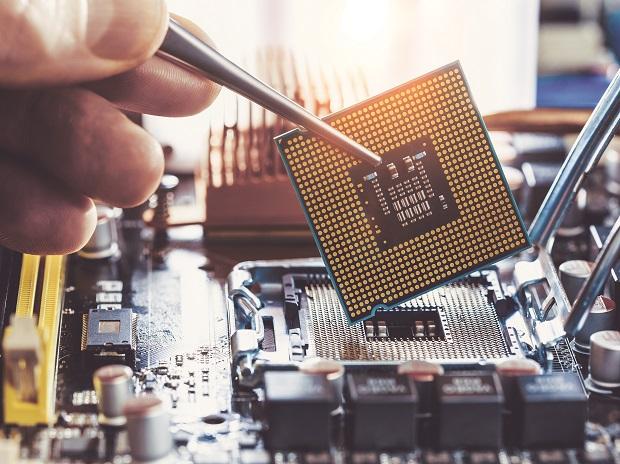
What are semiconductors, and what do they do? Here is all you need to know

What are semiconductors, and what do they do? Here is all you need to know


Semiconductors, also known as integrated circuits, are the backbone of modern electronics. They are a crucial component that is found in a wide range of devices, including computers, smartphones, appliances, gaming hardware, and medical equipment. With their ability to conduct electricity more than insulators but less than pure conductors, semiconductors play a pivotal role in more than one electronic function.


What are semiconductors?


In simplest terms, semiconductors are materials that possess properties between those of conductors (such as metals) and insulators (such as glass or plastic). The most commonly used semiconductor material is silicon (Si). Unlike conductors, which easily allow the flow of electric current, and insulators, which prevent its flow, semiconductors can conduct electricity under certain conditions but not as freely as conductors.


How do semiconductors work?


The conductivity component of semiconductors can be altered by introducing impurities through a process called “doping.” By adding specific impurities, the semiconductor’s electrical properties can be controlled. There are two main types of semiconductors based on the elements introduced during the doping process:


  • n-type semiconductor: Doped with impurities containing extra electrons, such as phosphorus, arsenic, antimony, or bismuth. These extra electrons make the semiconductor more conductive.

  • p-type semiconductor: Doped with impurities containing fewer electrons, such as boron, gallium, or aluminium. These “holes” create vacancies in the crystal lattice, making the semiconductor conductive in the opposite direction.


Applications of semiconductors


Semiconductors have revolutionised the electronics industry and are essential components in a wide range of devices, such as:


  • Microprocessors: The central processing units (CPUs) in computers and other electronic devices are made of semiconductors. Microprocessors perform tasks and execute instructions, making them the “brains” of modern electronics.

  • Memory chips: Semiconductors are used in memory chips to store data temporarily, facilitating information exchange and processing.

  • Commodity Integrated Circuits: These standardised chips are mass-produced for routine processing purposes and are found in everyday electronic devices.

  • Complex System on a Chip (SOC): These chips integrate various functions, combining memory, microprocessors, and other components into a single chip commonly used in smartphones and other consumer electronics.

  • Microcontrollers: These specialised semiconductors are used to control electronic devices and embedded systems.

  • Transistors: Transistors, a fundamental component of semiconductors, are used for signal amplification and switching in electronic circuits.


Global semiconductor landscape: Key players

The semiconductor industry is highly competitive, with major global players like Fujitsu Semiconductor Inc., Infineon Corporation AG, MediaTek Inc, ARM Holdings Plc, Qualcomm Incorporated, Broadcom Corporation, Marvell Technology Group, Apple Inc, Freescale Semiconductor Inc, and Texas Instruments Inc.


Currently, Taiwan Semiconductor Manufacturing Co (TSMC) is the world’s largest memory chip manufacturer, and it has placed Taiwan on the list of the most important regions in the world. Besides TSMC, Taiwan is also home to some of the most advanced chipmaking facilities in the world, including the brand-new 3-nanometer fabs that entered production in the second half of 2022.


In terms of the production of semiconductors and microchips, Japan boasts of the strongest semiconductor ecosystems in the world, with 102 chipmaking facilities operating in the country.


South Korea is the other major exporter of logic and memory chips. The country is home to two of the world’s three largest memory chip manufacturers: SK Hynix and Samsung. The pair collectively controlled roughly two-thirds of the global memory market as of September 2022.


Samsung’s chipmaking divisions also manufacture semiconductors for other companies. Samsung Foundry is one of only two companies in the world (the other being TSMC) that make chips for others with leading-edge process technologies such as 5-nanometer and now 3-nanometer.


Among other major producer centres are the United States, Germany, and China, which maintain a steady supply balance between logic and memory chips.


India: A growing electronic manufacturing hub

India’s electronics manufacturing sector has witnessed rapid growth in recent years. Prime Minister Narendra Modi highlighted this progress, noting that India’s electronic production has surged from less than $30 billion in 2014 to over $100 billion today. However, the push for semiconductor manufacturing has become more critical to reduce supply chain vulnerabilities and avoid overreliance on China.


Now, India is “rolling out the red carpet” for global semiconductor manufacturers, aiming to establish itself as a prominent industry hub. The government has committed $10 billion in incentives and assistance to encourage local chip manufacturing.


Setting up semiconductor fabrication units or fabs requires significant investments and expertise. India is seeking a collaborative approach, building partnerships with like-minded nations to facilitate sustainable growth in the industry. By leveraging its skilled workforce and fostering innovation, India aims to establish itself as a key player in the semiconductor revolution.


Through the production-linked incentive (PLI) scheme, companies like Vedanta and Taiwan’s Foxconn have pledged multi-billion dollar investments in setting up units to manufacture chips.


USA’s AMD also announced on Friday it will invest around $400 million in India over the next five years, and it will build its largest design centre in the country in Bengaluru. Anil Agarwal, founder and chairman of Vedanta Resources Limited, reiterated his company’s semiconductor manufacturing plant in India.


Strategic advantages: Skilled talent and design excellence


According to a report by The Hindu, India boasts a significant advantage in semiconductor design and intellectual labour. A large portion of semiconductor design engineers worldwide is either Indian or of Indian origin. Companies like Intel and NVIDIA already have large facilities in India with Indian talent working on design problems. This is an advantage that China is losing control over in the face of sanctions and an ageing population.


Source link

YouTube
Instagram
WhatsApp