Samsung Wallet, Thermo Check and WhatsApp are coming to Galaxy Watch series

Samsung Wallet, Thermo Check and WhatsApp are coming to Galaxy Watch series


Samsung Galaxy Watch series


South Korean electronics maker Samsung on Thursday announced that its Wallet and Thermo Check apps are coming to the Galaxy Watch series. In addition, the WearOS based smartwatches in the line to get instant messaging app WhatsApp.


“A range of new apps for its Galaxy Watch series will bring more responsive, adaptable and multi-functional smartwatch experiences for Galaxy users. With Samsung Wallet, Thermo Check and WhatsApp, users can do more than ever straight from their wrist,” said Samsung.


Samsung had last year integrated its Pay and Pass services into one app, called Samsung Wallet, for its smartphones. The app is now coming to Galaxy Watch series. It will debut with the new Galaxy Watch series, which is set to arrive on July 26 at its Galaxy Unpacked Seoul. The Samsung Wallet app enables users to make payments, store identity documents, and more.


Samsung said, the Thermo Check app would allow users to measure the temperature of their surroundings, from meals they are about to eat to water they are about to swim in, all without any physical contact required. Like the Samsung Wallet app, the Thermo Check will be available first on the upcoming Galaxy Watch devices. It would later be available for the Galaxy Watch5 series.


As for WhatsApp, it is now available for the company’s WearOS-based smartwatches, the Galaxy Watch5 series and Galaxy Watch4 series. The app will let users continue conversations, reply to messages by voice and even answer calls, all without needing to take out their phones, said Samsung.


WhatsApp for smartwatches was announced on July 19. It is available only on devices running Wear OS 3 or later. The app has been rolled out worldwide. The WhatsApp Wear OS app was launched as beta during Google’s developer-focused I/O conference. Wear OS, is Google’s operating system for wearables.

First Published: Jul 20 2023 | 10:05 AM IST


Source link

Apple tests ‘Apple GPT,’ develops generative AI tools to catch OpenAI

Apple tests ‘Apple GPT,’ develops generative AI tools to catch OpenAI


Apple Inc. is quietly working on artificial intelligence tools that could challenge those of OpenAI Inc., Alphabet Inc.’s Google and others, but the company has yet to devise a clear strategy for releasing the technology to consumers.


The iPhone maker has built its own framework to create large language models — the AI-based systems at the heart of new offerings like ChatGPT and Google’s Bard — according to people with knowledge of the efforts. With that foundation, known as “Ajax,” Apple also has created a chatbot service that some engineers call “Apple GPT.”

In recent months, the AI push has become a major effort for Apple, with several teams collaborating on the project, said the people, who asked not to be identified because the matter is private. The work includes trying to address potential privacy concerns related to the technology. 


Apple shares gained as much as 2.3% to a record high of $198.23 after Bloomberg reported on the AI effort Wednesday, rebounding from earlier losses. Microsoft Corp., OpenAI’s partner and main backer, slipped about 1% on the news.


A spokesman for Cupertino, California-based Apple declined to comment.


The company was caught flat-footed in the past year with the introduction of OpenAI’s ChatGPT, Google Bard and Microsoft’s Bing AI. Though Apple has woven AI features into products for years, it’s now playing catch-up in the buzzy market for generative tools, which can create essays, images and even video based on text prompts. The technology has captured the imagination of consumers and businesses in recent months, leading to a stampede of related products.


Apple has been conspicuously absent from the frenzy. Its main artificial intelligence product, the Siri voice assistant, has stagnated in recent years. But the company has made AI headway in other areas, including improvements to photos and search on the iPhone. There’s also a smarter version of auto-correct coming to its mobile devices this year.


Publicly, Chief Executive Officer Tim Cook has been circumspect about the flood of new AI services hitting the market. Though the technology has potential, there are still a “number of issues that need to be sorted,” he said during a conference call in May. Apple will be adding AI to more of its products, he said, but on a “very thoughtful basis.”


In an interview with Good Morning America, meanwhile, Cook said he uses ChatGPT and that it’s something that the company is “looking at closely.”


Behind the scenes, Apple has grown concerned about missing a potentially paramount shift in how devices operate. Generative AI promises to transform how people interact with phones, computers and other technology. And Apple’s devices, which produced revenue of nearly $320 billion in the last fiscal year, could suffer if the company doesn’t keep up with AI advances.


That’s why Apple began laying the foundation for AI services with the Ajax framework, as well as a ChatGPT-like tool for use internally. Ajax was first created last year to unify machine learning development at Apple, according to the people familiar with the effort.

The company has already deployed AI-related improvements to search, Siri and maps based on that system. And Ajax is now being used to create large language models and serve as the foundation for the internal ChatGPT-style tool, the people said.


The chatbot app was created as an experiment at the end of last year by a tiny engineering team. Its rollout within Apple was initially halted over security concerns about generative AI, but has since been extended to more employees. Still, the system requires special approval for access. There’s also a significant caveat: Any output from it can’t be used to develop features bound for customers.


Even so, Apple employees are using it to assist with product prototyping. It also summarizes text and answers questions based on data it has been trained with.

Apple isn’t the only one taking this approach. Samsung Electronics Co. and other technology companies have developed their own internal ChatGPT-like tools after concerns emerged about third-party services leaking sensitive data.


Apple employees say the company’s tool essentially replicates Bard, ChatGPT and Bing AI, and doesn’t include any novel features or technology. The system is accessible as a web application and has a stripped-down design not meant for public consumption. As such, Apple has no current plans to release it to consumers, though it is actively working to improve its underlying models.


Beyond the state of the technology, Apple is still trying to determine the consumer angle for generative AI. It’s now working on several related initiatives — a cross-company effort between its AI and software engineering groups, as well as the cloud services engineering team that would supply the infrastructure for any significant new features. While the company doesn’t yet have a concrete plan, people familiar with the work believe Apple is aiming to make a significant AI-related announcement next year.

John Giannandrea, the company’s head of machine learning and AI, and Craig Federighi, Apple’s top software engineering executive, are leading the efforts. But they haven’t presented a unified front within Apple, said the people. Giannandrea has signaled that he wants to take a more conservative approach, with a desire to see how recent developments from others evolve.


Around the same time that it began developing its own tools, Apple conducted a corporate trial of OpenAI’s technology. It also weighed signing a larger contract with OpenAI, which licenses its services to Microsoft, Shutterstock Inc. and Salesforce Inc. 


Apple’s Ajax system is built on top of Google Jax, the search giant’s machine learning framework. Apple’s system runs on Google Cloud, which the company uses to power cloud services alongside its own infrastructure and Amazon.com Inc.’s AWS. 


As part of its recent work, Apple is seeking to hire more experts in generative AI. On its website, it is advertising for engineers with a “robust understanding of large language models and generative AI” and promises to work on applying that technology to the way “people communicate, create, connect and consume media” on iPhones and its other devices.


An ideal spot for Apple to integrate its LLM technology would be inside Siri, allowing the voice assistant to conduct more tasks on behalf of users. Despite launching in 2011, before rival systems, Siri lagged competitors as Apple focused on other areas and adopted fewer features in favor of privacy.


In his May remarks, Cook defended the company’s AI strategy, saying the technology is used across much of its product lineup, including in features like car-crash and fall detection. More recently, Cook said that LLMs have “great promise,” while warning about the possibility of bias and misinformation. He also called for guardrails and regulation in the space. 


The company expanded its artificial intelligence efforts in 2018 with the hiring of Giannandrea, who previously led search and AI at Google. Since then, Apple hasn’t released many splashy new AI features, but at least two initiatives could help put it on the map.


The company is planning a new health coaching service codenamed Quartz that relies on data from an Apple Watch and uses AI to personalize plans, Bloomberg reported in April. And the company’s future electric car will use artificial intelligence to power the vehicle’s self-driving capabilities.



Source link

Merger regulations get tougher in crackdown by antitrust enforcers

Merger regulations get tougher in crackdown by antitrust enforcers


By Leah Nylen


US antitrust agencies stepped up the Biden administration’s crackdown on mergers and acquisitions with a sweeping overhaul of rules the government uses to determine whether deals violate competition law.


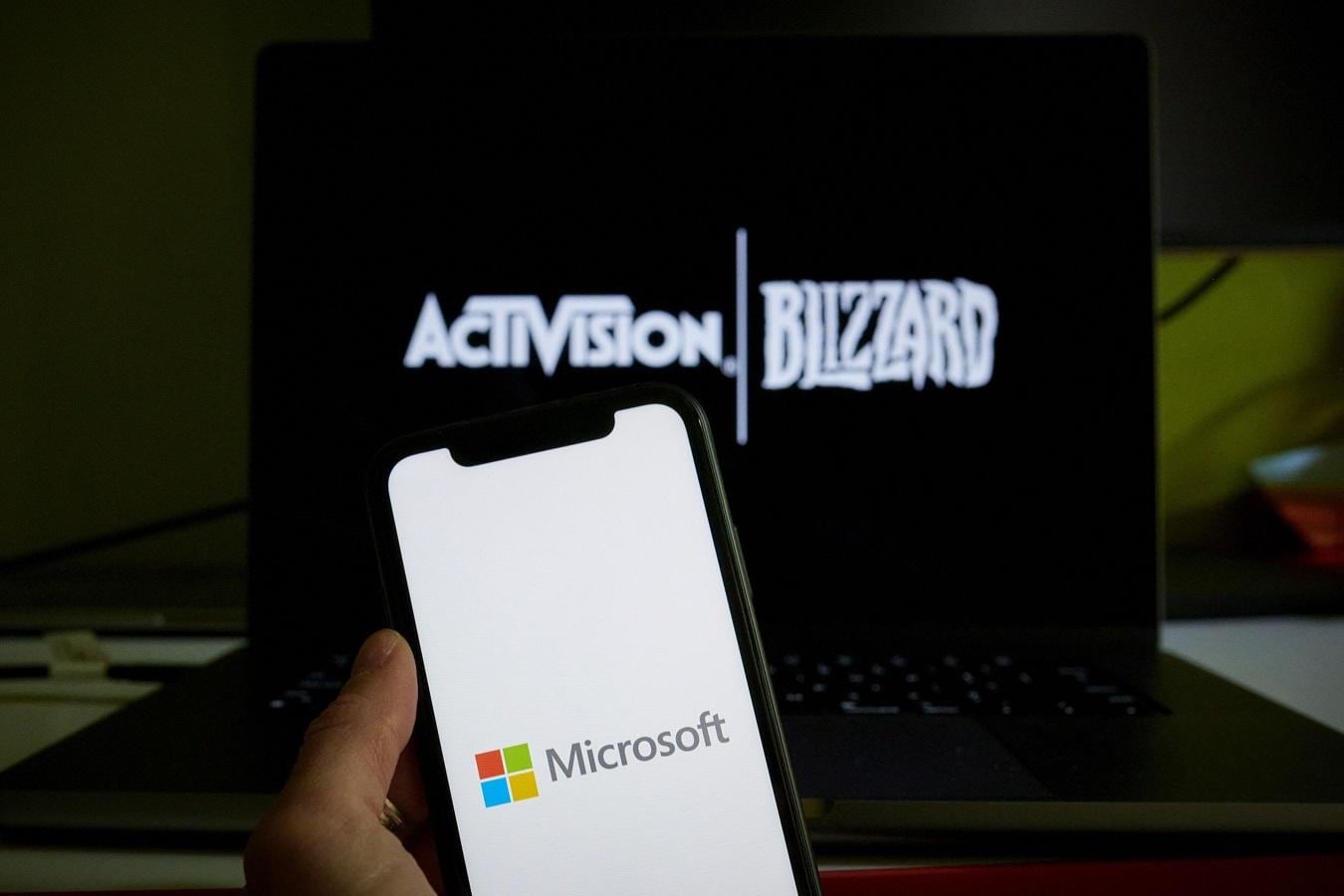
The changes come on the heels of several bruising defeats for the government in blocking vertical mergers. Last week, the Federal Trade Commission lost a legal fight over Microsoft Corp.’s $69 billion deal to buy Activision Blizzard Inc. It was the third big failure for antitrust enforcers, after the Justice Department’s unsuccessful bids to block UnitedHealth Group Inc. from buying up Change Healthcare Inc. last year and AT&T Inc.’s 2018 Time Warner merger. 


The 13 new guidelines proposed Wednesday by the Justice Department and FTC are part of an effort to curb the rise of companies that seek to dominate their industries by buying up rivals. The agencies are asking for public comments on the proposal over the next 60 days.


US regulators developed the new guidelines to provide greater transparency to the public and companies about how antitrust enforcers are thinking about the law as markets and industries change, Jonathan Kanter, the DOJ’s top antitrust cop, said in an interview with Bloomberg TV. 


“Markets today are very different than they were 50 years ago,” Kanter said. “Those economic shifts, those new realities are necessary to understand to apply the law effectively.”

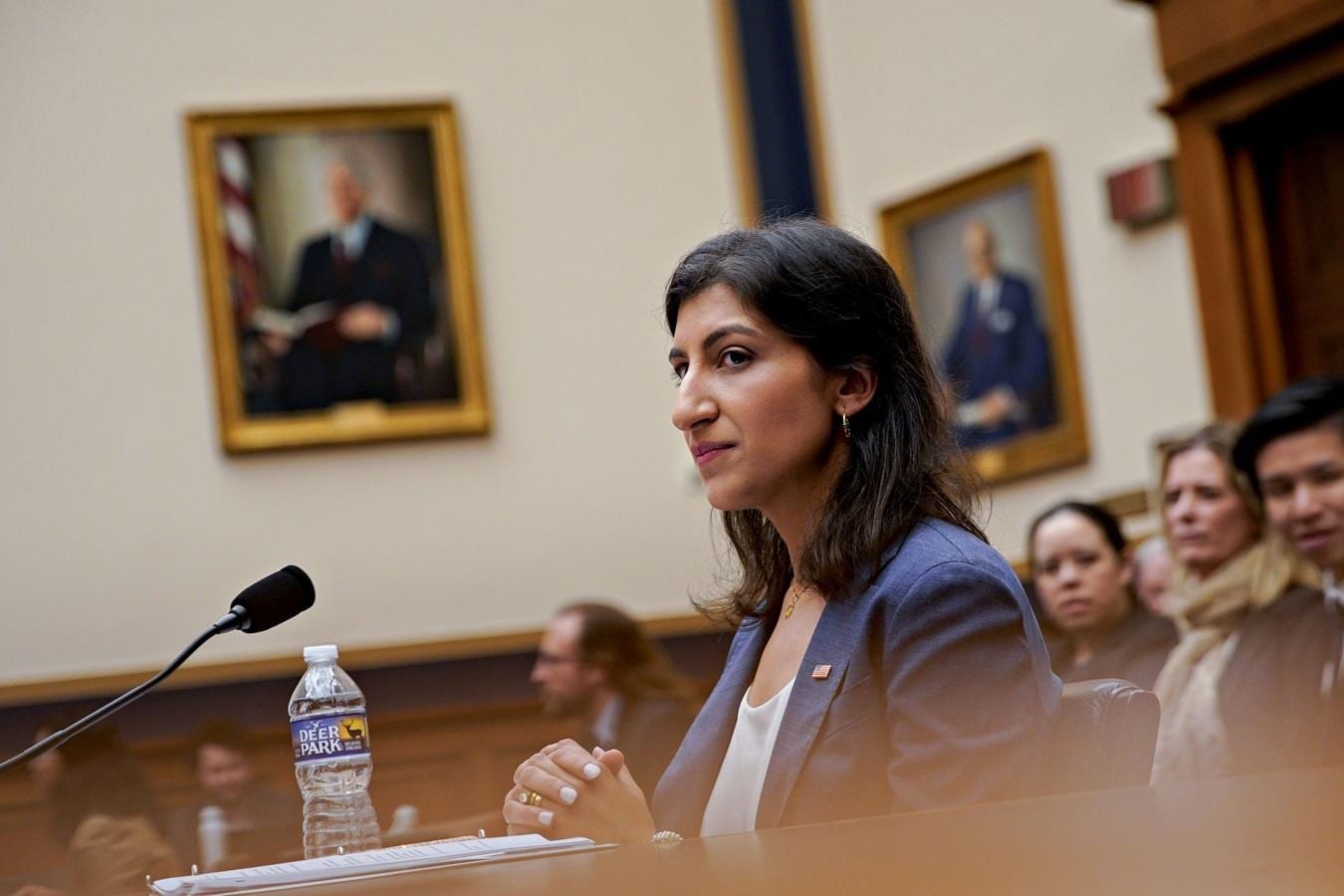
Under President Joe Biden, the US has doubled down on efforts to block more mergers after decades of a light-touch approach by government. Kanter and FTC Chair Lina Khan have argued previous administrations were too permissive, leading to a rise in corporate concentration that has limited choices for consumers and contributed to higher prices.


Under the proposed guidelines, enforcers said they will examine multiple mergers if a deal is part of a series of acquisitions made by a company within the same market. Agencies also will focus on the impact on workers when a deal involves companies that formerly competed for labor. 


Enforcers may assume a deal would harm competition if the company’s market share after the acquisition will be greater than 30%, according to the agencies. 

When it challenged the Microsoft deal, the FTC claimed it would allow the company to withhold Activision’s key titles from rival consoles or game services. But a federal judge ruled the government hadn’t proved the acquisition would hurt competition. The agency is appealing, though a court declined to pause the merger while the FTC seeks to reverse Microsoft’s win. The companies on Wednesday extended their deal deadline to Oct. 18.


In an interview with CNBC, Khan said the updated guidelines will help ensure enforcers “fully addressing the realities of digital markets, the realities of how firms are pursuing M&A in the current environment.” 


The White House heralded the guidelines update as an important revision to reflect changing economic conditions. Biden is set to meet with members of his Competition Council, which includes Khan and representatives from DOJ, later Wednesday.


Senator Elizabeth Warren, a Massachusetts Democrat and backer of Khan and Kanter, applauded the revamp, calling it “a much-needed update to counter the real harms posed by corporate monopolies.” 


‘Chill Merger Activity’


The proposals are likely to draw criticism from House Republicans, many of whom have criticized Khan and Kanter for their more aggressive approach to antitrust enforcement.


The US Chamber of Commerce, the nation’s largest business lobby which has been highly critical of Biden’s antitrust enforcers, condemned the new proposal saying it upends decades of bipartisan consensus that mergers aid the US economy.


“These guidelines are designed to chill merger activity, which will deny smaller companies access to the capital and expertise they need to grow and place U.S. businesses at a disadvantage with their global competitors,” Chamber vice president Neil Bradley said.


The agencies began the merger rule revamp in January 2022 and have spent the past 18 months honing new guidelines that would apply to all mergers and acquisitions. Last month, they also proposed an overhaul of the information that companies must provide during merger reviews for the first time in 45 years.


The agencies last changed the guidelines for mergers between direct competitors in 2010. Separate guidelines for so-called vertical deals, which involve companies that operate in the same supply chain but don’t compete directly, were revised in 2020 under former President Donald Trump. Khan and her fellow Democratic FTC commissioners withdrew the agency’s approval of those changes in 2021. 


The new proposal includes rules related to both horizontal and vertical deals as well as ones that involve online platforms. 


Source link

WhatsApp availabile on smartwatch app on Wear OS 3 globally: Meta

WhatsApp availabile on smartwatch app on Wear OS 3 globally: Meta


Meta today announced the availability of WhatsApp smartwatch app on Wear OS 3. The app has been rolled out worldwide. The WhatsApp Wear OS app was launched as beta during Google’s developer-focused I/O conference. Wear OS, is Google’s operating system for wearables.


Meta CEO Mark Zuckerberg announced the availability of WhatsApp smartwatch app on Wear OS. “Rolling out from today, now you can start new conversations, reply to messages, and take calls – all from your wrist,” he said.


Available on watches that run Wear OS 3, users will no longer need their phone with them to stay connected, and can respond to friends and family using their voice, emojis, quick replies or text.


We look forward to bringing WhatsApp to even more devices in the future. Please find a supporting asset attached along with screenshot of Mark announcing wear OS on his broadcast channel. With this Meta now gets to make its presence felt in the wearable market, especially since WhatsApp has a large audience. In India WhatsApp, according to reports, has over 400 million users.


However, WhatsApp smartwatch app is not available for Apple’s iPhone users. Apple users can only view and respond to messages via notifications, they cannot initiate conversation or make calls through WhatsApp.

First Published: Jul 19 2023 | 10:51 PM IST


Source link

Microsoft offers free security feature after alleged China cyber hack

Microsoft offers free security feature after alleged China cyber hack


Microsoft said its decision was “in response to increasing frequency and evolution of nation-state cyberthreats. (Photo: Bloomberg)


By Andrew Martin


Under pressure from US cybersecurity officials, Microsoft Corp. on Wednesday said it would provide free cloud security logs for all customers in the next few months.


Security logs are critical for detecting and preventing cybersecurity threats, in addition to allowing hacking victims to quickly take action following a breach, according to US officials. Microsoft currently charges for some forms of logging as a premium feature.


Microsoft said its decision was “in response to increasing frequency and evolution of nation-state cyberthreats.” Customers will receive detailed logs of email access and more than 30 other types of log data previously only available to customers paying for a premium service, the company said.


“These logs themselves do not prevent attacks, but they can be useful in digital forensics and incident response,” Vasu Jakkal, Microsoft’s corporate vice president for security, compliance, identity and management said, in a blog post. 


The decision comes after suspected Chinese hackers infiltrated cloud-based email systems at about 25 organizations globally, including several US agencies. Commerce Secretary Gina Raimondo was among the US officials whose emails were breached.


A lack of logging complicated the investigation into the so-called SolarWinds attack, which was disclosed in 2020. In that incident, Russia state-sponsored hackers installed malicious code in software update from SolarWinds Corp., among other methods, to infiltrate nine US federal agencies and about 100 companies.

First Published: Jul 19 2023 | 10:35 PM IST


Source link

Microsoft, Activision Blizzard extend deadline to close  bn deal

Microsoft, Activision Blizzard extend deadline to close $69 bn deal


The deadline for Microsoft’s USD 69 billion acquisition of video game company Activision Blizzard has been extended to as the companies seek to close a deal that has been challenged by regulators in the US, as well as by UK’s Competition and Markets Authority.


Microsoft believes that pushing back the deadline to Oct. 18 will provide enough time to work through the remaining regulatory issues, said Brad Smith, the company’s president.


We are confident about our prospects for getting this deal across the finish line, Smith said.


The extension comes with a bigger termination fee, should the deal be called off, and a number of other new agreements.


Tuesday marked an important deadline for the deal announced 18 months earlier. Both Microsoft and Activision had agreed that either party could walk away from the planned merger if it hadn’t closed by then, triggering Microsoft to potentially have to pay a USD 3 billion breakup fee unless both sides decided to renegotiate.


That termination fee has been increased to USD 3.5 billion with the extension.


Given global regulatory approvals and the companies’ confidence that CMA now recognizes there are remedies available to meet their concerns in the UK, the Activision Blizzard and Microsoft boards of directors have authorised the companies not to terminate the deal until after October 18, an Activision Blizzard spokesperson said Wednesday. “We’re confident in our next steps and that our deal will quickly close.


Microsoft spent the past week working to resolve longstanding legal challenges from antitrust enforcers in the U.S. and U.K. who argued the merger would harm competition.


The deal was effectively clear to go in the U.S. this week, especially after the Supreme Court decided against hearing a last-ditch effort to block the takeover from gamers who have described themselves as fans of popular Activision titles Call of Duty, World of Warcraft, Overwatch and Diablo.


Justice Elena Kagan rejected the emergency appeal without comment on Tuesday. Kagan handles emergency matters from California and other western states.


But the U.K. remained an obstacle, though one that’s likely to be surmounted.


The Competition and Markets Authority initially rejected the deal, but later pushed back its final decision so it can consider Microsoft’s argument that new developments mean its acquisition can go through.


A judge on Monday conditionally approved a joint request from Microsoft and the British regulator to delay upcoming proceedings, enabling both sides to further negotiate.


Daniel Beard, an attorney representing Microsoft in the U.K. case, told the judge Monday he was grateful the process is moving quickly because the U.K. is the only impediment to closing and speed is of the essence.


Among the additional information sought by the judge was Microsoft’s Sunday announcement of a deal addressing concerns from top rival Sony, maker of the PlayStation console that’s a competitor to Microsoft’s Xbox. Microsoft said it signed a deal with Sony to keep Call of Duty on PlayStation for at least 10 years.


Source link

YouTube
Instagram
WhatsApp