Chinese electronics maker Realme’s recently launched Buds Wireless 3 earphones are now available for purchase in India. Priced at Rs 1,799, the earphones are available with a special first sale day offer in which the company is offering a flat discount of Rs 100. The earphones are available on Realme online store, Amazon India, Flipkart, and at select retail stores across the country. Below are the earphones details:
Realme Buds Wireless 3: Features and specifications
The Realme Buds Wireless 3 are neckband-style wireless earphones. These boasts a large 13.6 mm dynamic audio driver tuned for bass-rich sound output. Realme said it has used ‘Dynamic Bass Booster’ algorithm for deeper bass and crisper vocals, making it the ideal device for listening to music.
The earphones are rated by the company to deliver battery life of up to 40 hours.
The Realme Buds Wireless 3 offer crystal-clear sound with active noise cancellation (ANC) and a 360-degree spatial audio effect, said the company.
The earphones are available in bass yellow, vitality white, and pure black colours.
To summarise, the Realme Buds Wireless 3 features a 13.6 mm dynamic bass driver for rich bass, a 40-hour battery life, active noise cancellation, and a 360-degree spatial audio effect. It is touted to deliver powerful sound, extended playtime, immersive noise cancellation, and a multidimensional audio experience.
The new draft Bill has the provision of penalties ranging up to Rs 250 crore (Representational)
The upcoming data protection Bill may cap the penalty at Rs 250 crore for data breaches instead of the earlier proposed amount of Rs 500 crore, according to a report in The Hindu BusinessLine (BL).
The new draft Bill has the provision of penalties ranging up to Rs 250 crore for each instance of data fiduciaries failing to take safeguards to prevent personal data breaches.
According to an earlier draft of the Digital Personal Data Protection Bill 2022, the proposed Data Protection Board could impose a fine of up to Rs 500 crore. The provision has been eliminated in the revised bill.
According to the BL, the revised bill states that “If the board determines on conclusion of an inquiry that breach of the provisions of this Act by a person is significant, it may, after giving the person an opportunity of being heard, impose such financial penalty as is specified in Schedule 1,”. Schedule 1 lists out the range of penalties, which ranges from Rs 10,000 to Rs 250 crore depending on the seriousness of the violation. The earlier draft has stipulated that in the case of non-compliance, a penalty of up to Rs 500 crore could be imposed.
Among other changes, the government could also lower the age of consent from 18 to 14 and exempt certain firms from adhering to additional obligations for protecting kids’ privacy if they can process their data in a “verifiably safe” manner, The Economic Times (ET) reported yesterday.
The change is a major departure from the earlier draft of the data protection Bill which was floated in November and fixed the age of consent at 18, requiring companies to obtain the consent of the individual’s parents before processing data of those under 18.
Earlier, Business Standard had reported that the Centre has retained the major provisions of the draft data protection Bill including penalties for data breaches, parental consent for children’s data, and deemed consent, in the final version to be tabled in Parliament. On July 5, the union cabinet had approved the draft Bill released for public consultation in November 2022.
A China-based hacking group has breached email accounts linked to government agencies in Western Europe, Microsoft Corp. says.
In a blog post published Tuesday, Microsoft said the group, which it identified as Storm-0558, focuses on acts such as espionage and data theft.
The group gained access to email accounts affecting about 25 organisations including government agencies and to accounts of individuals linked to these organisations, and had gone undetected for about a month until customers complained to Microsoft about abnormal mail activity.
We assess this adversary is focused on espionage, such as gaining access to email systems for intelligence collection, Charlie Bell, Microsoft’s executive vice president of security, said in a separate Microsoft post.
The hackers carried out the breach by forging authentication tokens a piece of information used to verify the identity of a user required to access the email accounts. Microsoft has since dealt with the attack and informed affected customers.
Microsoft said it is working with the Department of Homeland Security and the Cybersecurity and Infrastructure Security Agency, among others, to guard against such attacks.
It also said it would continue to monitor Storm-0558’s activities.
The Storm-0558 attack is the latest security breach discovered to have been carried out by China-based hackers.
Last month, Google-owned cybersecurity firm Mandiant said suspected state-backed Chinese hackers broke into the networks of hundreds of public and private sector organisations globally by using a security hole in a popular email security tool.
Earlier this year, Microsoft said state-backed Chinese hackers have been targeting US critical infrastructure and could be laying the technical groundwork for the potential disruption of critical communications between the US and Asia during future crises.
China says the US also engages in cyberespionage against it, hacking into computers of its universities and companies.
(Only the headline and picture of this report may have been reworked by the Business Standard staff; the rest of the content is auto-generated from a syndicated feed.)
US-based PC maker HP on Wednesday launched in India the Envy x360 15 laptop. According to the company, the Envy x360 15 is the first IMAX-enhanced laptop in the world equipped with artificial intelligence-driven features to boost security and performance. The HP Envy x360 15 starts at Rs 78,999 and is available on HP online store and at HP World retail stores.
“The new Envy x360 15 is specifically designed to enable content creators to fully express themselves through industry-leading displays and intelligent, high-performance productivity features,” said Vickram Bedi, Senior Director of Personal Systems at HP India.
HP Envy x360 15: Specifications
The Envy x360 15 is offered in 13th Gen Intel Core i7, AMD Ryzen 5, and AMD Ryzen 7 processors configurations with NVIDIA GeForce RTX 3050 graphics and AMD Radeon graphics. It sports a 15.6-inch IMAX Enhanced certified OLED touchscreen. On the audio front, the Envy x360 15 features IMAX theatrical sound mix along with DTS:X technology to provide a spatial experience.
The Envy x360 15 features a dedicated Emoji menu on the keyboard. The device features a manual camera shutter that can be used to turn off the laptop’s camera. According to the company, the Envy x360 15 has been manufactured using ocean-bound plastic and recycled aluminum.
The laptop supports up to 16GB LPDDR5 memory. It is rated for up to 15 hours on-battery life. Connectivity is covered by Wi-Fi 6E and Bluetooth 5.3.
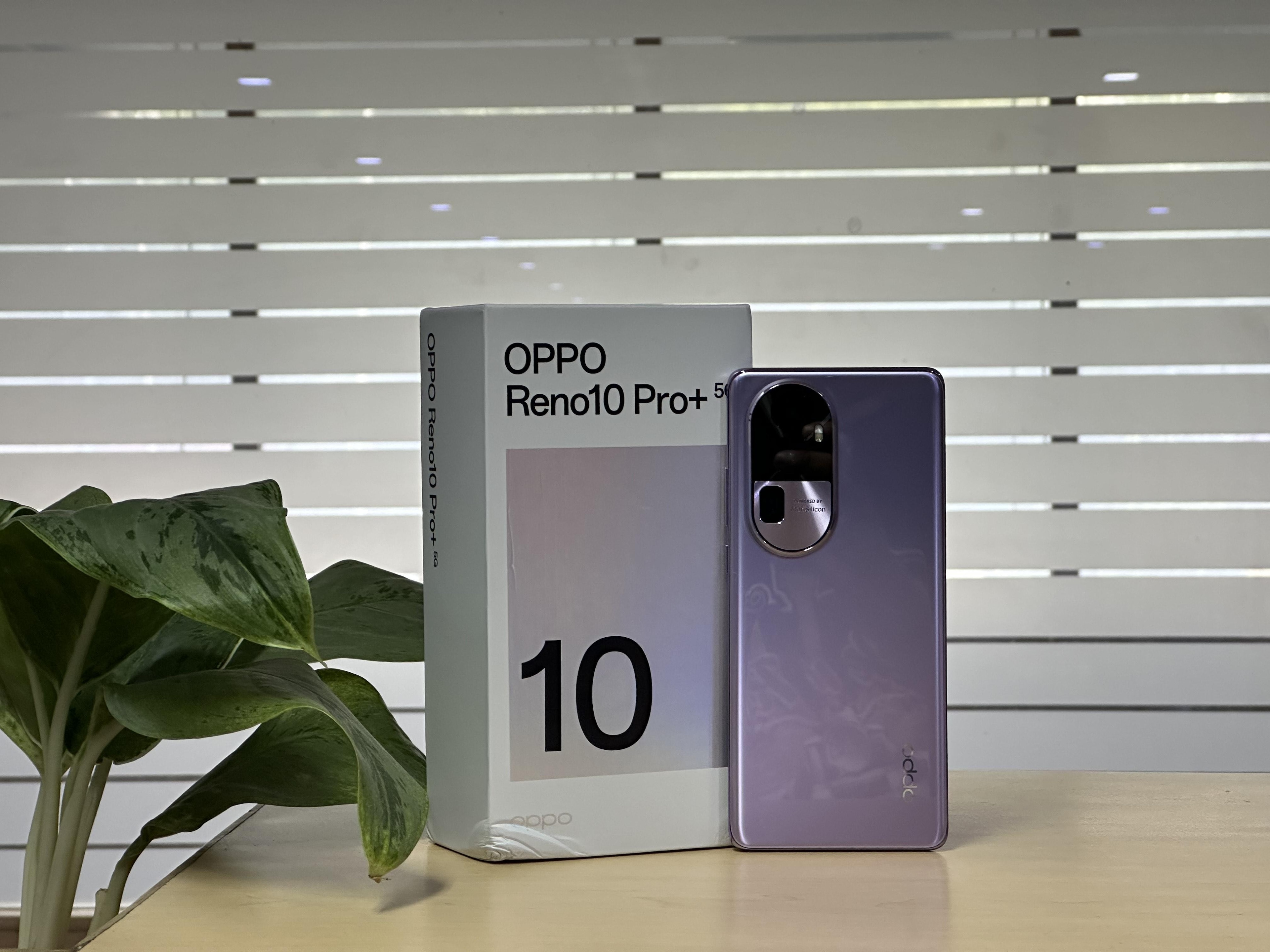
The Reno10 Pro Plus 5G is a new entrant in OPPO’s smartphone line in India. For the uninitiated, the Reno-series is the Chinese smartphone maker’s flagship line in the country with premium smartphones focused on imaging-centric capabilities. The Reno10 Pro Plus 5G is no different, but there is more about it than just the imaging capabilities. Powered by Qualcomm Snapdragon 8+ Gen 1 system-on-chip, the Reno10 Pro Plus 5G boasts thin-and-lightweight construction, 10-bit two-side curved OLED display of 120Hz refresh rate, and 100W superfast SUPERVOOC charging. On paper, the OPPO Reno10 Pro Plus 5G seems to be an all-round premium smartphone. Is it? Let us find out:
Design
The Reno10 Pro Plus 5G impresses with thin-and-lightweight construction. It measures 8.2mm at its thinnest side and weighs about 194g. On the face of it, however, the phone does not look any different from its peers from brands like Realme and Vivo. It is because of the two-side curved profile of the front and the back glasses. Sandwiched between the glasses is a plastic frame, which wears the same colour theme as the rest of the smartphones.
Speaking of colour, the Reno10 Pro Plus 5G has a dual-tone design on the back cover. Made of Gorilla Glass 5, the back cover has glossy purple colour (review unit) mated with black colour on a portion of camera island for the dual-tone design. The camera island protrudes significantly from the body and makes the phone wobble on flat surfaces. Thankfully, it is made of aluminium for protection against serious damage.
Display and audio
The front profile of the OPPO Reno10 Pro Plus 5G is dominated by its display, flanked by thin bezels on the top and bottom sides and no bezels on the right and left sides since the display has two-side curvature. OPPO has used the AGC Dragontrail Star 2 glass for protection. According to OPPO, this glass provides up to 20 improved drop resistance compared with Corning Gorilla Glass 5.
Design details aside, the phone sports a 6.74-inch 10-bit OLED display of 120Hz refresh rate. It is not an LTPO panel, but supports five-step dynamic refresh rate settings. The display is bright, vivid, and responsive. It is HDR10+ certified for high dynamic range content. The display’s two-side curved profile makes it easy to use with gesture navigations. Besides, the two-side bezel-less profile and thin bezels on the top and bottom sides make it a perfect fit for multimedia content sans distractions.
Lifting the visual experience is the audio delivered through dual-stereo speakers. The speakers are loud and clear, but not balanced. Nevertheless, the speakers are Dirac-tuned for wide soundstage. Besides, there is Dolby Atmos with support for spatial audio available for supported audio accessories such as the OPPO Enco Air3 Pro wireless earbuds.
Imaging
The Reno10 Pro Plus 5G is a camera-centric smartphone with an interesting camera system, which includes a dedicated 64-megapixel periscope telephoto lens for up to 3x optical zoom capabilities. The other two sensors in the triple-camera array on the rear are noteworthy too – there is a 50-megapixel main camera sensor (Sony IMX890) with optical image stabilisation and an 8MP ultra-wide-angle camera sensor of 112-degree field-of-view (FoV). On the front, the phone has a 32MP autofocus camera sensor.
Details aside, the camera system is versatile and full of value-added features. Though the focus here is on portrait photography, the cameras impress on other counts too. The primary camera sensor is a consistent performer and it works without a hitch even in low-light conditions. The large sensor type enables shallow depth-of-field, which looks natural. Therefore, it works well for portrait-like imaging on subjects that are not recognised by the sensor in portrait mode such as coffee mugs, flowers, motorbikes, etc.
Since the sensor is capable of creating natural shallow depth-of-field, it works even better in portrait mode. Adding zing to the portraits is the built-in filters, which includes AI colour portrait filter that turns the frame into monochrome while retaining colours on the subject for it to pop out. Likewise, there is bokeh flare portrait filter, which makes the subject stand out by adding a dramatic blur on the bokeh.
The main sensor enables full-body portraits, but there is an option to move to 3x zoom if you like the classic half-body portraits. Like the main sensor, the periscope telephoto lens is good in terms of details, colours, and composition. However, it is not as bright in the low-light settings. The sensor boosts the ISO to compensate for light loss due to narrow aperture in low-light conditions, but it still is no match to the quality delivered through the primary sensor. Therefore, on occasions, the phone auto shifts to primary camera sensor and uses in-sensor zoom in portrait mode.
Coming to the ultra-wild-angle sensor, it is good for cityscape shots but not for landscapes since the FoV is narrow. Nevertheless, it is good in terms of capturing details. There is no colour symmetry between the three sensors but that is true for most other smartphones with multi-camera sensors of different configurations.
As for the front camera, the addition of autofocus here makes for noticeable improvements in clarity, details, and colours. Like the main rear camera, the front camera supports in-sensor zoom. It starts at 0.8 and goes all the way up to 2x with limited deterioration in picture quality. And portrait filters are available here too for one to explore and experiment with.
Performance
Powered by Qualcomm Snapdragon 8+ Gen 1 system-on-chip, paired with 12GB RAM and 256GB on-board storage, the OPPO Reno10 Pro Plus feels snappy in use irrespective of the task you put it at. Importantly, the phone does not heat up or throttle the performance after extended usage. Power-and-graphic intensive workloads in hot and humid outdoor conditions make the phone go warm after extended use, yet the thermals remain in control for comfortable use.
Matching the performance is the Android 13 operating system-based OPPO ColorOS 13.1 interface. There are no inconsistencies in the system and the interface is optimised to make the most of the high refresh rate screen for smooth user experience. Besides, there are tons of value-added features such as infrared remote control, lock screen widgets, large folders, theme colour customisation, etc.
The interface, however, is not perfect. The phone asks permission to install lesser-known apps during the initial set-up. A little oversight and rush to set-up the new phone would land you in a pool swarming with apps you barely heard of. Moreover, there is bloatware and there are instances of ads scattered all over the interface. OPPO said it will remove the apps recommendation window from the initial set-up to provide a better phone experience. Moreover, the company said it aims to make the interface more user friendly with its next software version. How these promises pan out is to be seen though.
Battery
The OPPO Reno10 Pro Plus is powered by a 4,700 mAh battery, which is well optimised to deliver a day’s on-battery time on a full charge. The on-battery time based on usage may be modest, but the battery impresses with the stand-by time. Charging with the 100W fast charger (in-box accessory) is another impressive feat.
Verdict
The Reno10 Pro Plus is an impressive smartphone with notable features, particularly in the imaging and charging departments. While it lacks an official ingress protection rating for water-and-dust resistance, its thin-and-lightweight design compensates for this. The superfast wired charging capability is a significant advantage, even though wireless charging is not supported.
Priced at Rs 54,999, the Reno10 Pro Plus offers a premium smartphone experience without compromising on core features. It delivers a well-rounded experience across various aspects, which is quite surprising considering its competitive price point.
KPMG will use Microsoft Cloud and Azure OpenAI Service capabilities for its efficient operations
KPMG is set to invest $2 billion in artificial intelligence (AI) and cloud services through an expanded partnership with Microsoft, the firm said on Tuesday.
The company said that it will incorporate AI into its core audit, tax and advisory services for clients as part of the five-year partnership. This partnership will help support KPMG’s clients and 2,500 customers serviced jointly by KPMG and Microsoft.
The move has come after Accenture is heading towards the latest technologies to weather a slowdown in advisory deals. Due to the falling number of customers, professional services firms are facing a slowdown in their business.
The collaboration between KPMG and Microsoft includes the former’s multibillion-dollar commitment to Microsoft cloud and AI services over the next five years. The expanded alliance will enhance KPMG client engagements.
KPMG will use Microsoft Cloud and Azure OpenAI Service capabilities for its efficient operations and better services for its clients. It will also have access to Microsoft 365 Copilot.
Bill Thomas, global chairman and CEO of KPMG International said that the expansion of this alliance builds on the combined power of two world-class organisations that are working together to responsibly use cutting-edge cloud and AI technologies.
“KPMG is embracing the future, and we believe that AI is key to unlocking sustainable growth in a way that will build a better future for our people, our clients and society,” he said.
Satya Nadella, chairman and CEO of Microsoft, said that Microsoft’s expanded partnership with KPMG will bring together AI innovation across the Microsoft Cloud with KPMG’s tax, audit and advisory expertise to empower its employees and unlock insights for its customers.