VSCO launches standalone Galleries app to organise shared photos: What's it

VSCO launches standalone Galleries app to organise shared photos: What's it


Visual Supply Co. (VSCO) has launched a new standalone app called VSCO Galleries to make it easier for photographers to share photos with clients and collaborators. The app is currently available on the App Store for iPhone, and a desktop version is expected to launch later. According to a report by 9To5Google, the app aims to address a common issue photographers face when using traditional shared folders. In projects like weddings, events or portrait shoots, multiple photographers often upload images, which can make shared folders messy and harder to manage.


VSCO Galleries app: How it works


As reported, VSCO Galleries attempts to address this by creating a single space where images from multiple contributors can be collected and organised. Instead of sending files through different links or folders, photographers and collaborators can upload images to a unified gallery designed specifically for photo sharing.


The report noted that the app aims to make collaboration easier while also improving the way photographers deliver their work. VSCO described the platform as one that “simplifies the delivery process while promoting collaboration, enabling photographers, guests, event organisers and content creators to gather and share photos in one, photo-first experience.” 


The app also allows organisers to generate a QR code that contributors can scan to upload photos directly to the gallery. Guests or collaborators can upload images using a desktop or mobile browser, meaning they do not need to install the app themselves to contribute.


VSCO Pro subscribers will get additional features, including unlimited storage and password-protected galleries for sharing images with clients or event participants. These controls are intended to help photographers manage access and keep projects organised.


The core functionality of VSCO Galleries is available for free, while additional features are included in the VSCO Pro subscription, which costs $60 per year.


Source link

Alibaba Group's AI wizard who warned of US-China tech gap steps down

Alibaba Group's AI wizard who warned of US-China tech gap steps down


The architect of Alibaba Group Holding Ltd.’s chief AI model has quit his post, a surprise departure that’s rattled the developer community and raised questions about the Chinese online leader’s pivot to artificial intelligence. 


Junyang Lin, who also goes by Justin, announced on X he was stepping down as the tech lead for Qwen, Alibaba’s main AI platform. That early morning post triggered a surge of support from the open-source community. Alibaba’s shares slid as much as 5.3 per cent in Hong Kong — their biggest intraday loss since October — in part because investors are unwinding AI-related trades given global uncertainty.


Lin is one of the most influential figures behind Alibaba’s transition to AI, an endeavor intended to drive its next phase of growth beyond online commerce. During his tenure, the Qwen series of models became the foundation for Alibaba’s marquee AI app and services, and consistently ranked among the world’s top-performing platforms. 


That placed the online company among the frontrunners of a broader effort by Chinese firms to compete with the likes of OpenAI and Anthropic PBC. Qwen’s advances this week drew the attention of Elon Musk, who commented on its “impressive” density.


“me stepping down. bye my beloved qwen,” Lin wrote on X, without elaborating. 


The reasons behind Lin’s exit remain unclear. The AI engineer, who last year set up a new robotics team, had been posting updates about Qwen on X just a day before. And Alibaba last month unveiled a major upgrade to that marquee platform, designed to support AI agentic tasks as well as handle text, photo and video inputs. 


Lin and Alibaba representatives didn’t respond to messages seeking comment.   


Lin’s revelation — which spurred more than a thousand replies including well-wishes and questions within hours — casts a cloud over Alibaba’s AI ambitions. At least one other Alibaba engineer announced he was departing in the wake of Lin’s post. MiniMax Group Inc. — an Alibaba investee and AI pioneer — thanked Lin for his contributions to the open-source community.


Alibaba has been among the most aggressive investors in and advocates for AI since DeepSeek fired up the local tech industry.


In 2025, the company better known for creating China’s biggest online marketplace declared it was going all-in on AI and the pursuit of super-intelligence, while building a suite of AI services and products centered on Qwen technology. Chief Executive Officer Eddie Wu pledged more than $53 billion toward infrastructure and AI development — an outlay he’s said the company could surpass over time.


Lin had been working on building generalist models at Alibaba since 2022 and oversaw its open-source initiatives, according to his LinkedIn profile. He holds a master’s degree from Peking University.


In one of his last public appearances as Qwen head, Lin told a forum in Beijing in January that Chinese companies were unlikely to leapfrog the likes of OpenAI and Anthropic with fundamental breakthroughs in AI over the next three to five years.


“A massive amount of OpenAI’s compute is dedicated to next-generation research, whereas we are stretched thin — just meeting delivery demands consumes most of our resources,” Lin said at the time. 


What Bloomberg Intelligence Says 


The departure of Junyang Lin, tech lead for Alibaba’s Qwen open-source model, is unlikely to impact the tech giant’s AI development. Monetizing AI remains the key challenge for Alibaba, Baidu and Tencent, in a commoditized sector that’s awash with largely undifferentiated, free-to-access AI apps. The rising, though minor, profit contribution from Alibaba’s cloud-intelligence division won’t offset pressure in its core e-commerce and food-delivery business – Robert Lea and Jasmine Lyu, analysts


His departure follows a recent flurry of activity.


Alibaba, which also operates a Netflix Inc.-like streaming service and one of China’s biggest meal delivery platforms, revamped its mobile app Qwen in November as a major step into consumer-facing AI services. 


It plans to build the app into an all-around personal assistant by gradually integrating individual services under the Alibaba umbrella. 


In January, it linked its flagship online shopping and travel services to Qwen, taking its biggest step yet to build the app into a one-stop artificial intelligence platform for consumers. 


Source link

Google rolls out March Pixel Drop: Agentic Gemini, Circle to Search update

Google rolls out March Pixel Drop: Agentic Gemini, Circle to Search update


Google has announced its March Pixel Drop, introducing a set of new software features for Pixel devices. The update focuses on expanded capabilities for the Gemini assistant, improvements to search tools and interface features, and additional functions for older Pixel models. This includes some of the capabilities that Google announced at the launch of the Samsung Galaxy S26 series, such as agentic capabilities for Gemini and improved Circle to Search.


The features are rolling out gradually and will reach supported Pixel phones over the coming weeks.


Google’s March Pixel Drop: What’s new


Gemini agentic actions


Google is adding new capabilities to its Gemini assistant that allow it to complete certain tasks within supported apps. Users can ask Gemini to carry out actions such as ordering groceries or booking rides in select apps, with the assistant running these tasks in the background while users monitor or interrupt them if needed.


This feature is currently rolling out in beta to the Pixel 10 series, including the Pixel 10, Pixel 10 Pro and Pixel 10 Pro XL.


Circle to Search outfit detection and virtual try-on


Google has updated its Circle to Search feature with new visual search capabilities that enable multi-object image recognition. With this, users can circle an image on the screen to search for individual items and view related products. The feature also adds a virtual try-on option for certain clothing items.


These updates are being rolled out to the Pixel 10 series smartphones in select regions, including India.


Magic Cue contextual suggestions


Magic Cue, Google’s context-aware suggestion tool, is receiving updates that allow it to provide recommendations based on user conversations and preferences. For instance, if a user is discussing restaurants in a message, the feature may suggest dining options based on previous activity.


The update is rolling out to Pixel 10 devices, including the Pixel 10 Pro Fold, in select countries and languages.


Desktop mode on external displays


Google is adding a desktop-style interface when Pixel phones are connected to an external display. The feature allows users to run apps in a larger workspace similar to a desktop environment.


Expanded At-a-Glance updates


The At-a-Glance widget is being updated. The widget can now show commuting information such as updates on departures, delays and alternative routes. Users can also get real-time game scores and more.


Home screen customisation


The update adds five AI-generated icon styles. Additionally, Google has also added a new SpongeBob SquarePants Theme Pack.


Now Playing


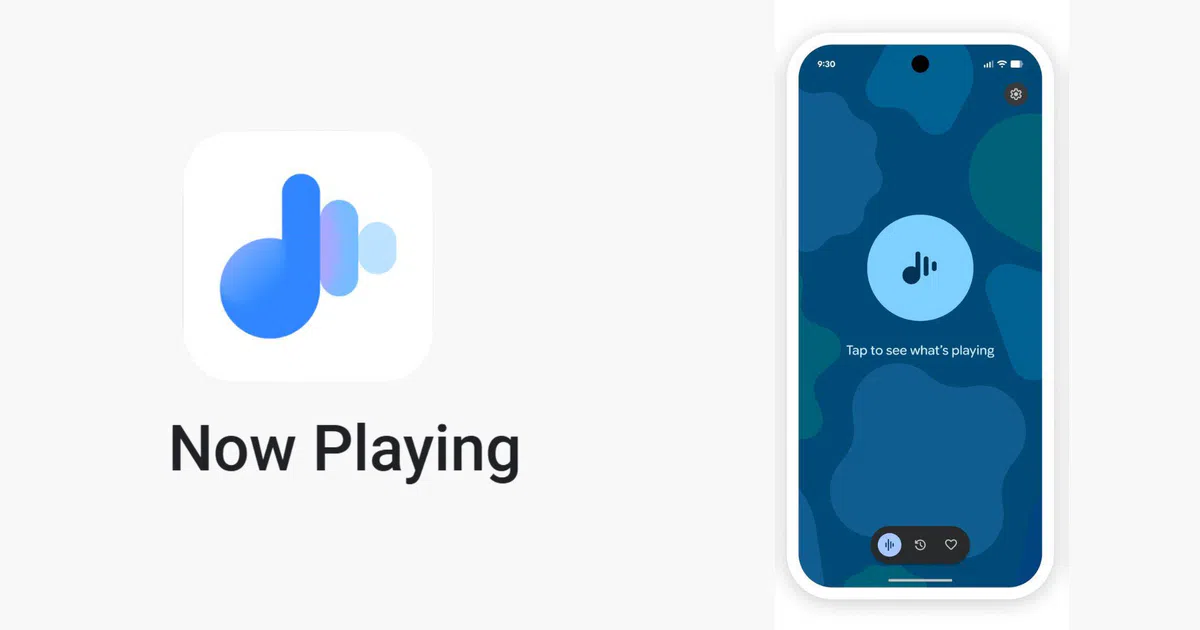
Google Pixel phones’ built-in music recognition tool is getting a standalone app. Apart from real-time track recognition, the new app has a history tab that lets users discover songs that they previously heard and play them on a preferred music app.


Pixel Watch updates


Pixel Watch can now send alerts if you accidentally leave your phone behind and lock your phone the moment you move out of its range. Additionally, the one-hand gesture controls on Pixel Watch 4 are now also rolling out to the Pixel Watch 3.


Source link

Pentagon row bolsters Anthropic reputation but flags AI military readiness

Pentagon row bolsters Anthropic reputation but flags AI military readiness


Anthropic’s moral stand on US military use of artificial intelligence is reshaping the competition between leading AI companies but also exposing a growing awareness that maybe chatbots just aren’t capable enough for acts of war.


Anthropic’s chatbot Claude, for the first time, outpaced rival ChatGPT in phone app downloads in the United States this week, a signal of growing interest from consumers siding with Anthropic in its standoff with the Pentagon, according to market research firm Sensor Tower.


The Trump administration on Friday ordered government agencies to stop using Claude and designated it a supply chain risk after Anthropic CEO Dario Amodei refused to bend his company’s ethical safeguards preventing the technology from being applied to autonomous weapons and domestic mass surveillance. Anthropic has said it will challenge the Pentagon in court once it receives formal notice of the penalties.


And while many military and human rights experts have applauded Amodei for standing up for ethical principles, some are also frustrated by years of AI industry marketing that persuaded the government to apply the technology to high-stakes tasks.


“He caused this mess,” said Missy Cummings, a former Navy fighter pilot who now directs the robotics and automation centre at George Mason University. “They were the No. 1 company to push ridiculous hype over the capabilities of these technologies. And now, all of a sudden, they want to be for real. They want to tell people, Oh, wait a minute. We really shouldn’t be using these technologies in weapons.'” 
Anthropic didn’t immediately respond to a request for comment. The Defense Department declined to comment on whether it is still using Claude, including in the Iran war, citing operational security.


Cummings published a paper at a top AI conference in December arguing that government agencies should prohibit the use of generative AI “to control, direct, guide or govern any weapon.” Not because AI is so smart that it could go rogue, but because the large language models behind chatbots like Claude make too many mistakes – called hallucinations or confabulations – and are “inherently unreliable and not appropriate in environments that could result in the loss of life.” 
“You’re going to kill noncombatants,” Cummings said in an interview Tuesday with The Associated Press. “You’re going to kill your own troops. I’m not clear whether the military truly understands the limitations.” 
Amodei sought to emphasise those limitations in defending Anthropic’s ethical stance last week, arguing that “frontier AI systems are simply not reliable enough to power fully autonomous weapons. We will not knowingly provide a product that puts America’s warfighters and civilians at risk.” 
Anthropic, until recently, was the only one of its peers to have approval for use in classified military system, where it has partnered with data analysis company Palantir and other defence contractors. President Donald Trump said Friday, around the same time he was approving Saturday’s military strikes on Iran, that the Pentagon would have six months to phase out Anthropic’s military applications.


Cummings, a former Palantir adviser, said it’s possible that Claude has already been used in military strike planning.


“I just fundamentally hope that there were humans in the loop,” she said. “A human has to babysit these technologies very closely. You can use them to do these things, but you need to verify, verify, verify.” 
She said that’s a contrast to the messaging from AI companies that have suggested that their technology is evolving to the point where it is “almost sentient.” 
“If there’s culpability here, I’d say half is Anthropic’s for driving the hype and half is the Department of War’s fault for firing all the people that would have otherwise advised them against stupid uses of technology,” Cummings said.


One social media commentator this week described Anthropic’s government problems as a “Hype Tax” – a message that was reposted by President Donald Trump’s top AI adviser, David Sacks, a frequent critic of the company.


And while it has caused legal hassles that could jeopardise Anthropic’s business partnerships with other military contractors, it has also bolstered its reputation as a safety-minded AI developer.


“It’s applaudable that a company stood up to the government in order to maintain what it felt were its ethics and were its business choices, even in the face of these potentially crippling policy responses,” said Jennifer Huddleston, a senior fellow at the libertarian-leaning Cato Institute.


Consumers have already spoken, leading to a surge of Claude downloads that made it the most popular iPhone app starting on Saturday and for all phone systems in the US on Monday, according to Sensor Tower. That’s come at the expense of OpenAI’s ChatGPT, which saw its consumer reputation damaged when it announced a Friday deal with the Pentagon to effectively replace Anthropic with ChatGPT in classified environments.


In the Apple store, the number of 1-star reviews – the worst rating – of ChatGPT grew by 775 per cent on Saturday and continued to grow early this week, forcing OpenAI to do damage control.


“We shouldn’t have rushed to get this out on Friday,” OpenAI CEO Sam Altman said in a social media post Monday. “The issues are super complex, and demand clear communication. We were genuinely trying to de-escalate things and avoid a much worse outcome, but I think it just looked opportunistic and sloppy.” 
Altman was planning to gather employees for an “all-hands” meeting on Tuesday to discuss next steps.


“There are many things the technology just isn’t ready for, and many areas we don’t yet understand the tradeoffs required for safety,” Altman said. “We will work through these, slowly, with the (Pentagon), with technical safeguards and other methods.


Source link

Tech Wrap Mar 3: OPPO Find X9 Ultra, Xiaomi Watch 5, Nothing Phone 4a

Tech Wrap Mar 3: OPPO Find X9 Ultra, Xiaomi Watch 5, Nothing Phone 4a


OPPO has announced that the OPPO Find X9 Ultra will be launched globally later this year. The OPPO Find X9 Ultra will join the existing OPPO Find X9 and X9 Pro, which were launched in November last year. As per the company, the OPPO Find X9 Ultra will integrate the most advanced imaging system that it has developed for a smartphone. 


Xiaomi launched the Xiaomi Watch 5 at the Mobile World Congress (MWC) 2026 in Barcelona. The Xiaomi Watch 5 sports a 1.54-inch display with thin bezels and is protected by sapphire glass on both the front and back. The smartwatch is powered by a dual-chip architecture comprising the Snapdragon W5 Gen 1 and a BES2800 co-processor. It runs on Google’s Wear OS 6, bringing app ecosystem support and Google Gemini capabilities that enable hands-free assistance for everyday tasks, information and navigation. India availability hasn’t been confirmed yet.


Nothing Phone 4a is set to launch on March 5. Ahead of the global launch, the Phone 4a was displayed at the Mobile World Congress (MWC) in Barcelona, Spain. The smartphone has been previewed in four colour options: White, Black, Pink and Blue. In India, the company has announced an exclusive first drop of the Phone 4a at its newly opened store in Bengaluru on March 7.


Apple has released the third developer beta for iOS 26.4 for eligible iPhone models. While the update does not bring significant new features, it focuses on system-level refinements, stability fixes and performance improvements ahead of the public release. Apple has already introduced several changes across earlier iOS 26.4 beta builds, offering a glimpse of what users can expect from the upcoming update.


Anthropic’s Claude has announced that it is now making the Memory feature available to free users. Anthropic released the Memory feature for Claude last year; however, it was launched for Enterprise, Team, Max and Pro subscribers. Now, it will be accessible to non-subscribers as well. The company has also made it easier for users to import saved memories from other artificial intelligence (AI) chatbots into Claude. It has laid down some easy-to-follow steps for the same.


Google has rolled out its Now Playing feature as a separate app for Pixel smartphones. The app is now available on the Google Play Store, marking a shift from how the feature was previously delivered on Pixel devices. For years, Now Playing has been built directly into Pixel phones through Android System Intelligence. It quietly worked in the background, identifying songs playing nearby and displaying the track name and artist on the lock screen. Users did not need to open an app or manually activate the feature — it recognised music automatically.


Apple began its week-long product rollout with the launch of the iPhone 17e and a refreshed iPad Air powered by the M4 chip. The company is expected to continue announcements, leading to its March 4 event. During this period, Apple could introduce a new entry-level MacBook and refresh its base iPad model. Updates to the MacBook Air with the M5 chip and higher-end MacBook Pro models with M5 Pro and M5 Max processors are also anticipated.


Google has rolled out a fresh set of updates to the Google Home app, adding new automation triggers, expanded Nest lock controls and improvements to its Gemini-powered voice assistant. The changes are being released in phases, with some features limited to early access or gradual roll-outs.


Apple’s latest entry-level iPhone arrives as a measured but meaningful upgrade over its predecessor. Launched on March 2 as part of the company’s week-long product announcements, the iPhone 17e succeeds the iPhone 16e introduced in February last year. While the two models share much in common aesthetically, the 2026 model focuses on hardware improvements, enhanced durability and a revised storage strategy.


Apple has introduced a new version of the iPad Air powered by its M4 chip, replacing the last-generation model with the M3 processor. The M4 iPad Air is available in 11-inch and 13-inch sizes, similar to its predecessor, while both models have similar displays and an overall similar look. However, the main difference lies in the internal hardware. The newer M4 model brings improved processing power, memory capacity, and Apple’s in-house modem and networking chip for connectivity.


Apple has asked Google to explore setting up servers for a new version of Siri powered by Google’s Gemini artificial intelligence models, according to a report by The Verge, citing The Information. The development indicates that Apple could rely more on Google’s cloud infrastructure as it works to scale its delayed AI-driven Siri upgrade.


Amid escalating tensions in West Asia, Amazon Web Services (AWS) said drone strikes damaged two of its data centres in the United Arab Emirates (UAE) and a facility in Bahrain, disrupting cloud services across the region.


Users across Asia, Europe, and Africa reported “elevated errors” on Anthropic’s artificial intelligence (AI) model Claude on Monday. The company later confirmed issues affecting claude.ai, the Claude console, Claude Code, Claude Opus 4.6, and Claude Haiku 4.5. The outage impacted the Claude website, mobile app, and application programming interface (API), according to the Times of India.


OpenAI Chief Executive Officer Sam Altman said that the company’s rush to forge a deal with the Defence Department — following a clash between the Pentagon and rival Anthropic PBC — looked “opportunistic and sloppy.”


Lunar Eclipse 2026 Date, Time: Skywatchers across India are set for a spectacular celestial display in 2026, as a total lunar eclipse — popularly known as a Blood Moon — will grace the night sky on March 3. During the rare event, the Earth will move directly between the Sun and the Moon, casting its shadow over the lunar surface and bathing it in a striking reddish glow.


OpenAI is facing a sharp backlash from users after news broke of its partnership with the US Department of Defence (DoD), which has been renamed the Department of War. Within hours of the announcement, downloads slowed and uninstalls of the ChatGPT app surged across the United States.


Meta Platforms Inc. is testing a shopping research feature in its artificial intelligence chatbot, rivalling a similar tool offered by OpenAI’s ChatGPT and Google’s Gemini. The feature, which allows requests for product suggestions, is being rolled out to some US-based users of the Meta AI web browser. The chatbot responds with a carousel of product images that include captions with information about the brand, website, and price.



Source link

Google launches dedicated Now Playing app for Pixel Phones: What's new

Google launches dedicated Now Playing app for Pixel Phones: What's new


Google has rolled out its Now Playing feature as a separate app for Pixel smartphones. The app is now available on the Google Play Store, marking a shift from how the feature was previously delivered on Pixel devices. For years, Now Playing has been built directly into Pixel phones through Android System Intelligence. It quietly worked in the background, identifying songs playing nearby and displaying the track name and artist on the lock screen. Users did not need to open an app or manually activate the feature — it recognised music automatically.


Pixel’s Now Playing app: What’s new

Google has separated the Now Playing tool into a dedicated app. According to a report from Android Authority, the core functionality remains the same, and the standalone version adds a more organised interface. When opened, the app shows a central icon that users can tap to manually check which song is playing around them. This gives users more direct control rather than relying only on automatic detection. 


As per the images shared on the Play Store, the app also includes a Now Playing history section. This allows users to see a list of songs that were previously identified. From there, they can manage their history and even listen to the recognised tracks using their preferred music streaming services. The report stated that this makes the feature more interactive compared to the earlier background-only experience. 


However, access to the app may not be available to everyone. According to the report, an automatic update was required before the app could be opened. A message reportedly asked users to “Check back in a few hours.” Despite this, the settings page of the app was accessible. Pixel users can now download and use the feature in app form instead of relying solely on system-level integration.


First Published: Mar 03 2026 | 4:44 PM IST


Source link

YouTube
Instagram
WhatsApp