Apple updating ad, search features to separate OS from Google: Report

Apple updating ad, search features to separate OS from Google: Report


In a bid to separate its mobile operating system from Google’s parent Alphabet, is taking steps to update its maps, search feature and advertising, a report by the Financial Times said. The two rivals have been in the smartphone market since the 2000s and are engaged in a “silent war”, it added.


In 2012, released its “Maps” to compete with Maps. After initial glitches, the application has shown considerable changes in the past decade.


Earlier this month, announced “Business Connect” which allows to claim their legal location. It also allows them to provide exclusive offers and promotions to their customers and interact with the users. Maps partners with Yelp to offer similar information.


But with Apple’s integration using Apple Pay, Business Connect might get an upper hand in the competition, the report said.


Apple’s search feature was augmented in 2019 after the purchase of Laserlike, an artificial intelligence start-up. According to experts, Apple could also grab a big share of Google’s dominance in the search market by not making it the default search engine in iOS.


However, this might come at a cost initially as pays Apple $8 billion to $12 billion a year to be the default search engine.


The biggest impact will be from Apple’s online advertising.


Apple appointed Keith Weisburg in September 2022 as the group product manager of Ad platforms. His main role is believed to be to “drive the design of the most privacy-forward, sophisticated demand side platform possible”. A demand-side platform is a digital media buying tool that lets advertisers purchase ad inventory on multiple exchanges, FT said.


This could allow Apple to make a new ad network and keep the third-party data brokers away from it.


According to Andrew Lipsman, an analyst at Insider Intelligence, as reported by FT, Apple’s move has left Alphabet “more vulnerable”.


“Apple is increasingly incentivised to get into the search business as it builds out its advertising arm…Search is the key to huge troves of first-party data, and that’s the new battleground for the future of digital advertising,” he said.



Source link

Lava announces Republic Day offers with 26% discount on all smartphones

Lava announces Republic Day offers with 26% discount on all smartphones


Home-grown electronic maker on Wednesday announced offers on its entire range of smartphones, including Agni 5G, Blaze Pro, Yuva Pro. In the sale, the company is offering a discount of 26 per cent on all smartphones. The offer can be availed by using the coupon code – LAVA26 – on the payments page. The offer will be live on official website and the e-commerce platform Amazon India, starting 12 pm on January 26. Below are the details:


Agni 5G


This will be available at a discounted price of Rs 13,313. Powered by Mediatek Dimensity 810 processor, it sports a 6.78-inch IPS LCD screen of 90Hz refresh rate. It comes in 8GB RAM and 128GB internal storage variant. The boots Android 11 operating system and comes in fiery blue colour.


Lava Blaze 5G


Lava Blaze 5G will be available at a discounted price of Rs 8,139. Powered by MediaTek Dimensity 700 processor and 5,000 mAh battery, the sports a 6.5-inch HD+ IPS screen of 90Hz refresh rate. It boots Android 12 operating system with an anonymous call-recording feature built-in. It has a 50-megapixel triple-camera system on the back and 8MP camera sensor on the front.


Lava Blaze NXT


It will be available at a discounted price of Rs 6,881. This smartphone is powered by MediaTek Helio G37 processor and 5,000 mAh battery. It sports a 6.5-inch HD+ IPS screen with a water drop notch. It is available in 4GB RAM (expandable by 3GB) and 64GB internal storage configuration. It comes in blue, red and green colours – both with glass-back design.


Lava X3


The Lava X3 will be available at a discounted price of Rs 5,179. Powered by MediaTek Helio A22 processor and 4,000 mAh battery, the smartphone sports a 6.5-inch HD+ IPS screen. It is available in 3GB RAM and 32GB internal storage configuration, expandable up to 512GB via microSD. Other features of the smartphone include a USB-C port, Bluetooth 5.1, WiFi, dual-SIM support, 3.5mm audio jack, face unlock and fingerprint scanner on the back.


Besides, the company is offering its true wireless earbuds ‘Probuds 21’ at a discounted price of Rs 26. Originally priced at Rs 1,299, this offer will be available only till stocks last, on Lava’s official website and Amazon.


Source link

BharOS: Know about indigenous OS successfully tested by union ministers

BharOS: Know about indigenous OS successfully tested by union ministers


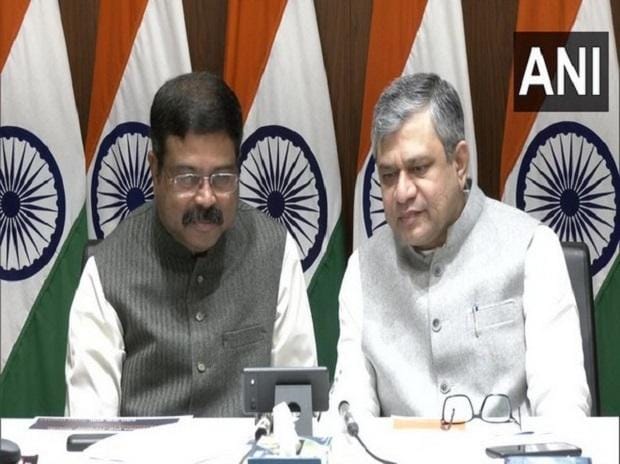
Union Minister for Communications, Electronics and Information and Union Education Minister and Union Telecom Minister Ashwini Vaishnaw on January 24 tested ‘BharOS’, an indigenous developed by the Indian Institute of Technology, Madras (IIT).


The is said to benefit one billion (100 crore) smartphone users in India by offering a more secure and private proposition compared to existing operating systems.


BharOS is based on Android Open Source Project (AOSP), making it a forked version of Android sans Google and other first-party and third-party apps. No default apps and Private App Store Services (PASS) are among the salient features detailed by about the BharOS.


No default apps essentially means the control rests with users to install apps of choice. With no default apps, users would have the choice to install and use only the apps they trust and want to use.


According to IIT Madras, this approach would allow users to have more control over the permissions that apps have on their device, as they can choose to allow apps that they trust to access certain features or data on their device.


Coming to the PASS, it seems to be a security-focused feature aimed at enterprise users. In the PASS, BharOS provides access to a curated list of apps that have met certain security and privacy standards of organisations. Only the apps checked for any potential security vulnerabilities or privacy concerns are listed in the PASS for users to install on their mobile devices.


BharOS is said to get ‘Native Over The Air’ (NOTA) updates to ensure that the supported devices get the latest version of the .


It is developed by JandK Operations Private Limited (JandKops), which is a non-profit organization incubated at .


“BharOS Service is a mobile operating system built on a foundation of trust, with a focus on providing users more freedom, control, and flexibility to choose and use only the apps that fit their needs. This innovative system promises to revolutionise the way users think about security and privacy on their mobile devices,” said Prof. V. Kamakoti, Director, .


With focus on security, the operating system is currently being provided to organisations that have stringent privacy and security requirements. Its developers, IIT Madras, said to have plans to work closely with private industry, government agencies, strategic agencies and telecom service providers to increase the usage and adoption of BharOS in the country.


Source link

InMobi group’s Nostra expects 3-fold rise in user base to 200 mn by 2024

InMobi group’s Nostra expects 3-fold rise in user base to 200 mn by 2024


Softbank-backed group’s mobile gaming platform Nostra on Tuesday said it expects to grow its user base by close to three-fold to 200 million by 2024.


Nostra, formerly Glance Gaming, said it has surpassed 75 million monthly active users in online gaming through Glance Lock Screen, making it India and Southeast Asia’s largest mobile gaming platform.


“Users are not only playing games on Nostra but also engaging deeply with games streams. They clocked over 470 million hours watching game streams in 2022. We plan to take Nostra’s proposition that users clearly love global and aim to reach over 200 monthly active users in the next two years on the back of Glance lock screen and several other device partnerships,” Group co-founder and Glance COO and President Piyush Shah said.


Online gaming is one of the fastest-growing industries globally. In India alone, the online gaming market is estimated to cross USD 7 billion by 2025, the statement said.


“Glance is fully committed to its role in the growth of the and Nostra is a huge part of this vision. In 2022 alone, the top three games on Nostra were played a whopping 423 million times on Glance lock screen,” Shah said.


In 2023, Nostra plans to introduce 600 new games spanning 15 categories across instant and android games, bringing its total number of titles to over 1,000.

(Only the headline and picture of this report may have been reworked by the Business Standard staff; the rest of the content is auto-generated from a syndicated feed.)


Source link

Russia aims to deploy over 1,000 satellites in orbit by 2030: Roscosmos

Russia aims to deploy over 1,000 satellites in orbit by 2030: Roscosmos


should increase the number of satellites in orbit from about 200 now to at least 1,000 by 2030, said Yury Borisov, Director General of Russia’s state space corporation Roscosmos.


In order to achieve such growth, it is necessary to produce 250 satellites per year and then 300-350 satellites annually by 2030, taking into account the gradual replacement of obsolete ones, Borisov said at an event on space exploration, Xinhua news agency reported.


He noted that the 1,000 satellites in orbit should serve for various purposes, including communications, remote sensing of the Earth, meteorology and navigation.


will start to deploy its own orbital station in 2027, according to Borisov, who said in July 2022 that would pull out of the International Space Station after 2024 but later postponed the possible deadline to 2028.


–IANS


int/sha

(Only the headline and picture of this report may have been reworked by the Business Standard staff; the rest of the content is auto-generated from a syndicated feed.)


Source link

BharOS: Know about indigenous OS successfully tested by union ministers

Union ministers test ‘BharOS’ operating system developed by IIT-Madras


Union ministers and Ashwini Vaishnaw successfully tested “BharOS”, an indigenous developed by IIT Madras, on Tuesday.


“Poor people of the country will be the main beneficiary of a strong, indigenous, dependable and self-reliant digital infrastructure. ‘BharOS’ is a successful step towards data privacy,” Pradhan said.


BharOS was developed by JandK Operations Private Limited (JandKops), which has been incubated at the (IIT) Madras.


The system can be installed on commercial off-the-shelf handsets. BharOS services are currently being provided to organisations that have stringent privacy and security requirements and whose users handle sensitive information that requires confidential communications on restricted apps on mobiles.


Such users require access to private cloud services through private 5G networks.


BharOS comes with no default apps. This means that users are not forced to use apps that they may not be familiar with or that they may not trust.


Additionally, this approach allows users to have more control over the permissions that apps have on their device, as they can choose to only allow apps that they trust to access certain features or data on their device.

(Only the headline and picture of this report may have been reworked by the Business Standard staff; the rest of the content is auto-generated from a syndicated feed.)


Source link

YouTube
Instagram
WhatsApp



