Qualcomm may soon launch Apple’s upcoming M-series processors competitor

Qualcomm may soon launch Apple’s upcoming M-series processors competitor


Chip-maker is reportedly developing a new chipset that will compete against Apple’s upcoming M-series processors.


The new processor is developing under the codename ‘Hamoa’ and is expected to be marketed as “Snapdragon 8cx Gen4”, reports Gizmochina.


The 12-core SoC was earlier mentioned by tipster Kuba Wojciechowski, who now claims that the silicon’s moniker will be Snapdragon 8cx Gen 4.


The company is likely working on several chipsets, but the one that is said to give the best performance is expected to have eight performance cores.


However, it is not clear whether Qualcomm’s Oryon cores will be featured in the new processor.


The company is apparently not developing a new graphics processing unit (GPU) for the Snapdragon 8cx Gen 4 because it is expected to have the same Adreno 740 graphics processor as the Snapdragon 8 Gen 2, the report said.


In November last year, during the company’s Investor Day, CTO Jim Thompson had announced Qualcomm’s plans to create a next-gen ARM-based SoC (system-on-a-chip) designed to set the performance benchmark for Windows PCs, that was expected to compete against iPhone maker’s M-series processors.


Meanwhile, earlier this month, the chip-maker had announced ‘Snapdragon Satellite’ — a satellite-based two-way capable messaging solution for premium smartphones at Consumer Electronic Show (CES) 2023, that would take on Apple’s satellite messaging feature.


–IANS


aj/dpb

(Only the headline and picture of this report may have been reworked by the Business Standard staff; the rest of the content is auto-generated from a syndicated feed.)



Source link

Google Account switcher gets ‘Material You’ redesign with rounded corners

Google Account switcher gets ‘Material You’ redesign with rounded corners


Tech giant Google’s Account switcher is getting a Material You redesign on the web.


The redesign features rounded corners for all elements with two main containers, reports 9To5Google.


The one in the foreground has a larger profile avatar along with the user’s name and email address, next to it followed by a ‘Manage your Account’ button that is placed in a rounded rectangle rather than the usual pill.


The next item that displays is ‘Add another account’ for users having multiple accounts, which finalises the inner container.


Moreover, the ‘Privacy Policy’ and ‘Terms of Service’ are displayed in the background along with “Sign out” or “Sign out of all accounts.”


There are light (white/light grey) and dark (black/dark grey) themes, the report said.


Meanwhile, late last month, it was reported that the tech giant had rolled out a new Material You design for its Nearby Share app on Android phones and tablets.


–IANS


aj/svn/

(Only the headline and picture of this report may have been reworked by the Business Standard staff; the rest of the content is auto-generated from a syndicated feed.)


Source link

Samsung working on ‘Lifelike Pixels’ technology for OLED screens: Report

Samsung working on ‘Lifelike Pixels’ technology for OLED screens: Report


is reportedly working on a new technology, Lifelike Pixels, for its OLED screens.


In South Korea, the tech giant has applied for trademark registration for a term called ‘Lifelike Pixels’, reports SamMobile.


While it is not clear how the will work, it is expected to be used in the company’s future OLED screens for smartphones and tablets.


However, the company might eventually bring the new to other devices, including augmented reality (AR) or virtual reality (VR) displays, laptops and smartwatches.


This trademark registration was filed on the same day the tech giant filed for the trademark of the Flex Hybrid term.


Flex Hybrid is the company’s new display type that folds and slides simultaneously.


Lifelike Pixel is likely related to improved colour reproduction through an OLED display, the report said.


Last month, it was reported that the company was prioritising the development of special OLED panels that will be used in certain iPad models in 2024.


Earlier, the tech giant wanted to make full-cut OLED panels but after looking at the potential demand for OLED panels for iPads, has started the development of two-stack tandem OLED panels.


–IANS


aj/ksk/

(Only the headline and picture of this report may have been reworked by the Business Standard staff; the rest of the content is auto-generated from a syndicated feed.)



Source link

Samsung Galaxy Watch’s new feature to allow users stream live video

Samsung Galaxy Watch’s new feature to allow users stream live video


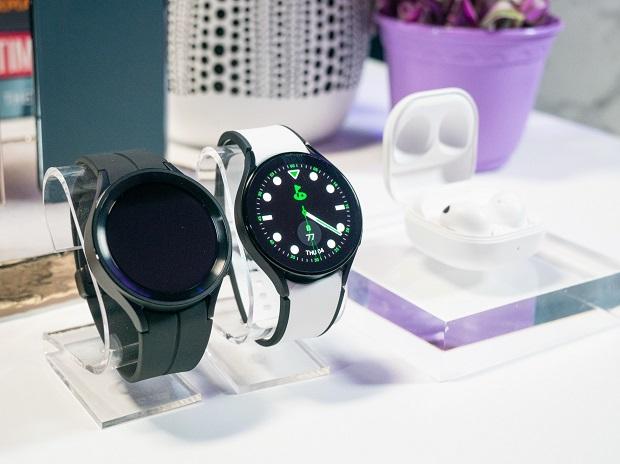
has said that it is bringing more smart home features to Galaxy Watch devices, which will enable users to view live feeds from home and doorbell Ring and Nest cameras on their .


Ring camera owners can also use the two-way intercom feature from their Galaxy Watch, reports Engadget.

The company first brought Nest integration to the SmartThings ecosystem in early 2021.


Moreover, users will soon be able to control a broader range of devices, such as smart air purifiers, thermostats, and blinds, from their wrists, according to the report.


This builds on existing Galaxy Watch support for TVs, air conditioners, lights and other devices.


Further, the company said that the users won’t need to open the SmartThings app to control their smart home devices.


They can swipe right from the watch face to access those functions, said the report.


However, didn’t reveal exactly when the update will be available.


Meanwhile, is planning to release a human assistant robot named ‘EX1’ this year.


The company said that it sees robots as “a new growth engine”.


“We plan to release a human assistant robot called EX1 within this year,” said Han Jong-hee, vice chairman and CEO of Samsung Electronics.


–IANS


shs/vd

(Only the headline and picture of this report may have been reworked by the Business Standard staff; the rest of the content is auto-generated from a syndicated feed.)



Source link

Samsung Display showcases new 360-degree folding phone hinge: Report

Samsung Display showcases new 360-degree folding phone hinge: Report


South Korean tech giant recently showcased a new 360-degree prototype display, which carries the potential to send its folding phones in a new direction.

According to The Verge, an American technology news website, at CES 2023, Display, the subsidiary that makes the company’s screens, showed off the new prototype display and hinge.

The ‘Flex In & Out’ display can rotate 360 degrees, meaning it can be folded inward and outward, company spokesperson John Lucas told The Verge in an email.

Further, the display’s different hinge design supposedly creates a significantly less visible crease. That’s because the “water-drop hinge” could allow the display to form a looser shape, like a waterdrop, when folded inward. This subtler hinge would also put less stress on the display.

This is not the first time that the company has shown off a ‘Flex In & Out’ prototype embracing the fold-in-all-directions design.

As per The Verge, Tom’s Guide reported that a ‘Flex In & Out’ display also made an appearance at South Korea’s International Meeting for Information Displays (IMID) in 2021.

However, the approach was different, and the display folded like an ‘S’ with multiple segments. As of the Galaxy Z Fold 4, which was released in August 2022, Samsung’s Fold line is still using displays that only fold flat in one direction, reported The Verge.

(Only the headline and picture of this report may have been reworked by the Business Standard staff; the rest of the content is auto-generated from a syndicated feed.)



Source link

Budget 2022-23 wishlist: Here are the key challenges in technology sector

Budget 2022-23 wishlist: Here are the key challenges in technology sector


Key challenges


Infrastructure: India’s infrastructure is still not fully developed in many regions. This can be a major obstacle for firms


Bureaucracy and regulations: The process of starting and running a business in India can be hampered by a complex web of bureaucracy and regulations. This can make it difficult for entrepreneurs to get their ventures off the ground


Digital divide: India is a country with a large digital divide. Rural and remote areas are lagging behind, both in terms of and awareness


Industry ask


Digital taxes: Simplify regulations related to digital technologies and e-commerce to make it easier for organisations and SMBs to operate online. The government can support digital innovation by reducing tax burdens, promoting e-invoicing and reducing compliance costs


Tax incentives for R&D: Introduce tax breaks or credits for research and development to encourage innovation and investment in new technologies.


Changes to intellectual property laws: Stronger protection laws for software and other digital products to encourage innovation and protect industry investments


Simplification of GST: Reduction in GST rate on specific services would encourage firms to increase investments in R&D and become more competitive. This would increase exports as firms would be able to offer their services at lower prices, making it attractive for foreign organizations to outsource their software development needs to India


graph


Source link

YouTube
Instagram
WhatsApp

