WhatsApp rolling out new ‘voice status updates’ feature on iOS beta

WhatsApp rolling out new ‘voice status updates’ feature on iOS beta


Meta-owned messaging platform is reportedly rolling out a new ‘voice status updates’ feature on iOS beta, which will allow users to share voice notes via status updates.


Selected beta testers can now share voice notes as status updates by accessing the new feature within the text status section, reports WABetaInfo.


The maximum recording time for a voice note is 30 seconds, and users also have the option to forward voice notes from their chats to status.


The platform also provides users more control over their voice recordings by offering the ability to discard a recording before sharing it.


Similar to images and videos, voice notes shared via status will automatically disappear after 24 hours and users can delete them for everyone at any time.


Moreover, the shared voice notes are end-to-end encrypted so only people whom users choose can listen to them.


The new feature is expected to be widely rolled out to more users over the coming weeks, the report said.


On Wednesday, it was reported that the messaging platform was rolling out the same feature on Android beta.


–IANS


aj/svn/

(Only the headline and picture of this report may have been reworked by the Business Standard staff; the rest of the content is auto-generated from a syndicated feed.)


Source link

Davos 2023: Adani is hooked on ChatGPT, says race for AI to get complex

Davos 2023: Adani is hooked on ChatGPT, says race for AI to get complex


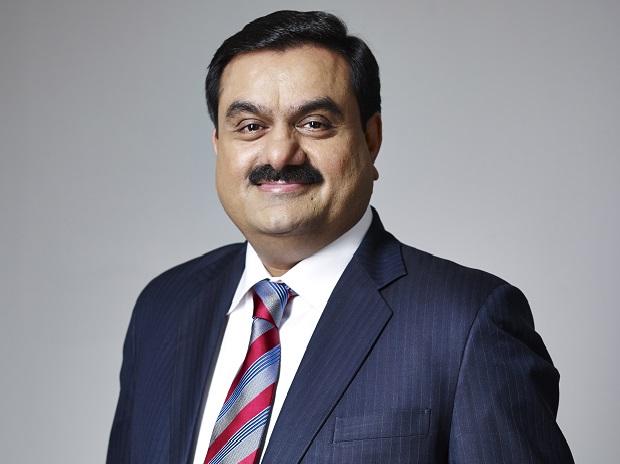
Asia’s richest man Gautam Adani, besides looking at opportunities to expand his vast empire, is hooked on ChatGPT – the programme that trawls vast amounts of information to generate natural-sounding text on virtually anything – from crafting jokes to writing ad copy, debugging computer code, to even generating poems and essays.


Adani, whose conglomerate has in recent years diversified from mines, ports and power plants into airports, data centres and defence, penned musing from his visit to to attend the meeting.


“From a meetings perspective, this was perhaps my busiest WEF as I met over a dozen heads of states and several business leaders,” he wrote on LinkedIn, talking of new geopolitical couplings, climate change and tight-lipped evangelists and AI.


Advancements in AI, or generative AI, was the buzzword at all the discussions at the WEF.


“The recent release of ChatGPT (I must admit to some addiction since I started using it) is a transformational moment in the democratization of AI given its astounding capabilities as well as comical failures,” he said.


Stating that generative AI will have massive ramifications, he said pioneering of chip design and large-scale production put the US ahead of the rest of the world and pave way for precision and guided weapons used in modern warfare.


“Generative AI holds the same potential and dangers, and the race is already on, with China outnumbering the US in the number of most-cited scientific papers on AI,” he said.


In fact, Chinese researchers in 2021 published twice as many academic papers on AI as their American counterparts.


“This is a race that will quickly get as complex and as entangled as the ongoing silicon chip war,” he added.


ChatGPT is an AI-powered chatbot prototype, which is developed by OpenAI. Users can ask questions and the bot will respond with relevant, natural-sounding answers and topics.


Responses from ChatGPT sound quite human-like and it is designed to mimic real conversations. The bot is capable of explaining, remembering what was said earlier in the conversations, elaborating on ideas when asked, and even apologizing when it gets things wrong.


Talking of the new geopolitical couplings and its implications, Adani said global alliances are now issue-based rather than allegiance-based.


“A very interesting remark made by Saudi Arabia’s Finance Minister that gave both China and the US ‘very important’ status highlights how fast geopolitical couplings are evolving,” he said. “The past is no longer a predictor for the future, as no country wants to make just a single bet.”

Each country is seeking its own form of self-reliance.


While climate change remains the top priority and risk for the global community, it is clear that climate investments will be driven by the energy security agenda and self-interest, he said adding it was evident this year that the faade of just focusing on green energy has been blown away by the European energy crisis.


“While the climate warriors may remain tight-lipped, there is recognition that we need a pragmatic energy transition plan that includes fossil fuels to achieve inclusive growth,” he said. “The US Inflation Reduction Act has prompted Europe to develop its own green package to prevent outbound migration of technology, money and expertise.”

Adani said Europe’s reactionary move is motivated more by concern for its own energy security and the protection of its industries than by a desire to steer the global green transition.


“In many ways, the divide between the US and Europe could not be more evident as both pursue their own national agendas while still claiming alignment. In my view, there is nothing wrong in doing so,” he said.


Also, it is increasingly evident that onshoring, self-reliance, energy independence, and building resilience in supply chains is as mandatory as is local job creation.


“While we can agree to this in theory, I am returning a little more uncertain about the state of globalization as compared to when I got to given that it is almost impossible for a country or a company to decouple itself and become completely self-reliant,” he said.


It would be too draining and prolonged.


“However, this may not be necessarily bad in the long run for our part of the world as India, Brazil, the Middle East, ASEAN, and African nations, will all find opportunities to expand by stepping into trade vacuums created as a result of the decoupling,” he said.


India, he said, is advantageously positioned away from frozen slippery slopes and may be the primary bright spot among several large economies.


“We had turned out in full force (at the WEF),” he said. “Our multi-vector, the non-partisan approach has ensured that we are well-respected and have become one of the leading voices batting for the emerging economies. The growing prominence was very visible during the forum, with widespread participation by Indian companies and government officials.”

Countries that rose to economic and geopolitical prominence had their governments and businesses working closely towards a common vision, be it the US, Japan, South Korea, or Singapore.


“It’s now on us to do the same to ensure that the 21st century belongs to India!,” he wrote.


“While I am unsure how much of the white pristine snow will vanish exposing the brown of the Swiss alps, I am confident that the percentage of my country’s women and men participating at the will continue to increase. Perhaps we can start calling the WEF ‘the Indian Summer’ in .

(Only the headline and picture of this report may have been reworked by the Business Standard staff; the rest of the content is auto-generated from a syndicated feed.)


Source link

Apple, Samsung working on OLED screens for upcoming iPad Pro, MacBook Pro

Apple, Samsung working on OLED screens for upcoming iPad Pro, MacBook Pro


and Display have reportedly started working together on OLED panel development for the upcoming iPad Pro and MacBook Pro devices, which are expected to be released next year or later.


The upcoming iPad Pro with an OLED screen is likely to release as soon as next year and might be available in 11.1-inch and 13-inch variants, reports SamMobile.

The first MacBook, most likely MacBook Air, with an OLED screen, is expected to be launched this year and might have a 13-inch display.


However, the MacBook Pro with an OLED screen is likely to be released in 2026 and is expected to come in 14-inch and 16-inch screen sizes, similar to the current-generation high-end laptops.


Existing MacBook Pro uses a Mini-LED display, which offers higher all-screen brightness than OLED panels, but also suffers from blooming in dark screens, the report said.


Meanwhile, last month, it was reported that was prioritising the development of special two-stack tandem OLED panels that will be used in certain iPad models in 2024.


Two-stack tandem OLED panels include two layers of pixels instead of one and this hybrid technology is likely to offer higher brightness and longer life than existing OLED panels which are used in smartphones, tablets, smartwatches, TVs and laptops.


–IANS


aj/uk/

(Only the headline and picture of this report may have been reworked by the Business Standard staff; the rest of the content is auto-generated from a syndicated feed.)



Source link

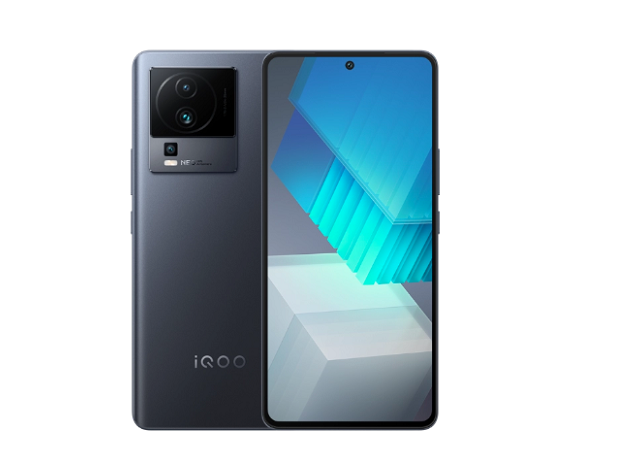
iQOO confirms Neo 7 smartphone specifications ahead of February 16 launch

iQOO confirms Neo 7 smartphone specifications ahead of February 16 launch


Chinese brand on Friday announced details around its Neo 7 smartphone, which is slated for launch in India on February 16. The Neo 7 will be available for purchase on India and e-store, announced on January 20. Successor to the iQOO Neo 6, the iQOO Neo was launched in the company’s home country last year as iQOO Neo 7 SE. The India-bound model is expected to be similar in terms of design, features, and specifications. Below are the details as shared by the company ahead of the launch:

iQOO Neo 7: Specification

The MediaTek Dimensity 8200 processor would power the iQOO Neo 7 . According to the company, the would support high-frame-rate gaming, MediaTek Hyper Engine 6.0, AI processing, MediaTek Imagiq 7.0, MediaTek MiraVision 785 display, and fast performance. The smartphone would boast a 6.78-inch E5 AMOLED screen, 120W flash charge for fast-wired charging, and full coverage 3D cooling system for thermal management.

iQOO has not shared information with regard to optics, storage variants, and battery capacity for the Neo 7. But, based on the Chinese model, the following is expected.

The smartphone is likely to have a triple-camera set-up on the back, featuring a 64-megapixel primary camera sensor, a 2MP depth sensor and a 2MP macro sensor. On the front, it would feature a 16MP camera sensor. It is expected to be offered in 8GB RAM + 128GB, and 8GB RAM + 256GB storage variants. It is likely to be powered by a 5,000 mAh battery. Other expected features include fingerprint scanner under the screen, Wi-Fi, Bluetooth 5.3, in-built GPS, dual SIM and USB-C port. The smartphone is likely to boot Android 13 operating system.


Source link

Google removes ‘Smart Reply’ suggestions from Voice app on Android, iOS

Google removes ‘Smart Reply’ suggestions from Voice app on Android, iOS


has removed Smart Reply suggestions that appeared at the bottom of messages from the Voice app on and iOS.


The company introduced the feature last year in February.

According to 9to5Google, this simple feature examined the most recently received message and suggested up to three contextual replies.


These pills would appear above the “Type a message” field with the Smart Reply immediately sending on tap.


Voice’s release notes on the Play Store and App Store confirm the removal: “Smart responses are no longer supported”, said the report.


Meanwhile, released the standalone “Switch Access” app on the Play Store, which was originally part of the Accessibility Suite.


The app allows users to interact with their device using one or more switches or a keyboard instead of the touchscreen.


“Control your phone or tablet using switches or the front camera. You can use switches to select items, scroll, enter text and more. Switch Access can be helpful if you can’t interact directly with your device,” according to the Switch Access about page.


The app scans the items on users’ screens and highlights each item until they make a selection.


–IANS


shs/svn/

(Only the headline and picture of this report may have been reworked by the Business Standard staff; the rest of the content is auto-generated from a syndicated feed.)



Source link

YouTube Music launches ‘Listening Room’ on Discord to get users’ feedback

YouTube Music launches ‘Listening Room’ on Discord to get users’ feedback


Google-owned music streaming platform Music will bev launching a “Listening Room” programme on (an online voice, video, and text communication platform) in which the company’s product team will collaborate with a group of users to get regular feedback on specific features.


Under the programme, users will get a free year of Music Premium, reports 9to5Google.


The requirements to be selected for the programme include — user needs to be a music lover, use Music as their primary music streaming service for a year, give regular feedback through conversations and polls on Discord, and agree to NOT share any information, i.e., taking screenshots, pictures, or recordings of conversations or early features with anyone outside of the group.


Meanwhile, YouTube Music might soon allow users the ability to create a custom radio.


Currently, it already lets users customise their current queue by familiarity, genre, mood, energy level, and more directly from the Now Playing screen.


According to 9to5Google, some YouTube Music users are seeing “Create a radio” in the main feed as a part of a limited rollout.


An experience similar to YouTube Music’s initial setup process will appear next to allow users to “tune your music”.


–IANS


shs/dpb

(Only the headline and picture of this report may have been reworked by the Business Standard staff; the rest of the content is auto-generated from a syndicated feed.)



Source link

YouTube
Instagram
WhatsApp

