NASA’s Webb Space telescope spots early galaxies hidden from Hubble

NASA’s Webb Space telescope spots early galaxies hidden from Hubble


NASA’s Webb Space Telescope is finding bright, early galaxies that until now were hidden from view, including one that may have formed a mere 350 million (35 crore) years after the cosmic-creating Big Bang.


Astronomers said on Thursday that if the results are verified, this newly-discovered throng of stars would beat the most distant galaxy identified by the Space Telescope, a record-holder that formed 400 million (40 crore) years after the universe began.


Launched last December as a successor to Hubble, the Webb telescope is indicating stars may have formed sooner than previously thought — perhaps within a couple million years of creation.


Webb’s latest discoveries were detailed in the Astrophysical Journal Letters by an international team led by Rohan Naidu of the Harvard-Smithsonian Center for Astrophysics. The article elaborates on two exceptionally bright galaxies, the first thought to have formed 350 million years after the Big Bang and the other 450 million (45 crore) years after.


Naidu said more observations are needed in the infrared by Webb before claiming a new distance record-holder.


Although some researchers report having uncovered galaxies even closer to the creation of the universe 13.8 billion (1,380 crore) years ago, those candidates have yet to be verified, scientists stressed at a news conference. Some of those could be later galaxies mimicking earlier ones, they noted.


“This is a very dynamic time,” said Garth Illingworth of the University of California, Santa Cruz, a co-author of the article published on Thursday. “There have been lots of preliminary announcements of even earlier galaxies, and we are still trying to sort out as a community which ones of those are likely to be real.”

Tommaso Treu of the University of California, Los Angeles, a chief scientist for Webb’s early release science programme, said the evidence presented so far “is as solid as it gets” for the galaxy believed to have formed 350 million years after the Big Bang.


If the findings are verified and more early galaxies are out there, Naidu and his team wrote that Webb “will prove highly successful in pushing the cosmic frontier all the way to the brink of the Big Bang”.


“When and how the first galaxies formed remains one of the most intriguing questions,” they said in their paper.


NASA’s Jane Rigby, a project scientist with Webb, noted that these galaxies “were hiding just under the limits of what could do”.


“They were right there waiting for us,” she told reporters. “So that is a happy surprise that there are lots of these galaxies to study.”

The USD 10 billion observatory — the world’s largest and most powerful telescope ever sent into space — is in a solar orbit that is one million miles (1.6 million kilometres) from Earth. Full science operations began over the summer and has since released a series of dazzling snapshots of the universe.

(Only the headline and picture of this report may have been reworked by the Business Standard staff; the rest of the content is auto-generated from a syndicated feed.)



Source link

Twitter won’t allow new accounts to buy Blue verification for 90 days

Twitter won’t allow new accounts to buy Blue verification for 90 days


will not allow new accounts to purchase the Blue subscription service for 90 days when it relaunches.


This means that users will not be able to instantly verify a new account, reports The Verge.


It could be an effort to reduce the chances of scams and impersonator accounts.


According to the report, the old plan didn’t specify a waiting period, but it did have a warning that “ accounts created on or after November 9, 2022, will be unable to subscribe to Blue at this time”.


The new Twitter Blue page says that the platform “may also impose waiting periods for new accounts in the future in our discretion without notice.”


Recently, Twitter CEO had said that the micro-blogging platform will relaunch its $8 Blue subscription service with verification from November 29, this time more “rock solid”.


He also said that with the new release, “changing your verified name will cause loss of checkmark until the name is confirmed by Twitter to meet Terms of Service”.


Musk had earlier paused Blue service after several fake accounts came up on the platform, impersonating brands and celebrities.

(Only the headline and picture of this report may have been reworked by the Business Standard staff; the rest of the content is auto-generated from a syndicated feed.)



Source link

Twitter won’t allow new accounts to buy Blue verification for 90 days

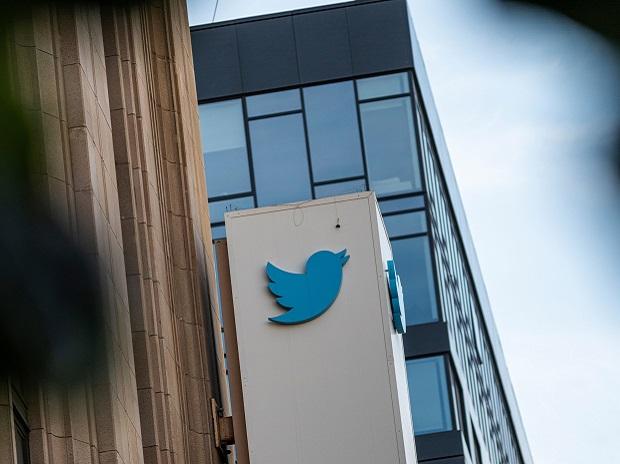
Twitter temporarily closes its offices after Musks’s ultimatum to employees


Inc. on Thursday announced it was temporarily closing its offices after issued an ultimatum: Stay with the company “working long hours at high intensity” or quit with three months’ severance pay.


The closure until Monday came after more workers than expected opted for the latter option, according to people familiar with the situation, causing confusion over who should still be allowed access to premises.


It’s a fresh blow for Musk, who laid off half the company’s workforce upon taking over, before having to ask some of them to return in order to build the platform he envisaged.


As Twitter’s internal communication channels filled with staff announcing their departure, Musk softened his earlier edict against working remotely. “All that is required for approval is that your manager takes responsibility for ensuring that you are making an excellent contribution,” he wrote in an email Thursday.


Topics related to the company trended in the US after the news, including #RIPTwitter, HQ, Apparently Twitter, and $44 billion, which was the price Musk paid for the social network business.


Below is the memo the company sent out to staff announcing the office closure:


Hi,


Effective immediately, we are temporarily closing our office buildings and all badge access will be suspended. Offices will reopen on Monday, November 21st.


Thank you for your flexibility. Please continue to comply with company policy by refraining from discussing confidential company information on social media, with the press or elsewhere.


We look forward to working with you on Twitter’s exciting future.


Twitter.


Source link

Twitter won’t allow new accounts to buy Blue verification for 90 days

Saluting out: How Musk’s ‘extremely hardcore’ email caused chaos at Twitter


“Hundreds upon hundreds” employees of have reportedly resigned in the last few hours. This comes ahead of the deadline given to them by to either agree to participate in his “extremely hardcore” way of work or resign and accept severance pay. Musk had set 5 PM (UST) to meet the demand.


According to some estimates, the number of resignations up to early Friday may even top 1,000.


“Am hearing the number of resignations today is likely over 1,000 though unclear as not all are posting their decision,” Alex Heath, editor of The Verge, wrote on . Some teams, including the engineering team responsible for managing its core system libraries, have resigned.


Slack, Twitter’s internal communication platform, was flooded with “salute” emojis sent by the employees who have resigned and are leaving the company. It must be noted that since the layoffs announced by Musk earlier this month, Twitter currently has only less than 3,000 employees remaining. If 1,000 have technically resigned, one-third of the team has already left.


“After the deadline hit, hundreds of employees quickly started posting farewell messages and saluting emojis in Twitter’s Slack, announcing that they had said no to Musk’s ultimatum,” The Verge reported.


The resigning employees do not want to be a part of Twitter 2.0. After his takeover, in his memo to employees, Musk wrote that “going forward, to build a breakthrough Twitter 2.0 and succeed in an increasingly competitive world, we will need to be extremely hardcore”.


“I have worked here at Twitter for over 11 years. Back in July, I was the 27th most tenured employee at the company. Now I’m the 15th,” posted one employee in Twitter’s Slack, according to IANS.


“I’m not pressing the (yes) button. My watch ends with Twitter 1.0. I do not wish to be part of Twitter 2.0,” another posted on Slack.


“Guess I just said goodbye to the ghost of my dream job forever? Tweeps, you are world-class,” posted another employee who resigned.


The company has closed all its US office buildings and suspended badge access.


According to Bloomberg, The memo which was circluated in the company by Musk read:


“Hi,


Effective immediately, we are temporarily closing our office buildings and all badge access will be suspended. Offices will reopen on Monday, November 21st.


Thank you for your flexibility. Please continue to comply with company policy by refraining from discussing confidential company information on social media, with the press or elsewhere.


We look forward to working with you on Twitter’s exciting future.


Twitter.”


Zoe Schiffer, managing editor at Platformer, tweeted that the designers who were leading Elon Musk’s Blue veified project have also resigned.


Some employees who have resigned have also posted the “salute” emoji on Twitter.


Earlier, a group of US Senators asked the country’s antitrust regulator to scrutinise Twitter. They said that Musk has “undermined the integrity and safety of the platform”.


“In recent weeks, Twitter’s new Chief Executive Officer, Elon Musk, has taken alarming steps that have undermined the integrity and safety of the platform and announced new features despite clear warnings those changes would be abused for fraud, scams, and dangerous impersonation,” the letter to Federal Trade Commission (FTC) signed by seven Democratic senators including Richard Blumenthal and Elizabeth Warren read.


How did it unfold?


October 27


Musk takes over as the head of Twitter. On the same day, he fires key executives, including CEO Parag Agrawal, CFO Ned Segal and Twitter’s head of legal policy, Vijaya Gadde.


The next day, Twitter was delisted and became a private entity. Musk tweeted that there will be a “content moderation council”.


October 31


Musk announces that he is the company’s CEO. The board of directors at Twitter was dissolved, and Musk became the “sole director”.


On the same day, the Washington Post reports that Musk plans to lay off 25 per cent of Twitter staff.


November 1


Musk floats the idea of an $8 per month Twitter Blue subscription. It would include the verification “Blue tick” as well. The company’s chief customer officer Sarah Personette resigned.


November 2


Bloomberg reports that Musk was planning to cut around 3,700 jobs. This was about half of the total employees on Twitter. Further, he was planning to call the employees back to the office.


For days, speculations around the subscription pack and layoffs kept circulating on Twitter.


November 4


Massive layoffs reported from Twitter, including in India. Musk said that he had “no choice”. Three months of severance was reportedly offered to those employees.


November 5


Twitter rolls out $8 Twitter Blue for iOS users.


November 10


Musk reportedly tells the Twitter employees that “bankruptcy was a possibility”.


November 11


Twitter Blue for iOS vanishes. “Twitter Blue will be available in your country in the future. Please check back later,” the pop-up reads.


November 12


Nearly 4,400 contract employees terminated from Twitter. They find it out because the employees lost access to the company’s email and Slack.


November 15


Musk reportedly fires the employees who criticised him on Slack. It was, however, unclear how many people were affected.


November 16


Musk emailes his vision of Twitter 2.0, which would require an “extremely hardcore” culture. The employees must agree or leave with three months of severance pay.


November 17


“Hundreds upon hundreds” reportedly resign from Twitter “, saluting” each other on Slack.

(With agency inputs)


Source link

Elon Musk’s ‘hardcore’ ultimatum sparks exodus, leaving Twitter at risk

Elon Musk’s ‘hardcore’ ultimatum sparks exodus, leaving Twitter at risk


gave Inc. an ultimatum to either commit to the company’s new “hardcore” or leave. Many more workers declined to sign on than he expected, potentially putting Twitter’s operations at risk, according to people familiar with the matter.


So many decided to take severance that it created a cloud of confusion over which people should still have access to company property. closed its offices until Monday, according to a memo viewed by Bloomberg. “Please continue to comply with company policy by refraining from discussing confidential information on social media, with the press or elsewhere,” the memo added.


Musk tried, in the final hours before his deadline, to convince people to stay. Key staff were brought into meetings as the Thursday evening deadline neared to hear pitches on the social network’s future, according to people familiar with the matter. Musk, who had earlier said he was strictly against remote work, also sent a follow-up email Thursday softening his tone.


“All that is required for approval is that your manager takes responsibility for ensuring that you are making an excellent contribution,” he wrote, adding that staffers should have in-person meetings with their colleagues not less than once per month.


It wasn’t enough. Twitter’s internal communications channels filled with offering a salute emoji, which has become a symbol for departing the company. Former staff tweeted the salute publicly, too, along with their internal Slack messages.


Some employees who were departing speculated that so many were leaving, along with their knowledge of how the product works, that the social network may have trouble fixing problems or updating systems during its normal operations, according to people familiar with the matter.


Twitter’s future is also complicated by a possible national security review of Musk’s deal by the US government, people familiar said earlier.


Musk on Wednesday had asked employees to formally state whether they were willing to keep working at the company – a commitment that would include “working long hours at high intensity.” Employees had until 5 p.m. Eastern time Thursday to fill out a Google form.


The form included just one possible response: “Yes.” Anyone who failed to accept the form by the deadline was told they would be out of the company with three months severance.


The ultimatum from Musk came less than two weeks after he laid off 50% of Twitter’s workforce, or roughly 3,700 employees. Many workers consulted lawyers this week to determine what to do. The form included almost no details about the severance packages, and it was not immediately clear whether employees would receive legal protections that would allow them to keep vesting stock awards or maintain insurance coverage.


Musk brought back leaders who had departed, either as part of his own layoffs or through resignation, to convince others to stay, one of the people said. One returning leader is Ella Irwin, who will manage employees in Trust and Safety, according to a person familiar with the matter, who declined to be identified discussing non-public changes.


Musk later sent a follow-up email on remote work, according to a screenshot viewed by Bloomberg. “Any manager who falsely claims that someone reporting to them is doing excellent work or that a given role is essential, whether remote or not, will be exited from the company.”


Source link

Google Cloud joins hands with DSCI for boosting cloud adoption

Google Cloud joins hands with DSCI for boosting cloud adoption


along with the Data Security Council of India (DSCI) on Thursday announced the ‘Secure with Cloud’ initiative to help demystify security, and enable the government and private sector to deploy and encourage transformation in India.


With the new initiative, DSCI and Cloud will work on building a platform to improve collaboration between various stakeholders in the cloud ecosystem – the government, regulators, CIOs, CISOs, CSPs, Cloud MSPs, Start-ups, Cloud Security Enterprises and Services Providers, and SaaS Players.


Secure with cloud initiative will also provide industry best practices and frameworks with Start-up and mobile app ecosystems on privacy and security. It will also engage with public sector entities across various verticals to demonstrate how cloud platforms and cloud-enabled products are architected, are secure by default, and can be used effectively to secure operations.


“We are thrilled to announce the ‘Secure with Cloud’ initiative supported by Cloud. This will create the much-needed space for enabling security-led deliberations and serve as a platform to host successful cloud adoption journeys for embracing cloud transformation. We are looking at this initiative as an industry-driven intervention, which will bring together the stakeholders from across the cloud ecosystem and bolster the agenda of security in the cloud paradigm by promoting the adoption of best practices,” said Vinayak Godse, CEO at DSCI.


The initiative would also derive actionable insights and build a narrative with proof points, focused roundtables, and case studies, said.


Mark Johnston, Security Leader, Office of the CISO at said: “At Google Cloud, we are committed to helping our customers navigate securely as they embark on their cloud journeys. The initiative with DSCI is one step towards unraveling the power and flexibility of the cloud and its many benefits to enterprises of all sizes.”


The initiative is supported by a diverse advisory committee that consists of leaders from various industries including technology services, consulting, cloud service providers, eCommerce, and digital payments who would further guide and extend support toward meeting the goals.


Atul Gupta, Partner and Head – Digital Trust and Cyber, in India, who is a member of the advisory committee, said, “Technology providers have enhanced their solution capabilities to develop a TRUSTED environment which enables safe and secure adoption of digital technologies. The trusted theme will in near future go beyond security and privacy, with ethics playing a significant role.”


Source link

YouTube
Instagram
WhatsApp


