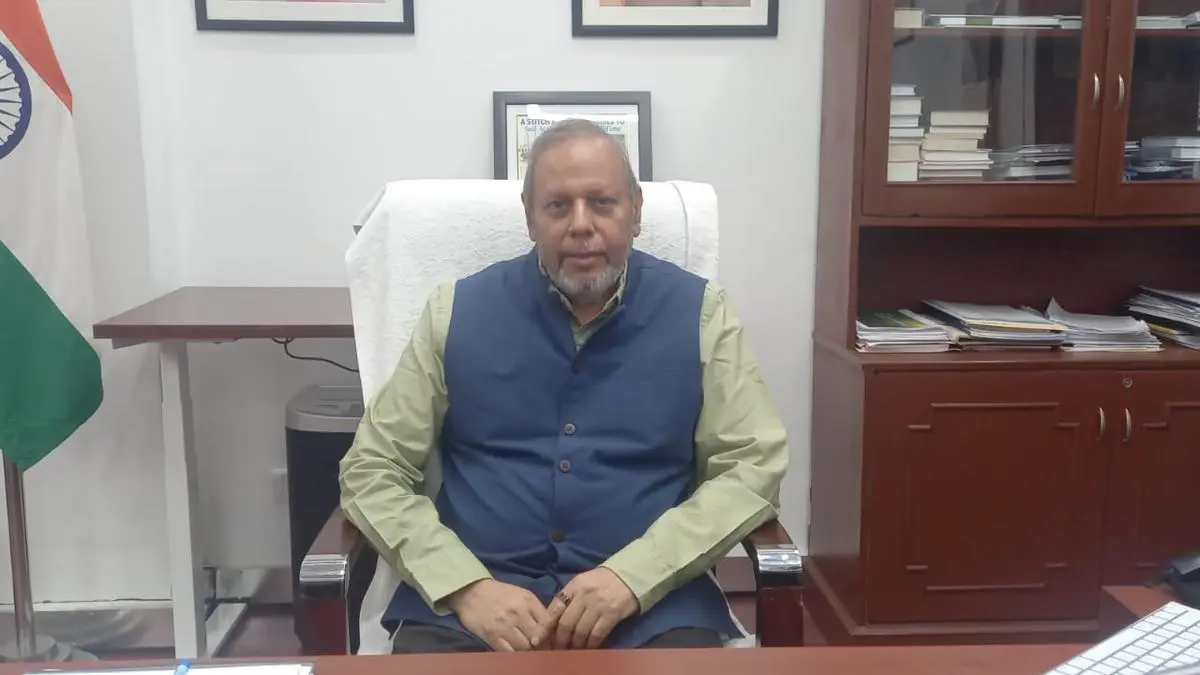
PMEAC Chairman S Mahendra Dev remains candidly optimistic about India’s economic resilience, even as West Asian conflict pushed crude prices past $114 per barrel this Thursday. In an exclusive interaction with businessline, Dev outlined why India is largely withstanding the shock, noting that while LPG supply faces minor disruptions, the broader growth story remains intact. He also dismissed concerns over a potential El Nino, arguing that expanded irrigation now shields Indian agriculture from rainfall deficits. On the AI front, Dev noted that while the impact on jobs remains speculative, the technology is likely to create a new surge in demand for skilled manpower. Excerpts:
How do you assess the current situation of Indian economy amid uncertainty over the war, as no one knows how long it will continue?
Indian economy is in good shape, numbers on macro fundamentals are good. If you see any indicator — fiscal deficit or current account deficit, banking and private sector profit — they are in good shape. Besides, the government is also increasing the capital expenditure in the Budget. Even in the debt to GDP ratio, we are under control.
Although globally there are problems of low growth and the supply chain problems, India has withstood the shock because of its monetary and fiscal policies.
What is your assessment about GDP?
Under the new GDP series, we (the government) are expecting 7.6 per cent growth in FY26. While the conflict may cause minor disruptions in March, we remain on track to achieve our projected growth. In the geopolitical uncertainties, India’s domestic economy is strong because exports are only 20 per cent of our GDP. Domestic consumption and investment are the sole drivers of growth, representing 80 per cent of the total. In that context, though we are not decoupled, we are much better off than even advanced countries. In this world, you cannot decouple. If the war ends soon, I do not think we will have much impact on our macro fundamentals.
What are the risks as no one knows when this war will end?
In the Ukraine-Russia war, initially there were some problems. But we could manage and there was not much impact on our fiscal growth or inflation. The US-Israel-Iran conflict has yet to significantly drive inflation through energy prices, though it has caused specific disruptions in the LPG supply chain.
Any direct impact on GDP?
We initially expected growth between 7 per cent and 7.4 per cent. While we still anticipate hitting the 7 per cent mark, a second, more cautious scenario must be considered if the war continues. Our energy vulnerability is high: we import nearly all our crude oil and over half of our gas. Most critically, since 90 per cent of our LPG passes through the Strait of Hormuz, any prolonged instability there will inevitably weigh on GDP and drive up inflation.
What is likely impact on inflation?
Right now, inflation is around 3 per cent as the new series show. I expect if the war prolongs, it will perhaps touch 4 -4.5 pert cent. Because for oil, we have to spend more money and that will have some impact on fiscal. But, on the whole, I am optimistic that we will withstand this shock without much disturbance to our macro fundamentals. If it prolongs and if there is a global recession, it may have more impact on our growth and inflation.
So, what kind of tolerance level you see in terms of the crude prices?
Crude prices up to $90/barrel (average for year) should be okay because earlier it was much less, so we can withstand that. But if it increases further to $ 120 or $ 130, it will have more impact on our fiscal parameters, and also inflation may increase further, even impact on GDP growth.
Indian basket of crude has already crossed $140. In this situation, what could be the CAD in the short and medium term?
I am talking about the average of Indian basket. There is a whole next year ahead to talk about 2026-27, and we do not expect the war to go on. But, even if the war ends, it will have some impact in the medium term, because the oil prices may still be higher for some time.
On the impact on current account deficit (CAD), our tolerance limit is around 2 per cent, so I do not expect more than that because right now it is about 1.3 per cent. It may go to 2 per cent, and even then it is slightly thin. Rupee too, will not go on depreciation. We are expecting FDI flows, and the foreign portfolio investors (FPI) to come back after sometime, because the US tariff issue is also being sorted out. The only risk is, a prolonged war may have some impact on remittances.
Yes, remittances by Indian diaspora is an issue to watch out for.
Recent data show that very few people have come after the war hit countries in the Gulf. They are still staying there. So, I do not think it will have any impact, as all of them will not come back, though remittances may have some marginal decline. What needs to be watched is how long it prolongs, which nobody knows. It may stop next week or prolong further, depending on that, they (Indians there) will decide.
Another issue of concern for India is fertilizer availability as natural gas, the key feedstock in Urea production, has been affected, so also its prices. We have seen fertilizer shortages in last two years. If domestic production of Urea falls, how do you see India to cope agricultural production?
Right now there is no shortage of Urea or DAP. I do not think farmers are complaining anywhere. So, everything depends on how long this war continues. The lower availability of gas may have some impact on fertilizer production and import. By beginning of Kharif season (before June 1), I think things will be sorted out. I do not think any major problems will be there on fertilizer side.
But, in the long run, I prefer farmers shifting to organic and natural farming, although some people do not agree with that view. But I feel we have to move. Sri Lanka’s example was an extreme case. Here, we can increase the share of organic and natural farming, because you cannot depend forever on fertilizers and pesticides, which are harmful to the people, who are getting cancers and other diseases. Soil is getting affected due to excessive fertiliser use. How to incentivise organic and other things with certification are more important. We should have a debate on these things. I am not saying we should entirely shift, and that is not feasible.
Now that many global models are predicting about emergence of El Nino. It is proved that Indian monsoon rainfall normally gets affected in El Nino years. Do you think India is now prepared to take another shock if there is deficient monsoon?
I think the worst drought year in last many decades was 2009. Many people had predicted 6 per cent drop in farm growth. But I went around and saw that there was moisture, a lot of moisture and that was suitable for Rabi crops. I said agriculture sector growth would be positive 1 per cent and actually it became 0.4 per cent in 2009-10.
India can withstand because irrigation has increased to 55 per cent (of total cultivable land), and we keep on increasing the irrigation so that we can increase our resilience to rain-deficiency. But if it is complete drought it will have an impact. We do not know how will be the distribution, it is too early. Also the crop sector share is now very less in the value of output as it is more from horticulture (which needs less water compared to other crops), livestock and fisheries. That way, we are more insulated.
You were earlier chairman of the CACP and you know that many of the non-price recommendations do not get implemented by the government and it is said to be one of the factors for continuing import dependence on pulses and edible oil, which was recently pointed out by the Supreme Court. Even in case of rice and wheat, where India has surplus, still export is banned in case of one bad year. Do you think that it is time to shift from rice wheat to other areas?
As an economist, I do not agree on banning agri export. But from the policy point of view, you need to balance between the farmers and consumers. When prices of pulses or rice or wheat or any other commodity increase, consumers get affected. Unless you take some measures, it keeps on increasing. If we export too much also, the domestic prices increase. So, a balance between farmers and consumers interests are needed.
Secondly, agriculture economists have been saying about diversification from rice and wheat to other crops. But to shift to millets or oilseeds or pulses, economics has to be right. For instance, the cost of cultivation (A2+FL) of rice is about ₹30,000 per hectare, jowar (sorghum) is ₹9,000, Bajra (pearl millet) is about ₹5,000, and Ragi it is almost negative. We have to make these millets more profitable crops with better varieties, higher yield and prices. Farmers do not shift unless there is a profit.







