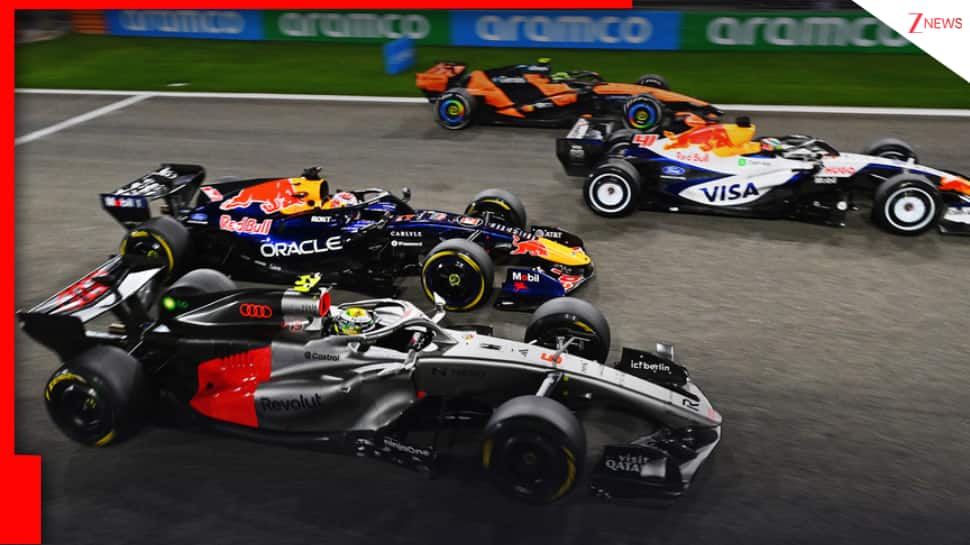
The 2026 Formula 1 season marks one of the most revolutionary moments in the sport’s modern history. With brand-new technical regulations, redesigned cars, new manufacturers joining the grid, and a record-length global calendar, Formula 1 is entering a completely fresh competitive era.
From Melbourne’s season opener to Abu Dhabi’s finale, the championship promises uncertainty, innovation, and potentially a reshuffled competitive order unlike anything seen in recent years. More than just another championship fight, 2026 represents a reset, one that could reshape the competitive order and redefine how modern Formula 1 racing looks and feels.
A Regulation Revolution Changes the Sport
At the heart of the 2026 season lies a major overhaul of both chassis and power-unit regulations. The new rules aim to make cars lighter, more efficient, and better suited for wheel-to-wheel racing.
The biggest transformation comes from the hybrid engines. Power units will now rely on a near-equal split between internal combustion and electrical energy, significantly increasing the role of battery deployment and energy recovery. The removal of the complex MGU-H system simplifies engine design while encouraging new manufacturers to enter the sport.
Drivers will now play a more active role in managing energy throughout races, making strategy and driving style more important than ever before.
New Cars, New Racing Philosophy
The 2026 cars are designed around efficiency rather than pure aerodynamic dominance. Active aerodynamics allow cars to switch between low-drag modes on straights and high-downforce configurations through corners, improving overtaking opportunities. Reduced drag and improved agility are expected to make racing closer, while fully sustainable fuels mark another step toward Formula 1’s long-term environmental goals.
The result is a car that demands precision, not only from engineers but also from drivers, who must carefully balance speed, energy harvesting, and deployment across every lap.
Expanded Grid and New Manufacturers
Formula 1 expands to 11 teams, the largest grid in a decade, with Cadillac joining the championship.
Teams & Engine Suppliers
McLaren – Mercedes
Mercedes – Mercedes
Red Bull Racing – Red Bull-Ford
Ferrari – Ferrari
Aston Martin – Honda
Alpine – Mercedes
Williams – Mercedes
Haas – Ferrari
Racing Bulls – Red Bull-Ford
Audi – Audi works team
Cadillac – Ferrari customer engines
Star Drivers and a Changing Generation
All 22 race seats are confirmed, blending world champions, race winners, and rising talents.
Red Bull Racing: Max Verstappen, Isack Hadjar
Ferrari: Charles Leclerc, Lewis Hamilton
Mercedes: George Russell, Kimi Antonelli
McLaren: Lando Norris, Oscar Piastri
Aston Martin: Fernando Alonso, Lance Stroll
Williams: Alexander Albon, Carlos Sainz
Alpine: Pierre Gasly, Franco Colapinto
Audi: Nico Hülkenberg, Gabriel Bortoleto
Haas: Esteban Ocon, Pierre Gasly (team reshuffles across grid noted)
Racing Bulls: Liam Lawson, Arvid Lindblad
Cadillac: Sergio Perez, Valtteri Bottas
A Global Calendar and High Expectations
The championship retains its worldwide appeal with a packed calendar stretching from Australia’s season opener to the traditional finale in Abu Dhabi.
Key Races
- Australian Grand Prix (Melbourne) – Season opener
- Monaco Grand Prix – Iconic street circuit challenge
- British Grand Prix (Silverstone) – Historic home of F1
- Italian Grand Prix (Monza) – Temple of Speed
- Las Vegas Grand Prix – Night race spectacle
- Abu Dhabi Grand Prix – Season finale
Energy Management: The New Competitive Battlefield
Under the 2026 regulations, success may depend less on outright speed and more on efficiency. Energy harvesting and deployment strategies will differ dramatically from track to track, forcing teams to adapt setups and driving approaches for each venue. Circuits with heavy braking zones allow easier energy recovery, while faster layouts require drivers to carefully manage throttle input to maintain performance over race distance.
This technical complexity could create fluctuating performance advantages, ensuring the championship remains unpredictable.
A Tight Fight at the Front
Early indications from pre-season preparations suggest the leading teams are separated by only small margins. Ferrari and Mercedes appear strong contenders, while Red Bull and McLaren remain firmly in the hunt. With such fine performance gaps, race execution, reliability, and strategic decisions may prove more decisive than raw pace alone.
Why 2026 Could Be a Historic Season
Formula 1 has experienced major regulation resets before, and they often change everything. Dominant teams can suddenly struggle, while midfield contenders can rise to championship contention. The 2026 season carries that same sense of uncertainty. New technology, new teams, and new driving demands combine to create one of the most open competitive landscapes in recent memory.
As the lights prepare to go out for the opening race, the 2026 season stands as more than just another year of racing. It represents Formula 1’s future: cleaner, smarter, and potentially closer than ever before. For fans and teams alike, one thing is certain: a new era has begun, and nobody yet knows who will master it first.







