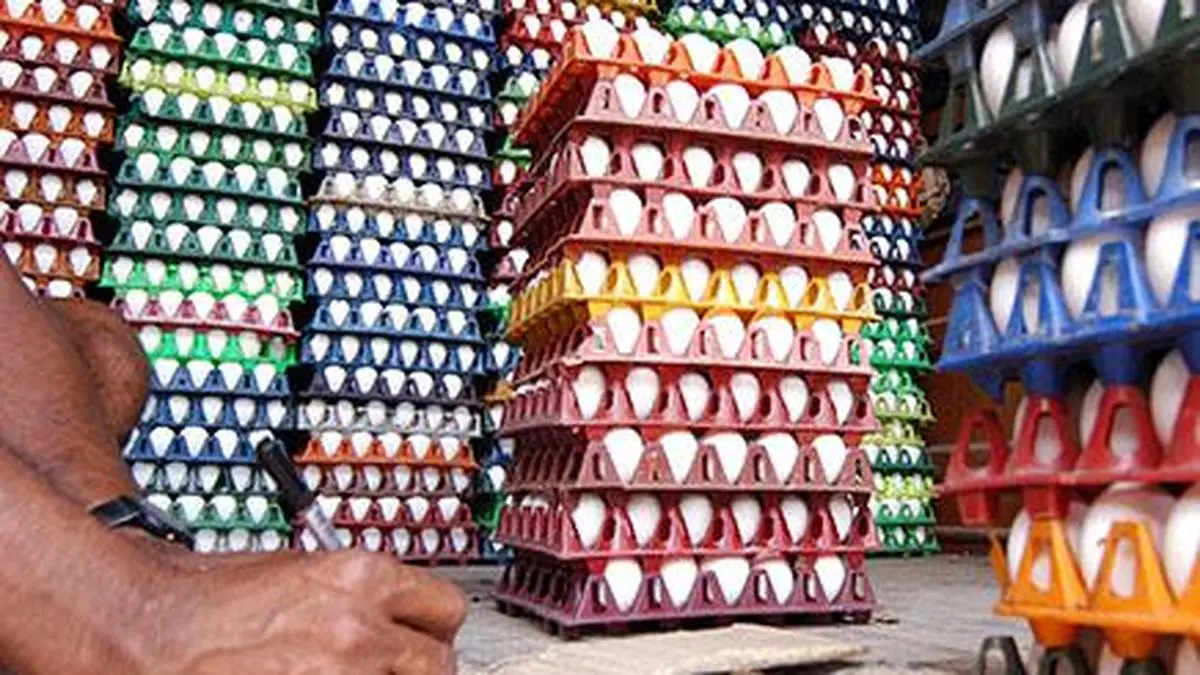
Egg exporters are battling shipping disruptions and a near five-fold surge in freight costs due to the West Asia war, even as export demand stays strong and domestic demand weakens.
The fallout has stranded shipments, flooded the local market and pushed prices below cost.
Of 125 delayed containers, 90-95 have now reached destinations, offering partial relief. But 5-10 remain stuck at JNPT and about 30 are still on a vessel near Dammam, likely to clear in a few days, said Valsan Parameswaran, Secretary, All India Poultry Exporters Association.
With eggs’ 90-day shelf life already half spent for many consignments, time is of the essence. The bigger hit, however, is freight; container rates have jumped from nearly $1,800 to $9,500-$10,500, eroding margins.
Limited support from the Export Credit Guarantee Corporation of India (ECGC) has helped, but exporters want more support, especially from Kochi, and freight subsidies.
Despite demand…
Pre-war, India shipped 80 lakh-1 crore eggs daily (about 20 containers), largely from Namakkal. Now, barely 1–2 containers move every few days, he said. This, despite strong demand in the UAE, Oman, Qatar and West Africa, amid supply gaps from Iran and Turkiye.
Despite this, Indian exporters are struggling to service the orders due to shipping constraints and limited vessel availability.
Prices slide
The export slump has swamped the domestic market, dragging prices down from about ₹540 per 100 eggs to nearly ₹430, well below the below the production cost of ₹450 — translating into daily losses of around ₹5 crore for South Indian farmers.
Besides, seasonal factors have compounded the pressure. “Demand has softened following Ramadan and Easter, while school closures have cut mid-day meal offtake. Lower summer consumption has further weakened the market,” Parameswaran said.
Published on April 7, 2026







