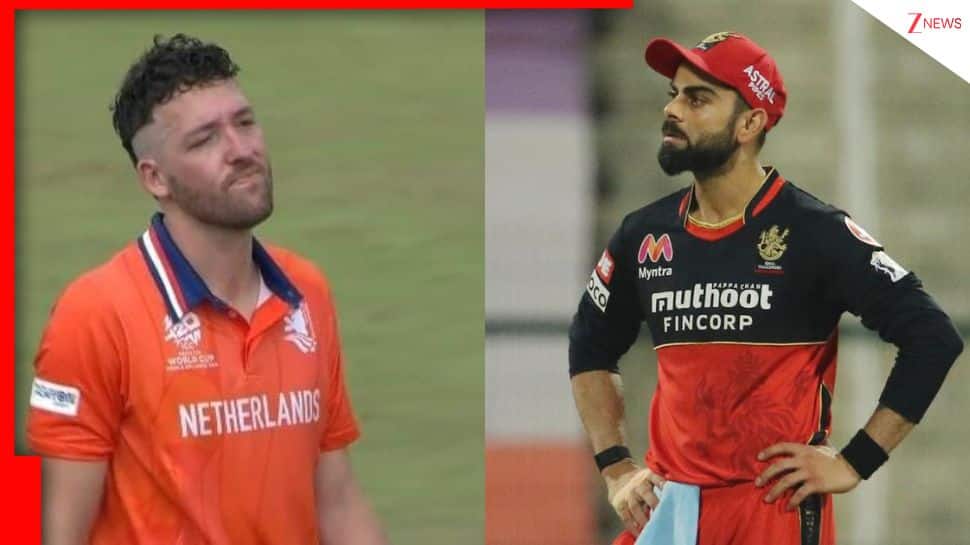
Paul van Meekeren’s blunt remark following Royal Challengers Bengaluru’s record-breaking sale has triggered a wider debate on cricket’s financial imbalance. The Netherlands pacer said that just 0.5% of the money involved could significantly boost Dutch cricket, highlighting the growing gap between wealthy franchises and emerging nations.
@RCBTweets https://t.co/4pfrha6Rr4
— Paul van Meekeren (@paulvanmeekeren) March 24, 2026
Royal Challengers Bengaluru was sold for USD 1.78 billion, approximately Rs 16,660 crore, making it one of the biggest deals in franchise cricket history. The scale of the transaction has once again drawn attention to the massive money flowing through the Indian Premier League. Reacting to the news, van Meekeren posted on X, “If only they could give 0.5%… we could close the gap.” That fraction amounts to roughly Rs 83 crore, a sum that could be transformative for a country like the Netherlands.
His comment gains weight in the context of recent performances. The Netherlands showed strong competitiveness in the T20 World Cup 2026, pushing higher-ranked teams despite limited resources. However, the gap off the field remains significant. Associate nations continue to struggle with inadequate funding, lack of exposure, and limited opportunities to play against top-tier sides. Van Meekeren’s observation captures this imbalance in simple terms.
The IPL’s rapid commercial rise has only widened this divide. Driven by lucrative media rights, franchise-based revenues, and strong investor interest, the league’s overall valuation has reached around USD 18.5 billion. While IPL teams command billion-dollar valuations, associate boards operate on tight budgets. Many players are semi-professional, infrastructure is underdeveloped, and domestic systems lack depth.
Van Meekeren’s statement has reignited the debate around financial distribution in cricket. Some believe the ICC should allocate more funds to associate nations, while others argue that wealthier boards and leagues must play a role in sharing resources. At present, there is no structured system that ensures balanced financial growth across the sport.
The RCB sale itself was driven by business strategy. Former owners United Spirits Limited decided to divest their stake, with a multi-industry consortium stepping in at a record valuation. While the deal reflects the IPL’s commercial strength, it also raises broader questions about the future of cricket’s global ecosystem.
Experts believe this conversation is far from over. As associate teams continue to improve on the field, pressure will grow for structural reforms. Voices like Netherlands captain Scott Edwards and Oman skipper Jatinder Singh have already called for more opportunities against top teams.
Van Meekeren’s “0.5%” remark may be simple, but it underlines a complex reality. It has sparked an important discussion about cricket’s financial future, one that the sport can no longer afford to ignore.







