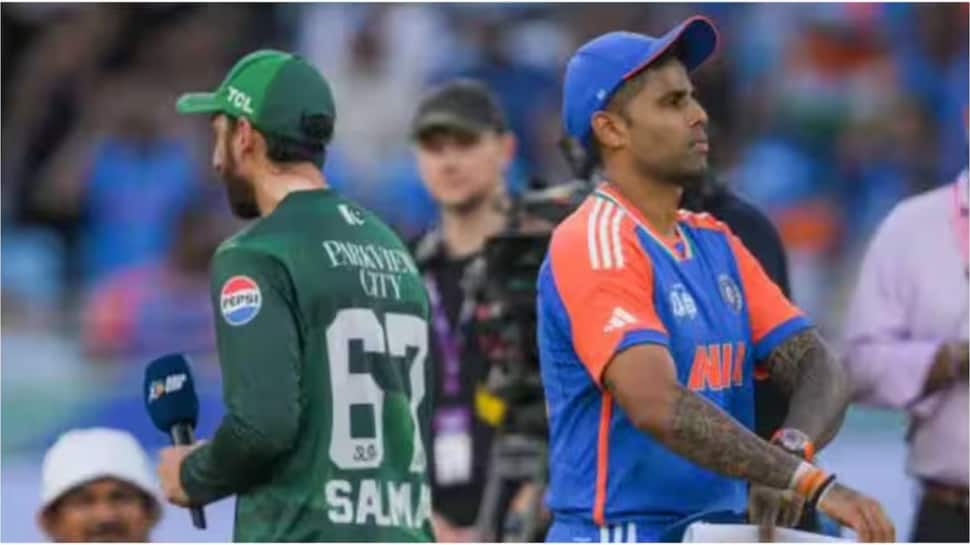
The historic rivalry between India and Pakistan has reached a new level of complexity during the T20 World Cup 2026. Beyond the on-field action, a significant debate has erupted over the Indian team’s continued refusal to exchange handshakes with their Pakistani counterparts. Former England captain Alastair Cook has now entered the conversation, questioning whether the visible tension is a calculated public stance rather than a reflection of personal animosity between the athletes.
Origins of the Handshake Snub
The refusal to engage in the customary post-match handshake first became a major talking point during the 2025 Asia Cup. At that time, India captain Suryakumar Yadav opted out of the gesture as a mark of respect for the families of those who lost their lives in the Pahalgam terror attack. The decision was further framed as a show of solidarity with the Indian Army following Operation Sindoor.
While the move drew criticism from several international commentators who felt it undermined the spirit of the game, many former Indian players defended the team. They argued that the focus should remain on the cricket and that the players have a right to express national sentiment through such gestures.
Insights from the Overlap Podcast
The controversy was a central theme of a recent discussion on the Overlap Cricket YouTube podcast featuring Michael Vaughan, Alastair Cook, Phil Tufnell, and David Lloyd. The panel initially addressed the current sporting disparity between the two nations. Phil Tufnell went as far as to label the fixture a “mismatch,” noting India’s overwhelming dominance. Michael Vaughan supported this view, suggesting that the Pakistani side often appears “intimidated” when facing the Men in Blue.
As the dialogue shifted to the handshake row, Vaughan expressed his disappointment, stating, “That whole situation in sour isn’t it? You know, it is just sad. Not shaking hands on a cricket field.”
Cook’s “Behind Closed Doors” Theory
Alastair Cook offered a contrasting perspective, suggesting that the public display of friction might not tell the whole story. He pondered whether the players maintain a normal relationship away from the glare of the media and the stadium cameras.
“But aren’t they talking behind closed doors? I read somewhere that everyone’s just chatting away,” Cook remarked during the podcast. He further elaborated on this theory by adding, “It like, it is only for show, isn’t it? On the actual field, they are not shaking hands, but then behind closed doors, they are all talking and are all fine.”
A Toxic Spectacle?
The handshake issue is part of a broader narrative of increasing tension. Veteran commentator Mike Atherton recently described the India-Pakistan clash as a “toxic, politicised” spectacle, suggesting it has become “too big to fail” despite the surrounding controversies.
As both teams head into the Super 8 stage, the spotlight remains divided. While India prepares for a high stakes encounter against South Africa, Pakistan faces the challenge of proving their mettle against New Zealand. Whether the friction is merely “for show,” as Cook suggests, or a permanent shift in the diplomatic landscape of the sport, it remains one of the most polarizing themes of the T20 World Cup 2026.







