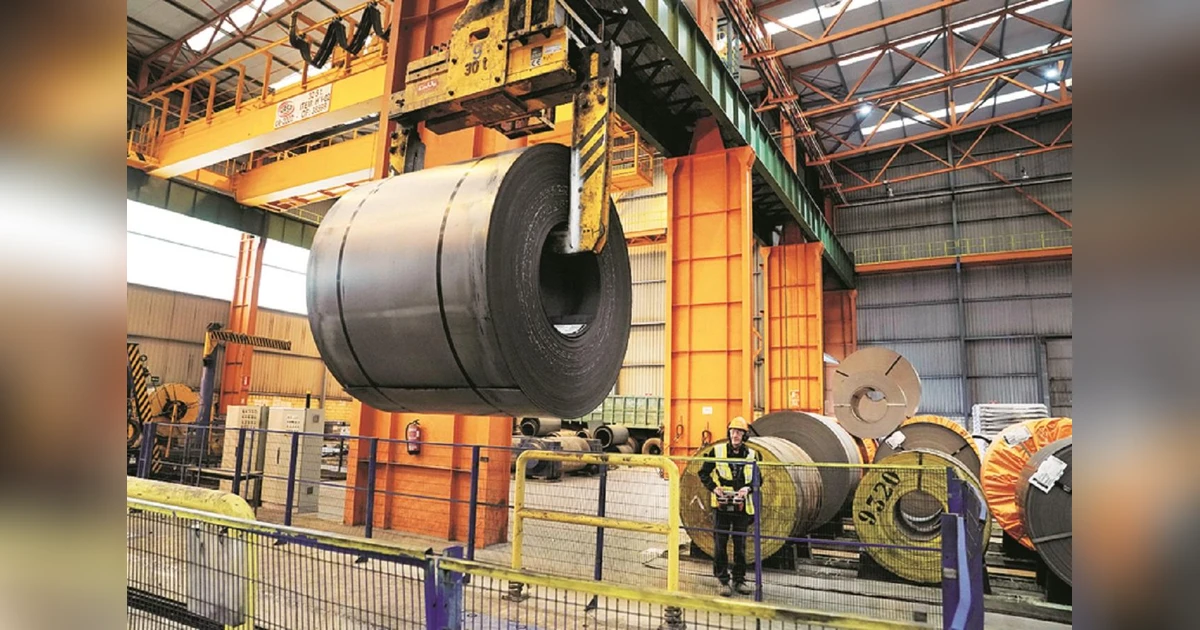
Metal shares today
Shares of ferrous and non ferrous metal companies were under pressure, falling up to 7 per cent on the National Stock Exchange (NSE) in Friday’s intra-day trade.
National Aluminium Company (Nalco) and Hindalco Industries were down 7 per cent and 6 per cent, respectively. Jindal Steel, Steel Authority of India (SAIL), Tata Steel, Vedanta, Lloyds Metals, Hindustan Zinc and Hindustan Copper slipped 5 per cent each.
The Nifty Metal index shed 4.4 per cent at 11,339.30 on the NSE in intra-day trade. At 10:45 AM; the metal index was the top loser among sectoral indices, down 4.3 per cent, as against 1.3 per cent decline in the Nifty 50.
Why are metal shares under pressure?
According to media reports, the Office of the United States Trade Representative has launched a Section 301 tariff investigation against India and 15 other countries, examining trade practices that may harm US industries. The probe could lead to new tariffs on sectors such as engineering goods, steel, petrochemicals and solar modules, adding uncertainty for Indian exports.
Meanwhile, for the steel sector, thermal coal prices in Q4FY26TD increased by 12 per cent quarter-on-quarter (QoQ) compared with the Q3FY26 average, raising input costs for sponge iron producers. Consequently, industry players are unlikely to undertake aggressive price cuts, as the higher coal costs will need to be passed through to steel prices, thereby supporting pricing discipline. This dynamic is expected to create a positive bias for primary long steel prices, analysts at Elara Capital said.
Further, the ongoing West Asia conflict has introduced a significant uncertainty in the global aluminium market, primarily due to the vulnerability of the Gulf Cooperation Council (GCC) supply chain. The GCC region accounts for 8 -9 per cent of global aluminium production and exports nearly 75 per cent of its output, equivalent to 6.5 per cent of global demand. However, most smelters in the region depend on imported alumina and bauxite transported through the Strait of Hormuz and rely heavily on gas for power generation, the brokerage firm said.
Disruptions to fuel supply, logistics, and shipping routes have already led to force majeure announcements and production curtailments at some smelters. If the conflict persists, it could tighten global aluminium supply and push the market further into deficit, thereby supporting higher LME aluminium prices.
In contrast, Indian producers with relatively integrated operations and domestic raw material linkages are better positioned to benefit from the potential rise in aluminium prices. Key beneficiary in the brokerage firm coverage universe is Hindalco.
The current geopolitical situation remains fluid but appears to be stabilising for now. India’s macro backdrop remains supportive, with 7 per cent GDP growth, inflation much below the 4 per cent target, and manageable external balances. However, the previous two scenarios suggest that a sustained rise in crude prices would eventually transmit into policy tightening and corporate margin pressure, analysts said. ============================== Disclaimer: View and outlook shared on the stock belong to the respective brokerages and are not endorsed by Business Standard. Readers discretion is advised.







