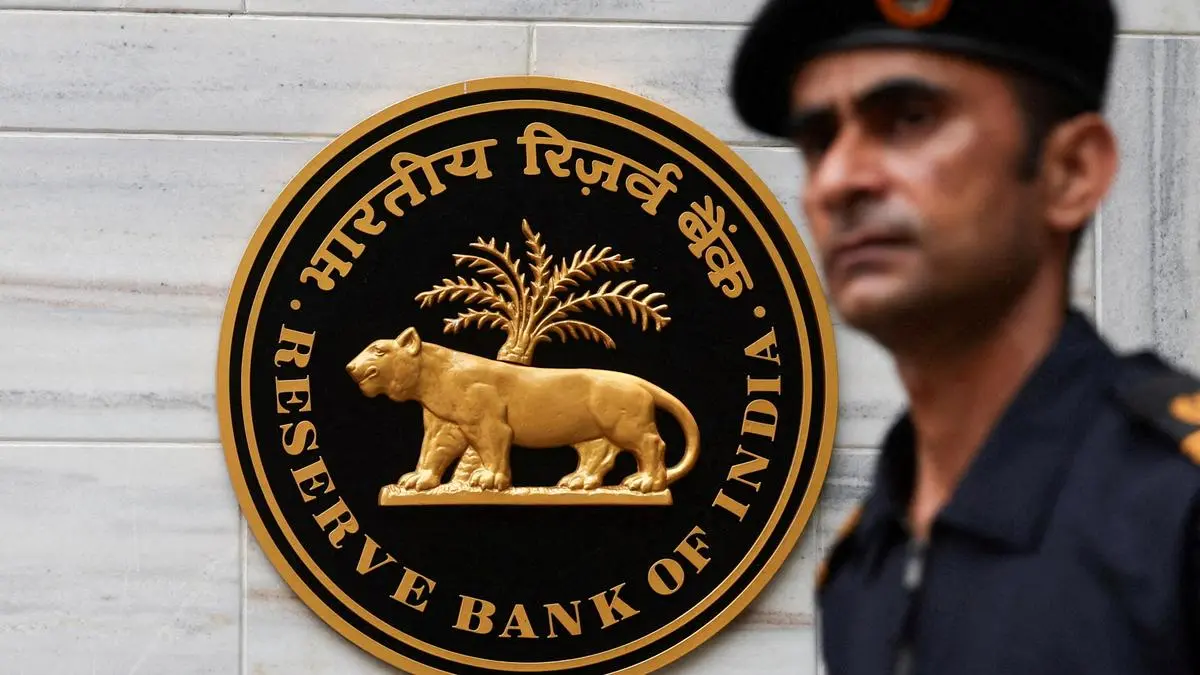
Economists say the economy faces challenges on imported inflation via the energy route, possibility of widening current account deficit and rising fiscal deficit
| Photo Credit:
FRANCIS MASCARENHAS
The Central Board of Directors of the Reserve Bank of India on Friday assessed the emerging global and domestic economic scenario, including the evolving geopolitical developments and their impact on financial markets, along with associated challenges.
The meeting comes in the backdrop of Brent crude oil prices vaulting over the $100 per barrel mark amid the West Asia war and the rupee depreciating beyond the 93 per US dollar level.
Given the aforementioned backdrop, economists say the Indian economy faces challenges on three-fronts – imported inflation via the energy route, possibility of widening current account deficit and rising fiscal deficit.
The Central Board of Directors approved RBI’s budget for the accounting year 2026-27 and also the bank’s Medium Term Strategy Framework (Utkarsh 3.0) for the 2026-29. The Board met in Patna under the Chairmanship of Sanjay Malhotra, Governor.
Abhishek Bisen, Head of Fixed Income, Kotak Mahindra AMC, said the rupee breaching the 93-mark against the US dollar reflects a sharp rise in external vulnerabilities amid heightened geopolitical tensions.
“Disruption to global energy supplies following the escalation in the Middle East has pushed up Brent crude oil price and is currently close to $108 (peaked at $119 on March 19, 2026) per barrel, adversely impacting India’s terms of trade. Since the onset of the US-Iran conflict, the rupee has depreciated nearly 2 per cent, driven by a stronger dollar, risk-off sentiment and higher import costs.
“Sustained elevation in oil prices could pose challenges to India’s growth-inflation dynamics leading to pressures in the current account deficit and complicating monetary policy trade-offs,” he said.
Published on March 20, 2026







