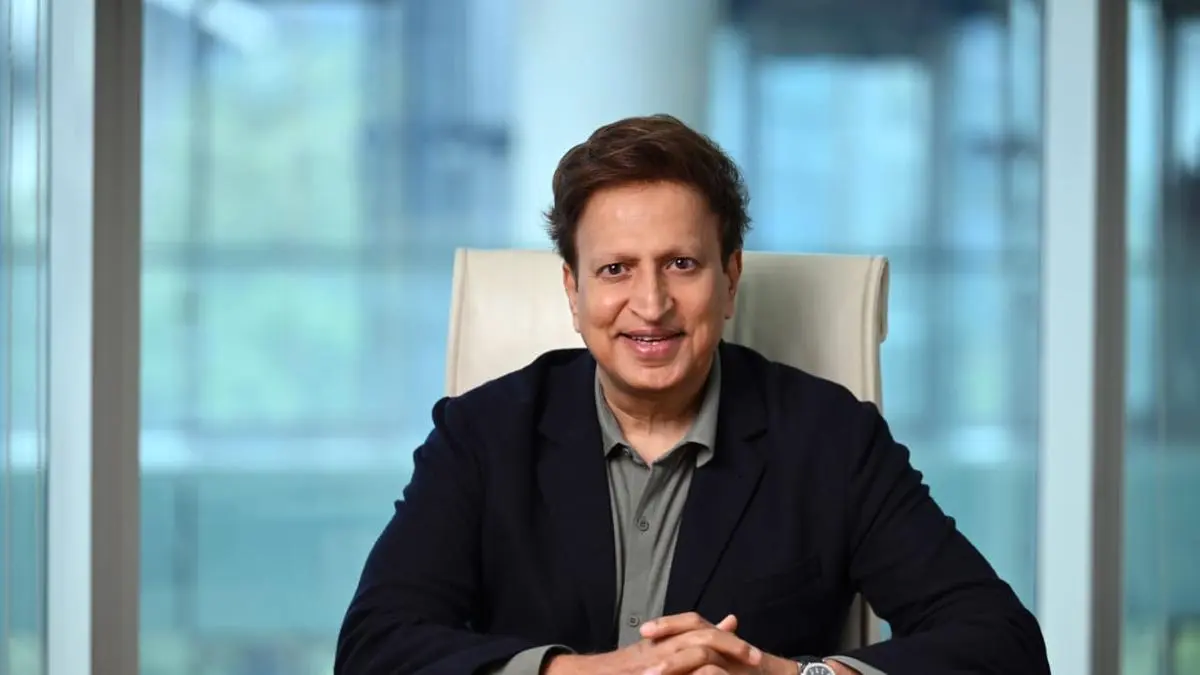
Retail participation in India remains at a very early stage, with shallow investment depth despite a rise in investor accounts, says Dinesh Thakkar, Chairman, founder and CEO of Angel One, pointing to a long runway for deeper market participation. In an interaction with businessline, he said regulatory tightening in derivatives is part of a broader cycle and that “trading is a zero-sum game,” with technology expected to play a key role in moving investors towards long-term wealth creation
How do you see retail participation evolving in India?
Retail participation in India is still at a very early stage, both in terms of the number of investors and the depth of investment. There is potential for 30–40 crore new investors to enter the market over time, but even among those who have already entered, participation remains shallow.
The opportunity is not just about bringing more people into the market, but about enabling deeper participation. The real question is how we position ourselves for the next 10–20 years and move investors from being first-time participants to becoming knowledgeable, long-term investors.
Over the last decade, mutual fund AUM has grown from about ₹11 lakh crore to ₹82 lakh crore. Retail ownership of market capitalisation is now around 19 per cent, higher than FII ownership. That reflects a clear shift towards long-term investing.
Where do you see the biggest opportunity for technology and AI to deepen participation?
Despite equities delivering 14–15 per cent CAGR over the long run, a large part of India is still not investing in equities. The issue is not just affordability — it is trust, awareness and behaviour.
Household equity exposure in India is around 7–8 per cent, compared with about 60 per cent in developed markets like the US. That gap represents the real opportunity. Getting people into the market is one challenge; getting them to allocate meaningfully over time is another.
Technology and AI can help bridge this by improving awareness, building trust and guiding behaviour.
How do you see the recent tightening in derivatives impacting retail?
Trading is a zero-sum game — some people will win and some will lose, and typically those who are newer to the market are more vulnerable.
Policy decisions should be based on long-term investor outcomes, not short-term participation cycles. You have to look at the investor’s overall balance sheet over 5–10 years, not just one product or one phase.
Regulation has always stepped in when excesses build up. The market has moved from badla to futures, then options and now weekly expiries. Whenever speculation becomes excessive, regulation responds. That is part of keeping the market healthy.
How do you see the surge in options trading among retail investors?
A large part of this activity is driven by younger participants taking directional bets. These are not sophisticated investors running hedging strategies. They are looking for leverage, and options are the most accessible regulated product.
Earlier, leverage was more available in the cash market through intraday trading. As that reduced, activity shifted to options. This shows that the segment is fundamentally seeking leverage.
If the market offers a properly designed alternative, such as a leveraged ETF, some of this activity could migrate there. The demand for leverage itself is unlikely to disappear. A customer often starts as a trader and gradually evolves into a long-term investor. SIP inflows have grown from about ₹3,000 crore in 2015 to over ₹30,000 crore now, and that growth has been consistent.
If you shut the gateway product entirely, some investors may not take the next step. Even if they begin with trading, many will, over time, shift towards mutual funds and cash market investing. That is the journey the industry should support.
What role does your platform play in this transition?
Our platform is built to understand the customer by tracking risk appetite, earning patterns and behaviour, and using those insights to support better allocation decisions.
Our role is not just to enable transactions, but to improve investor outcomes over time. Once trust is established, we can guide customers towards the right products and help their journey evolve.
We are building capabilities across wealth and long-term investment solutions so that customers can move beyond smaller investments as they mature. We also see strong demand in this segment, with Ionic Wealth crossing $1 billion in AUM.
AI is a key part of this strategy. By matching solutions to an individual’s profile, tracking behaviour and offering timely guidance, the platform can help investors become more informed and move towards long-term wealth creation.
Do you see tighter regulations having an impact on the broking industry?
Tightening is necessary and is healthy for long-term growth. The industry has adapted to regulatory changes across cycles. Retail participation is still underpenetrated, and investment depth remains low. As long as this underpenetration exists, the growth runway remains strong. What matters is ensuring minimal scope for manipulation and timely regulatory action. That is what builds trust. India also needs a healthy derivatives market. For foreign investment to remain strong, there has to be sufficient participation on both sides. Regulators understand this and have strong surveillance systems. Over time, such interventions strengthen the market.
What is your outlook on markets and FPI participation?
Current market levels offer a reasonable entry point, and volatility should be seen as an opportunity. Geopolitical events create short-term uncertainty, but the broader economy and corporate earnings remain resilient. Over the coming quarters, earnings growth should improve and reflect in stock prices.
Foreign investors may move in and out tactically, but they cannot remain structurally underweight on India for long. Over the past couple of years, flows have fluctuated, but India’s long-term growth story remains strong.







