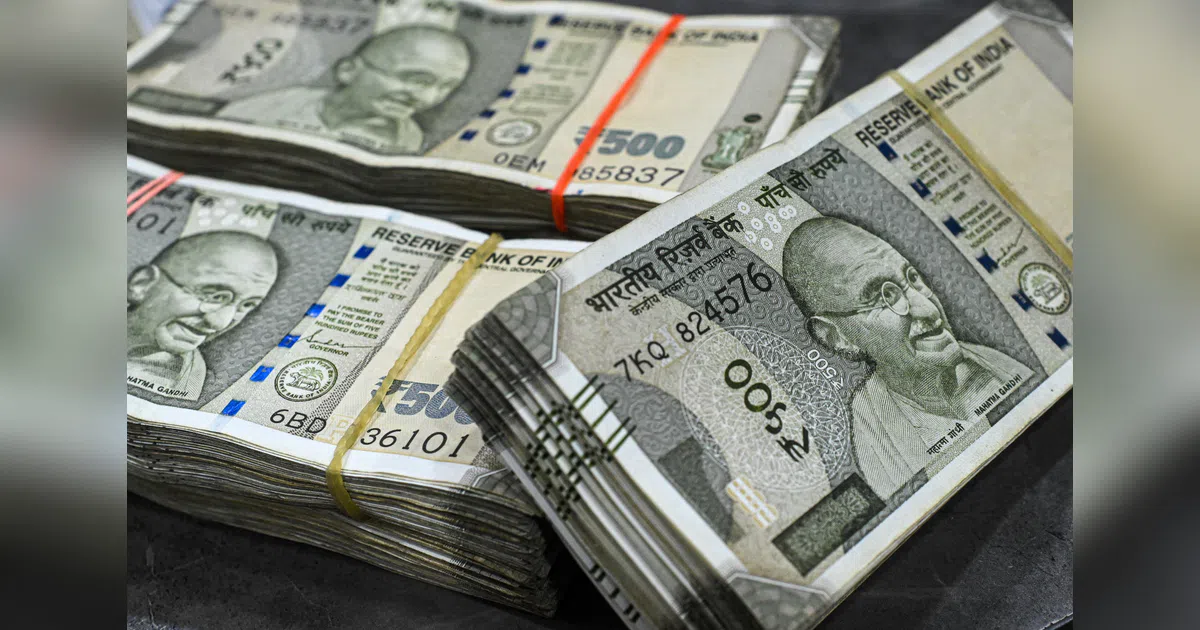
The Indian rupee surged on Thursday after the central bank tightened the screws on speculative bets against the currency, with the Asian unit having its best day since 2013, when policymakers had also resorted to extraordinary measures to stabilise markets.
The rupee rallied to a peak of 92.8350 per US dollar, bouncing back sharply from a record low of 95.21 hit in the previous session. The currency closed at 93.10, up 1.8% on the day.
It’s been more than a decade since the rupee surged by a comparable magnitude, in September 2013, after emergency measures by the Reserve Bank of India helped steady the currency and an unexpected reprieve in the Federal Reserve’s tapering program brought the currency relief.
Then, as now, investors were concerned about India’s current account deficit widening to unsustainable levels amid global headwinds and capital outflows.
Since Friday, India’s central bank has taken measures to curb arbitrage and speculative trades that bet against the rupee. The moves are aimed to soothe worries around risks to India’s external balances as the war in the Middle East continues to roil global markets and energy importing economies.
The RBI late on Wednesday barred banks from offering rupee non-deliverable forwards to resident and non-resident clients and said companies cannot re-book cancelled forwards. The move followed tighter limits on banks’ FX positions in the onshore market.
These steps sparked chunky dollar sales in the local forex market, helping shore up the rupee while widening the spread between the onshore and non-deliverable forwards, underlining the impact on hedging costs.
Heightened volatility in the forwards market on Thursday prompted the Clearing Corporation of India to impose additional margin requirements on such trades.
“RBI seems quite serious to follow through on new regulations to control INR weakness. Further policy changes by RBI and the India government to manage INR weakness could be likely,” said Michael Wan, senior currency analyst at MUFG.
Oil prices rose again on Thursday while local stocks slipped after US President Donald Trump vowed more aggressive strikes on Iran, dimming hopes for de-escalation in the Iran war.







