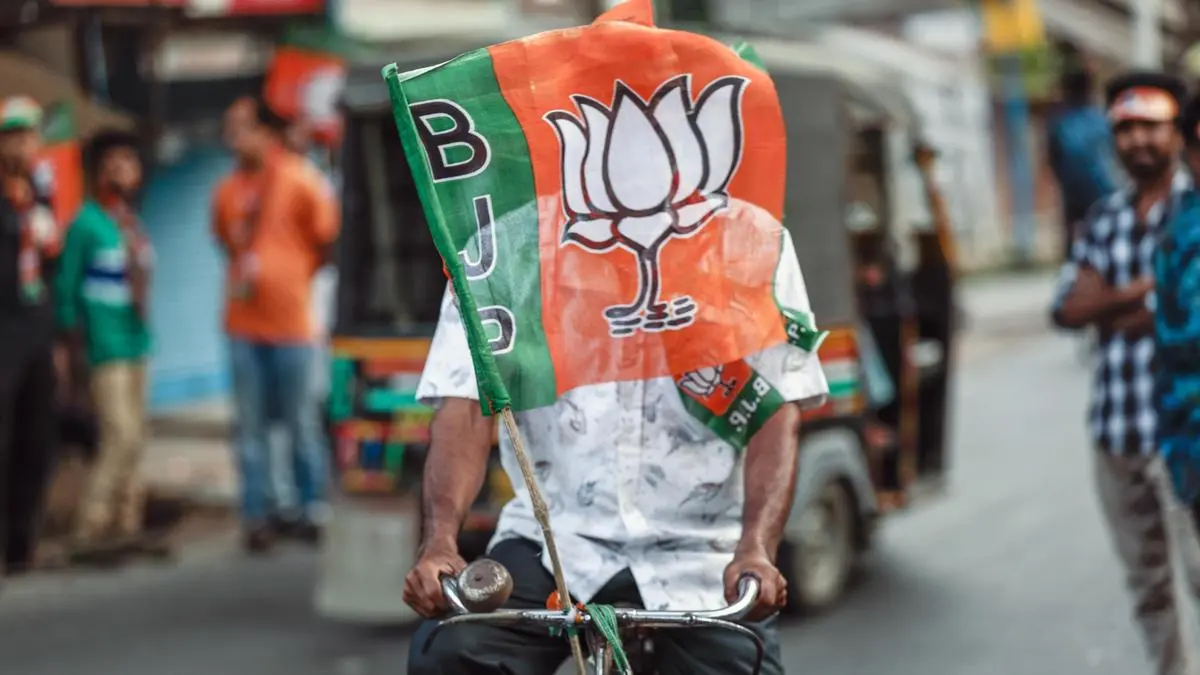
With just five days left for the close of nominations on April 6 for the Tamil Nadu Assembly elections scheduled on April 23, both the national parties — the Bharatiya Janata Party (BJP) and the Indian National Congress (Congress) — are yet to announce their candidates, reflecting internal pressures and strategic dilemmas within the two outfits. In between the five days, three days are holidays – Good Friday, Saturday and Sunday.
In contrast, regional players, including the two heavyweights — the Dravida Munnetra Kazhagam (DMK) and the All India Anna Dravida Munnetra Kazhagam (AIADMK) — along with the new entrant, Tamilaga Vettri Kazhagam, had announced their candidate lists last week. Several key leaders, including DMK president MK Stalin and TVK founder C Joseph Vijay, have already filed their nominations.
AIADMK general secretary Edappadi K Palaniswami has also gained an early edge, having kicked off his campaign well ahead of rivals and embarking on an extensive state-wide tour to rally support for party candidates.
Union Minister and BJP’s Tamil Nadu election in-charge Piyush Goyal arrived in Chennai on Tuesday evening to finalise seat-sharing arrangements, indicating that an announcement is likely within a couple of days. Both BJP and Congress are expected to release their final candidate lists from their headquarters in Delhi.
The delay has sparked frustration among party cadres, who fear that candidates will be left with barely two weeks for campaigning. Congress leaders, however, maintain that such delays are routine, citing the role of the Central Election Committee (CEC), which requires the presence of senior leaders such as Rahul Gandhi and Mallikarjun Kharge. With Rahul Gandhi returning to Delhi after campaigning in Kerala, party insiders expect progress soon.
Within the BJP, sources indicate that Goyal is working to balance competing demands from senior leaders, many of whom are lobbying for tickets for themselves or their associates. Similar factional pressures and alliance-related constraints are also complicating decision-making within the Congress.
The BJP, contesting as part of the AIADMK-led alliance, has been allotted 27 seats, while the Congress, aligned with the DMK, will contest 28 seats. Despite this, dissatisfaction over seat-sharing continues in both camps.
Psephologist and Political Strategist JVC Sreeram criticised the delay, saying both parties are “making a mockery of themselves” by failing to identify candidates well in advance. He argued that while the BJP and Congress aim to expand their footprint in Tamil Nadu, organisational weaknesses and internal factionalism are undermining their efforts. He also pointed to a disconnect between social media support and ground realities, particularly for the BJP.
Echoing these concerns, socio-political analyst Ramu Manivannan highlighted structural issues such as a lack of strong candidates, weak constituency-level connections, reluctance to invest resources, and dissatisfaction over seat allocation by alliance partners. “Everyone wants a winning seat on a platter,” he observed, warning that the delay could ultimately impact the electoral performance of both parties.
Published on April 1, 2026







