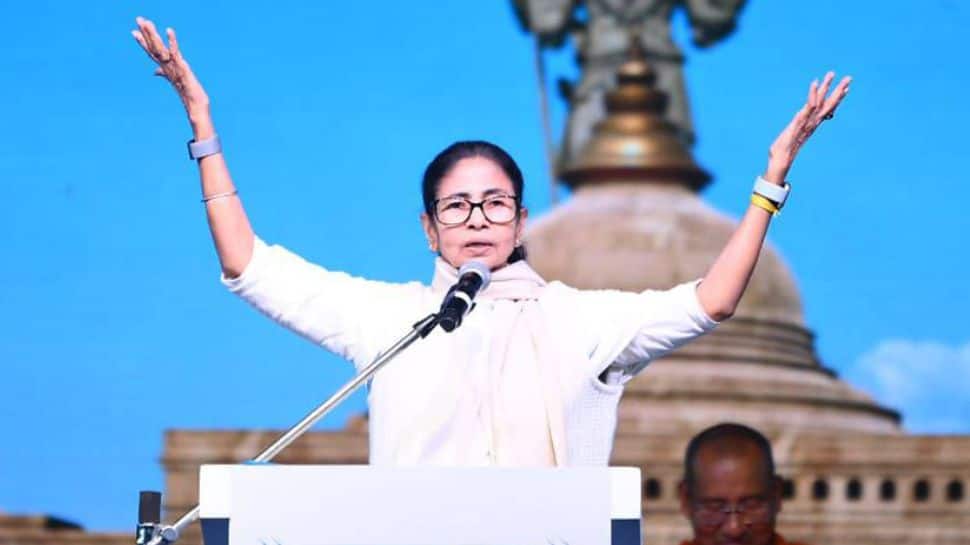
Bengal election 2026: West Bengal is set to enter election mode in the coming months, leading to heightened political activity across the state. Leaders from both the Trinamool Congress (TMC) and the Bharatiya Janata Party (BJP) are gearing up for a high-stakes battle, with the chief ministerial position at the centre of the contest. TMC supremo and Chief Minister Mamata Banerjee has been in power since 2011. She rose to power on a strong anti-incumbency wave, effectively ending the three-decade-long rule of the Communist Party of India (Marxist)-led Left Front government. In doing so, she became the first woman to hold the office of Chief Minister in West Bengal. Before this, she had also served as a Union Cabinet Minister.
Popularly known as Didi in the state and in political circles, Mamata Banerjee remains one of the most influential and strongest figures in West Bengal politics, backed by a long political journey that comes from her established presence at both grassroot and national levels. However, with the elections approaching, it is essential to assess the factors that could potentially hurt the Mamata Banerjee-led TMC government.
Also Check- West Bengal Election 2026: Can Left Revive Itself From Dormancy? Expert Says
Challenges TMC is facing in this election
Kunal Debnath, PhD, Assistant Professor, Department of Political Science, Rabindra Bharati University, explained that one of the major challenges confronting the TMC government is the anti-incumbency sentiment after nearly 15 years in power.
“Anti-incumbency is not a new issue, but it is more concerning when coupled with huge corruption charges against top leaders and ministers,” he stated.
Notably, there is no concrete evidence to suggest whether allegations of corruption will play a decisive role in shaping electoral outcomes.
Debnath further pointed out that beyond corruption, the TMC faces several structural challenges, including unemployment, fiscal constraints, low levels of industrialisation, and irregular or stagnant recruitment in public institutions, among others.
How important is the urban vote for TMC?
In the 2021 state elections, the TMC outperformed the BJP across urban, semi-urban, and rural constituencies. According to Debnath, this demonstrated that the party’s electoral strength rested on broad-based support rather than dependence on urban centres alone.
“There is no official, standardised classification released by the Election Commission or state authorities that splits these 294 constituencies explicitly into “urban” and “rural” categories. Approximately, 32 per cent of constituencies are urban, 20 per cent are mixed or semi-urban, and the remaining 48 per cent are rural. So, given this distribution, it would be misleading to argue that only the urban vote is decisive for the TMC,” he said.
What role is national politics playing in Bengal’s election?
The TMC government has repeatedly levelled charges against the BJP-led central government, including alleged discrepancies in the Election Commission’s Special Intensive Revision (SIR) exercise and the withholding of MGNREGA funds. This has brought centre-state relations into sharp focus ahead of the polls.
“We cannot say that assembly elections in West Bengal are independent of national politics. Rather, it is important to note that the TMC or the CPI(M) always label the BJP’s cultural nationalism—largely based on Hindi, Hindu, Hindustan, as exclusionary and cultural imposition, allowing them to frame the BJP as a cultural outsider rather than a locally rooted party,” Debnath said.
He further added that the CPI(M) seeks to differentiate itself from the TMC by arguing that the latter indirectly facilitates the BJP’s national dominance, including through passive cooperation or abstentions in Parliament. The party further alleges that central agencies such as the CBI and the ED have not acted rigorously against corruption charges involving TMC leaders, suggesting a tacit understanding between the state and the Centre, he said.
In addition, Debnath explained, “The TMC actively leverages national political developments, such as debates around the CAA, NRC, SIR, and symbolic projects like the Ram Mandir, to consolidate minority support by presenting itself as their primary protector. As a result, national politics in Bengal functions not merely as a background context but as a key arena of electoral strategy, ideological contestation, and inter-opposition rivalry.”
Youth and first-time voters in Bengal
In the 2026 elections, youth voters, including Gen Z and first-time voters, are expected to play a significant role in shaping political narratives, even if they do not solely determine the final outcome.
“This cohort, which makes up roughly one-fifth to one-quarter of the electorate, is highly visible, digitally connected, and sensitive to issues such as unemployment and economic opportunity, which are widely perceived concerns among young people in the state,” Debnath emphasised.
“Many youths also have socio-economic ties to the ruling party, through casual or contractual jobs in government-linked sectors, social welfare schemes, or beneficiary networks, which can influence their political outlook and voting behaviour,” he noted.
While Gen-Z and other young voters may not act as a monolithic bloc, their issue priorities and turnout are influencing party strategies and campaign narratives, particularly in competitive urban and semi-urban seats, even as final electoral outcomes continue to depend on how effectively parties consolidate support among rural and older voter groups.
As West Bengal moves closer to the 2026 Assembly elections, Mamata Banerjee and the TMC face a complex electoral landscape shaped by governance challenges, national political currents, and shifting voter demographics. While the Chief Minister retains a strong personal brand, sustained challenges and emerging political alternatives could test the party’s dominance.







