On a petition seeking import curb on yellow peas due to its adverse impact on domestic production of pulses, the Supreme Court has passed an order directing the government to convene a meeting of different stakeholders to revisit the existing policy framework and explore a better substitute under which the farmers are incentivised for diversification of the conventional crops to pulses, along with certain benefits.
“We hope and expect that the Ministries will resolve this issue effectively through a new policy decision,” it said and added that the meeting will consider recommendations of the Commission for Agricultural Costs and Prices (CACP). The next hearing of the case has been fixed on May 8.
Hearing a petition filed by farmer organisation Kisan Mahapanchayat, a bench comprising Chief Justice Surya Kant and Justice Joymalya Bagchi on March 13 also said that “the deliberations that may take place among different stakeholders be placed on record.”
Commenting on the Order, Kisan Mahapanchayat president Rampal Jat told businessline that the commitment of Union Government’s Ministers of Agriculture and Farmers’ Welfare, Food, and Commerce towards the interests of farmers will be put to the test. He welcome the Order, specifically asking to place before the honourable court the respective position of different stakeholders concerning the Centre’s policies on crop diversification, MSP, and the assurance of procurement at MSP, Jat said.
Acting on the petition, which said that supply of imported yellow peas was affecting the livelihood of Indian farmers, the Supreme Court in September 2025 had sought the Centre’s response.
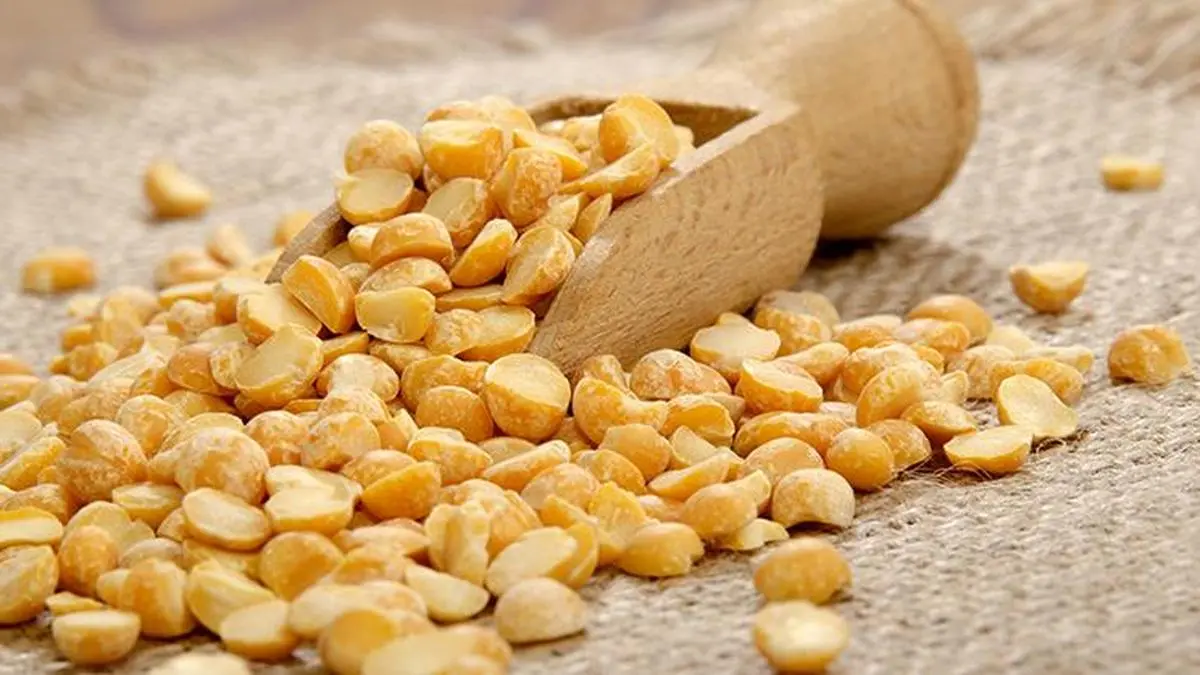
Yellow peas are seen as a substitute pulse variety for tur/arhar (pigeon peas) and chana (gram). The petitioner has said that in countries like Canada, the US and Australia, yellow peas are mostly used as cattle feed.
In its reply, the Directorate General of Foreign Trade under Ministry of Commerce, had contended that the petition was “not maintainable in as much as no Legal Right or a Fundamental Right of the petitioner is violated.”
“That the petitioner, by invoking the jurisdiction of this Hon’ble Court had challenged the policy decision taken by the Government of India, Ministry of Commerce and Industry in relation to Foreign Trade Policy. In the instant petition, the petitioner has utterly failed to point out any manifest illegality, infirmity, or arbitrariness in the said Notification. The Petitioner had also failed to demonstrate as to how their legal right has been violated,” DGFT had said in its reply filed before the apex court.
It also informed the Court that 30 per cent import duty on yellow peas was introduced from October 29, 2025.
During the hearing of the case, the Bench had reportedly observed; “You have an MSP for wheat, you have an MSP for rice (paddy), and you have an MSP for some pulses now also. The moment you make sure that the farmer will get this price, you will see how it (pulses production) will rise. Unfortunately, this aspect probably has not been really addressed…”
Pointing out that pulses farmers frequently sell their produce at 20–25 per cent below respective MSPs because there is no guaranteed government procurement platform in place like wheat and paddy, the Chief Justice has observed: “We don’t want to pass any order on that because it’s a matter of policy. But if you have subject experts who know the pulse of the farmer—without knowing these pulses, if they know the pulse of the farmer—he will do it.” The per-acre productivity of these pulses is far less as compared to wheat or paddy, he added.
The latest Order of the SC has also mentioned that different Ministries need to have a better coordination, understanding and should establish some mechanism under the aegis of the Ministry of Agriculture and Farmers Welfare to promote pulses as a substitute of wheat or paddy in the northern and central India and may be as a substitute for other crops in southern states.
It has been recognised that the absence of an incentivized MSP which should be sufficient enough to cover the expenditure small or medium level farmers incur in producing pulses, along with a guaranteed timely sale of the product, coupled with the fixation of the cost price of yellow peas, which is being imported in such a manner that it does not adversely impact the home-ground pulses produced by the farmers.
Published on March 15, 2026







