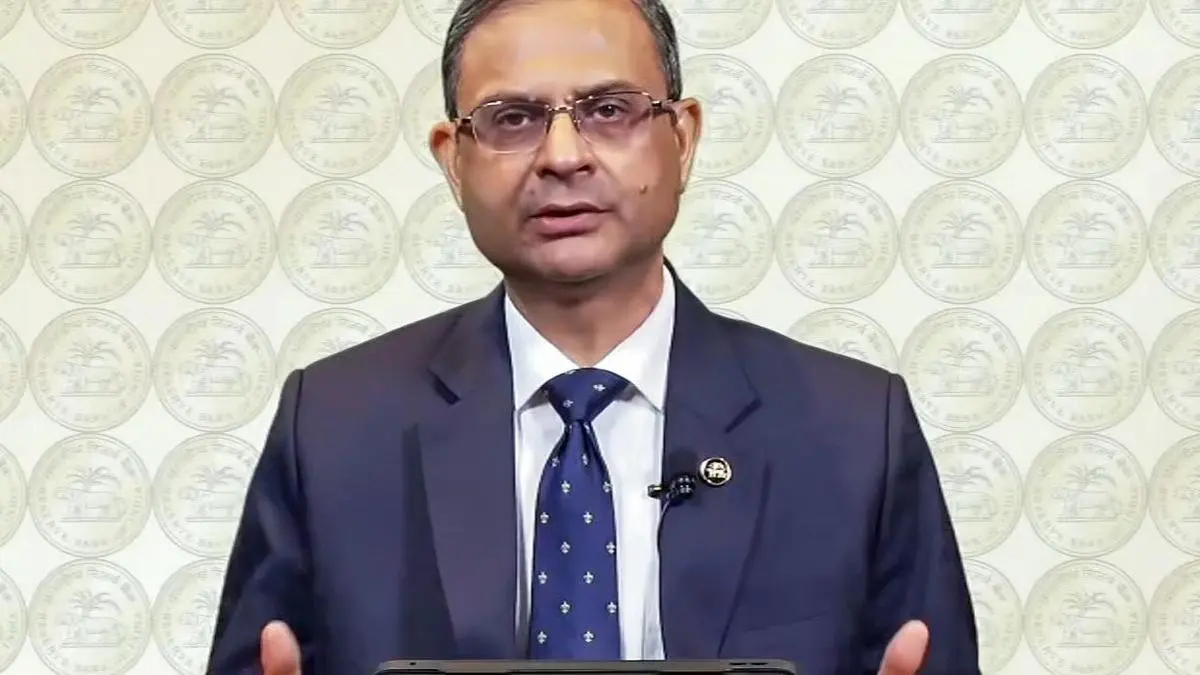
RBI Governor Sanjay Malhotra
| Photo Credit:
ANI
Reserve Bank of India Governor Sanjay Malhotra on Friday said Indian banks will need to evolve as market-makers globally if the global rupee market has to be on-shored.
Indian banks are dealing only with offshore market-makers rather than with end-users, Malhotra said in his key note address at the 25th FIMMDA-PDAI Annual Conference, in Amsterdam.
The Governor said: “We will also stand prepared to deploy appropriate policy measures, as warranted, to mitigate spillovers and ensure orderly market conditions.”
This observation comes in the backdrop of the rupee breaching the 95 to the dollar mark in intraday on Thursday for the first time since March 30, 2026, and closing at an all time low of 94.91 per US dollar.
The rupee has been buffeted by a host of factors, including global crude oil prices recently touching a four year high amid the ongoing West Asia war and blockade of the Strait of Hormuz, and persistent Dollar outflows due to FPI related sales in the Indian equity markets.
Malhotra emphasised that all banks should facilitate this as a priority, so that retail users get a fair deal. Currently, usage of the FX Retail platform remains limited.
The aforementioned suggestions form part of five areas for further deepening and strengthening India’s financial markets.
The Governor said while Central government securities market is liquid by most standards, there is scope to improve liquidity across all tenors and securities.
Malhotra noted that OTC (over-the-counter) derivatives markets, especially interest rate derivatives, remain concentrated in just one or two few products. He underscored that it needs to improve if efficient interest rate hedging options have to be made available to stakeholders.
He observed that development of credit derivatives, which is largely an underutilised area, is yet to take off in any meaningful way.
The Governor said market participants must acknowledge that while a privilege bestows some benefits, it also entails responsibilities.
The responsibilities include ensuring that every user has easy access to financial markets; every user can transact on fair and transparent terms, irrespective of size and sophistication; broader regulatory objectives are met in letter and spirit even as organisational interests are pursued; and to protect, promote and sustain market integrity.
Published on May 1, 2026







