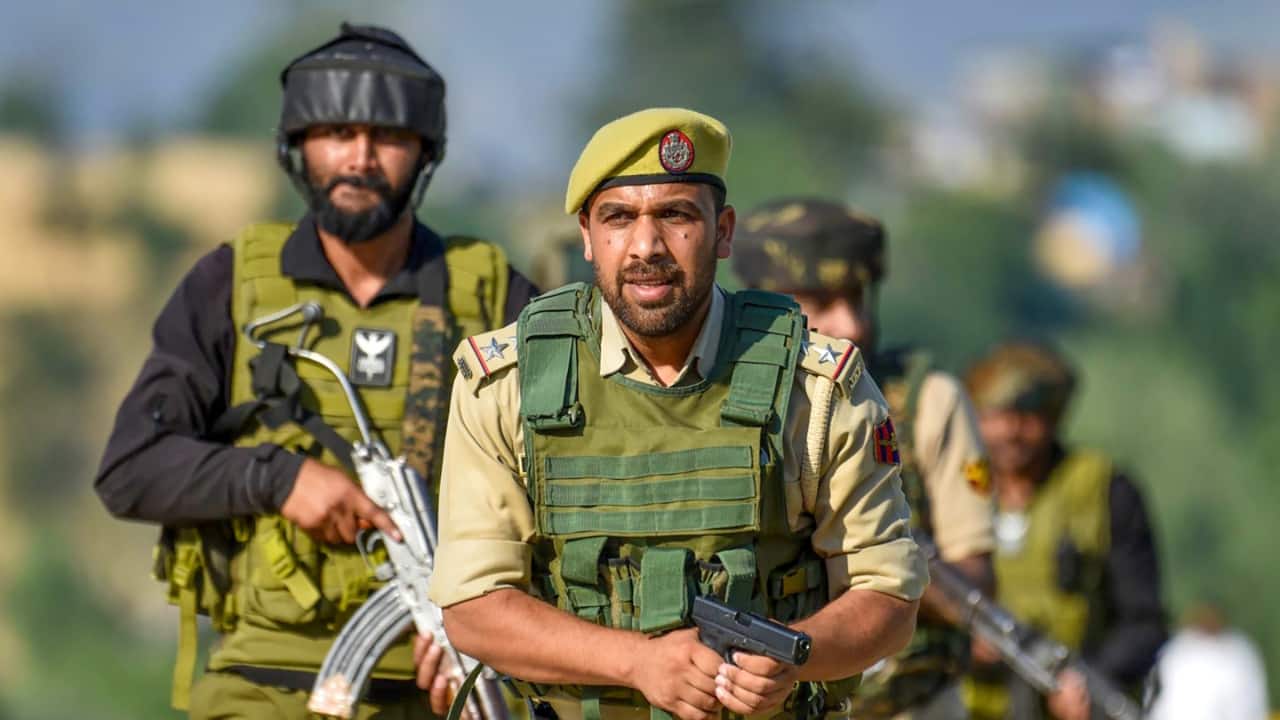
This year, the administration faces challenges beyond mere security arrangements; keeping pilgrims safe from disasters if caused by erratic weather is emerging as a major concern and challenge for authorities.
For the safe and secure conduct of holy Amarnath pilgrimage this year Jammu Kashmir is having dual challenges apart from foolproof security arrangements, Authorities are having big challenge of erratic weather of Kashmir valley. From last few months Kashmir is witnessing unseasonal harsh rains , hailstorms as well as cloud burst that too mostly in hills of valley and at a very often frequency.
To reach holy Amarnath cave a pilgrim have to cross tough hilly terrain of Himalayan hills on both routes Pahalgam as well as Baltal. Before the erratic weather turns into any disaster administration had adopted technology to remain update well in advance. Government has made operational Doppler Weather Radars (DWRs) at Srinagar, Banihal Top, Jammu, and Leh to provide continuous and real-time update about weather for next 24 hours and it will remain monitoring weather conditions along both routes of the Amarnath Yatra for 24×7. These advanced radar systems keep meteorologists aware of future weather developments, and they can issue timely alerts whenever necessary to administration.
Amarnath pilgrims had already once witnessed the devastating flash floods near the Amarnath Holy Cave in 2022, which made to think authorities on the need for a robust early warning system. But this year it’s more strengthen and advance weather monitoring infrastructure has been a key priority for the administration.
The Doppler Weather Radar plays a crucial role in detecting severe weather happenings such as cloudbursts, heavy harsh rainfall, sudden thunderstorms, hailstorms, and strong gusty winds. It provides continuous surveillance of weather conditions along the Jammu-Srinagar National Highway and both pilgrimage routes, from the base camps to the Holy Cave, helping authorities respond swiftly to any adverse weather situation and ensuring the safety of pilgrims.
Anshul Garg, Divisional Commissioner Kashmir said “Monitoring is being carried out at the highest level. Every year, the India Meteorological Department (IMD) issues regular weather advisories, which are promptly shared with all Yatra officers on duty. Doppler radars installed in Srinagar and Banihal are used to provide accurate weather forecasts, and based on these assessments, we decide whether the Yatra can proceed safely. This year, we are following the same protocol while making it even more efficient. Our officers are working round the clock in close coordination with the IMD, and we have been conducting regular preparedness exercises. Display boards along the Yatra route will also provide advance updates on weather conditions to keep pilgrims informed.”
Apart from adopting advanced technology the authorities have deployed 45 specialized Mountain Rescue Teams at 25 strategic locations along the Amarnath Yatra route, including the Holy Cave area. These specialized teams have been equipped with upgraded rescue gear and provided advanced training to enhance their operational capabilities. The objective is to ensure a swift and effective response in the event of natural disasters, accidents, or any other emergency during the annual pilgrimage. The teams will be stationed at vulnerable and landslide-prone locations along both the Baltal and Pahalgam routes of the Yatra thorough-out the Yatra period.
V K Birdi, IG Kashmir Police said “The Meteorological Department keeps us continuously updated with real-time weather inputs. Based on those forecasts, we plan, prepare, and implement our response measures accordingly. The National Disaster Management Authority (NDMA) has identified and mapped all vulnerable locations along the Yatra route. Teams from the NDRF, SDRF, Jammu and Kashmir Police, and paramilitary forces have been strategically deployed at these sensitive points to ensure a swift response and provide immediate assistance whenever any emergency arises.”
The multi-layered disaster management and rescue having dozens of SDRF , NDRF and QRTies of Army , CRPF , BSF and Jammu Kashmir police, those all teams will remain deployed throughout the pilgrimage period on the mountain routes of pilgrimage to ensure the safety, security, and well-being of devotees undertaking the annual pilgrimage.
The Government of Jammu and Kashmir is working round the clock to ensure the smooth and successful conduct of the annual Amarnath Yatra, which is scheduled to begin on July 3. The safety and security of the pilgrims remain the highest priority for both the government and the security agencies.
Stay informed on all the latest news, real-time breaking news updates, and follow all the important headlines in india news and world news on Zee News.







