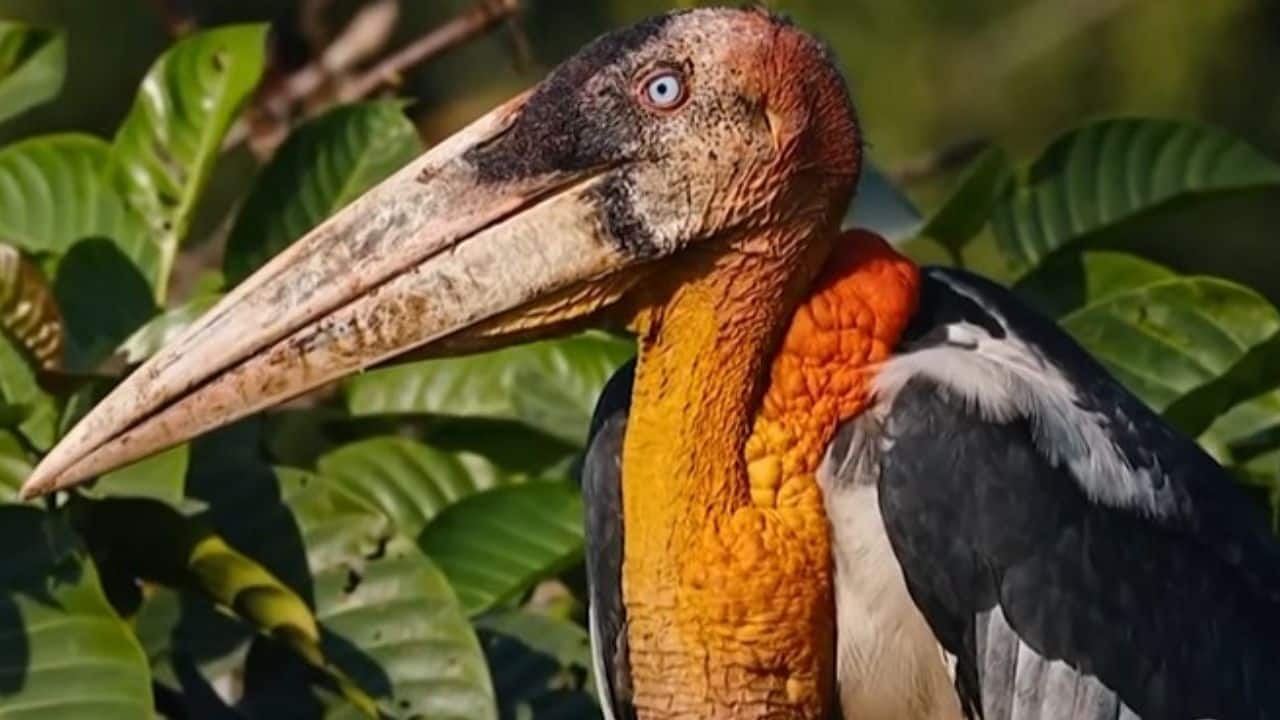
Most birds win people over with their colour or song. One bird in Assam earned only fear. Villagers called it a bad omen and cut down the tall trees where it nested. Then a group of women changed its fate. On June 28, Prime Minister Narendra Modi shared its story on Mann Ki Baat. This is the Hargila. Few outside Assam have even heard of it.
A rare stork hides behind the strange name
The Hargila is the Assamese name for the Greater Adjutant Stork. It is one of the rarest storks on earth and among the world’s most threatened bird species. Most of the remaining population lives in Assam.
The name means bone swallower
The name Hargila comes from the local language. It has two parts. Har means bone, while gila means swallower. Together, they mean “bone swallower”. The bird feeds on animal carcasses and waste. Its powerful beak can crush and swallow bones.
It stands nearly five feet tall
This is a large bird. It stands nearly five feet tall and has a wingspan of about eight feet. It has a bald head, a long beak and a distinctive pouch hanging from its neck. Many people once found its appearance unusual and intimidating.
For years it was called a bad omen
For generations, many villagers feared the bird. They believed it brought bad luck. Its bald head, scavenging habits and strong smell added to its negative image. As a result, people often cut down the tall trees where it nested. Some nests can measure nearly a metre across.
The bird came close to disappearing
The hostility took a heavy toll. By around 2007, only about 450 Hargilas were left in Assam. The species was heading towards a steep decline, raising fears for its survival.
One scientist refused to give up
That same year, biologist Purnima Devi Barman witnessed a nesting tree being cut down. Nine chicks fell with it. The incident changed her life. She stepped away from her research for a time and dedicated herself to saving the bird.
Thousands of women joined the cause
Barman began by working with women in nearby villages. Today, around 20,000 women are part of the Hargila Army. They protect nesting trees, rescue fallen chicks and celebrate the bird through traditional textiles and community events. Their work has also created livelihood opportunities.
Its home is often a city dump
Many Hargilas live near Guwahati. Nearly half of the world’s wild population is known to feed at garbage dumps. The Boragaon dump supports the largest year-round congregation of the species. While the waste provides food, it also exposes the birds to plastic and other dangers.
Now the bird is a symbol of pride
The conservation effort has produced remarkable results. In December 2023, the bird’s conservation status improved from Endangered to Near Threatened. Its population in Assam has grown significantly, and the state now observes October 7 as Adjutant Day. A bird once feared and rejected has become a source of pride.
The Hargila story shows how people can change. Once seen as a bad omen, the bird is now protected and celebrated. A species that was on the brink of extinction has found a future. Today, the bird stands as a symbol of hope, showing how understanding can replace fear.
Stay informed on all the latest news, real-time breaking news updates, and follow all the important headlines in india news and world news on Zee News.







