The FIFA World Cup India qualified for but never played: The untold story of football’s biggest missed opportunity

The FIFA World Cup India qualified for but never played: The untold story of football’s biggest missed opportunity


New Delhi: India’s greatest World Cup story is not about a famous victory or a heartbreaking defeat. It is about a tournament the country qualified for but never played.

In 1950, India earned a place at the FIFA World Cup in Brazil. The team had its ticket, a place in the draw and opponents waiting. It was set to face Italy, Sweden and Paraguay. Everything was in place for the country’s debut on football’s biggest stage. Then, in a move that continues to be debated more than seven decades later, India pulled out before the tournament began.

It is one of the most puzzling chapters in Indian sporting history.


Add Zee News as a Preferred Source


The 1950 World Cup was the first tournament after a gap of 12 years. The Second World War had forced the cancellation of the 1942 and 1946 editions. Only 33 countries entered the qualification process for the tournament in Brazil. India was placed in a qualifying group along with Burma, now Myanmar, and the Philippines.

Before a ball could be kicked, both Burma and the Philippines withdrew from the qualifiers. Their exit meant India automatically secured a place in the World Cup.

For the first and only time in history, India had qualified for football’s biggest stage. When the final draw was conducted, the team was placed in Group 3 along with Sweden, Italy and Paraguay.

Could India have made an impact?

The question has fascinated football followers for decades. Late football journalist Novy Kapadia wrote that India’s group was not impossible to get through. Paraguay was not among the strongest teams in the competition at the time. Italy arrived in difficult circumstances and even saw coach Vittorio Pozzo resign after reaching Brazil.

ALSO READ: FIFA World Cup 2026 Opening Ceremony Highlights: Shakira, Burna Boy and J Balvin steal show as tournament kicks off in style

According to Kapadia, Sweden was the strongest side in the group, but India could have competed for second place and, at the very least, gained priceless international experience.

Whether India would have progressed is impossible to know. What is certain is that the tournament could have changed the course of Indian football.

When Indian football earned respect on world stage

Indian football did not enjoy the international exposure it has today, but the team had earned respect for its style of play.

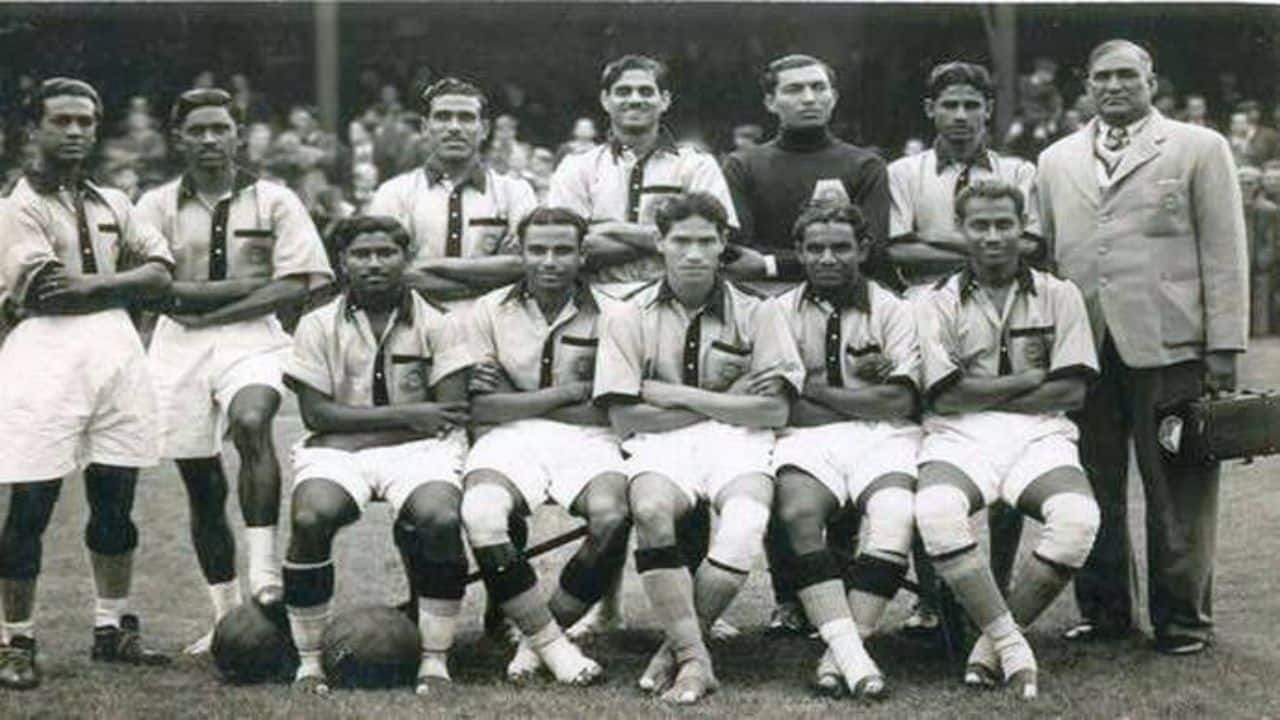
At the 1948 London Olympics, the country pushed France all the way before losing 2-1. The performance caught attention across the football world.

Players such as Ahmed Khan, S. Raman, M.A. Sattar and S. Mewalal had become popular names among football followers. Many of them were known for their dribbling skills and attacking football.

For many fans, the defining image was that of Indian players competing barefoot. During the London Olympics, several Indian footballers played without boots, although right-back Taj Mohammed wore them.

Why did India pull out?

This is where the story becomes complicated. There has never been a single clear explanation for the team’s withdrawal from the 1950 World Cup.

The official reason given by the All India Football Federation (AIFF) was disagreement over team selection and insufficient preparation time.

Over the years, another explanation became widely accepted. Many believed the FIFA refused to allow players to compete barefoot.

Football historians and researchers, however, have challenged that claim.

ALSO READ: FIFA World Cup 2026: How the 48-team format works and what changes in groups, knockouts and qualification – All you need to know

Kapadia and senior sports journalist Jaydeep Basu both argued that the barefoot theory does not stand up to scrutiny.

In his book ‘Box to Box: 75 Years of the Indian Football Team’, Basu wrote that the FIFA had no objection to Indian players playing barefoot. The players from the 1948 Olympic squad reportedly carried football boots in their travel bags and simply chose when to wear them.

At the time, playing with heavily bandaged feet instead of boots was not unusual in several parts of the world. The practice continued in some countries until the mid-1950s.

Was money the real reason?

Another popular explanation is that India could not afford the trip to Brazil. Research suggests that financial difficulties do not explain the withdrawal either.

According to Basu’s book, several state football associations had offered to contribute towards travel expenses.

Kapadia also wrote that Brazilian organisers had contacted Indian football officials and expressed willingness to cover most of the team’s costs.

ALSO READ: FIFA World Cup 2026 kicks off in style with grand opening ceremony in Mexico – See Pics

Brazil had its own reasons. Several countries, including Scotland, France, Turkey and Czechoslovakia, too had withdrawn from the tournament. Organisers were eager to keep participating teams in the competition.

Kapadia also wrote that Brazil was keen to host a team from the country of Mahatma Gandhi and Jawaharlal Nehru.

By May 16, 1950, India had even announced its World Cup squad. The plan was for the team to leave for Brazil on June 15 and play its opening match against Paraguay on June 25.

Then everything changed.

The withdrawal came soon after, leaving behind a mystery that still has no complete answer.

Did officials misjudge the opportunity?

Many football historians believe administrators of that era did not fully understand what the World Cup would eventually become.

At the time, hockey was India’s dominant sport. Olympic success was viewed as the highest achievement available to any athlete.

India was also preparing for the 1951 Asian Games in New Delhi, where expectations were high.

ALSO READ: FIFA World Cup 2026 starts today: 7 things to do on your smartphone and TV to avoid streaming problems during live matches

The World Cup did not carry the prestige it enjoys today. It had not become the international sporting spectacle that now captures billions of viewers.

There may have been another factor as well.

Under rules of that era, participation in the World Cup could result in players being classified as professionals. Professional players were often barred from competing in events such as the Olympics and Asian Games, which followed amateur regulations.

Some countries found ways around those restrictions, but Indian officials may not have been fully aware of the options available.

That concern may have influenced the decision to stay away from Brazil.

More than seven decades later, the 1950 World Cup is a story of what might have been. Every four years, when the world gathers to watch football’s biggest tournament, many Indian fans are reminded that there was once a moment when their country had a place at the table and chose not to take it.


Source link

Scientists reveal how Venus flytrap snaps shut in under a second

Scientists reveal how Venus flytrap snaps shut in under a second


Using high-speed imaging and mechanical testing, researchers found that the plant’s outer tissue rapidly becomes more flexible, triggering a spring-like release of stored energy that shuts the trap in under a second. (a file photo)
| Photo Credit:
DAVID LOH

Pity the poor fly that lands on a Venus flytrap. When the insect touches hair-like structures on this remarkable carnivorous plant, its trap snaps shut, dooming the victim to be digested over several days in secreted enzymes. Scientists have now found the physical mechanism behind this snapping action.

Researchers said experiments showed that the Venus flytrap’s closure is initiated by a rapid softening of the cell walls in the outer layer of the plant’s trap, which is a highly modified leaf divided into two hinged lobes that resemble jaws with teeth.

Old theory challenged after a century of belief

For more than a century, the prevailing hypothesis had been that the trap’s closure was driven by a rapid redistribution of water within the leaf, with water moving between cells to swell one side of the leaf. The new research points to a different biological mechanism.

“One of the most iconic plants in the world can still surprise us. After more than a century of research, we are still discovering fundamentally new things about how the Venus flytrap works,” said physicist Yoël Forterre of the French research agency CNRS and Aix-Marseille University, senior author of the study published on Thursday in the journal Science.

How the Venus flytrap actually lives and feeds

An insect lands on a Venus flytrap, a meat-eating plant on display at the carnivorous plant fair 'Dejate Atrapar' (Let Yourself Get Caught), in Bogota. (a file photo)

An insect lands on a Venus flytrap, a meat-eating plant on display at the carnivorous plant fair “Dejate Atrapar” (Let Yourself Get Caught), in Bogota. (a file photo)
| Photo Credit: Luisa Gonzalez

The Venus flytrap is a small carnivorous plant native to a limited region of North Carolina and South Carolina in the United States. Like many carnivorous plants, it grows in nutrient-poor environments and supplements its nutrition by capturing and digesting insects.

High-speed imaging reveals the hidden mechanism

In experiments conducted in Marseille, the researchers used high-speed imaging, mechanical measurements by indentation of the plant’s outer layer and mechanical modeling. They also measured water transport within the plant tissue to rule out that as the mechanism at play.

“The plant uses specialized trigger hairs located on the inner surface of the trap. When an insect touches these hairs twice within a short period of time, the trap closes. Closure can occur in as little as one tenth of a second,” Forterre said.

Cell wall softening acts like a biological spring

“Our hypothesis is that the trap is already mechanically loaded before triggering, much like a spring. When the trap is stimulated, the cell walls of the outer epidermal layer rapidly soften by roughly 30 to 40%, meaning that the cell wall becomes more flexible. This releases internal stresses stored in the tissue and causes the trap to bend and close. The softening develops within about one second,” Forterre said.

When the trap snaps shut, the insect is sealed inside for digestion.

Pinpointing the plant’s internal “motor”

“By directly measuring the mechanics of the living trap as it responds, we pinned down the internal ‘motor’ that drives the leaf across its instability threshold and sets off the snap-buckling that closes it,” said physicist and study lead author Jeongeun Ryu, who worked on the study as a postdoctoral researcher at the CNRS and Aix-Marseille University.

After the plant absorbs the nutrient-rich liquid produced by the digestive processes, the trap reopens, with the insect’s empty exoskeleton left behind.

Evolution, engineering and future inspiration

“What I find remarkable is that evolution often does not invent entirely new mechanisms, but rather reuses and refines existing ones. Plants are known to modify the mechanical properties of their cell walls during growth, but the Venus flytrap appears to push this mechanism to an extreme, using it on a timescale of about one second,” Forterre said.

There are roughly 800 known species of carnivorous plants. They are not all closely related, indicating that flesh-eating evolved independently multiple times during plant evolution.

How the Venus flytrap snaps shut is a topic that has long interested scientists including Charles Darwin, the 19th century naturalist who advanced the theory of evolution by natural selection. The researchers see potential practical applications from their findings.

“To our knowledge, this is the first time such a rapid change in the mechanical properties of cell walls has been seen in a plant,” Ryu said.

“It settles a question that goes back to Darwin – what drives one of the fastest movements in the plant kingdom – and points to a new way for a living thing to move: not by pumping fluid or simply collapsing, but by actively tuning the stiffness of its own material. That principle could eventually inspire soft robots or smart materials, though that remains a longer-term prospect,” Ryu said.

Published on June 12, 2026



Source link

India restricts diesel and petrol sales at retail pumps for bulk users

India restricts diesel and petrol sales at retail pumps for bulk users


Retail dealers have also been instructed not to sell more than 200 litres of diesel per customer or vehicle per day, and the fuel cannot be resold. The measure is aimed at regulating bulk fuel consumption and improving supply discipline at retail outlets.

India has imposed ​restricted
institutional and commercial ‌customers from buying ​motor spirit
and ⁠high-speed diesel (HSD) at retail outlets and ‌directed them
to source their ‌requirements from their ‌own ⁠consumer pumps, ⁠a
notification showed on Thursday.

The restrictions would ​be in ‌place for an initial period of
up to 90 ‌days unless it ​is revoked by another ⁠order, the
notification said.

Retail outlet dealers have ‌been directed to not sell more
than 200 litres of high-speed diesel ‌to a customer ​or vehicle in
a day, the ⁠notification said, adding that ⁠the HSD cannot then ‌be
resold.

Published on June 12, 2026


Source link

FIFA World Cup 2026 kicks off in style with grand opening ceremony in Mexico – See Pics

FIFA World Cup 2026 kicks off in style with grand opening ceremony in Mexico – See Pics


The 2026 FIFA Men’s World Cup began in spectacular fashion on Thursday night as Mexico City’s iconic Estadio Azteca hosted a dazzling opening ceremony that blended football, music, and history on a memorable night.  

Spanish actress Salma Hayek and FIFA president Gianni Infantino have declared the tournament open and placed the trophy inside the Mexico City stadium.

With thousands of fans packing the legendary venue, FIFA President Gianni Infantino officially declared the tournament open before presenting the coveted World Cup trophy to an enthusiastic crowd. The ceremony marked the start of football’s biggest celebration and set the tone for a month-long festival across North America.


Add Zee News as a Preferred Source


Global music stars Shakira and Burna Boy headlined the star-studded event, captivating supporters with a vibrant performance of the tournament’s official anthem, “Dai Dai.” Their energetic show transformed the stadium into a sea of colour, lights, and music, creating an electric atmosphere ahead of the opening match.

The festivities began approximately 90 minutes before kick-off, with cultural performances and visual displays showcasing the rich heritage of the host nation. Fans from around the world joined in the celebrations, waving flags and singing along as the excitement reached fever pitch.


The choice of Estadio Azteca added a powerful historical dimension to the occasion. Widely regarded as one of football’s most iconic venues, the stadium became the first in history to host World Cup matches in three different editions of the tournament, having previously staged games in 1970 and 1986.

Its legacy is unmatched. Brazilian legend Pelé celebrated World Cup glory on its famous turf in 1970, while Argentine icon Diego Maradona lifted the trophy there 16 years later after inspiring his nation to victory.

Now, four decades after its last World Cup showcase, the Azteca once again took centre stage, opening a new chapter in football history as the 2026 tournament officially got underway in unforgettable fashion.

The exciting opening ceremony set the stage for the opening match between co-hosts Mexico and South Africa, which will be followed by a clash between South Korea and Czechia.


Source link

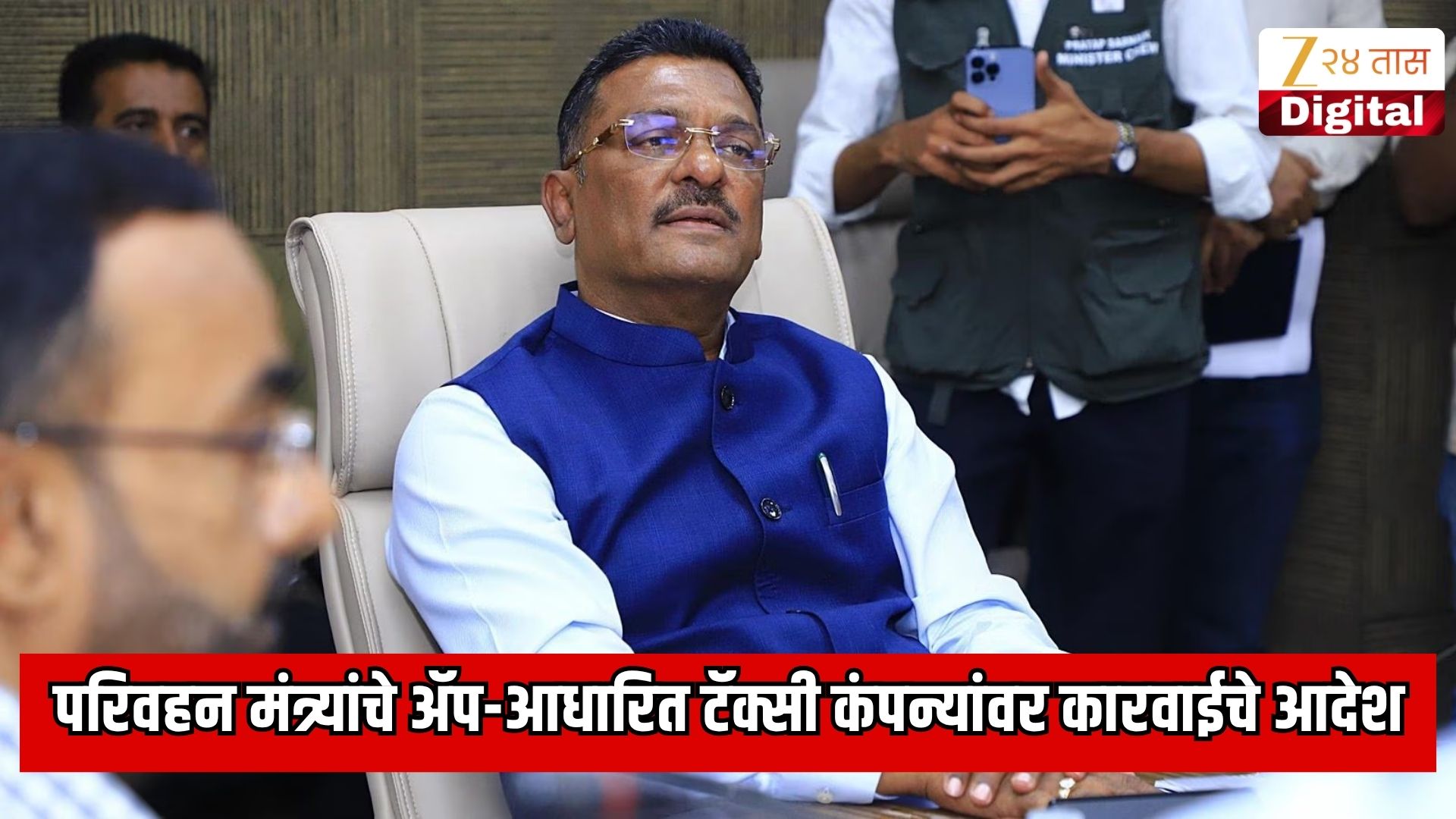
ॲप-आधारित टॅक्सी कंपन्यांवर कारवाई करण्याचे मंत्री प्रताप सरनाईक यांचे आदेश

ॲप-आधारित टॅक्सी कंपन्यांवर कारवाई करण्याचे मंत्री प्रताप सरनाईक यांचे आदेश


खासदार डॉ. श्रीकांत शिंदे यांच्या मागणीची परिवहन मंत्र्यांकडून तात्काळ दखल घेण्यात आली आहे. गेल्या काही दिवसांपासून विविध ॲप-आधारित टॅक्सी सेवांबाबत प्रवाशांकडून मोठ्या प्रमाणावर तक्रारी समोर येत होत्या. 


Source link

YouTube
Instagram
WhatsApp