Mission Sudarshan Chakra to become India’s multi-level missile defence system: Rajnath Singh

Mission Sudarshan Chakra to become India’s multi-level missile defence system: Rajnath Singh


Union Defence Minister Rajnath Singh interacts with scientists and examines a missile model after inaugurating the Advanced Weapon System Complex at DRDO’s Defence Research & Development Laboratory (DRDL), Dr APJ Abdul Kalam Missile Complex, in Hyderabad on Friday, June 12, 2026.
| Photo Credit:
ANI

Defence Minister Rajnath Singh on Friday said the “Mission Sudarshan Chakra,” announced by Prime Minister Narendra Modi during his 2025 Independence Day address, is set to become a multi-level missile defence system of modern India.

It will not only protect military installations and critical infrastructure, but also ensure the safety of civil infrastructure and key establishments, he said.

The system will possess the capability to deliver a “decisive punch” whenever needed and its three-layered protection will ensure minimal inconvenience to citizens and prioritise their safety, he said.

It is a system designed to provide a robust protective shield for all assets of vital importance, he said, speaking after inaugurating an Advanced Weapon System Complex at DRDO’s Defence Research & Development Laboratory (DRDL), Dr APJ Abdul Kalam Missile Complex, here.

DRDO’s role in strengthening India’s defence ecosystem

The defence minister commended the Missile Systems and Strategic Systems Cluster of DRDO for its pivotal contributions to India’s technological excellence, strategic autonomy, and national security, a defence release said.

He asserted that the exceptional performance of indigenous missile systems during Operation Sindoor is testimony to the growing strength of India’s defence R&D ecosystem.

The systems developed by DRDO, such as Akash and BrahMos, proved that India possesses the capability to compete in the global defence technology ecosystem.

Highlighting the pivotal role played by air defence during Operation Sindoor, he said the air defence system completely thwarted the enemy’s intentions when aerial threats loomed over borders.

He said the vital role of air defence can be witnessed in the conflict zones of the Middle East, voicing PM Modi-led government’s commitment to create a multi-level missile defence system through “Mission Sudarshan Chakra”.

Modern warfare, resilience and deterrence

Singh highlighted the importance of possessing “resilience” and “deterrence” to safeguard national security interests in light of the rapidly evolving nature of warfare, and global uncertainties.

Precision-strike capabilities, integrated air defence systems, hypersonic weapons, autonomous platforms, artificial intelligence, electronic warfare, and advanced sensor technologies are redefining the nature of modern warfare, he said.

“The international order is undergoing a period of tension and transformation; where old assumptions are crumbling, and new alliances & challenges are taking shape. In such an environment, there is a need to possess resilience – the capacity to absorb any shock and bounce back; and deterrence – the ability to instill fear in the mind of the aggressor that a befitting reply would be given if a hostile eye is cast,” he said.

Acknowledging DRDO’s efforts in building resilience and deterrence capabilities of the nation, he said the organisation is instilling confidence in the nation that it will neither bow down to instability nor allow any shortcomings in its preparedness.

Call for faster production and future-ready defence systems

Urging DRDO to consider production as an integral part of the development process, the defence minister underscored the importance of reducing development-to-production timelines, simplifying manufacturing processes, increasing indigenous content and developing systems that can be rapidly mass-produced for the defence forces when the need arises.

He praised DRDO for its persistent efforts towards addressing present-day challenges while working on futuristic technologies that provide India with a strategic advantage.

He stressed the need to equip the defence forces with state-of-the-art systems in sufficient quantity and at the right time to tackle future challenges.

Published on June 12, 2026


Source link

What Elon Musk becoming a trillionaire means in real terms

What Elon Musk becoming a trillionaire means in real terms


A live feed shows SpaceX CEO Elon Musk on the day of SpaceX’s initial public offering (IPO) at the Nasdaq MarketSite, in New York City, U.S., June 12, 2026.
| Photo Credit:
JEENAH MOON

Catapulted by the market debut of his rocket company SpaceX, Elon Musk is now the world’s first trillionaire.

That level of wealth, all owned by just one person, was once unfathomable. Before Friday, the trillion dollar mark was reserved for measures like the GDP (or staggering debt) of a handful of major economies — and, in the last decade alone, the value of some of the biggest companies to ever trade on the stock market.

A wealth milestone once beyond imagination

Musk’s new title arrives amid a wider acceleration for the richest of the rich. Year after year, his former (although now very distant) billionaires club has reaped a growing number of members — from tech titans to celebrities.

All the while, more and more people worldwide are struggling to pay their everyday bills. Many have decried the arrival of the first trillionaire as the latest and most alarming example of that wealth gap.

The number “one trillion” is hard in itself for the human mind to comprehend. One trillion dollars is a thousand times greater than $1 billion. And a million times more than USD 1 million.

What a trillion dollars actually means

According to Forbes, Musk’s net worth actually hit USD 1.1 trillion as of midday Friday, after SpaceX soared in its first moments on the market. Still, here’s some ways to think about how far USD 1 trillion of that money could go.

Thinking about what USD 1 trillion looks like is almost as astronomical as the interplanetary — and at this point, still far from realized — goals SpaceX has laid out for itself.

In terms of physical cash, one trillion US dollar bills laid end to end would stretch nearly 97 million miles (or almost 156 million km).

That would account for the distance of more than 200 round trip journeys to the moon — which NASA says sits an average of 238,855 miles (nearly 384,400 km) away from Earth. It would also surpass the roughly 93 million miles (about 150 million km) between Earth and the sun.

Putting global wealth into perspective

There are nearly 8.2 billion people living on Earth today, per the latest numbers from the U.S. Census Bureau. If USD 1 trillion was divided among the entire population, each person would receive almost USD 122.

One trillion dollars is more than double the annual GDP of South Africa, the country where Musk was born. According 2026 numbers from International Monetary Fund, the nation’s output of goods and services stands at nearly USD 480 billion.

Only about 21 countries in the world have a GDP over the trillion dollar mark today. The US and China lead the pack at more than USD 32.38 trillion and USD 20.85 trillion, respectively, but that’s far ahead most other economies.

Real-world value of extreme wealth

Houses sold in the US have a median sales price of about USD 403,200, per the latest numbers from the Federal Reserve Bank of St Louis. With USD 1 trillion, you could buy nearly 2.5 million homes at that cost.

At current US gas prices — which averaged at nearly USD 4.11 a gallon Friday per AAA — USD 1 trillion could buy more than 243 billion gallons of regular fuel.

To help put that in context, that far surpasses the nearly 137 billion gallons Americans used on finished motor gasoline all last year. And prices at the pump were much less expensive in 2025. Steep oil prices, spanning from the US and Israel’s ongoing war against Iran, propelled the national average above USD 4 a gallon for the first time in four years.

The trillion-dollar club and beyond

According to Forbes, the second richest person in the world today is Google co-founder Larry Page — who carried a net worth of nearly USD 295 billion as of midday Friday. That’s USD 705 billion under the trillion dollar mark.

In fact, the combined net worth, as of Friday, of the four men following Musk on Forbes’ richest list — which, beyond Page, includes fellow Google co-founder Sergey Brin (USD 272 billion), Amazon’s Jeff Bezos (USD 247 billion) and Oracle’s Larry Ellison (USD 228 billion) — amounted to just over USD 1.04 trillion.

Those fortunes can oscillate by tens of billions of dollars by the day, or even a matter of hours. Musk’s own net worth has rapidly ballooned in value. Just last year, his net worth sat at USD 342 billion per Forbes — up from USD 195 billion in 2024.

Published on June 12, 2026


Source link

Global shares advance as Trump claims breakthrough in Iran war talks

Global shares advance as Trump claims breakthrough in Iran war talks


World shares advanced on Friday, while oil prices sank more than 4 per cent after US President Donald Trump claimed there was a breakthrough in talks to end the Iran war. 


Expectations that an agreement between the US and Iran may help reopen the strait sent oil prices tumbling. 


In share trading, the future for the S&P 500 was 0.2 per cent higher, while that for the Dow Jones Industrial Average was up 0.4 per cent. 


Investors in the US and elsewhere were awaiting the debut Friday on Wall Street of SpaceX, Elon Musk’s rocket company, which is set to become the largest initial public offering (IPO) on record, raising around $75 billion. 


Asian markets logged bigger gains. South Korea’s Kospi jumped 4.6 per cent to 8,123.62, narrowing losses from earlier this month from sell-offs of shares related to artificial intelligence. The Kospi has nearly doubled over the past six months, with a record closing high of 8,801.49 on June 2. 


Samsung Electronics advanced 7.9 per cent. Computer chipmaker SK Hynix rose 2.3 per cent. 


Tokyo’s Nikkei’s 225 gained 2.8 per cent, also led by gains for technology stocks. SoftBank Group, a multinational investment holding company with a strong AI focus, was up 1.5 per cent. Chip equipment maker Tokyo Electron jumped 7.3 per cent. 


Hong Kong’s Hang Seng gained 1.9 per cent to 24,658.91 and the Shanghai Composite index rose 1.1 per cent to 4,031.51. Taiwan’s Taiex gained 2.4 per cent, while Sensex advanced 1.4 per cent. 


The renewed investor optimism came after Trump said Thursday he had called off military strikes against Iran. He asserted that the U.S. had made “a great settlement of the war with Iran,” adding that an extension of the shaky ceasefire between the two sides could be finalized in “the next few days.” Few details were offered. 


Global markets retreated earlier in the week as tensions between the US and Iran escalated. 


“Trump has said many times before that a deal is very close, only for hostilities to resume,” ING commodities analysts Warren Patterson and Ewa Manthey wrote in a note on Friday. “However, there does appear to be more positive noise around the deal this time.” “(But) we would be cautious about assuming that the extension of the ceasefire is a done deal,” they added. “Even if it is, it could be fragile.” On Thursday, Wall Street’s benchmark S&P 500 surged 1.8% to 7,394.30, back to where it was in early May. The Dow Jones Industrial Average rallied 1.9% to 50,848.75, and the technology-heavy Nasdaq composite climbed 2.5% to 25,809.66. 


Prices of AI and other tech stocks have been volatile the past week in part due to renewed worries that massive investments and soaring share prices are creating a bubble liable to burst. On Thursday, US chipmaker Marvell Technology climbed 11.1%, but technology company Oracle lost 8.5% on worries over its high spending, despite strong-than-expected quarterly results.

In other dealings early Friday, the U.S. dollar rose to 160.04 Japanese yen from 159.93 yen. The euro was trading at $1.1580, up from $1.1578. 


Source link

SpaceX shares surge on debut, valuation hits .77 trillion

SpaceX shares surge on debut, valuation hits $1.77 trillion


SpaceX has now entered the elite trillion-dollar club and is set to become part of the Nasdaq 100 index, marking a major milestone for both SpaceX and the broader AI-space sector.
| Photo Credit:
Dado Ruvic

Shares of SpaceX surged on their market debut, opening at $150 against an IPO price of $135 and later climbing to $164, propelling the Elon Musk-led company to become the sixth-largest U.S. firm by market capitalisation.

The IPO saw massive interest from both retail and institutional investors as Musk prepares to take the AI battle to space with his ambitious plans to make orbital data centres.

SpaceX raised USD75 billion from the public by selling nearly 556 million shares priced at USD135 at a valuation of USD1.77 trillion. With the public listing, SpaceX has joined an elite club of companies having a valuation of over a trillion dollars. SpaceX also became the maiden US company to list with more than a trillion-dollar valuation.

Earlier, the company’s president Gwynne Shotwell rang the market opening bell with Musk participating in the event virtually from Texas. The SpaceX stock is trading under the ticker SPCX on Nasdaq, giving an opportunity to individuals to freely trade in the company’s shares.

Musk’s vision of space, AI and multiplanetary future

The rocket, satellite and AI company, which was started by Musk 24 years ago, is at the frontier of space exploration with ambitions ranging from multiplanetary civilization to data centres in space. “SpaceX is about taking fiction out of science fiction,” Musk said during the opening bell ceremony.

Musk added that other companies were not working on technology that would “make life multiplanetary”. Musk said that he was not sure of SpaceX’s success but wanted to give it a try.

“I gave SpaceX less than 10% chance of succeeding at all. To be clear, in fact, Itold people this. I said, look, we’re probably going to fail, but you know, should give it a try bvecause if we don;y, if there’s not a new company that enters space, we will never be a truly space-beating civilisation,” Musk said while celebrating the market debut of SpaceX with fellow colleagues in Texas.

With the blockbuster listing, Musk has become the first person on the planet to become a trillionaire. Majority of Musk’s wealth comes from his massive shareholding in SpaceX in which he also holds dominant voting rights that allows him to steer the company in the direction he wants.

AI expansion, chip ambitions and next-phase growth

Founded in 2002, SpaceX is the only company building the integrated hardware and software infrastructure of the future across space, connectivity, and AI, the company said in its prospectus.

The AI unit xAI was founded in 2023 and acquired by SpaceX in early 2026. The company is rapidly scaling its compute infrastructure and boasts one of the largest compute clusters – COLOSSUS and COLOSSUS II.

The company is also planning Terafab facility, a chip manufacturing initiative with Tesla and Intel that aims to further extend the vertical integration to chip design and manufacturing.

Musk upended the norms in IPO pricing by choosing a fixed price rather than opting for a range that lets gauging of investor interest at different price points. Musk chose a take-it-or-leave-it approach for the SpaceX IPO relying on the legion of supporters to back SpaceX just as they did to Tesla.

Nasdaq entry, investor windfall and AI market test

SpaceX will soon be a part of Nasdaq 100 index as the stock exchange changed its rules in March for speedier entry of megacap listings. The inclusion will automatically make SpaceX a part of many passive index funds indirectly making the company a part of many individuals’ portfolio.

The SpaceX IPO has also come as a boon for thousands of current and former employees by making them millionaires.

The SpaceX debut is happening at a pivotal moment for AI as the wave sweeps stock markets lifting many AI-linked shares to record highs. The listing will also be a test that will gauge investor appetite for upcoming big-ticket AI listings with Anthropic and OpenAI slated to go public later this year.

Published on June 12, 2026


Source link

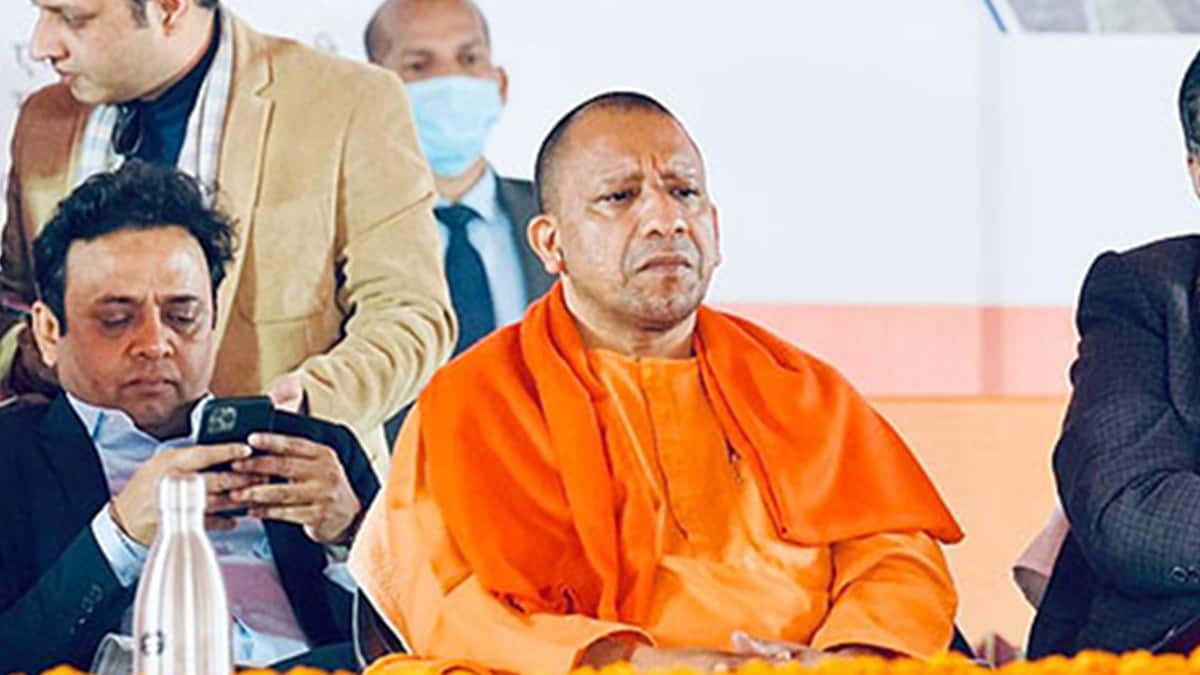
Uttar Pradesh enhances airport facilities in 6 cities as Yogi govt boosts air connectivity

Uttar Pradesh enhances airport facilities in 6 cities as Yogi govt boosts air connectivity


LUCKNOW: Uttar Pradesh is expanding as a hub for civil aviation under Chief Minister Yogi Adityanath, with the state government driving the development of new airports, expansion of existing terminals, and improved air connectivity across the region, a statement from the Civil Aviation Department said. The significant progress has been recorded in the Gorakhpur, Agra, Kanpur, Aligarh, Moradabad and Shravasti airport projects.

In view of the increasing number of flights at Gorakhpur Airport, the state government has decided to develop a new civil terminal. For this purpose, an MoU was signed in June 2025 between the Government of Uttar Pradesh, the Airports Authority of India and the Ministry of Defence for the transfer of 42.14 acres of Indian Air Force land. Under the project, the work related to the relocation of assets has been almost completed. At present, an average of 12 flights are operating from the airport.

For the construction of a new civil terminal at Agra Airport, 52 acres of land had already been made available, while an additional 92.50 acres of land have also been acquired. The construction work being carried out by the Airports Authority of India has reached approximately 60 per cent physical progress.


Add Zee News as a Preferred Source


Under the agreement between the State Government and AAI, 50 acres of land were provided for Kanpur Airport, where a new civil terminal was developed at a cost of approximately Rs 150 crore. The terminal has already been inaugurated by Chief Minister Yogi Adityanath. The release further stated that currently, four flights are operating from the airport. A proposal for approximately 100 acres of additional land for the expansion of the terminal complex is now under consideration.

The development work of Aligarh Airport was completed in 2024. The state government has now decided to undertake its major expansion. For this purpose, Rs 738.60 crore has been approved for the acquisition of 275.74 hectares of land. Most of the land has already been purchased, while the acquisition process for the remaining land is underway.

The development of the Moradabad airstrip into an airport was completed in 2024. Technical processes are now underway between the Airports Authority of India and the State Government regarding the identified land for its expansion. Work is being carried out on the verification of geo-coordinates and ensuring land availability in accordance with the master plan.

The development of Shravasti Airport was also completed in 2024 under the RCS scheme. For the airport expansion, 218 hectares of land have already been acquired against the required 226.75 hectares. Acquisition of the remaining land is in progress. An amount of Rs 350 crore has been approved for the project.

The state government’s objective is to connect different regions of Uttar Pradesh through improved air connectivity, thereby promoting tourism, industry, investment and employment opportunities. These investments in the civil aviation sector will provide new momentum to the state’s economic progress and regional development.


Source link

YouTube
Instagram
WhatsApp