Chief Minister Vishnu Deo Sai presents vision of developed Chhattisgarh at NITI Aayog meeting

Chief Minister Vishnu Deo Sai presents vision of developed Chhattisgarh at NITI Aayog meeting


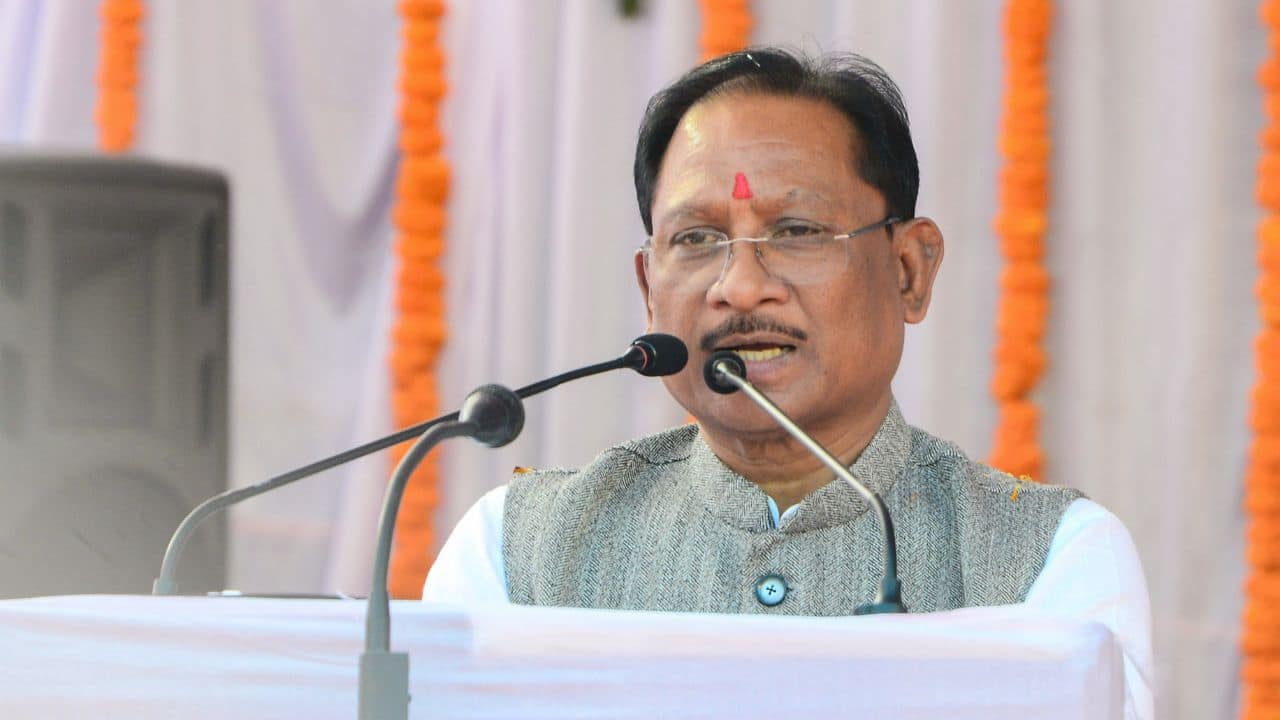
At the 11th Governing Council meeting of NITI Aayog, chaired by Prime Minister Narendra Modi, Chhattisgarh Chief Minister Vishnu Deo Sai presented a new vision for a Naxalism-free Bastar. He said the region, long affected by violence, will emerge as a model of economic revival, employment, education, tourism, and agriculture-led development.

At the meeting held at Rashtrapati Bhavan, the CM outlined a comprehensive plan to double tribal family incomes, drive a dairy revolution, expand irrigation across 32,000 hectares, develop tourism as a major industry, and boost investment in AI and semiconductors. He said these efforts are aimed at transforming Chhattisgarh into a developed state in line with the Viksit Bharat 2047 vision.

He added that the government aims to raise Bastar families’ monthly income to Rs 30,000 within three years, from current levels where nearly 85 per cent earn less than Rs 15,000 per month. To strengthen rural livelihoods, it is promoting agriculture, animal husbandry, forest produce, small industries, and welfare schemes.


Add Zee News as a Preferred Source


He added that the “Dairy Model” is being rapidly implemented, with tribal families to receive milch cows and buffaloes. The initiative aims to create sustainable village incomes, generate jobs for women and youth, and boost dairy centres, milk collection, transport, and local markets.

He said two major irrigation projects worth over Rs 2,000 crore are being launched, expanding irrigation coverage to 32,000 hectares. Year-round water availability in the Indravati region is expected to improve farm productivity and enable cultivation of vegetables, fruits, and other cash crops alongside paddy.

He also said digital health profiles are being created for nearly 36 lakh people in Bastar to strengthen healthcare services. The initiative will maintain secure medical records, improve access to timely information for doctors, and particularly benefit rural communities, women, and senior citizens.

The Chief Minister said nearly 200 security camps in Bastar are being transformed into “Seva Dera” centres, providing villagers access to 371 Central and State Government schemes at one location, including ration services, pensions, Ayushman cards, banking, healthcare, and education.

Highlighting tourism as a major source of employment, he said the government is developing Chitrakote and the Buddhist pilgrimage site of Sirpur as world-class destinations. Bastar is expanding water sports, adventure sports, and jungle safaris, while Sirpur is set to get a Global Meditation Centre, museum facilities, and a developed Mahanadi riverfront.

The Chief Minister said that the Chhattisgarh Government is accelerating investment, good governance, and technology-driven development. A total of 435 reforms have been implemented in the state, and the single-window system has been strengthened to create a more investment-friendly environment. He also informed that two modern semiconductor units are being established in the state.

He said that a new development model is being created in Bastar through education, healthcare, skill development, and digital technology. Education Cities are being developed in Abujhmad and Jagargunda at a cost of Rs 100 crore. In addition, better educational opportunities are being provided through 341 PM SHRI Schools, 5,857 smart classrooms, and bilingual books in 16 local languages.

Chief Minister informed that more than 33 lakh farmers have been connected to digital services under the AgriStack scheme. Government services have been made more transparent and accessible through the Digital Dwar platform and the Atal Monitoring Portal.

The CM said that under the vision of Atmanirbhar Bharat, industry, investment, and exports in Chhattisgarh have gained new momentum. New industries are being established in sectors such as sports goods, semiconductors, electronics, bio-ethanol, garments, and textiles, creating additional employment opportunities. Green industries are also being promoted for environmental conservation and CM Startup and NIPUN Missions to drive employment.

He informed that the ‘One District One Product’ (ODOP) scheme is helping local products from the state gain access to national and international markets. Up to February 2026 in the financial year 2025–26, exports worth Rs 761.76 crore were recorded, with aromatic rice contributing the largest share. This is leading to increased incomes for farmers, artisans, and entrepreneurs.

The meeting was attended by Union Ministers, Chief Ministers of various states, Lieutenant Governors of Union Territories, the Vice Chairman of NITI Aayog, its members, and senior officials.


Source link

FISA 702 reauthorization: Who are the 17 Republicans who voted against it – check full list

FISA 702 reauthorization: Who are the 17 Republicans who voted against it – check full list


The US House on Thursday refused to renew an extension through July 2 of the Foreign Intelligence Surveillance Act (FISA) provisions. This came amid a row over President Donald Trump‘s decision to make Bill Pulte the Director of National Intelligence, succeeding Tulsi Gabbard.

U.S. Representatives Thomas Massie (R-KY) and Lauren Boebert (R-CO) were among Republicans who voted against FISA extension. (REUTERS)

As DNI, Pulte would be in charge of the spy agencies. He is slated to take up the post on June 19. The extension to FISA that the Trump administration sought failed on a 198 to 218 vote. Now, the legal provisions granting broad authority to monitor phone, email and other communications to or from foreign persons are set to lapse on Friday now that there’s no Congressional approval.

Also Read | Trump pushes Bill Pulte to cut intel workforce, says ‘too many people’

The vote was regarding Section 702 of FISA and the US House notes the aim was to ‘amend the FISA Amendments Act of 2008 to extend the authorities of title VII of the Foreign Intelligence Surveillance Act of 1978, and for other purposes.’

Among those who voted ‘no’ or against the FISA extension are 19 Republicans. Here’s the full list.

Full list of Republicans who voted against FISA

The Republicans who voted against the FISA extension are as follows –

  1. Lauren Boebert of Colorado
  2. Josh Brecheen of Oklahoma
  3. Tim Burchett of Tennessee
  4. Eric Burlison of Missouri
  5. Kat Cammack of Florida
  6. Michael Cloud of Texas
  7. Andrew S. Clyde of Georgia
  8. Elijah Crane of Arizona
  9. Warren Davidson of Ohio
  10. Troy Downing of Montana
  11. Russ Fulcher of Idaho
  12. Paul A. Gosar, also of Arizona
  13. Harriet M. Hageman of Wyoming
  14. Mike Kennedy of Utah
  15. Thomas Massie of Kentucky
  16. John W. Rose, also of Tennessee
  17. Chip Roy from Texas
  18. Michael A. Rulli also from Ohio
  19. Keith Self, also of Texas

While 19 Republicans voted ‘nay’ 190 voted yes. Among Democrats, seven voted to extend FISA, while 199 voted against it.

Prior to the vote, House Democrats had said in a statement “The apparent motivation for his elevation is the demonstrated willingness of Bill Pulte to search government databases for alleged dirt on President Trump’s chosen political enemies.” Pulte has been a long-time Trump loyalist and was formerly director of the Federal Housing Finance Agency. During this time, he’s known to have launched investigations into perceived political adversaries of Trump.

Now, despite this lapse, intelligence agencies can continue the program to monitor communications until March 2027. This is because the Foreign Intelligence Surveillance Court has approved yearlong certifications of warrantless surveillance tactics and procedures. However, without the renewed statute, communications providers may stop cooperating with the government.

This can lead to gaps in data as the Trump administration would have to go to court to compel compliance.

(With Bloomberg inputs)


Source link

FIFA World Cup 2026: South Africa coach Hugo Broos sends strong warning ahead of Mexico clash, says ‘Must win opening game…’

FIFA World Cup 2026: South Africa coach Hugo Broos sends strong warning ahead of Mexico clash, says ‘Must win opening game…’


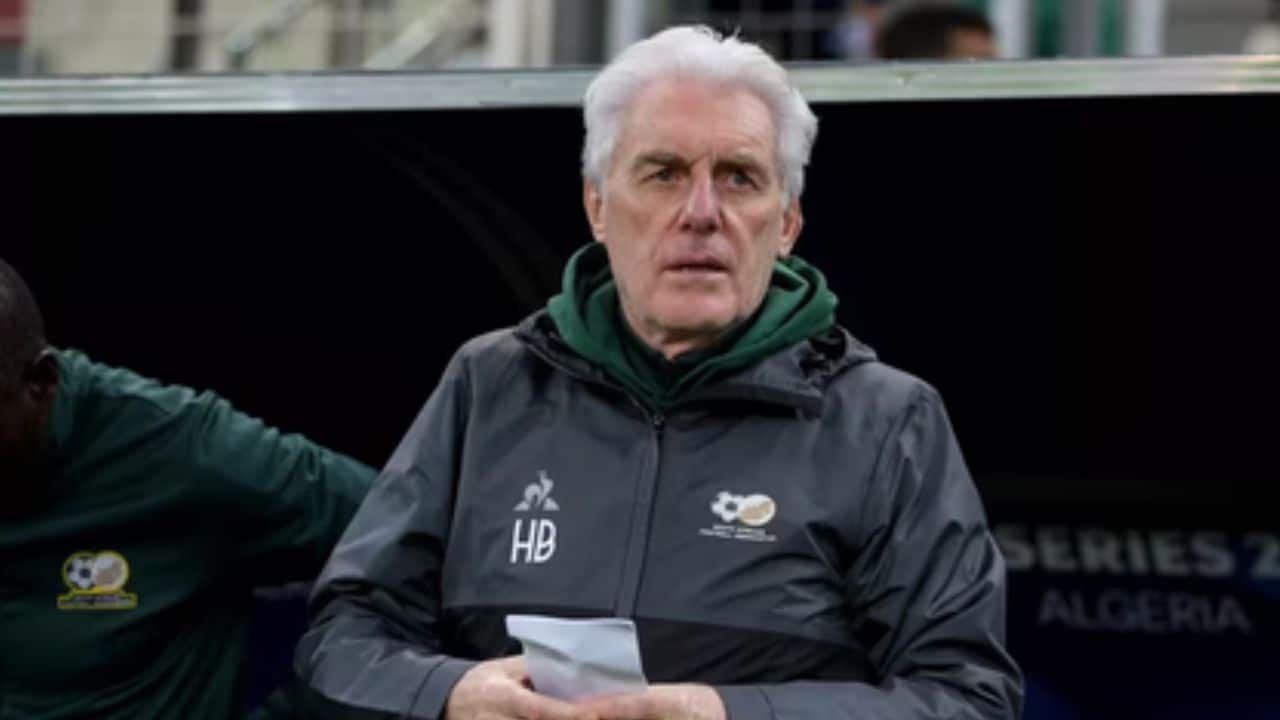
South Africa manager Hugo Broos has issued a clear message ahead of his team’s FIFA World Cup 2026 opener against co-host Mexico, stressing that his side must focus on winning the first match and avoid getting overwhelmed by the atmosphere at the iconic Azteca Stadium.

Broos said his squad is fully prepared for the challenge and believes his players are ready to handle the pressure of playing in front of a passionate home crowd.

ALSO READ: FIFA World Cup 2026 Opening Ceremony Live: Shakira, Burna Boy to light up grand inauguration


Add Zee News as a Preferred Source


Broos sets clear target

The South Africa coach underlined the importance of a strong start in a competitive group that also includes South Korea and the Czech Republic.

Broos said failing to win the opening match could immediately put his team under pressure in the tournament. “In a group like this, it is very important to win your first game. If you don’t win, you are already in a difficult position,” he said.

Mexico a strong side with home advantage

Broos acknowledged Mexico’s quality and depth, stating that they have match-winners across the squad and will be boosted by home support.

He admitted that playing at the Azteca Stadium in front of a massive crowd will be a major challenge for his players. “They have very good players who can decide a match. Playing in front of their own fans gives them a boost,” Broos said.

ALSO READ: FIFA World Cup 2026 Opening Ceremony Live: Shakira, Burna Boy to light up grand inauguration

Preparation in high altitude conditions

South Africa have already spent time in Mexico to adapt to the high-altitude conditions in Mexico City, which sits more than 2,200 metres above sea level. Broos said the team arrived early for proper acclimatisation and believes the preparation phase has gone according to plan. “Because of the altitude, we had to come a little earlier. We had 10 days, and I think that is sufficient,” he said. The South Africa coach also urged his players to stay focused and not be distracted by the intense crowd atmosphere expected at the stadium.

He said handling the noise and pressure will be key to achieving a positive result in the opening fixture. Broos also recalled historical ties between the two teams, including their meeting in the 2010 World Cup opener in South Africa, which ended in a 1-1 draw.

How to watch and stream FIFA World Cup 2026 in India

Multiple group-stage matches that will take place simultaneously will be aired across Zee5 app and website.

Link: https://www.zee5.com/


Source link

Rafale deal unlikely to be announced during PM Modi’s France visit

Rafale deal unlikely to be announced during PM Modi’s France visit


The current proposal stipulates that 90 of the 114 Rafale jets are to be produced in India, while the remaining 24 will arrive in a fly-away condition

The estimated ₹3.25 lakh crore government-to-government defence deal with France for 114 Rafale fighter jets is unlikely to be announced during Prime Minister Narendra Modi’s upcoming two-day visit to Paris starting June 13. The more significant part is that the Macron government is engaging seriously with India’s demand for access to source codes, which would allow the indigenous integration of weapons and systems. Another issue under extensive consideration is India’s push to execute the entire project under the ‘Make in India’ procurement policy, French diplomatic sources said on Thursday ahead of Modi’s visit.

Make in India

The current proposal stipulates that 90 of the 114 Rafale jets are to be produced in India, while the remaining 24 will arrive in a fly-away condition. This marks a significant shift from the two earlier Rafale contracts with France. When India purchased 36 Rafales for the Indian Air Force (IAF) in 2016 and another 26 marine versions last year, all aircraft were acquired in 100 per cent fly-away condition — they were built, assembled and tested entirely in France by Dassault Aviation. This time, however, 90 of them will be manufactured in India.

“Everything is open when the two leaders sit across the table,” said French diplomatic sources, noting that India formally issued a Letter of Request (LoR) last month seeking a commercial and technical response for what will be its biggest-ever defence acquisition. “Both the French government and French companies are committed to integrating Make in India into our defence deals, including the Rafale,” said sources.

As negotiations move into the formal stages of finalising costs, Indian content and manufacturing cooperation, the bilateral procurement route is visibly evolving from a traditional client-provider relationship. “It’s not a supplier-customer relationship. Its equal to equal,” said diplomatic sources.

Defence Secretary Rajesh Kumar Singh had earlier said that Dassault Aviation had offered 40 per cent localisation during initial discussions. However, he stated that the Ministry of Defence is pushing for 50 per cent or more Indian content to boost self-reliance. For the first time, the aircraft will be manufactured outside of France.

French diplomatic sources, too, reiterated that this contract is a departure from previous defence agreements. “This Rafale deal will be different from earlier deals. Unlike the past, the integration of Indian components and weapons will be an inherent part of this contract,” said a source.

Prime Minister Modi and French President Emmanuel Macron are scheduled to hold a bilateral meeting in Nice on June 14.

The proposed acquisition is meant to fill the capacity deficiency of the IAF, which now has an existing fleet of 32 squadrons against the requirement of 40 squadrons to fight a two-front war. From 2029-30, the Rafale jets from the expected deal will start coming to India.

Published on June 11, 2026


Source link

Trade sees India’s 2026-27 cotton carry-forward stocks 42% up at 85 lakh bales on higher imports

Trade sees India’s 2026-27 cotton carry-forward stocks 42% up at 85 lakh bales on higher imports


Cotton imports in the 2025-26 season are expected to rise to 60-65 lakh bales (of 170 kg each) following the government’s recent decision to exempt import duty, aimed at ensuring the textile industry has access to quality cotton.

As a result, carry-forward stocks at the start of the 2026-27 season in October are projected to rise by about 42 per cent to over 85 lakh bales.

According to the Cotton Association of India (CAI), imports till the end of May 2026 stood at 43.5 lakh bales, up nearly 32 per cent from 33 lakh bales in the corresponding period last year. The trade body had earlier projected imports of 47 lakh bales for the ongoing marketing season, ending September.
“Imports of 43.5 lakh bales had already arrived at Indian ports by the end of May. Following the recent duty exemption, we expect an additional 15 lakh bales to be imported. Total imports this season could reach 60-65 lakh bales,” said Atul S Ganatra, Chairman of CAI’s Crop Committee.

At its recent meeting, CAI retained its estimate of the 2025-26 cotton crop at 334 lakh bales. Cotton pressing for the season was completed at 322.35 lakh bales till the end of May, Ganatra said. Exports are estimated at 10 lakh bales. Closing stocks for 2025-26 are projected at 85.59 lakh bales, about 25 lakh bales higher than the previous season’s estimated 60 lakh bales.

“The higher closing stock is primarily on account of increased imports,” Ganatra said.

Though domestic and imported cotton are currently available at similar prices, textile mills continue to favour imported cotton as it delivers around 4 per cent higher yarn realisation, Ganatra said.

In addition, yarn produced from imported cotton commands a premium of about ₹7 per kg in the market, making imports more attractive despite price parity.

As of end-May, cotton stocks were estimated at 191.44 lakh bales. Of this, around 82 lakh bales were held by mills, while the rest was with the Cotton Corporation of India (CCI), traders, ginners and multinational companies.

Published on June 11, 2026


Source link

YouTube
Instagram
WhatsApp




