Samsung launches Hearapy app on Android to reduce motion sickness: Details

Samsung launches Hearapy app on Android to reduce motion sickness: Details


Hearapy app (Image: Google Play Store)


Samsung has introduced a new app to tackle a common travel problem—motion sickness. Called Hearapy, the app is now available on Android via the Google Play Store and claims to reduce symptoms like nausea using sound. According to the company, the app uses sound to help users stay balanced and feel comfortable while travelling, instead of relying on medication or other methods.


Hearapy app: How it works


As per the Samsung Play Store description, the app is built around the idea that specific sound frequencies can help improve balance. It states that a “clear 100 Hz bass sine tone stimulates your sense of balance and helps you feel better on the go.” The company also highlights that travel sickness affects a large number of people and that this solution is designed to make journeys more comfortable. Samsung said the app works best when paired with its Galaxy Buds 4 Pro, although it can function with other headphones as well. 


According to The Verge, the app works by playing a low 100Hz sine wave tone through connected headphones for about 60 seconds. This sound is designed to stimulate the vestibular system, which is the part of the inner ear responsible for balance and orientation. 

Users can adjust the playback duration between 40 and 120 seconds. However, a full minute of listening is said to provide relief from motion sickness symptoms for up to two hours. The process can be repeated if needed, depending on how the user feels during travel. 


Research and limitations


According to The Verge, Samsung said that the concept is inspired by research from Nagoya University in Japan. The study found that certain sound wavelengths helped reduce “the staggering and discomfort” experienced by people in moving vehicles. However, this is not a guaranteed fix. The effectiveness may vary depending on the headphones being used and their ability to produce sound at around 80 to 85 decibels. Samsung also noted that while the app works with most earphones, proper sound output is important for the best results.

First Published: Apr 02 2026 | 12:43 PM IST


Source link

Jogindra Group’s Rs 1,100 crore investment to accelerate Punjab’s industrial growth and green energy push: Sanjeev Arora

Jogindra Group’s Rs 1,100 crore investment to accelerate Punjab’s industrial growth and green energy push: Sanjeev Arora


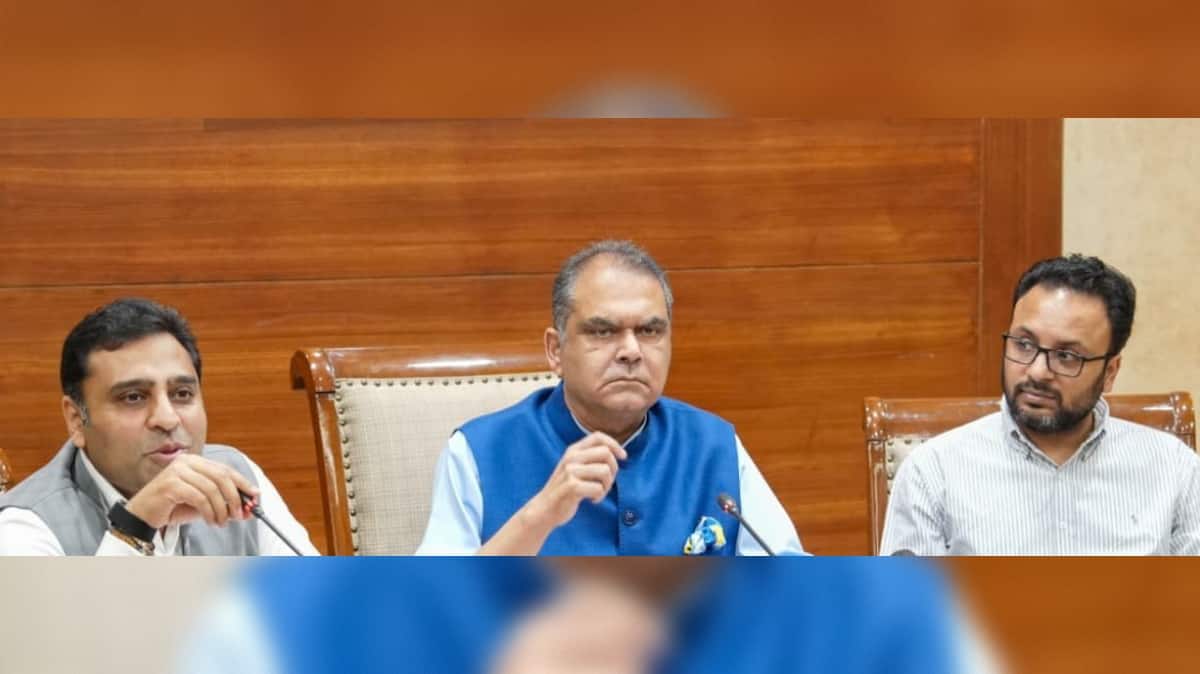
Punjab Cabinet Minister for Industries and Commerce, Investment Promotion, Power, and Local Government, Sanjeev Arora, shared that Jogindra Group has announced a strategic expansion plan worth Rs 1,100 crore, giving a major boost to Punjab’s industrial growth and green energy transition. He stated that this investment reflects the growing confidence of the industry in Punjab’s progressive policies and business-friendly environment.

Sanjeev Arora said that this investment reflects the growing confidence of the industry in Punjab’s progressive policies and business-friendly environment. He detailed that the expansion includes Rs 700 crore investment in the steel sector, primarily through Jogindra Castings and Vardhman Adarsh, along with Rs 400 crore investment in renewable energy through Jogindra Green India.

Highlighting the scale of impact, Sanjeev Arora noted, “The Jogindra Group’s turnover is projected to increase from Rs 3,000 crore to Rs 5,000 crore, while employee strength will rise from 1,800 to 3,000, creating significant employment opportunities. He added that renewable energy capacity will expand from 37 MW to 120 MW.”


Add Zee News as a Preferred Source


Providing background, he stated that established in 1992, Jogindra Group is a leading industrial conglomerate in North India with a strong presence in steel manufacturing and a growing footprint in renewable energy. “The Group is promoted by CMD Adarsh Garg along with Directors Sanjay Gupta and Nimit Gupta,” he added.

Emphasising the regional impact, Sanjeev Arora said that Mandi Gobindgarh has always been the backbone of Punjab’s steel industry. “Today, under Bhagwant Mann Government, it is regaining its strength with new investments, modernization, and a strong push towards cleaner and more efficient production. The expansion by Jogindra Group is a clear sign that Gobindgarh is once again becoming a growth engine for Punjab’s industrial economy.”

He further stated that Punjab continues to emerge as a preferred destination for both manufacturing and green energy investments, and that this Rs 1,100 crore investment will strengthen the industrial base, create substantial employment opportunities, and promote sustainable growth.

Reiterating the Bhagwant Mann Government’s commitment, the Minister said, “The AAP Government remains focused on providing a conducive ecosystem for industry, ensuring ease of doing business and encouraging environmentally responsible investments across Punjab.”


Source link

Latent View Analytics Ltd leads gainers in 'A' group

Latent View Analytics Ltd leads gainers in 'A' group


Ola Electric Mobility Ltd, V-Mart Retail Ltd, Websol Energy System Ltd and Page Industries Ltd are among the other gainers in the BSE’s ‘A’ group today, 02 April 2026.

Ola Electric Mobility Ltd, V-Mart Retail Ltd, Websol Energy System Ltd and Page Industries Ltd are among the other gainers in the BSE’s ‘A’ group today, 02 April 2026.

Latent View Analytics Ltd surged 10.30% to Rs 287.5 at 11:45 IST. The stock was the biggest gainer in the BSE’s ‘A’ group. On the BSE, 8.14 lakh shares were traded on the counter so far as against the average daily volumes of 1.93 lakh shares in the past one month.


Ola Electric Mobility Ltd soared 8.56% to Rs 28.15. The stock was the second biggest gainer in ‘A’ group. On the BSE, 147.64 lakh shares were traded on the counter so far as against the average daily volumes of 62.25 lakh shares in the past one month.

V-Mart Retail Ltd spiked 7.81% to Rs 522. The stock was the third biggest gainer in ‘A’ group. On the BSE, 8.84 lakh shares were traded on the counter so far as against the average daily volumes of 12957 shares in the past one month.

Websol Energy System Ltd exploded 4.01% to Rs 74.25. The stock was the fourth biggest gainer in ‘A’ group. On the BSE, 7.2 lakh shares were traded on the counter so far as against the average daily volumes of 8.51 lakh shares in the past one month.

Page Industries Ltd jumped 3.67% to Rs 33825. The stock was the fifth biggest gainer in ‘A’ group. On the BSE, 2098 shares were traded on the counter so far as against the average daily volumes of 647 shares in the past one month.

Disclaimer: No Business Standard Journalist was involved in creation of this content

First Published: Apr 02 2026 | 12:04 PM IST


Source link

IPL 2026: Sanjiv Goenka’s reaction after Rishabh Pant’s LSG loss leaves fans stunned

IPL 2026: Sanjiv Goenka’s reaction after Rishabh Pant’s LSG loss leaves fans stunned


Lucknow Super Giants owner Sanjiv Goenka backed captain Rishabh Pant after the team’s six-wicket defeat to Delhi Capitals in their IPL 2026 opener, even as a post-match on-field exchange between the two sparked widespread discussion on social media. LSG were bowled out for 141 at home, a total that proved insufficient as Delhi Capitals chased it down comfortably with more than two overs to spare. The result has put early focus on LSG’s team combination and leadership decisions.


Add Zee News as a Preferred Source


Reacting shortly after the match, Goenka struck a composed tone, backing both the captain and the squad.

“This is a long season, and moments like these are part of building something meaningful. I have full confidence in our captain and the team to respond with strength,” Goenka wrote on X.

He also acknowledged fan support at the Ekana Stadium and expressed confidence that the team would “come back stronger”, signalling no immediate concern despite the loss.

Viral visuals add to post-match narrative

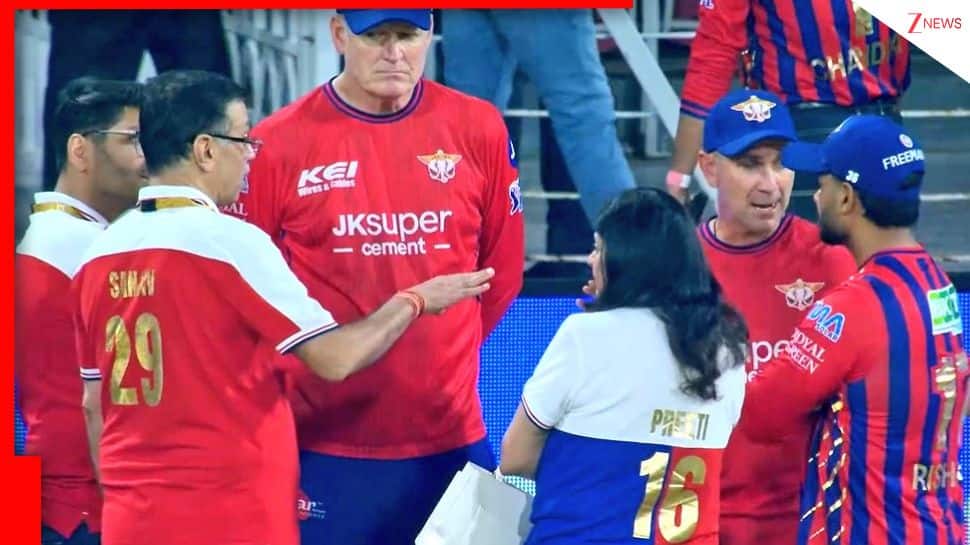
Following the match, visuals of Goenka in conversation with Pant and head coach Justin Langer surfaced online and quickly went viral. While there was no audio to confirm the nature of the discussion, the clip triggered speculation among fans.

The moment also revived comparisons with Goenka’s earlier public interaction with former LSG captain KL Rahul during the 2024 season, which had drawn criticism at the time. However, Goenka’s public statement after the game appeared aimed at diffusing any such narrative.

Batting struggles cost LSG in opener

On the field, LSG struggled to build momentum with the bat. The top order failed to deliver:

  • Pant scored 7 after promoting himself up the order
  • Aiden Markram managed 11
  • Nicholas Pooran added just 8

The lack of partnerships proved costly as LSG were restricted to a below-par total.

In response, Delhi Capitals sealed the chase comfortably, powered by:

  • Sameer Rizvi (70*), anchoring the innings
  • Tristan Stubbs (39*), finishing the game
  • Pant reflects on opening decision

Pant’s decision to open the innings was one of the key talking points after the match. The left-hander, who has predominantly batted in the middle order, said the move remains under consideration.

“It’s a 50-50 call,” Pant said when asked if he would continue opening.

Statistically, Pant has been effective as an opener in T20 cricket, but the role change raises questions about LSG’s overall batting balance, especially with established top-order options like Mitchell Marsh and Markram.

Tactical calls under scrutiny

Pant also addressed other decisions taken during the match. He explained that all-rounder Shahbaz Ahmed was introduced as an impact substitute following a batting collapse, which limited the team’s bowling options.

On the batting order, Pant defended the move to send Ayush Badoni ahead of Pooran.

“The idea was simple. He would take charge in the middle overs. We had a defined role for him, especially when we lose early wickets,” Pant said.

He admitted that the team fell short due to the absence of key partnerships but pointed out that the bowlers showed promise with the new ball.


Source link

Why RBI is clamping down on FX arbitrage

Why RBI is clamping down on FX arbitrage


India’s central bank has activated crisis-era measures to support the rupee, which has fallen to an all-time low as oil prices soared ​and foreign investors pulled money out at a record pace.

Amid the strain, the Reserve Bank of ‌India (RBI) has stepped in to curb speculative activity via arbitrage trades.

Here is ​what the central bank is trying to achieve through its measures.

What has the RBI done?

The RBI has announced two rounds of measures to support the rupee.

Last Friday, the RBI capped the net open rupee position of banks at $100 million compared with its earlier rule where positions equivalent ‌to 25 per cent of capital were permitted. A few days later, on Wednesday, it said banks can’t offer rupee non-deliverable forwards to resident and non-resident clients.

What are the reasons behind the move?

The RBI’s moves followed a near 4% depreciation ‌in ⁠the rupee in March, over and above an about 4% depreciation in the ⁠prior 12 months.

While some of the declines were due to weakening external fundamentals – foreign outflows and higher oil prices – a popular arbitrage trade had added to the pressure on the currency.

This so-called rupee basis trade involved profiting from differences ​between rupee forward rates onshore and ‌in the NDF market.

The trade itself is relatively straightforward. When NDFs imply a weaker rupee than onshore markets, traders can arbitrage the gap by selling dollars in the NDF market while buying dollars onshore.

This adds to dollar demand in an already strained local market and ‌accelerates the fall in the rupee. It also dulls the impact of FX ​market interventions by the central bank and puts more pressure on its forex reserves.

How large is the arbitrage trade?

Bankers estimate that across state-run, ⁠private and foreign lenders, banks had built up positions of about $30 billion to $40 billion with a significant chunk of the activity occurring since the Iran war broke out.

Do the rules amount to capital controls?

Not really. No additional restriction has been imposed on withdrawing capital from India.

What the steps do mean is that banks and corporates will only be able to hedge genuine underlying exposures/dollar requirements while making it significantly harder for both to put on large speculative wagers on the currency.

What does this mean for corporates and banks?

The moves could leave banks saddled with chunky losses as they rush to unwind arbitrage positions, an objective made ‌even costlier by the central bank’s decision to bar lenders from offering corporates NDF contracts.

The cost of cutting ​positions to RBI levels largely depends on the spread between the onshore market and the offshore NDF. A wider spread raises the cost of unwinding positions, ⁠and consequently, increases losses.

The move has also led to a sharp rise in hedging costs for overseas ⁠investors who typically rely on NDFs to hedge currency risk.

What does this mean for the rupee?

The rupee is expected to benefit from the measures as ‌the unwinding of arbitrage positions would spark a bout of heavy dollar sales in the onshore market.

The flip-side, though, is that the measures could create a disconnect between the ​onshore and NDF market while also denting the central bank’s previous efforts to integrate the two markets.

Published on April 2, 2026



Source link

YouTube
Instagram
WhatsApp



