BOI sets up specialised branch to strengthen partnership-led lending ecosystem

BOI sets up specialised branch to strengthen partnership-led lending ecosystem


BOI said its specialised branch support the Bank’s strategic objective of sustainable business growth
| Photo Credit:
Getty Images

Bank of India (BOI) has inaugurated a dedicated Strategic Business Branch (SBB) to focus on digital and partnership-led financing business including Pool Buyout, Co-Lending, TReDS (Trade Receivables Discounting System) and Supply Chain Finance at Nariman Point, Mumbai.

Ravi Shankar, General Manager, Digital Lending Department, BOI, said,”The opening of SBB is a significant step towards strengthening our partnership-led lending ecosystem.

“By bringing these strategic business segments under a dedicated branch, we aim to enhance scalability, portfolio monitoring and operational efficiency while supporting the evolving financing requirements of the corporates.”

BOI said its specialised branch will serve as a centre of excellence for partnership-led financing, supporting the Bank’s strategic objective of sustainable business growth while maintaining robust governance and risk controls.

Published on June 9, 2026


Source link

NCDEX likely to relaunch pepper futures by end-June


The National Commodity and Derivatives Exchange (NCDEX) is preparing to relaunch pepper futures by the end of June, with the contract likely to emerge as an early beneficiary of the market regulator’s proposed cash-settlement-first framework for agri derivatives, according to sources familiar with the matter.

Pepper futures were among the more actively traded spice contracts on NCDEX in the early 2010s before the exchange discontinued them following a series of quality disputes and delivery-related legal challenges. Many of the legacy disputes linked to the contract have since been resolved, clearing the path for a relaunch.

The exchange has already secured the necessary regulatory approvals for the contract relaunch and put in place warehousing infrastructure in Kerala, which is expected to serve as the base delivery centre.

However, industry sources said the timing of the launch could coincide with the operationalisation of the Securities and Exchange Board of India’s (SEBI) proposed pilot framework allowing certain agricultural derivatives to be introduced as cash-settled contracts before transitioning to physical settlement.

Under the proposal issued in May, contracts would be required to migrate to physical settlement upon crossing specified thresholds related to average daily traded volume or open interest, or after a two-year outer limit, whichever is earlier. The framework is expected to be operationalised shortly, potentially before the end of this month.

The move is aimed at addressing concerns around low liquidity and delivery-related constraints that have hampered the growth of several commodity contracts. Market participants said the framework could prove particularly useful for contracts such as pepper, where exchanges are seeking to build trading volumes and liquidity before scaling up delivery-based settlement.

“For a contract that is being brought back after a long gap, the challenge is not just delivery readiness but attracting sufficient participation from day one. The proposed framework gives exchanges another route to build liquidity before transitioning to physical settlement,” said a person familiar with the discussions.

Sources said that if the new settlement framework is notified in the coming weeks, the pepper contract could serve as an early test of whether a phased approach to settlement can help revive trading interest in agricultural commodities that have struggled to attract volumes under traditional physical-delivery structures.

“The timing is interesting because the framework is expected to be operationalised around the same time. Whether pepper ultimately uses it will depend on the final contours, but it is certainly relevant for contracts of this nature,” said another person familiar with the matter.

The relaunch is also expected to support NCDEX’s efforts to expand its presence in southern India, where spice markets remain active. The exchange could use the opportunity to improve domestic price discovery in pepper, a commodity where global pricing is heavily influenced by Vietnam despite India remaining one of the world’s major producers.

The exchange has been working to broaden its commodity offerings and deepen its presence in agricultural markets after a prolonged period of regulatory disruptions across several farm commodity contracts. NCDEX did not comment on queries.

Published on June 9, 2026


Source link

Banks want RBI to relax liquidity buffer norm relating to institutional deposits


Money in a burlap full of Indian Five Hundred  Rupee Notes. Concept for lottery winning, cash prizes, jackpot. istock photo for BL

Money in a burlap full of Indian Five Hundred Rupee Notes. Concept for lottery winning, cash prizes, jackpot. istock photo for BL
| Photo Credit:
pixelfusion3d

In the backdrop of the gradual structural shift in deposits, banks want the Reserve Bank of India to relax the so-called “run-off factor” on institutional deposits under the Liquidity Coverage Ratio (LCR) framework so that they have more resources to lend.

The structural shift in bank deposits refers to a phenomenon whereby savers, in pursuit of higher returns are gravitating towards investments such as mutual funds, which in turn place deposits with banks.

LCR requires banks to maintain high quality liquid assets (HQLAs) to meet 30 days net outgo under stressed conditions. This ratio is currently at 100 per cent. As of March 2026, scheduled commercial banks’ liquidity buffers were robust, with an LCR of 123.70 per cent.

The run-off factor/ rate, representing the estimated percentage of deposits a bank expects to be withdrawn or transferred during a period of stress, for funds mobilised from banks/insurance companies & financial institutions and entities in the ‘business of financial services’ is pegged at 100 per cent, leaving banks with barely any surplus to lend.

In contrast, the run-off factor for retail deposits (without internet banking and mobile banking), the run-off factor is 5 per cent. What this means is that for every ₹100 raised by banks as retail deposits, they have to park only ₹5 in HQLAs such as Government Securities.

After taking into account, statutory pre-emptions such as the cash reserve ratio (CRR) and the statutory liquidity ratio (SLR), currently at 3 per cent and 18 per cent, respectively of banks’ deposits, they still have ₹74 available to lend.

The chief of a private sector bank said, “The wholesaleisation of deposits is quietly reshaping the industry’s balance sheets. As money migrates from retail savers to institutions, banks are forced to hold far more high-quality liquid assets — 100 per cent LCR for institutional deposits versus barely 5 per cent for retail.’

Structural drag

“It’s a structural drag that locks up liquidity and leaves far less room for actual lending.” He emphasised this needs to be suitably re-calibrated lower.

He underscored that if the RBI and the government want banks to finance growth, they must first unshackle their balance sheets.

The treasury head of a private sector bank noted that a calibrated reduction in CRR, SLR and LCR would immediately release meaningful lendable resources.

“The industry isn’t asking for concessions; it’s asking for the freedom to put more money to work in the real economy,” he said.

Published on June 9, 2026


Source link

Sebi may widen 50% overlap rule to thematic passive mutual fund schemes

Sebi may widen 50% overlap rule to thematic passive mutual fund schemes


The Securities and Exchange Board of India (Sebi) is considering extending the maximum 50 per cent portfolio overlap rule — currently applicable to active funds — to index funds and exchange-traded funds (ETFs), in a move to curb the proliferation of schemes in the fast-growing passive mutual fund (MF) segment.


According to industry sources, the proposed restriction may initially apply only to sectoral and thematic passive schemes. Another major category within passive investing — smart-beta funds — could face limits on the number of schemes an asset management company (AMC) can launch.


“These are some of the suggestions made by the industry. The regulator may, however, choose a different approach,” said a senior mutual fund executive.


Queries sent to Sebi and the Association of Mutual Funds in India (Amfi) remained unanswered at the time of publication.


Earlier this year, Sebi introduced the 50 per cent overlap rule for active sectoral and thematic funds to prevent the launch of near-identical products. The regulator is exploring similar guardrails for the passive segment and had sought feedback from Amfi, according to another industry executive.


Over the past few years, new fund launches have increasingly been concentrated in the passive space as asset managers sought to gain market share in the rapidly expanding segment. The absence of launch restrictions, coupled with greater scope for product innovation, has led to a sharp rise in the number of offerings.


The number of passive schemes, including overseas products, has increased fivefold over the past six years. At 740, passive schemes account for nearly 40 per cent of all MF schemes, compared with just 8 per cent in April 2020.


The surge in launches has been accompanied by strong investor interest. Assets under management (AUM) in passive products, including gold and silver ETFs and overseas fund-of-funds, have grown ninefold since the pandemic to around ~15 trillion.


The proliferation of mutual fund schemes first came under Sebi’s scrutiny in 2024, when fund launches hit record levels amid a strong equity market rally. That year saw more than 50 sectoral and thematic fund launches and around 130 passive fund launches.


Regulatory concerns were heightened by the concentration of launches in relatively narrow and higher-risk categories such as thematic and smart-beta funds, which were also attracting significant investor inflows.


New fund offers (NFOs) typically attract heightened investor interest during bull markets, with fund houses often launching products linked to sectors, themes or factors that have already delivered strong returns. This raises the risk of investors entering at or near the peak of a cycle and subsequently facing underperformance.


Since then, Sebi has rolled out several measures to keep the pace of new launches under check. Besides the overlap rule, the regulator has capped distributor commissions on switch transactions into NFOs and mandated time-bound deployment of NFO collections to address incentives that encourage frequent product launches.


Source link

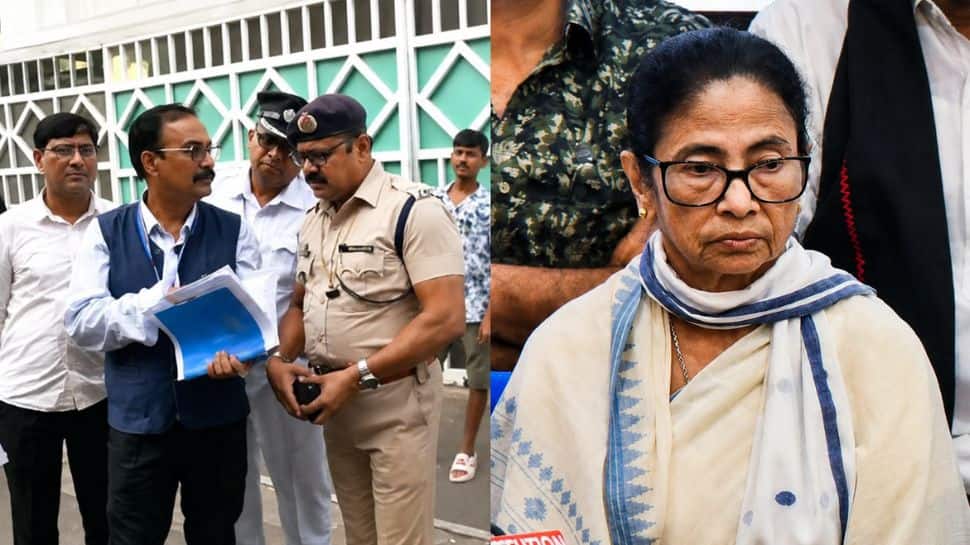
More trouble for TMC: CID visits Mamata Banerjee’s home and nephew Abhishek’s office while she meets Sonia Gandhi in Delhi

More trouble for TMC: CID visits Mamata Banerjee’s home and nephew Abhishek’s office while she meets Sonia Gandhi in Delhi


While TMC Supremo and former West Bengal Chief Minister Mamata Banerjee is in Delhi holding a closed-door meeting with Congress leader Sonia Gandhi, CID teams back home have launched a coordinated crackdown, simultaneously descending on the former CM’s residence and the Camac Street office of her nephew and key political heir, MP Abhishek Banerjee.


Add Zee News as a Preferred Source


CID probe linked to alleged fake signatures in Assembly

The CID visit is believed to be linked to allegations of fake signatures in the West Bengal Legislative Assembly. The agency is investigating a complaint against Abhishek Banerjee over a letter sent to the Assembly Secretariat regarding the party’s choice for the Leader of the Opposition.

TMC signature row

Some rebel TMC MLAs have claimed that their signatures on the letter were forged and that they never signed it. The CID has formed a Special Investigation Team (SIT) to look into the matter. Handwriting samples of some MLAs have already been collected.

Also Read: 20 TMC MPs to back NDA? Why Kakoli Ghosh’s claim has set off fresh buzz

Internal rift in TMC

This is not only a legal issue. It has also exposed a divide within the TMC. Several MLAs have spoken against the party leadership. Some have accused the party of using their names and signatures without permission. The MLAs who filed the complaint were later expelled from the party, making the conflict even deeper.

Mamata Banerjee meets Sonia Gandhi amid political crisis

The timing of these developments has made the situation more dramatic. While CID officials were visiting Abhishek Banerjee’s residence in Kolkata, he and Mamata Banerjee were in Delhi for important political meetings. Mamata Banerjee was meeting Sonia Gandhi and trying to show opposition unity at the national level, while her party in Bengal was facing a serious internal crisis.

According to reports, the CID has given Abhishek Banerjee a 24-hour notice. He had earlier not responded to a summons, saying that he was unwell and busy with programmes in Delhi. His legal team has also moved the Calcutta High Court, seeking protection from any strict action by the CID.

The development comes after another major incident. On May 30, protesters allegedly attacked Abhishek Banerjee in Sonarpur. Eggs and shoes were reportedly thrown at him. His clothes were torn, and he had to wear a helmet for safety. Later, he said that because of health problems caused by the incident, he would not appear before the CID.

Abhishek Banerjee is also facing another case. A cybercrime FIR was recently filed over his alleged inflammatory election speeches. As a result, he is facing pressure from many sides. Police investigations, internal party rebellion, court cases, and growing political pressure have all added to his problems.

TMC faces one of its biggest internal challenges

The situation is also becoming difficult for Mamata Banerjee. While she is trying to bring opposition parties together at the national level, her own party in Bengal is facing one of its biggest internal challenges in recent years. 

Also Read: The global diaspora – 10 countries with the biggest Indian populations


Source link

YouTube
Instagram
WhatsApp