Worker critical after colleagues force compressed air into body as prank in Greater Noida; 2 held

Worker critical after colleagues force compressed air into body as prank in Greater Noida; 2 held


A 22-year-old factory worker sustained severe internal injuries and is battling for his life after two colleagues allegedly forced compressed air into his body through his rectum, purportedly as a prank, at a manufacturing unit in Greater Noida’s Rabupura area on Tuesday, police said.

Worker critical after colleagues force compressed air into body as prank in Greater Noida; 2 held

Both accused, one of whom is the victim’s cousin, have been arrested and booked for attempted murder.

The victim, who hails from Kashipur in Uttarakhand, works as a daily wage labourer at an FMCG (fast-moving consumer goods) flexible packaging factory in Rabupura, police said.

According to the FIR lodged by the factory’s plant manager, the incident occurred around noon on Tuesday while the man was sweeping the factory floor. The accused allegedly used an air pipe connected to a compressed-air machine and forced air into the victim’s body, causing severe intestinal injuries.

Police said the equipment is typically used for cleaning factory floors. Within minutes of the incident, the man complained of severe abdominal pain and began bleeding, following which the factory staff rushed him to a nearby private hospital.

“He is currently on ventilator support and his condition is critical. Doctors have indicated that surgery may be required,” said Shyam Babu Shukla, station house officer of Rabupura police station.

Preliminary inquiry suggested the men had previously engaged in similar acts. The accused allegedly told investigators that Tuesday’s incident was intended as a prank, but it turned serious.

Police registered a case under Section 109 (attempt to murder) of the Bharatiya Nyaya Sanhita and arrested both accused.


Source link

FIFA World Cup 2026: Ronaldo started, Portugal led… then DR Congo stunned everyone | Other Sports News | Zee News

FIFA World Cup 2026: Ronaldo started, Portugal led… then DR Congo stunned everyone | Other Sports News | Zee News


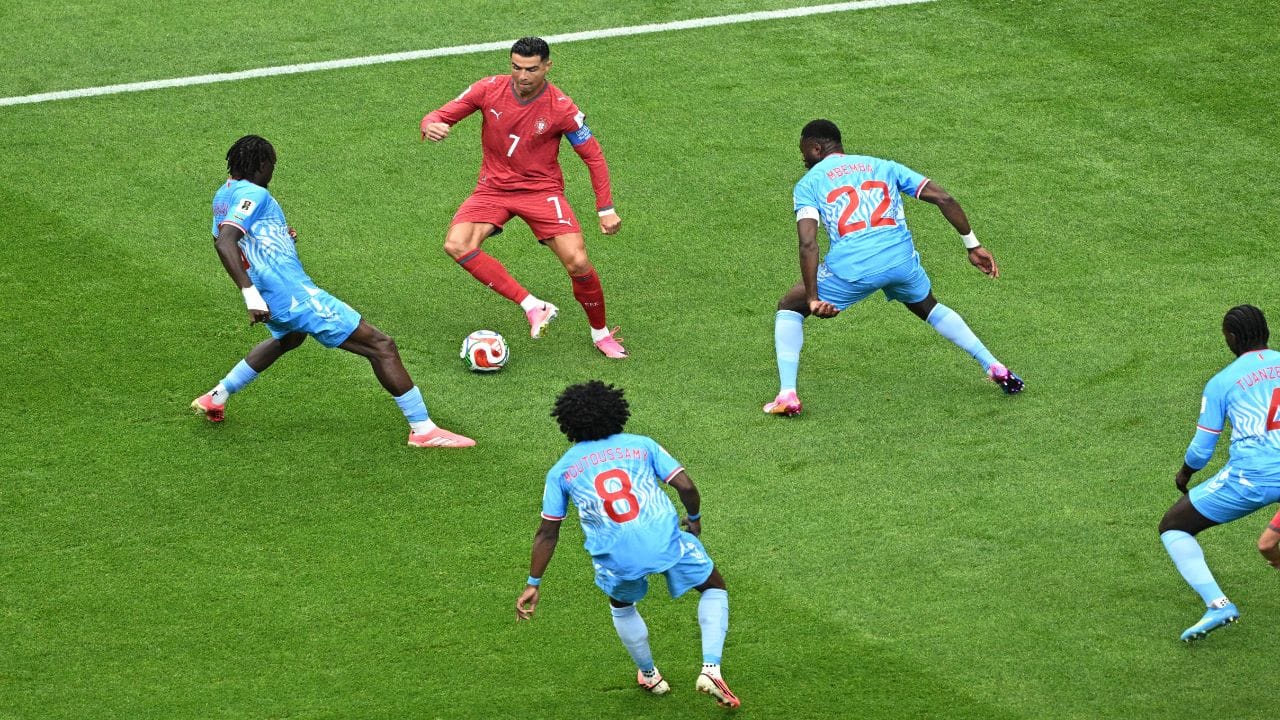
FIFA World Cup 2026: Portugal opened their FIFA World Cup 2026 with a disappointing 1-1 draw against DR Congo in Houston, where the African side made their return to football’s biggest stage with a hard-earned point. While Portugal dominated possession for long stretches, Sébastien Desabre’s men showed discipline, resilience and enough attacking threat to ensure they left with a result that could prove crucial in Group K.

Playing their first World Cup match since 1974, DR Congo made a strong impression as they secured a valuable point. Facing the strongest team in the group on paper, the Leopards stood firm after an early setback and found a deserved equaliser just before half-time.

Neves strikes early for Portugal

Portugal could hardly have asked for a better start. Just six minutes into the match, Pedro Neto delivered a teasing cross from the left and João Neves perfectly timed his run. The midfielder slipped into space inside the penalty area and headed past Dimitry Mpasi to give Roberto Martinez’s side a 1-0 lead.

The early goal appeared to set the tone for a comfortable evening for Portugal, who controlled the ball through the midfield trio of Neves, Bruno Fernandes and Vitinha. But despite enjoying most of the possession, they struggled to turn that control into clear scoring opportunities.

DR Congo responded well. Yoane Wissa tested Diogo Costa with an effort from outside the box, while Cédric Bakambu also looked lively as the African side began finding moments on the counterattack. Aaron Wan-Bissaka made an important defensive intervention to deny Nuno Mendes a shooting opportunity as Portugal searched for a second goal.

Making another chapter in his extraordinary World Cup career at the age of 41, Cristiano Ronaldo received loud cheers whenever he touched the ball. However, the Portuguese captain found chances hard to come by during the opening period.

Wissa rewards DR Congo’s persistence

As half-time approached, DR Congo’s increasing confidence finally paid off. Deep into stoppage time, a short corner routine created the breakthrough. Arthur Masuaku received the ball before producing an excellent cross towards the far post. Wissa found space inside the area and guided a powerful header beyond Costa to level the score at 1-1.

The goal changed the mood heading into the break. Portugal had enjoyed most of the possession, but DR Congo had managed more attempts on goal and looked comfortable in the contest.

Portugal push, but Congo hold firm

Martinez reacted by introducing Francisco Conceição in the beginning of the second half with a hope to inject more energy into the attack. The winger soon became Portugal’s most dangerous outlet, repeatedly driving down the right flank and creating problems for the Congolese defence.

Portugal thought they had restored their lead when João Cancelo gave an acrobatic finish after good work from João Neves, but the full-back had drifted offside and the goal was correctly ruled out.

Ronaldo had perhaps his best opportunity midway through the half. Conceição picked him out inside the box, but the veteran striker could not make clean contact and dragged his shot wide of the post.

DR Congo never abandoned their attacking ambitions. Bakambu came close when he won possession inside Portugal’s area and struck the outside of the post. Later, he fired over the bar after a dangerous counterattack that exposed Portugal’s defence.

As the game entered its closing stages, Portugal increased the pressure. Rafael Leão, Gonçalo Ramos and Nelson Semedo were introduced from the bench, while Bruno Fernandes continued searching for openings. Mpasi was calm in goal, collecting crosses confidently and helping his side withstand the late assault.

Portugal’s final opportunities came through a Fernandes effort from distance and a late corner, but neither produced a winner. DR Congo managed the closing moments intelligently and held on through five minutes of added time.

The final whistle confirmed a memorable result for the Leopards. Returning to the World Cup after a 52-year absence, they left Houston with a valuable point against one of Europe’s strongest teams. Meanwhile, Portugal will feel they had enough possession and territory to win the match but lacked the cutting edge needed to turn dominance into three points.

Stay informed on all the latest news, real-time breaking news updates, and follow all the important headlines in india news and world news on Zee News.


Source link

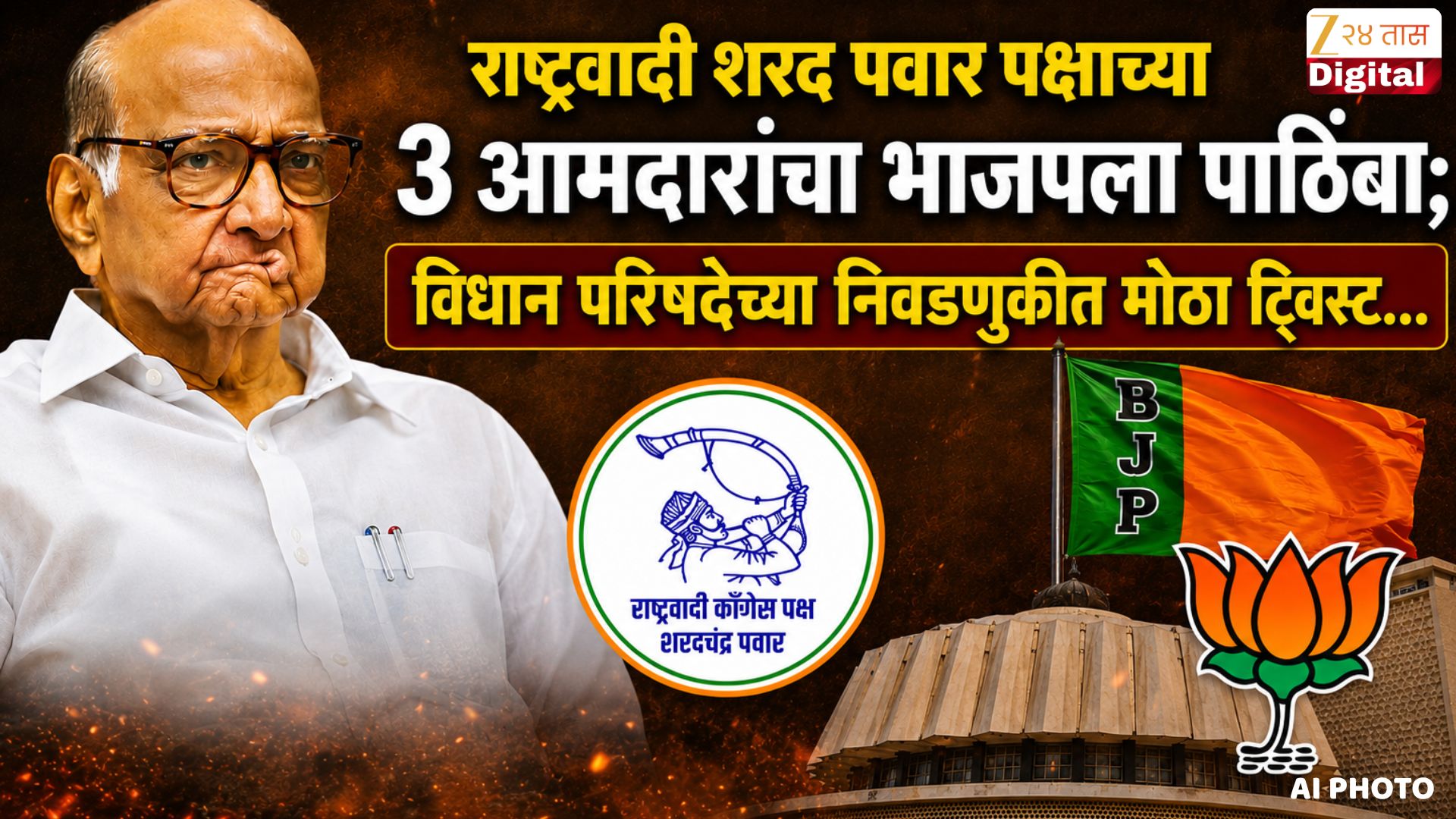
राष्ट्रवादी शरद पवार पक्षाच्या 3 आमदारांचा भाजपला पाठिंबा; विधान परिषदेच्या निवडणुकीत मोठा ट्विस्ट

राष्ट्रवादी शरद पवार पक्षाच्या 3 आमदारांचा भाजपला पाठिंबा; विधान परिषदेच्या निवडणुकीत मोठा ट्विस्ट


Vidhan Parishad Election 2026 : महाराष्ट्रात राजकीय भूकंपाच्या चर्चांमध्ये दुसरीकडे सोलापूर विधान परिषदेच्या निवडणुरीत सर्वात मोठा ट्विस्ट पाहिला मिळतोय. 


Source link

At G7 Summit, PM Modi says access to AI must be broad and inclusive

At G7 Summit, PM Modi says access to AI must be broad and inclusive


Prime Minister Narendra Modi on Wednesday said access to critical artificial intelligence (AI) technologies must be broad and inclusive, and called for global structures to govern AI while ensuring its benefits reach countries across the Global South.


Addressing the Group of Seven (G7) Summit’s outreach session on the “safe, rapid and efficient rollout of artificial intelligence”, Modi said AI should become an inclusive tool rather than a divisive one.


Modi’s remarks come amid growing global debate over access to advanced AI models, including recent restrictions by the United States on access to certain frontier AI systems for foreign nationals on national security grounds.


“Access to these critical AI technologies must be broad and inclusive,” Modi said. “All democratic nations should have access to such AI models so that they can protect their critical information infrastructure and counter growing cyber threats.”


The Prime Minister said frontier AI models are creating unprecedented possibilities in cybersecurity. However, he cautioned that no country could be fully secure in cyberspace unless all nations were secure.


“India has always viewed cyberspace as a global public good,” he said.


Modi outlined a framework for balancing safety, speed and efficiency in AI deployment. He called for the development of AI systems that are “safe by design”, arguing that safety should be a foundational element rather than an afterthought.


He also advocated common standards, testing frameworks and regulatory sandboxes to ensure that innovation and governance progress simultaneously.


“For AI deployment, we should develop common standards, testing frameworks and regulatory sandboxes so that innovation and governance move forward together,” Modi said.


Drawing parallels with sectors such as civil aviation and maritime transport, he said globally accepted rules had benefited all countries and a similar approach was needed for AI governance.


The Prime Minister also stressed the need for stronger international cooperation to tackle deepfakes, misinformation and cyber fraud.


“We should promote technologies like watermarks to protect against deepfakes,” he said, adding that AI must expand human potential, empower human choice and protect human dignity.


Describing AI as one of the most transformative technologies ever created, Modi said it was accelerating scientific research, improving governance and creating opportunities in manufacturing, healthcare and education.


“But the real test of AI is not how powerful our machines become, but how much it empowers common people,” he said.


Referring to the AI Impact Summit hosted by India in February, Modi said New Delhi had proposed the MANAV vision for human-centric AI development.


He also cited Pope Leo’s recent message on AI, which emphasised human values, inclusivity and meaningful human control as guiding principles for technological development.


“India’s MANAV vision and the Pope’s message express the same foundational principle — that humans should remain at the centre of technology, however advanced it may be,” Modi said.


The Prime Minister underscored the importance of protecting children as AI technologies become more widespread. While AI could help provide education in mother tongues, foster creativity and personalise learning, it could also expose children to misinformation, deepfakes and exploitation if adequate safeguards were not put in place.


“The difference is not about technology, but about values, design and governance,” Modi said. “We need to make digital space a playground for learning for children, not a tool of manipulation.”


Source link

Federal reserve holds rates steady as officials split over future hikes amid rising inflation

Federal reserve holds rates steady as officials split over future hikes amid rising inflation


A file photo of Federal Reserve Chair Kevin Warsh. The Federal Reserve kept interest rates unchanged for the fourth consecutive meeting, holding the benchmark range at 3.5%–3.75%, but revealed deep divisions among policymakers over the future rate path.
| Photo Credit:
EVELYN HOCKSTEIN

Federal Reserve officials left interest rates unchanged and were split over whether they expect to raise rates this year.

Policymakers’ new projections indicated nine officials foresee at least one quarter-point hike this year, with six anticipating at least two. Another nine expected no move or a cut.

Notably, only 18 officials out of 19 entered their projections for rates at the end of 2026. The absence of an entry suggests new Chairman Kevin Warsh, who has been critical of so-called forward guidance, declined to submit a rate forecast.

In its first gathering under Warsh’s leadership, the Federal Open Market Committee voted unanimously Wednesday to hold its benchmark federal funds rate in a range of 3.5% to 3.75%.

The decision marked the fourth straight time officials held rates in place as they continue to shift their concerns from the labor market to inflation, driven in part by the impact of the Iran war on energy prices.

In their post-meeting statement, officials said inflation remained elevated and vowed to deliver price stability.

They continued to characterize growth as “solid.” Officials also described productivity growth and capital investment as strong.

The statement was also shorter than recent post-meeting releases. Its brevity could be a sign of things to come under Warsh, who has promised to shake up the central bank’s communication strategy.

In what may be the most eagerly anticipated debut of a Fed chair in many decades, Warsh is scheduled to hold a press conference at 2:30 p.m. in Washington.

He is under pressure to deliver a credible message to investors on managing inflation that has re-accelerated. Yet that may conflict with the expectations of President Donald Trump, who, in weighing candidates for the job, repeatedly said he wanted a Fed chief who would lower interest rates.

Follow the reaction in real time on Bloomberg’s TOPLive blog

Inflation Forecasts Jump

Policymakers made several adjustments to the economic forecasts they issued in March, soon after the Middle East conflict began.

Policymakers’ median forecast for inflation this year jumped to 3.6% from 2.7%. Their forecast for 2026 core inflation — which excludes volatile food and energy categories — increased, as well, to 3.3% from 2.7%.

Officials lowered their median outlook for growth in 2026 to 2.2%, from the 2.4% they forecast in March. Their median unemployment forecast for the end of 2026 fell to 4.3% from 4.4%.

Shifting Backdrop

The economic backdrop for policymakers has shifted dramatically from the beginning of the year when fragility in the labor market and a more benign outlook for inflation made additional rate cuts in 2026 plausible to many Fed officials.

Since then, strong jobs has suggested the labor market is pulling clear of a long period of weak hiring growth. Job creation topped all forecasts in May and the unemployment rate held steady at 4.3%.

At the same time, an April report on prices showed the Fed’s preferred measure of inflation hit 3.8% from a year earlier, the largest increase since 2023. Separate measures of consumer and producer prices also rose in May at the fastest pace in more than three years.

That’s driven not only by the Iran war but also by price pressures spilling over from the surge of investment by companies building out the infrastructure for artificial intelligence.

Still, news of a preliminary peace deal between the US and Iran has sent oil prices tumbling. If the agreement holds, that could take substantial pressure off of energy costs and inflation.

At the start of the year investors had been betting on a resumption of Fed rate cuts this year. But heading into the June meeting, pricing in federal funds futures pointed to a quarter percentage point increase in rates by the end of 2026.

More stories like this are available on bloomberg.com

Published on June 17, 2026



Source link

YouTube
Instagram
WhatsApp



