At G7 Summit, PM Modi says access to AI must be broad and inclusive

At G7 Summit, PM Modi says access to AI must be broad and inclusive


Prime Minister Narendra Modi on Wednesday said access to critical artificial intelligence (AI) technologies must be broad and inclusive, and called for global structures to govern AI while ensuring its benefits reach countries across the Global South.


Addressing the Group of Seven (G7) Summit’s outreach session on the “safe, rapid and efficient rollout of artificial intelligence”, Modi said AI should become an inclusive tool rather than a divisive one.


Modi’s remarks come amid growing global debate over access to advanced AI models, including recent restrictions by the United States on access to certain frontier AI systems for foreign nationals on national security grounds.


“Access to these critical AI technologies must be broad and inclusive,” Modi said. “All democratic nations should have access to such AI models so that they can protect their critical information infrastructure and counter growing cyber threats.”


The Prime Minister said frontier AI models are creating unprecedented possibilities in cybersecurity. However, he cautioned that no country could be fully secure in cyberspace unless all nations were secure.


“India has always viewed cyberspace as a global public good,” he said.


Modi outlined a framework for balancing safety, speed and efficiency in AI deployment. He called for the development of AI systems that are “safe by design”, arguing that safety should be a foundational element rather than an afterthought.


He also advocated common standards, testing frameworks and regulatory sandboxes to ensure that innovation and governance progress simultaneously.


“For AI deployment, we should develop common standards, testing frameworks and regulatory sandboxes so that innovation and governance move forward together,” Modi said.


Drawing parallels with sectors such as civil aviation and maritime transport, he said globally accepted rules had benefited all countries and a similar approach was needed for AI governance.


The Prime Minister also stressed the need for stronger international cooperation to tackle deepfakes, misinformation and cyber fraud.


“We should promote technologies like watermarks to protect against deepfakes,” he said, adding that AI must expand human potential, empower human choice and protect human dignity.


Describing AI as one of the most transformative technologies ever created, Modi said it was accelerating scientific research, improving governance and creating opportunities in manufacturing, healthcare and education.


“But the real test of AI is not how powerful our machines become, but how much it empowers common people,” he said.


Referring to the AI Impact Summit hosted by India in February, Modi said New Delhi had proposed the MANAV vision for human-centric AI development.


He also cited Pope Leo’s recent message on AI, which emphasised human values, inclusivity and meaningful human control as guiding principles for technological development.


“India’s MANAV vision and the Pope’s message express the same foundational principle — that humans should remain at the centre of technology, however advanced it may be,” Modi said.


The Prime Minister underscored the importance of protecting children as AI technologies become more widespread. While AI could help provide education in mother tongues, foster creativity and personalise learning, it could also expose children to misinformation, deepfakes and exploitation if adequate safeguards were not put in place.


“The difference is not about technology, but about values, design and governance,” Modi said. “We need to make digital space a playground for learning for children, not a tool of manipulation.”


Source link

Federal reserve holds rates steady as officials split over future hikes amid rising inflation

Federal reserve holds rates steady as officials split over future hikes amid rising inflation


A file photo of Federal Reserve Chair Kevin Warsh. The Federal Reserve kept interest rates unchanged for the fourth consecutive meeting, holding the benchmark range at 3.5%–3.75%, but revealed deep divisions among policymakers over the future rate path.
| Photo Credit:
EVELYN HOCKSTEIN

Federal Reserve officials left interest rates unchanged and were split over whether they expect to raise rates this year.

Policymakers’ new projections indicated nine officials foresee at least one quarter-point hike this year, with six anticipating at least two. Another nine expected no move or a cut.

Notably, only 18 officials out of 19 entered their projections for rates at the end of 2026. The absence of an entry suggests new Chairman Kevin Warsh, who has been critical of so-called forward guidance, declined to submit a rate forecast.

In its first gathering under Warsh’s leadership, the Federal Open Market Committee voted unanimously Wednesday to hold its benchmark federal funds rate in a range of 3.5% to 3.75%.

The decision marked the fourth straight time officials held rates in place as they continue to shift their concerns from the labor market to inflation, driven in part by the impact of the Iran war on energy prices.

In their post-meeting statement, officials said inflation remained elevated and vowed to deliver price stability.

They continued to characterize growth as “solid.” Officials also described productivity growth and capital investment as strong.

The statement was also shorter than recent post-meeting releases. Its brevity could be a sign of things to come under Warsh, who has promised to shake up the central bank’s communication strategy.

In what may be the most eagerly anticipated debut of a Fed chair in many decades, Warsh is scheduled to hold a press conference at 2:30 p.m. in Washington.

He is under pressure to deliver a credible message to investors on managing inflation that has re-accelerated. Yet that may conflict with the expectations of President Donald Trump, who, in weighing candidates for the job, repeatedly said he wanted a Fed chief who would lower interest rates.

Follow the reaction in real time on Bloomberg’s TOPLive blog

Inflation Forecasts Jump

Policymakers made several adjustments to the economic forecasts they issued in March, soon after the Middle East conflict began.

Policymakers’ median forecast for inflation this year jumped to 3.6% from 2.7%. Their forecast for 2026 core inflation — which excludes volatile food and energy categories — increased, as well, to 3.3% from 2.7%.

Officials lowered their median outlook for growth in 2026 to 2.2%, from the 2.4% they forecast in March. Their median unemployment forecast for the end of 2026 fell to 4.3% from 4.4%.

Shifting Backdrop

The economic backdrop for policymakers has shifted dramatically from the beginning of the year when fragility in the labor market and a more benign outlook for inflation made additional rate cuts in 2026 plausible to many Fed officials.

Since then, strong jobs has suggested the labor market is pulling clear of a long period of weak hiring growth. Job creation topped all forecasts in May and the unemployment rate held steady at 4.3%.

At the same time, an April report on prices showed the Fed’s preferred measure of inflation hit 3.8% from a year earlier, the largest increase since 2023. Separate measures of consumer and producer prices also rose in May at the fastest pace in more than three years.

That’s driven not only by the Iran war but also by price pressures spilling over from the surge of investment by companies building out the infrastructure for artificial intelligence.

Still, news of a preliminary peace deal between the US and Iran has sent oil prices tumbling. If the agreement holds, that could take substantial pressure off of energy costs and inflation.

At the start of the year investors had been betting on a resumption of Fed rate cuts this year. But heading into the June meeting, pricing in federal funds futures pointed to a quarter percentage point increase in rates by the end of 2026.

More stories like this are available on bloomberg.com

Published on June 17, 2026


Source link

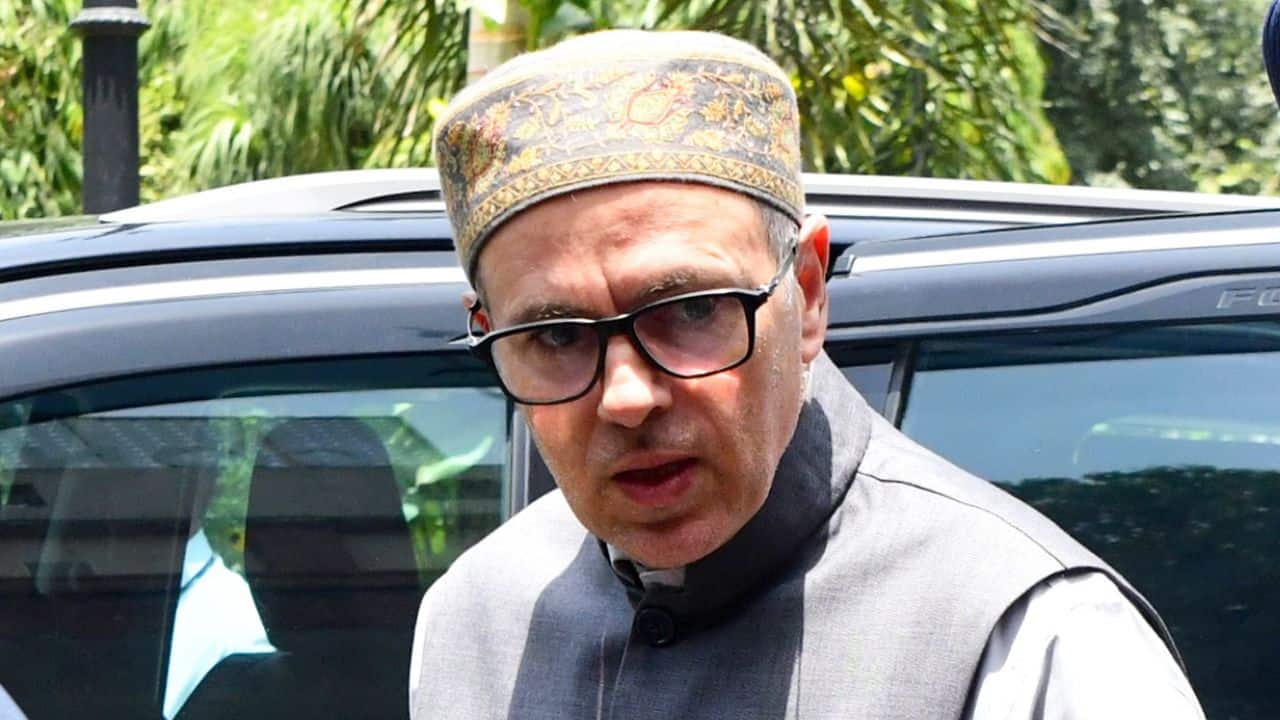
'Our principles are not for sale': Omar Abdullah draws line as opposition bloc bends to NDA | India, -Jammu and Kashmir News | Zee News

'Our principles are not for sale': Omar Abdullah draws line as opposition bloc bends to NDA | India, -Jammu and Kashmir News | Zee News


Jammu and Kashmir Chief Minister Omar Abdullah on Wednesday made it clear that the National Conference (NC) will not compromise its ideology or core values for political power. Speaking in Bandipora district, Abdullah said the party would continue to follow its long-held principles and remain committed to the people of Jammu and Kashmir, regardless of changing political equations at the national level.

Omar Abdullah reacts to changing political equations

Abdullah was responding to reports that some opposition Members of Parliament, including leaders from the Trinamool Congress (TMC) and Shiv Sena (UBT), may support the BJP-led National Democratic Alliance (NDA) on certain issues.

He said every political party is free to make its own decisions, but the National Conference will continue to follow its own ideology, history, and commitments.

‘Our principles are not for sale’

The Chief Minister stressed that the National Conference has a long political legacy and a clear set of values.

“The National Conference has a long political legacy and a set of values that can be judged from its past decisions. Our principles are not for sale,” Abdullah said.

He added that no political offer or compromise could force the party to abandon its core beliefs.

NC will not compromise its ideology

Abdullah said the National Conference would never compromise its moral values or political principles for short-term gains.

He said the party’s decisions would always be guided by public interest and ideological conviction rather than political convenience or shifting alliances.

According to Abdullah, the NC remains committed to the people of the erstwhile state of Jammu and Kashmir and will continue to uphold its political stance.

Omar Abdullah distances NC from other opposition parties

During his interaction with the media, Abdullah said he could not speak for leaders or MPs of other opposition parties.

He said it was up to individual parties and their leaders to decide how far they wanted to go in supporting or opposing the NDA government.

“It is up to them. It is up to their conscience. They will go as far as their conscience allows them to go,” he said.

National Conference’s strength in Parliament

The National Conference currently has representation in both Houses of Parliament.

The party holds two seats in the Lok Sabha through Aga Syed Ruhullah Mehdi from Srinagar and Mian Altaf Ahmad from Anantnag-Rajouri. It also has three members in the Rajya Sabha.

Abdullah indicated that the party’s MPs would continue to act in line with the National Conference’s established political position and ideology.

Speculation over opposition support to NDA

Abdullah’s remarks come amid political speculation that some opposition MPs could support the NDA government on key legislative issues.

The discussions gained attention following reports of internal differences within certain opposition parties, including the TMC and Shiv Sena (UBT).

However, Abdullah made it clear that the National Conference’s position remains unchanged and that the party will not alter its ideology for political advantage.

Stay informed on all the latest news, real-time breaking news updates, and follow all the important headlines in india news and world news on Zee News.


Source link

NSE files DRHP with SEBI, revives IPO plan for Rs 30,000 crore listing

NSE files DRHP with SEBI, revives IPO plan for Rs 30,000 crore listing


The filing follows regulatory clearance, and the listing could become one of the largest in India once SEBI makes its observations.
| Photo Credit:
THE HINDU

The National Stock Exchange (NSE) filed its draft red herring prospectus (DRHP) with the Securities and Exchange Board of India (SEBI) late Wednesday, reviving its public listing plans after nearly a decade of regulatory delays.

The proposed initial public offering (IPO) consists entirely of an offer for sale of up to 148.9 million equity shares, or nearly 6 per cent stake, by existing institutional shareholders, with no fresh equity issue. Based on the exchange’s unlisted market valuation of about ₹5 lakh crore, the issue size is estimated to be up to ₹30,000 crore.

The IPO is intended to enhance visibility and brand image, provide liquidity to shareholders, and create a public market for the shares in India, according to a public filing by the country’s largest stock exchange.

SBI, global investors among key sellers in mega OFS

Among the top-selling shareholders are State Bank of India, which will offload 24.75 million shares, followed by MS Strategic (Mauritius) Ltd with 16 million shares, Canada Pension Plan Investment Board with 11.87 million shares, and Aranda Investments (Mauritius) Pte Ltd with 11.25 million shares.

Bank of Baroda and Stock Holding Corporation of India Ltd. are selling nearly 11 million shares each. General Insurance Corporation of India will offload 10.66 million shares, while The New India Assurance Company will sell 10.5 million shares. National Insurance Company and United India Insurance Company will each offload 6 million shares.

NSE will receive no proceeds; LIC stays out of offer

NSE will not receive any proceeds from the offer. Life Insurance Corporation of India (LIC), the exchange’s largest shareholder, is not participating in the offer-for-sale.

Kotak Mahindra Capital Co., Citigroup Global Markets India, JM Financial and Morgan Stanley India Co. are among the list of 20 book-running lead managers for the share sale.

Regulatory nod clears path for one of India’s biggest listings

The filing follows receipt of a no-objection certificate from the markets regulator earlier this year to proceed with the IPO. The NSE board subsequently approved the IPO proposal on February 6. Since an Indian stock exchange cannot list its own shares on its own platform, NSE lists its shares on its rival exchange, BSE, which has been listed since 2017.

NSE, the world’s most active derivatives exchange, had first attempted to list back in 2016. Those plans have since held up due to regulatory action related to co-location and dark fibre.

Over the past few years, the exchange has sought to remove the regulatory overhang by settling certain cases and strengthening its governance standards. NSE is still awaiting the final settlement of the colocation and dark fibre matter, for which it has made provisions in its books of accounts.

Once SEBI reviews the draft papers and issues its observations, the exchange can proceed with the launch of the public issue, subject to market conditions. The listing is expected to be among the biggest ever by an Indian company and would finally bring the country’s largest stock exchange to the public markets after years of uncertainty.

Published on June 17, 2026


Source link

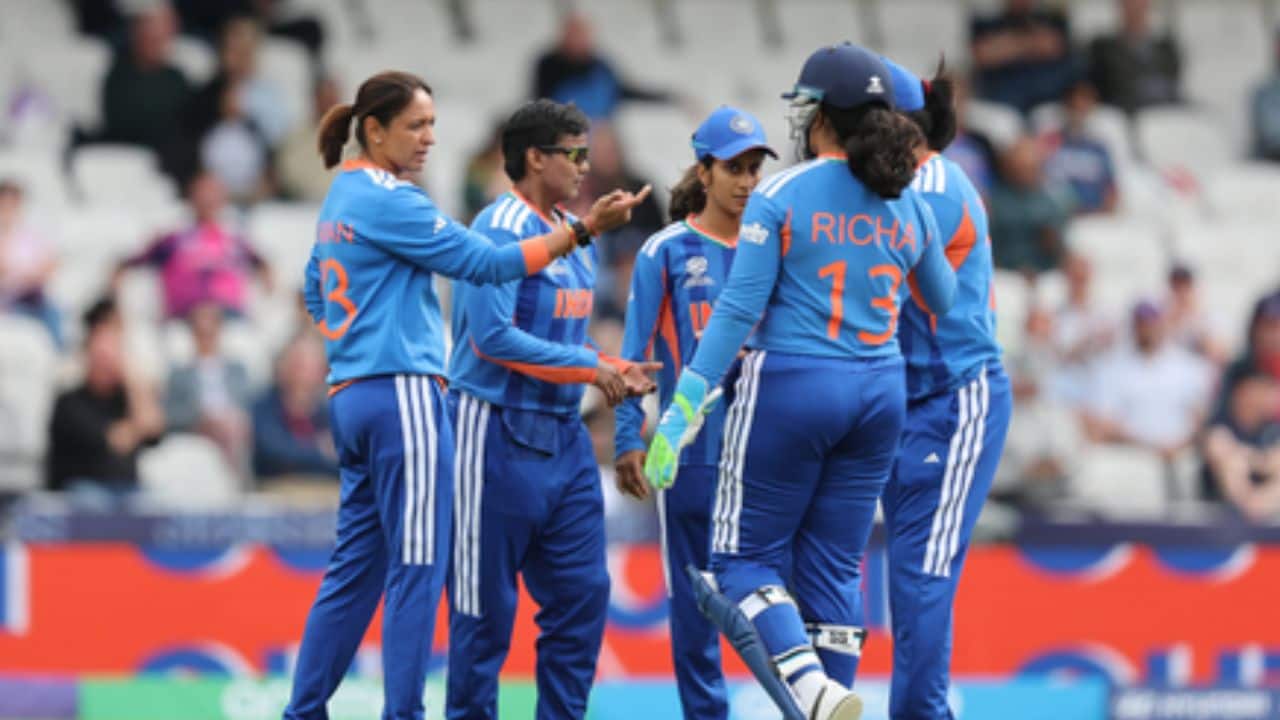
Women's T20 World Cup: India crush Netherlands by 95 Runs, Smriti Mandhana and Sree Charani shine | Cricket News | Zee News

Women's T20 World Cup: India crush Netherlands by 95 Runs, Smriti Mandhana and Sree Charani shine | Cricket News | Zee News


India’s bowlers, led by N Sree Charani’s 4-19, delivered a ruthless performance to seal a 95‑run victory over the Netherlands in their 2026 ICC Women’s T20 World Cup group clash at Headingley on Wednesday. With the win, India are now on top of the Group A table, with a net run rate of 3.98, which is 0.10 more than that of Australia. 

Image Credit: Pic Credits: (IANS)


Source link

YouTube
Instagram
WhatsApp