Axis Bank looks to bolster Axis Finance’s capital; roping in a strategic partner an option

Axis Bank looks to bolster Axis Finance’s capital; roping in a strategic partner an option


Axis Bank is weighing options to bolster its wholly-owned subsidiary Axis Finance’s capital, including a combination of capital infusion from the bank itself as well as roping in a strategic partner, said a top management team official.

The aforementioned plan comes in the wake of RBI lifting the proposed bar, mentioned in RBI’s October 2024 Draft Circular – Forms of Business and Prudential Regulation for Investments, on overlap in the businesses undertaken by a bank and its group entity.

By getting in a strategic partner, the Bank can dilute its equity stake in the subsidiary and raise some capital for it, the official said. There is also a possibility that the subsidiary can fund its future growth by deleveraging.

Axis Finance is Axis Bank’s wholly-owned Non–Banking Finance Company (NBFC) subsidiary. It offers loans to corporates, MSMEs and retail customers.

According to the RBI’s (Commercial Banks – Undertaking of Financial Services) (Amendment) Directions, 2025, as a principle, any form of business shall be undertaken by one entity in a bank group. However, if a bank undertakes a form of business through more than one entity in a bank group, the same shall be done with proper rationale such as business segmentation/specialisation, duly recorded and approved by the Board of the bank.

Further, in case lending business is undertaken through a group entity also, additional conditions shall be applicable to such a group entity (NBFCs including HFCs) including regulations as applicable to Upper Layer NBFC other than the requirement for listing, irrespective of whether the NBFC has been specifically identified by the Reserve Bank as Upper Layer or not.

Notwithstanding the same, listing requirement shall be complied with by those NBFC group entities which are identified by the Reserve Bank as Upper Layer.

Referring to the RBI’s Forms of Business Circular, the Axis Bank official said: “All options are on the table….”

Published on January 26, 2026


Source link

Beyond Tradition: How the 2026 Republic Day Parade Reimagined India’s Story

Beyond Tradition: How the 2026 Republic Day Parade Reimagined India’s Story


NEW DELHI, 26/01/2026:Operation Sindoor Indian Defence Forces tableau rolls past during the 77th Republic Day Parade celebrations, at Kartavya Path in New Delhi Monday. January 26, 2026. Photo: SHIV KUMAR PUSHPAKAR / The Hindu
| Photo Credit:
SHIV KUMAR PUSHPAKAR

The Republic Day parade in its 77th edition on Monday shifted subtly from tradition, unfolding as a carefully choreographed narrative that blended military might, cultural memory and visual storytelling. From battlefield-style marching sequences to river-themed enclosures and immersive installations, the 2026 parade at Kartavya Path signalled a conscious shift in how the nation tells its Republic Day story.

At the heart of this refreshed presentation was Operation Sindoor, whose success formed the spine of the military display. The parade’s structure departed from the linear drills of previous years, replacing them with a progression that mirrored modern combat scenarios, from reconnaissance and surveillance to mechanised assault and command integration.

Besides, the inclusion of animal and robotic elements added to the character of the 77th Republic Day parade held at Kartavya Path.

The tone was set at the very outset with the arrival of President Droupadi Murmu, accompanied by the chief guests, President of the European Council Antonio Costa and European Commission President Ursula von der Leyen, in a ceremonial horse-drawn carriage escorted by the President’s Bodyguard. The return of the President’s traditional buggy, absent in recent years, lent the opening moments a stately flourish and an unmistakably old-world charm.

One of the most striking visual departures from the past parades was the redesign of spectator enclosures, named after rivers instead of the conventional block system. Adding to the spectacle were animal contingents and robotic elements, underscoring the evolving character of India’s armed forces.

For the first time, animals from the Indian Army’s Remount and Veterinary Corps (RVC) marched down the Kartavya Path, highlighting the role of animals in defending the country’s borders. The contingent featured a diverse group including two Bactrian camels, four Zanskari ponies, four trained birds of prey (raptors) and sixteen army dogs comprising indigenous and traditional military breeds.

The military segment unfolded like a moving battlefield map. Contingents were sequenced to reflect operational logic, reconnaissance units leading the way, followed by combat formations, mechanised columns and integrated command-and-control displays. Aerial elements, ground-based platforms and support systems appeared in phased battle arrays, reinforcing Operation Sindoor as more than a symbolic reference.

Large-scale visual installations inspired by paintings and calligraphic interpretations of Vande Mataram lined the ceremonial route from Rashtrapati Bhavan to the National War Memorial. These installations formed a continuous visual arc commemorating 150 years of ‘Vande Mataram’, the national song, making cultural memory an integral part of the parade rather than a backdrop.

Weapon systems took centre stage in this narrative. Advanced missile platforms including the Long-Range Surface-to-Air Missile, Akash Weapon System and ABHRA Medium Range Surface-to-Air Missile were showcased alongside the BrahMos supersonic cruise missile. Artillery and rocket systems such as the Suryastra Universal Rocket Launcher, Dhanush Gun System and Amogh Advanced Towed Artillery Gun System rolled past the saluting dais, while DRDO presented the Long Range Anti-Ship Missile in launcher configuration.

Balancing the military emphasis were vibrant cultural performances and tableaux from States, Union Territories and central ministries. Through dance, music and visual motifs, these presentations highlighted regional traditions, heritage crafts and folk forms, while also weaving in themes of self-reliance, innovation and technological progress.

Together, the elements made the Republic Day parade of 2026 markedly different, less a ceremonial procession and more a curated national narrative. By placing Operation Sindoor at its core and framing culture and history as living, visual experiences, this year’s parade offered a glimpse of how India intends to project its identity at home and abroad.

Published on January 26, 2026


Source link

Higher area, conducive weather may lift India’s mustard output  by 10%

Higher area, conducive weather may lift India’s mustard output by 10%


The mustard acreage this year is higher by 3.2 per cent at 89.36 lakh hectare
| Photo Credit:
PTI

After sliding more than four per cent last year, mustard production may exceed by at least 10 per cent in 2025-26 due to increased area as well as conducive weather, so far. However, latest prediction of rain and hailstorms over north-west region in the next few days may be a concern due to possibility of crop damage.

The mustard acreage this year is higher by 3.2 per cent at 89.36 lakh hectare (lh) against 86.57 lh in 2024-25. The production was 126.67 lakh tonnes (lt) last year and the government has set a target of 139 lt during 2025-26.

Isolated hailstorm activity is likely over Jammu-Kashmir on January 26-27, and over Himachal Pradesh, Uttarakhand, west Uttar Pradesh and Rajasthan on January 27 due to a western disturbance, India Meteorological Department (IMD) said in a statement Monday.

No report of frost

“Scattered to fairly widespread light to moderate rainfall with thunderstorm, lightning and gusty winds speed reaching 40-50 kmph gusting to 60 kmph is likely over Punjab, Haryana, on January 27; thunderstorm, lightning and gusty winds speed reaching 30-40 kmph gusting to 50 kmph over west Uttar Pradesh and Rajasthan on January 27 and over east Uttar Pradesh on January 27-28,” IMD said in its forecast for the mustard-growing regions.

“The production looks good as the crop is in very good conditions in all places. There was no report of frost, which is good for the yield,” said P K Rai, former director of Bharatpur-based Indian Institute of Rapeseed-Mustard Research.

Rai, who is currently, director of National Institute of Biotic Stress Management (NIBSM), said that he plans to increase the area under mustard in Chhattisgarh to about 1 lakh hectare from current about 30,000 hectare.

Area up 3 times in UP

An analysis of mustard acreage this year shows that in traditional Rajasthan it has increased by 1 per cent to 35.35 lh, in Madhya Pradesh by 41 per cent to 11.79 lh and in Uttar Pradesh by 4 per cent to 16.99 lh. The area in Rajasthan is still below record 39.37 lh of 2022-23, but the area in Uttar Pradesh has shown an impressive gain of nearly three times from 5.93 lh in 2015-16.

Rai attributed its to major work in east Uttar Pradesh where a programme was run in association with Banaras Hindu University for expansion of area.

However, the slide in mustard acreage in the north east, Assam in particular and Jharkhand may be concern for the government when the edible oil mission is in its third season. The government has targetted to raise its area in non-conventional states where there is higher potential, particularly to target rice fallow land.

Down in N-E

Experts attribute the decline in mustard area in Jharkhand to rains in November which is the main sowing window, beyond which is planting is done the crop may be at risk of higher temperature and pest attack.

The mustard area in Jharkhand grew from 1.94 lh in 2015-16 to 4.58 lh in 2024-25. However, it has dipped to 3.52 lh this year whereas the state had set a target to cover it in 5.48 lh.

Similarly in all the north-eastern states, the area has dipped to 3.04 lh from 3.97 lh. In Assam, it has declined to 2.88 lh from 3.07 lh.

Published on January 26, 2026


Source link

Amid demand surge, banks amp up focus on gold loans

Amid demand surge, banks amp up focus on gold loans


Businesswoman counting money, calculating the conversion rate of Indian Rupee money as a return of financial investment at the table in her office indoors.
| Photo Credit:
iStockphoto

With the price of gold reaching all-time highs, banks are seeing a huge surge in demand for gold loans.

According to data from RBI, outstanding loans against gold jewellery for scheduled commercial banks (SCBs) stood at ₹3.58 lakh crore as of November 2025, an increase of 125 per cent year-on-year. 

In contrast, credit card loans increased only 2.4 per cent, while other personal loans grew 9 per cent over the same period.

Speaking to businessline, experts suggest that given the global slowdown, growth is expected to be driven domestically and banks are hence looking at gold loans to meet credit demand.

“Banks have been looking to rebalance their portfolios between secured and unsecured lending and gold loans serve to achieve this. As a result, more banks are entering this segment, which has been traditionally dominated by more NBFCs,” said Vivek Iyer, Partner and Financial Services Risk Advisory Services, Grant Thornton Bharat.

Ongoing process

Moreover, Iyer explained that the increase in gold prices directly expands the lending capacity for banks. As the value of the pledged gold increases, banks are able to sanction higher loan amounts for the same quantity of gold while being within RBI’s prescribed loan-to-value (LTV) limits. “The increase in the underlying collateral value has led to higher disbursements though the LTV ratio has remained stable, “ he said.

Aparna Kirubakaran, Director, Crisil Ratings believes that the increase can also be attributed to the slowdowns in other retail segments such as personal loans. She adds that with the current trend of surge in gold prices and increasing demand from borrowers, banks have already been increasing their focus in this segment over the last 1-2 years. 

Market share of banks in gold loans could be around 55 per cent, as per industry estimates. 

In terms of asset quality, Gross Non Performing Assets (GNPA) for gold loans stood at 0.8 per cent for September 2025, as per RBI.

Status factor

From a consumer perspective, Iyer suggests that gold is a sentimental asset class and hence when people borrow against gold, the intent is to usually pay it back out of the fear of losing it. This ensures that repayment patterns are strong, making it a good viable product for the lenders. 

The increase in demand can also be observed in terms of the total assets under management for major gold non-banking financial companies (NBFCs). 

Muthoot Finance, India’s largest gold loan NBFC, saw its gold AUM go up 47 per cent to ₹13.2 lakh crore in the quarter ending September 2025, as against ₹9 lakh crore in the same quarter last financial year.

Manappuram Finance saw its AUM go up by 29 per cent to ₹31,505 crore (₹24,365), while for IIFL Finance it went up by more than 3x to ₹34,577 crore.

Published on January 26, 2026


Source link

US West Coast refinery maintenance, domestic refinery capacity additions to keep India’s product exports stable

US West Coast refinery maintenance, domestic refinery capacity additions to keep India’s product exports stable


Given the limited connectivity to other US refining hubs, the most likely source of replacement fuels (for California) will be imports from Asia, particularly of jet fuel and gasoline.
| Photo Credit:
BING GUAN

India’s refined petroleum products exports are expected to remain steady in the 2026 calendar year aided by refinery maintenance on the US West Coast, a development that will help refiners such as Reliance Industries (RIL) capitalise on petrol and jet fuel shipments to California.

Besides, refinery capacity additions and higher utilisation back home is also expected to boost product availability.

Global real time data and analytics provider Kpler expects India’s refined product export to remain constructive, supported by high refinery utilisation, flexible configurations and continued export optionality into both the Atlantic Basin and Asia.

Incremental throughput growth is likely as new capacity and ramp-ups at HPCL Rajasthan Refinery (HRRL) progress, while expansions at sites such as Panipat (Indian Oil Corporation) and stronger utilisation across other public and private refineries lift overall product availability.

Refinery economics should remain supportive given continued access to discounted and advantaged crude feedstocks, helping India maintain export competitiveness even if global margins soften, said Sumit Ritolia, Kpler’s Lead Research Analyst for Refining & Modeling.

Steady sailing

“In addition, refinery closures and rationalisation in PADD 5 are expected to increase California’s reliance on imported gasoline and blend stocks, creating an additional outlet for Indian barrels, where RIL has historically been an important supplier,” he told businessline.

Washington’s refining sector is organised into Petroleum Administration for Defense Districts (PADDs) with PADD 5 catering to the West Coast. The US Energy Information Administration (EIA) expects the upcoming loss of refinery capacity at the West Coast to contribute to relatively higher gasoline margins and gasoline prices that are about equal to 2025, in nominal terms.

Given the limited connectivity to other US refining hubs, the most likely source of replacement fuels (for California) will be imports from Asia, particularly of jet fuel and gasoline.

However, the main near-term constraint is higher planned refinery maintenance versus last year, with April–May and August–September likely to see peak turnaround activity that temporarily reduces runs and export availability and increases volatility, Ritolia added.

On the demand side, Ritolia said that domestic growth remains healthy but uneven, with stronger gasoline (petrol) growth than gasoil (diesel), meaning incremental supply could skew toward middle distillates and ATF as new units stabilise.

As a result, exports will remain a key clearing mechanism in 2026, particularly for diesel and jet fuel during periods of high utilisation and outside peak domestic demand windows, he explained.

EU sanctions

On impact on the European Union’s (EU) 18th sanctions package, which came into effect on January 21, Ritolia said it is still very early to draw firm conclusions.

However, with new EU restrictions now in force, export-oriented refiners that previously relied on Europe as a key outlet are expected to shift toward lower-risk crude feedstocks and reduce exposure to Russian barrels and other higher-compliance origins, since those volumes can no longer be monetised as easily, he added.

“As a result, we could see increased preference for Middle East and other ‘clean’ Atlantic Basin crudes, while some refiners may cut runs, redirect products to non-EU markets at weaker netbacks, or adjust crude slates to remain compliant,” Ritolia noted.

Netback calculates the revenue generated from oil and gas sales against costs incurred to bring the product to market.

“The most impacted exporters have been RIL and Mangalore Refinery and Petrochemicals (MRPL). So far RIL has not imported Russian barrels since December 19 (2025), while MRPL has not imported Russian crude since late November, although it remains too early to generalise a firm trend as refiners will continue to optimise based on economics and execution feasibility,” he said.

Importantly, even without Europe as an outlet, there is still strong global demand for refined products, and Kpler does not expect any major issues in clearing Indian product exports overall.

Published on January 26, 2026


Source link

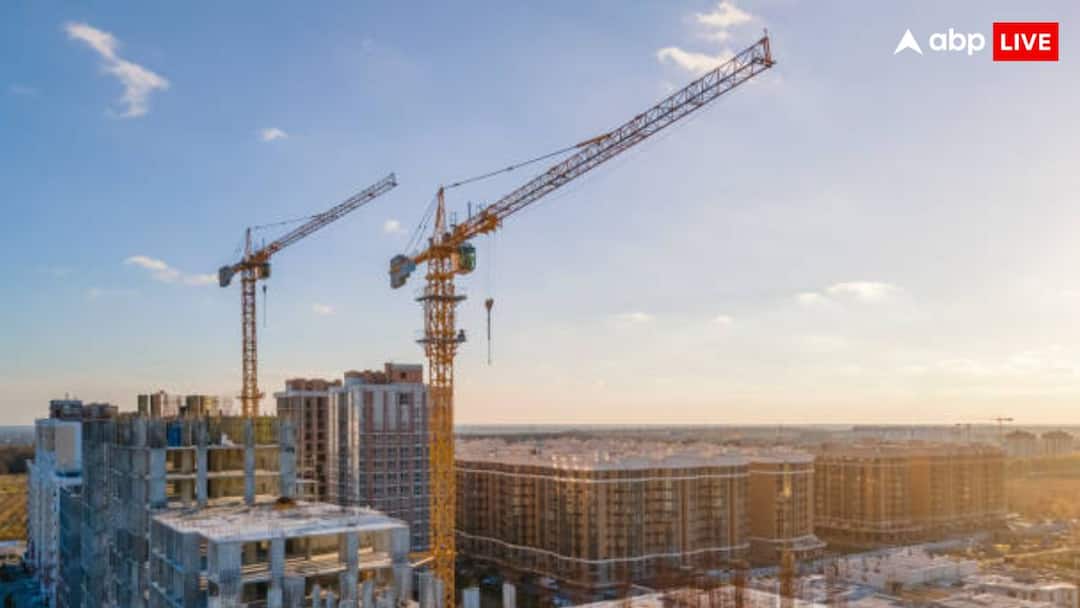
यूनियन बजट पर रियल एस्टेट की नजरें टिकी; उद्योग का दर्जा मिलने की बढ़ी उम्मीद, जानिए डिटेल

यूनियन बजट पर रियल एस्टेट की नजरें टिकी; उद्योग का दर्जा मिलने की बढ़ी उम्मीद, जानिए डिटेल


Real Estate Budget 2026: इस बार बजट 2026 को लेकर रियल एस्टेट सेक्टर की नजरें खास तौर पर सरकार पर टिकी हुई हैं. रविवार 1 फरवरी को पेश होने वाले इस बजट से रियल स्टेट सेक्टर को कई बड़े फैसलों की उम्मीद है.

बिल्डर्स और डेवलपर्स चाहते हैं कि सरकार उन्हें उद्योग का दर्जा दे. साथ ही जमीन से जुड़े काम ऑनलाइन करने, मंजूरी मिलने की प्रक्रिया में तेजी और आसान सिंगल-विंडो क्लीयरेंस सिस्टम शुरू करने की उम्मीद की जा रही हैं. आइए जानते हैं, इस बारे में….

क्या है संस्थाओं का कहना?

रियल एस्टेट सेक्टर से जुड़े संगठनों और बिल्डरों का मानना है कि अगर इस क्षेत्र को उद्योग का दर्जा मिलता है, तो उन्हें कम ब्याज पर लंबे समय के लोन लेने में आसानी होगी. साथ ही फंडिंग के बेहतर विकल्प भी मिल सकेंगे.

डेवलपर्स का कहना है कि, यह मांग काफी समय से की जा रही है. अब उन्हें बजट से पॉलिसी सपोर्ट मिलने की उम्मीद है, जिससे सेक्टर को स्थिरता और मजबूती मिल सके.

जीडीपी और रोजगार में रियल एस्टेट की भूमिका

मनीकंट्रोल में छपी एक रिपोर्ट के अनुसार, सिग्नेचर ग्लोबल (इंडिया) लिमिटेड के संस्थापक और चेयरमैन प्रदीप अग्रवाल का कहना है कि रियल एस्टेट सेक्टर अभी देश की जीडीपी में करीब 7 प्रतिशत का योगदान दे रहा है. इससे 200 से ज्यादा जुड़े हुए सेक्टरों में रोजगार मिलता है.

उन्होंने बताया कि अगर इस क्षेत्र को उद्योग का दर्जा मिल जाता है, तो बड़ी संस्थाओं से फंडिंग मिलने में आसान होगी. उन्होंने कहा कि, आगे चलकर यह सेक्टर आर्थिक विकास में और मजबूत भूमिका निभा सकता है. सरकार से सही नीतियों का साथ मिलने पर साल 2047 तक इसका योगदान जीडीपी में 15 प्रतिशत तक पहुंच सकता है.

वहीं, ट्राइबेका डेवलपर्स ग्रुप के सीईओ रजत खंडेलवाल ने कहा कि सेक्टर को ऐसी स्थायी नीतियों की जरूरत है, जिससे घर बनाने वालों और खरीदने वालों दोनों को फायदा हो. उनका मानना है कि उद्योग का दर्जा मिलने से सस्ता लोन और लंबी अवधि की पूंजी मिल सकेगी. जिससे बिल्डरों के काम करने के तरीके में मदद मिलेगी.  

सिंगल-विंडो सिस्टम की जरूरत

रियल एस्टेट डेवलपर्स सिंगल-विंडो क्लीयरेंस सिस्टम लागू करने की उम्मीद कर रहे हैं. जिससे अलग-अलग विभागों की सभी मंजूरियां एक ही डिजिटल प्लेटफॉर्म पर मिल सकेंगी. जिससे सरकारी प्रक्रियाएं आसान बनेंगी. उनका मानना है कि इस व्यवस्था से प्रोजेक्ट समय पर पूरे होंगे और पूरे सिस्टम में पारदर्शिता भी बढ़ेगी.

यह भी पढ़ें: India- EU के बीच ऐतिहासिक समझौते की तैयारी, रक्षा से लेकर व्यापार तक आएगा बदलाव, 2 अरब लोगों का बनेगा बाजार


Source link

YouTube
Instagram
WhatsApp