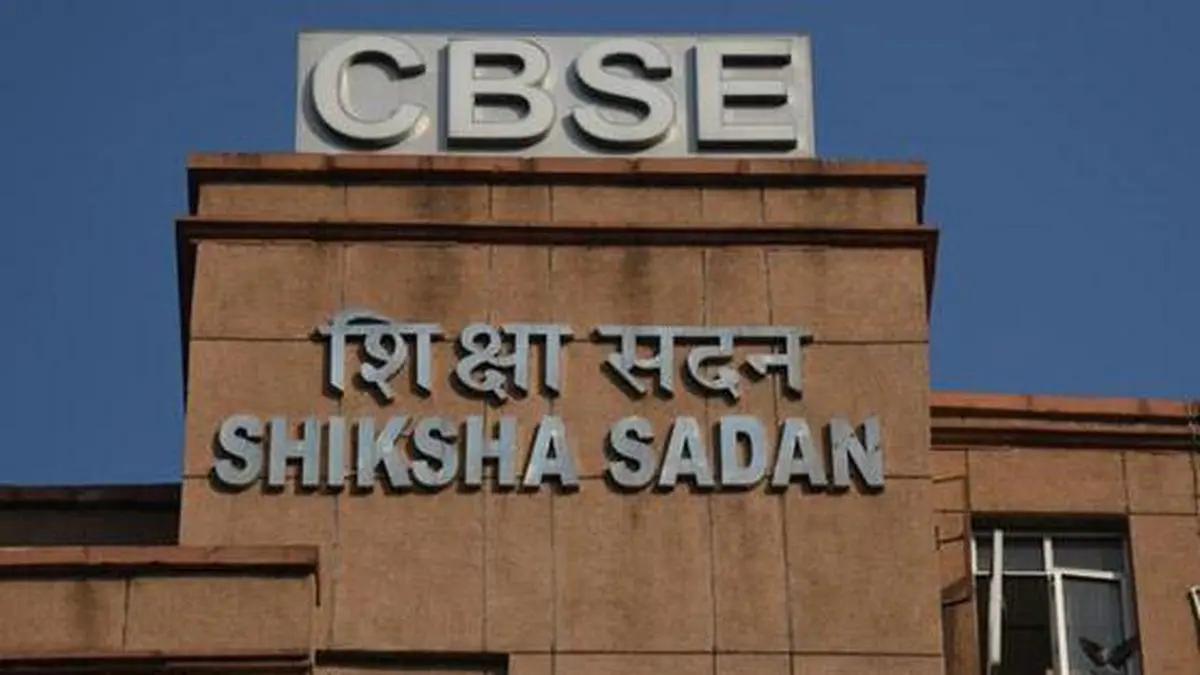
CBSE’s re-evaluvation site launch hit with delay on Monday

CBSE’s re-evaluvation site launch hit with delay on Monday


The Board had earlier decided to postpone the operationalisation of the portal from May 29 to June 1 
| Photo Credit:
KRISHNAN VV

The operationalisation of verification and re-evaluation portal of the Central Board of Secondary Education, for Class 12 students, faced delays on Monday. The Board had earlier decided to postpone the operationalisation of the portal from May 29 to June 1 to ensure “highest standards and protocols of evaluation.”

The portal remained inaccessible throughout the day and even till press time on Monday due to technical glitches. In the afternoon, CBSE in a post on X had stated “Dear students, Verification and re-evaluation portal will go live soon. Official announcement will follow.”

Ethical hacker Nisarga Adhikary, who has been flagging cybersecurity-related vulnerabilities on the OnMark portal, in a post on X on Monday claimed that the re-evaluation site “got taken down after he had reported an open payment info endpoint to Cert-IN.”

In a statement on May 29, CBSE had said, “In order to ensure a transparent and glitch-free process for verification and re-evaluation of answer books of students who intend to submit their applications on the Post-Result Activities portal, it has been decided that the designated portal will now be operational from 1st June 2026. This is to ensure the highest standards and protocols of evaluation.“

The CBSE’, which introduced the On Screen Marking System for the first time this year for Class 12th Board Exam , is under the scanner after students have alleged discrepancies in its implementation. Several students have reported inaccuracies in scoring mechanism while cases of a mismatch in roll numbers and scanned answer sheets also surfaced. Some students have also alleged missing pages in the scanned answer sheets.

Cybersecurity researchers have been flagging several vulnerabilities in the OnMark portal of the service provider of CBSE. The Board on Sunday acknowledged that vulnerabilities had been identified and said that they have been contained.

Published on June 1, 2026


Source link

IRDAI slaps ₹1 crore penalty on Nissan Renault Financial Services

IRDAI slaps ₹1 crore penalty on Nissan Renault Financial Services


“The Corporate Agent should submit an Action Taken Report to the Authority within 90 days from the date of this Order,” the IRDAI said
| Photo Credit:
REUTERS

The Insurance Regulatory and Development Authority of India (IRDAI) has imposed ₹1 crore penalty on Nissan Renault Financial Services India, a corporate agent, for violation of guidelines pertaining to motor insurance service, among others.

The regulator also directed the firm to place the order before the Board of the Corporate Agent in the upcoming Board Meeting and provide a copy of the minutes of the discussion to the regulator. “The Corporate Agent should submit an Action Taken Report to the Authority within 90 days from the date of this Order,” IRDAI said on Monday.

Published on June 1, 2026


Source link

RBI’s wallet curbs may force fintechs to redraw growth plans

RBI’s wallet curbs may force fintechs to redraw growth plans


Executives also expressed concerns over the future of wallet interoperability through UPI
| Photo Credit:
tommy

A proposed tightening of mobile wallet regulations by the Reserve Bank of India (RBI) is forcing fintech companies to revisit business plans built around prepaid payment instruments (PPIs), a segment that has continued to grow even as UPI dominates digital payments.

Industry executives said the draft framework issued on April 22 could restrict several wallet-led offerings and slow growth in a category that processed 695 million transactions worth ₹22,448 crore in March. The sector is now preparing to seek regulatory consultations and modifications to some of the proposals before the rules are finalised.

“The proposals materially reduce the flexibility that wallets currently offer consumers. If implemented without modifications, several high-volume use cases may become commercially unviable,” said the founder of a fintech firm, requesting anonymity.

Among the key proposals, the RBI has capped person-to-person wallet transfers at ₹25,000 per month, reduced the cash loading limit to ₹10,000 from ₹50,000, and imposed an overall monthly balance ceiling of ₹2 lakh.

The regulator has also proposed restricting minimum-KYC wallets to payments for goods and services, effectively barring their use for person-to-person transfers.

“Many customers use entry-level wallets before completing full KYC requirements. Removing remittance functionality at this stage could impact adoption and disrupt existing domestic transfer models built around wallets,” said a senior payments industry executive.

Industry participants are expected to seek a phased implementation timeline and broader consultations with stakeholders before the rules are finalised. Some executives suggested that the rollout should be deferred by six to twelve months to allow companies adequate time to adapt.

The proposals could particularly affect wallet-focused companies such as Mobikwik, while Paytm continues efforts to restore its wallet business after regulatory action against Paytm Payments Bank.

Executives also expressed concerns over the future of wallet interoperability through UPI. While the framework for wallet-based UPI payments has been introduced, pending clarity around interchange arrangements has limited adoption.

Despite UPI’s dominance, wallet transactions have continued to grow. RBI data shows wallet transactions rose to 695 million in March, amounting to ₹22,448 crore, compared with 506 million transactions worth ₹16,077 crore a year earlier. Industry estimates suggest around 110 million users actively use mobile wallets.

Some industry executives believe the regulator’s move may be aimed at addressing practices such as credit-linked wallet products, co-branded card-like offerings and the proliferation of multiple wallets by the same user.

“The direction of the draft suggests the regulator wants a clearer distinction between banking products and wallet-based services, while ensuring payment firms operate within a more narrowly defined regulatory perimeter,” said another executive.

The draft guidelines also prohibit cross-border transactions through PPIs unless operators hold separate authorisations for such services, adding another compliance requirement for wallet providers.

Published on June 1, 2026


Source link

टीसीएस है देश की सबसे बड़ी IT कंपनी, इंफोसिस के CEO सलिल पारेख की सैलरी 3 गुना ज्यादा क्यों?

टीसीएस है देश की सबसे बड़ी IT कंपनी, इंफोसिस के CEO सलिल पारेख की सैलरी 3 गुना ज्यादा क्यों?


TCS vs Infosys: भारत की सबसे बड़ी IT कंपनियों की लिस्ट में शुमार TCS और इंफोसिस किसी पहचान की मोहताज नहीं हैं. दोनों ही कंपनियों में लोगों को बड़ी दिलचस्पी रहती है. हाल ही में दोनों कंपनियों के सीईओ को लेकर बड़ी जानकारी सामने आई है. दोनों कंपनियों से सामने आए सालाना रिकॉर्ड्स के मुताबिक कंपनियों के सीईओ की सैलरी में बड़ा फर्क है, लेकिन ऐसा क्यों? आइये जानें.

CEO की सैलरी में फर्क
दरअसल हाल ही में इंफोसिस और टीसीएस की वित्त वर्ष 2025-26 की सालाना रिपोर्ट सामने आई है. जिसके मुताबिक इंफोसिस के CEO सलिल पारेख को इस साल में 82.6 करोड़ रुपये वेतन के रूप में मिले. तो वहीं TCS के CEO के कृथिवासन को 28 करोड़ रुपये वेतन के रूप में मिले. इसका मतलब है कि सैलरी के मामले में सलील पारेख की कमाई TCS के CEO से करीब 55 करोड़ रुपये ज्यादा रही है.

ये भी पढ़ें: Richest Chief Minister: देश के सबसे अमीर CM होंगे DK शिवकुमार, 1413 करोड़ की संपत्ति के साथ टॉप पर

बड़ी कंपनी छोटी कमाई
दोनों सीईओ की सैलरी में इतना बड़ा अंतर इसलिए भी चर्चा का विषय है क्योंकि TCS कारोबार, इंफोसिस के कारोबार से काफी बड़ा है. टीसीएस का वित्त वर्ष 2026 रेवेन्यू 2.67 लाख करोड़ रुपये है. जिसमें कंपनी का मुनाफा 49,210 करोड़ रुपये बताया जा रहा है. 

तो वहीं इंफोसिस का वित्त वर्ष 2026 का रेवेन्यू 1.79 लाख करोड़ रुपये है. जिसमें कंपनी का मुनाफा 29,440 करोड़ रुपये बताया जा रहा है. इसका मतलब है कि कंपनी छोटी होने के बावजूद भी इंफोसिस के सीईओ को ज्यादा वेतन मिला है.

ये भी पढ़ें: IPL RCB: सिर्फ ट्रॉफी नहीं, कमाई में भी नंबर वन बनी विराट की आरसीबी, कमाया 400 करोड़ का बंपर मुनाफा

क्यों है सलिल पारेख का इतना मोटा पैकेज?
सलील पारेख का कुल पैकेज 82.6 करोड़ रुपये है. जो इस प्रकार बांटा गया है:

फिक्स्ड सैलरी: 7.97 करोड़ रुपये
रिटायरमेंट और अन्य लाभ: 0.53 करोड़ रुपये
परफॉर्मेंस आधारित बोनस: 8.5 करोड़ रुपये
स्टॉक (शेयर) आधारित इंसेंटिव: 23.35 करोड़ रुपये
शेयर ऑप्शन बेचने/एक्सरसाइज करने से फायदा: 50.75 करोड़ रुपये

इस गणित को देखें तो उनकी कमाई का मोटा हिस्सा कंपनी के शेयरों और स्टॉक इंसेंटिव से आया है.

के कृथिवासन का पैकेज कितना और कैसा है?
इंफोसिस के सीईओ के. कृथिवासन का कुल सालाना पैकेज 28 करोड़ रुपये है. जो इस प्रकार से बांटा गया है:

बेसिक सैलरी: 1.67 करोड़ रुपये
भत्ते और अन्य सुविधाएं: 1.43 करोड़ रुपये
प्रदर्शन आधारित कमीशन: 25 करोड़ रुपये

इसका मतलब है कि उनकी सैलरी का अधिकांश हिस्सा नकद वेतन और बोनस से आता है, जबकि स्टॉक आधारित भुगतान बहुत कम था.

फिर भी बड़ी कंपनी है TCS
हालांकि TCS, इंफोसिस से बड़ी और ज्यादा मुनाफा कमाने वाली कंपनी है, फिर भी इंफोसिस के CEO सलिल पारेख की कमाई कहीं ज्यादा है. इसकी मुख्य वजह ये है कि उनके वेतन पैकेज में शेयर और स्टॉक आधारित इंसेंटिव का बड़ा हिस्सा शामिल है. यही कारण है कि उनकी कुल कमाई TCS के CEO से लगभग तीन गुना ज्यादा हो गई है.


Source link

Broker’s call: Happiest Minds (Buy)

Broker’s call: Happiest Minds (Buy)


Target: ₹560

CMP: ₹378.75

Happiest Minds reported Q4FY26 revenues of ₹604.10 crore, (vs our estimate of ₹645.50 crore), up 2.8 per cent q-o-q and 10.9 per cent y-o-y. In USD terms it reported degrowth of 1.1 per cent q-o-q in revenues at $65.0 milion.

For FY26, INR revenues stood at ₹231.50 crore, up 12.3 per cent y-o-y, while the USD revenue stood at $265.8 million, up 9.1 per cent YoY. EBIT Margin came in at 13.6 per cent for Q4-FY26, declining 90 bps q-o-q (vs CIE estimate of 15.6 per cent). For the full year, EBIT margin stood at 13.6 per cent, up by 70 bps y-o-y.

PAT for the quarter came in at ₹6.12 crore, up by 51.8 per cent QoQ and 32.5 per cent y-o-y. For the full year, PAT stood at ₹21.26 crore, up 8 per cent y-o-y.

Margin remained stable at 17.5 per cent, aided by improved utilisation and operational efficiency, though continued AI investments may keep near-term profitability range-bound. We believe execution on AI monetisation, platform scaling-up and margin discipline will remain critical for sustaining growth momentum. The management expects margin to improve by about 100 bps over time, targeting an operating margin range of 17.5-18.5 per cent.

Accordingly, we expect Revenue/EBIT/PAT to respectively expand at a CAGR of 16.5/21.2/25.6 per cent over FY26–FY29E. While we maintain our ‘Buy’ rating, we revise our target price to ₹560 (earlier ₹620), based on the FY28E EPS.

Published on June 1, 2026


Source link

YouTube
Instagram
WhatsApp