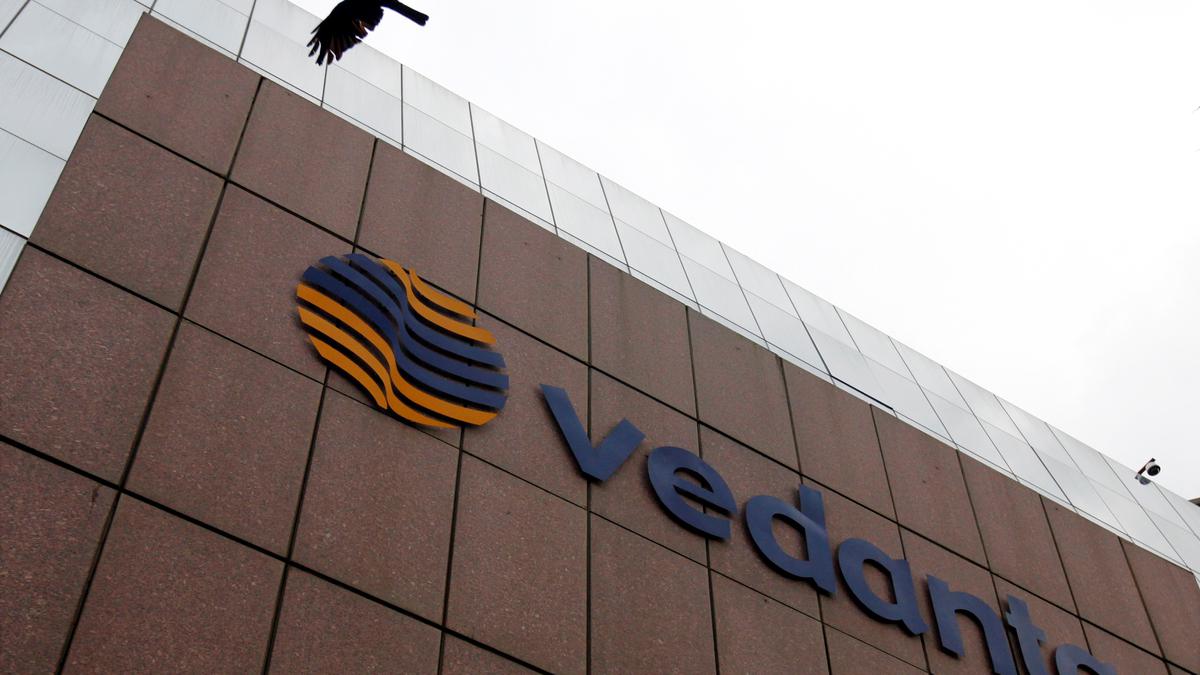
Vedanta Aluminium secures 18 BIS certifications for smelting ops in Jharsuguda, Korba

Vedanta Aluminium secures 18 BIS certifications for smelting ops in Jharsuguda, Korba


Vedanta Aluminium, India’s largest aluminium producer, announced that it has cumulatively secured a total of 18 BIS (Bureau of Indian Standards) certifications across its smelter operations at Jharsuguda, Odisha and Korba, Chhattisgarh.

Jharasuguda is the home to the world’s largest aluminium plant, while Korba is where Bharat Aluminium Company Limited (BALCO), India’s iconic aluminium producer, is located. These certifications, earned progressively over time, reaffirm Vedanta Aluminium’s position at the forefront of quality, reliability, and regulatory compliance in the industry, according to a company statement.

Vedanta Aluminium was the first in the Indian aluminium industry to secure certification for its large range of aluminium products as per available BIS quality standards. The most recent certification has been achieved by its unit BALCO and covers aluminium alloy wire rods under IS 9997:2023. This strengthens Vedanta Aluminium’s ability to supply high-performance materials for India’s power grids, automotive sectors, and advanced engineering applications.

These alloy redraw rods are engineered for demanding applications where strength, conductivity, and durability are critical. Certified under IS 9997:2023, they are purpose-built for overhead transmission lines, automotive wiring systems, and welding wires, supporting industries that power India’s growth and modernisation.

Approach to quality

 Rajiv Kumar, CEO, Vedanta Aluminium, said, “These BIS certifications are a testament to our focus on delivering products that meet the highest standards of reliability and performance, supporting India’s journey towards advanced infrastructure and sustainable manufacturing.”

Rajesh Kumar, CEO & Director, BALCO, said, “This new BIS certification reflects our holistic approach to quality, where rigorous checks, disciplined processes and a culture of excellence, ensuring that every product we deliver contributes to building a stronger, sustainable future for India.”

The certification has been granted following stringent assessments of manufacturing processes, product integrity, testing protocols and operational consistency by BIS, India’s apex standards body. It adds to BALCO’s growing roster of BIS-certified aluminium products like Alloy Ingots (Primary Foundry Alloy), EC Ingots, T Ingots, Wire Rods, Plates, Sheets & Strips, essentials for automotive, construction, electrical gear, packaging, and engineering.

Vedanta Aluminium’s certified, value-added products directly support grid modernisation, mobility, affordable housing, industrial electrification, and precision engineering. By expanding capacity, accelerating technology upgrades, and leading on standards compliance, the company is strengthening domestic supply chains, reducing import dependence, and enhancing export competitiveness across sectors from power transmission and automotive to construction, packaging, and cleantech.

Published on January 24, 2026


Source link

Kotak Mahindra Bank Q3 PAT rises 4% at ₹3,446 crore

Kotak Mahindra Bank Q3 PAT rises 4% at ₹3,446 crore


KMB’s management expects margin to improve slightly in Q4 due to last quarter seasonality effect
| Photo Credit:
REUTERS

Fourth-largest private lender Kotak Mahindra Bank (KMB) on Saturday reported its Q3FY26 net profit at ₹3,446 crore, up 4 per cent year-on-year (y-o-y), led by modest growth in core income.

The bank’s net interest income (NII) was up 5 per cent y-o-y to ₹7,565 crore, while other income grew 8 per cent on-year to ₹2,838 crore. Net interest margin (NIM), a core indicator of bank’s profitability, stood at 4.54 per cent in Q3, flat quarter-on-quarter (q-o-q) but lower than 4.93 per cent a year ago.

KMB’s management expects margin to improve slightly in Q4 due to last quarter seasonality effect, but said they will need to monitor how margin pans out in the first quarter of next fiscal.

Core business

Net advances of the lender rose 16 per cent y-o-y and 4 per cent q-o-q to ₹4.80 lakh crore. Consumer banking loans, comprising home loans, credit cards, personal loans, among others formed 47 per cent of overall advances, while wholesale loans formed 31 per cent.The bank expects growth in credit card business to revive as it has revamped its business model. Credit card loans fell 13 per cent y-o-y during Q3, and stood at ₹12,322 crore. Micro loans was the other segment which saw a y-o-y de-growth of 30 per cent during Q3.

Overall deposits of the bank rose 15 per cent y-o-y to ₹5.26 lakh crore, and share of low-cost current and savings account (CASA) deposits fell further to 41.3 per cent in Q3FY26 from 42.3 per cent last quarter and in same period last year. Ashok Vaswani, MD & CEO, KMB said the lender will grow its deposits at the pace of 1.5-2 times the growth of nominal GDP. Advances growth will be based on how deposit growth shapes up, he added.

Fresh slippages of the bank stood at ₹1,605 crore in Q3, lower than ₹1,629 crore last quarter.Gross and net non-performing asset ratio (GNPA, NNPA) ratio fell to 1.30 per cent and 0.31 per cent in Q3, respectively, lower than 1.50 per cent and 0.41 per cent last year. The bank’s board has approved raising ₹15,000 crore via non-convertible debentures (NCDs) on a private placement basis in FY27.

Published on January 24, 2026



Source link

केरल में विझिंजम इंटरनेशनल सीपोर्ट की बढ़ेगी कैपेसिटी, अडानी ग्रुप करेगा 16000 करोड़ का निवेश

केरल में विझिंजम इंटरनेशनल सीपोर्ट की बढ़ेगी कैपेसिटी, अडानी ग्रुप करेगा 16000 करोड़ का निवेश


Adani Ports: केरल के मुख्यमंत्री पिनाराई विजयन ने केरल में विझिंजम इंटरनेशनल सीपोर्ट के डेवलपमेंट के दूसरे फेज का उद्घाटन किया, जिसके लिए अडानी पोर्ट्स एंड स्पेशल इकोनॉमिक जोन लिमिटेड (APSEZ) 2029 तक पोर्ट की कैपेसिटी को 5.7 मिलियन TEUs तक बढ़ाने के लिए 16000 करोड़ रुपये का निवेश करने जा रही है. इस मौके पर अडानी पोर्ट्स के मैनेजिंग डायरेक्टर करण अडानी और केंद्रीय बंदरगाह, जहाजरानी और जलमार्ग मंत्री सर्बानंद सोनोवाल भी मौजूद रहे.

विझिंजम पोर्ट की बढ़ेगी कैपेसिटी

उद्घाटन समारोह को संबोधित करते हुए करण अडानी ने कहा, “फेज 2 के तहत 16000 करोड़ रुपये के अतिरिक्त निवेश और कुल 30000 करोड़ रुपये की प्रतिबद्धता के साथ विझिंजम 2029 तक 1 मिलियन TEU (ट्वेंटी-फुट इक्विवेलेंट यूनिट) की कैपेसिटी से बढ़कर 5.7 मिलियन TEUs हो जाएगा, जो भारत का सबसे बड़ा ट्रांसशिपमेंट पोर्ट और विश्व स्तर पर प्रतिस्पर्धी समुद्री हब बनकर उभरेगा.”

कंपनी के MD करण अडानी ने आगे कहा, यह केरल राज्य में किसी भी बिजनेस हाउस द्वारा किया गया सबसे बड़ा इन्वेस्टमेंट है.

करण ने CM के सपोर्ट को सराहा

उन्होंने कहा, “सिर्फ 15 महीनों के ऑपरेशन में विझिंजम 1 मिलियन TEU को हैंडल करने वाला सबसे तेज भारतीय पोर्ट बन गया – जिससे केरल ग्लोबल शिपिंग मैप पर मजबूती से अपनी जगह बना पाया और भारत के पोर्ट-बेस्ड डेवलपमेंट विजन को दिखाया.” करण आगे कहते हैं, “मुझे यह मानना ​​होगा कि अगर CM का लगातार सपोर्ट नहीं होता, तो हम यह प्रोजेक्ट पूरा नहीं कर पाते. ऐसे बड़े ग्रीन फील्ड प्रोजेक्ट को लागू करते समय वह हमारे लिए सबसे बड़ी पूंजी रहे हैं, जिसकी कोई भी इन्वेस्टर उम्मीद कर सकता है.” 

उन्होंने इस प्रोजेक्ट के लिए विपक्ष के नेता वी. डी. सतीसन और सांसद शशि थरूर द्वारा दिए गए लगातार समर्थन को भी स्वीकार किया और इसे कोऑपरेटिव फेडरलिज्म का एक मज़बूत उदाहरण बताया. सूत्रों ने पहले PTI को बताया था कि फेज 2 के इक्विपमेंट डेवलपमेंट में 21 ऑटोमेटेड शिप-टू-शोर (STS) क्रेन, 45 ऑटोमेटेड कैंटिलीवर रेल-माउंटेड गैन्ट्री (CMRG) क्रेन, एक रेल हैंडलिंग यार्ड और एक अत्याधुनिक इलेक्ट्रिकल और ऑटोमेशन सिस्टम शामिल होंगे.

अडानी पोर्ट्स का BPCL के साथ करार

अडानी पोर्ट्स ने विझिंजम पोर्ट पर भारत का पहला शिप-टू-शिप LNG बंकरिंग ऑपरेशन शुरू करने के लिए भारत पेट्रोलियम कॉर्पोरेशन लिमिटेड (BPCL) के साथ एक MoU साइन किया है. यह पोर्ट ईस्ट-वेस्ट शिपिंग कॉरिडोर के साथ जहाजों के लिए एक डेडिकेटेड LNG रिफ्यूलिंग हब के रूप में काम करेगा.

ये भी पढ़ें:

पानी की तरह बह गए 16 लाख करोड़ रुपये, सेंसेक्स-निफ्टी में गिरावट से शेयर बाजार में त्राहिमाम 


Source link

Hindustan Zinc, CIMIC Group companies join hands to set up India’s first zinc tailings recycling facility

Hindustan Zinc, CIMIC Group companies join hands to set up India’s first zinc tailings recycling facility


Hindustan Zinc Limited (HZL), a Vedanta Group company and one of the world’s largest integrated zinc producers, has awarded contracts to CIMIC Group companies Sedgman and Leighton Asia for developing India’s first zinc tailings recycling facility at its flagship Rampura Agucha Mines (RAM) in Rajasthan.

Tailings are finely ground remnants left after mineral extraction. While traditionally classified as waste, tailings often contain residual quantities of valuable metals that were not recoverable through earlier processing technologies. 

The one-of-its-kind facility at Rampura Agucha will deploy advanced processing techniques to recover metals such as zinc and silver from previously processed tailings, transforming legacy waste into valuable resources and reinforcing a circular approach to mining, according to a company statement.

Strategic milestone

The company said that the project is a strategic national milestone, aligned with India’s focus on resource efficiency, circular economy practices, and strengthening domestic critical minerals supply. The initiative forms a key pillar of Hindustan Zinc’s broader strategy to build a future-ready, multi-metal portfolio whilestrengthening India’s critical minerals ecosystem.  

The facility will unlock value from legacy tailings, reduce environmental footprint, improve land utilisation, and enhance long-term resource security for the country.

Arun Misra, CEO – Hindustan Zinc Limited, said, “By establishing India’s first zinc tailings recycling facility at a global scale, Hindustan Zinc is creating a blueprint for how legacy resources can be re-engineered into future supply, strengthening the nation’s critical minerals security. Our collaboration with Sedgman’s global minerals processing expertise and Leighton Asia’s on-ground infrastructure execution brings together the best of technology and delivery to set new benchmarks for responsible mining.”

HZL plans to double its production capacity. Earlier in August, the Board of Hindustan Zinc approved an investment of up to ₹3,823 crore to develop a 10 million tonnes per annum (mtpa) zinc tailings recycling facility at Rampura Agucha. This will be completed within 28 months from the day work for the plant begins. CIMIC Group of companies have been engaged for engineering, procurement and construction activities.

New opportunities

Sedgman, a global leader in minerals processing, will deliver detailed engineering and offshore equipment procurement, while Leighton Asia, a long-standing infrastructure delivery partner with a strong presence in India, will manage onshore procurement and construction.  

Juan Santamaría, ACS Group and HOCHTIEF Chief Executive Officer and CIMIC Group Executive Chairman, said, “Modern tailings reprocessing unlocks new opportunities to recover essential minerals that power clean energy technologies and digital infrastructure.”

Grant Fraser, Managing Director, Sedgman, said, “Our end-to-end technical and delivery expertise enables more sustainable minerals extraction while supporting the clean energy transition.”

Udaipur-based Hindustan Zinc operates zinc, lead and silver underground mines, smelters in Rajasthan and Uttarakhand. Earlier this year, HZL board approved the first phase of investments aimed at doubling the company’s production capacity. These plans include expanding refined metal capacity by 250 kilotonnes per annum (KTPA) and upgrading mines and milling infrastructure across multiple locations, with an investment of nearly ₹12,000 crore. 

Published on January 24, 2026



Source link

European Commission chief Ursula von der Leyen arrives in India

European Commission chief Ursula von der Leyen arrives in India


President of the European Commission Ursula von der Leyen
| Photo Credit:
REUTERS

European Commission President Ursula von der Leyen arrived in the national capital on Saturday on a state visit and was received by Minister of State for Commerce and Industry Jitin Prasada. Von der Leyen, along with European Council President Antonio Luis Santos da Costa, will serve as chief guests at India’s 77th Republic Day celebrations on Monday.

The visit will be followed by the India-EU summit and the formalisation of a trade agreement. Speaking earlier this week at the World Economic Forum in Davos, von der Leyen said, “We are on the cusp of a historic trade agreement (with India).” Commerce Minister Piyush Goyal has described the proposed free trade agreement as “the mother of all deals”, as New Delhi and Brussels look to expand market access amid tightening global trade conditions driven by US tariffs and Chinese export restrictions.

External Affairs Minister S Jaishankar on Thursday met ambassadors from European Union member states and underlined the need for closer cooperation to “derisk the world economy” in response to unpredictable US policies. He said stronger India-EU engagement would help build resilient supply chains, provide global public goods such as humanitarian assistance and disaster relief, anti-piracy efforts and development projects, and contribute to global stability through enhanced trade, mobility and security cooperation.

India and the European Union have both been impacted by the trade approach of US President Donald Trump. India faces tariff rates of up to 50 per cent on certain exports to the United States, while the EU is yet to ratify a trade arrangement with Washington that has been criticised as imbalanced.The EU’s foreign policy chief, Kaja Kallas, has described India as “indispensable” to Europe’s economic and strategic future.

The 27-nation bloc has also advanced a new security and defence partnership with India.Together, India and the European Union represent around a quarter of the global population and gross domestic product. According to EU data, bilateral trade in goods touched 120 billion euros in 2024, marking an increase of nearly 90 per cent over the past decade, while trade in services amounted to an additional 60 billion euros.

Published on January 24, 2026


Source link

FPIs dump ₹11,068 crore in equities as selling intensifies through the week

FPIs dump ₹11,068 crore in equities as selling intensifies through the week


The week’s selling translated into a 2.51% decline in the Nifty, which closed at 25,048, while the Sensex fell 2.4% to settle at 81,537.

Foreign portfolio investors (FPIs) intensified their selling in Indian equities during the week ended January 23, offloading a net ₹11,068.34 crore across five consecutive trading sessions, according to data from the National Securities Depository Limited (NSDL). The relentless weekly outflow marks a sharp escalation in selling pressure, with Monday recording the heaviest single-day outflow at ₹4,542.94 crore.

The selling remained unabated throughout the week. Monday witnessed net sales of ₹4,542.94 crore, followed by ₹2,062.07 crore on Tuesday, ₹1,210.45 crore on Wednesday, ₹988.70 crore on Thursday, and ₹2,264.18 crore on Friday. FPIs sold equities worth ₹95,563.59 crore during the week while purchasing only ₹84,495.25 crore, reflecting sustained risk-off sentiment.

“FPIs not only continued their selling spree in the week ended 23rd January, but also increased the intensity of their selling. Total FPI selling in the equity market this month through 23rd January stood at ₹33,598 crores. This is the highest monthly selling figure since August 2025,” said Dr VK Vijayakumar, Chief Investment Strategist at Geojit Investments Limited.

Falling rupee

The rupee’s relentless depreciation emerged as a key trigger for the exodus. The domestic currency touched ₹91.96 against the dollar on Friday, prompting FPIs to de-risk their India positions. “A major factor that pushed FII selling has been the continuous decline in the rupee which touched ₹91.96 to the dollar on Friday. Market participants believe that the delay in the US-India trade agreement will widen India’s trade and current account deficits further impacting the rupee. Sustained FII selling is in anticipation of this rupee depreciation,” Vijayakumar explained.

The week’s selling translated into a 2.51 per cent decline in the Nifty, which closed at 25,048, while the Sensex fell 2.4 per cent to settle at 81,537. The correction wiped out ₹16 lakh crore in market capitalisation, with realty, consumer durables and capital market stocks bearing the brunt of the downturn, falling 11.33 per cent, 6.55 per cent and 6.50 per cent respectively.

“From its recent record high, the Nifty has undergone a swift correction of over 5 per cent within just 11 trading sessions, making it one of the sharpest declines in recent months,” noted Sudeep Shah, Head – Technical and Derivatives Research at SBI Securities. “A key technical development is Nifty’s breakdown below its 200-day EMA for the first time since April 2025, accompanied by the formation of a large bearish candle on the weekly chart.”

DIIs provide support

While FPIs retreated, domestic institutional investors (DIIs) provided critical support, pumping in ₹20,746 crore during the week. “Since July 2025, persistent FII selling has been effectively countered by strong domestic inflows. While FIIs have sold nearly ₹2.24 lakh crore, DIIs have absorbed much more – around ₹4.85 lakh crore, largely cushioning the impact,” Shah added.

However, concerns about earnings quality and trade uncertainties continue to weigh on sentiment. “Sentiments remained very weak due to a combination of factors such as sustained rupee depreciation, lack of any finality regarding US-India trade deal and unimpressive Q3 results, so far, which are not indicating any pick up in corporate earnings,” Vijayakumar said.

Dr Ravi Singh, Chief Research Officer from Master Capital Services, noted the broader market impact. “The decline in domestic equities can be attributed to a combination of persistent global and domestic headwinds. On the domestic front, underwhelming and cautious Q3 earnings commentary from several corporates emerged as a key trigger, weighing heavily on market confidence.”

“In brief, if FII confidence in Indian market is to resume two conditions should be fulfilled: One, corporate earnings have to improve; two, the US-India trade deal should happen. While the former is likely in Q4 FY26, there is no clarity at all on the timeline of the latter. This is the biggest uncertainty weighing on the market now,” Vijayakumar added.

Published on January 24, 2026


Source link

YouTube
Instagram
WhatsApp


