Tech giant Adobe opens seventh office in India

Tech giant Adobe opens seventh office in India


Tech leader Adobe, which began operations in India in 1997, has just opened its seventh office in the country. The IGBC Platinum certified facility in Noida underscores Adobe’s continued investment in India as a key hub for innovation and growth. The 8,000-strong workforce in India is Adobe’s largest outside the US, contributing to more than a third of its innovation.

The campus brings together over 700 employees across engineering and customer-focused roles. Abhigyan Modi, Country Manager–Adobe India and Senior Vice President, Document Cloud, Adobe, said the teams in India play a critical role in advancing its AI-driven future.

Swati Rustagi, Head of Employee Experience, Adobe India, said, “The office space is designed to inspire our people — through connection, conversation and teams coming together… to unlock their full potential.”

CIEL HR inaugurates new, 100-seat Mumbai office

CIEL HR has inaugurated its new office in Mumbai, marking a significant step in its journey to building a unified “PeopleOS” ecosystem. The new workspace brings together all CIEL HR entities under one roof, enabling closer collaboration and seamless delivery of end-to-end HR solutions. Designed to accommodate over 100 employees, the Mumbai office will serve as a key hub for growth, the company said. CIEL HR plans to expand its team in the city, in line with the rising demand for integrated, technology-led HR services.

“At CIEL, we believe that organisations function best when every aspect of people management works in tandem. Our PeopleOS approach is about connecting the dots across the employee lifecycle, from building to development to operations. This new office reflects that philosophy, bringing our capabilities together to serve clients more effectively,” said K Pandiarajan, Executive Chairperson of CIEL HR Group.

More Like This

Published on May 11, 2026


Source link

How India’s ethanol hedge is paying back

How India’s ethanol hedge is paying back


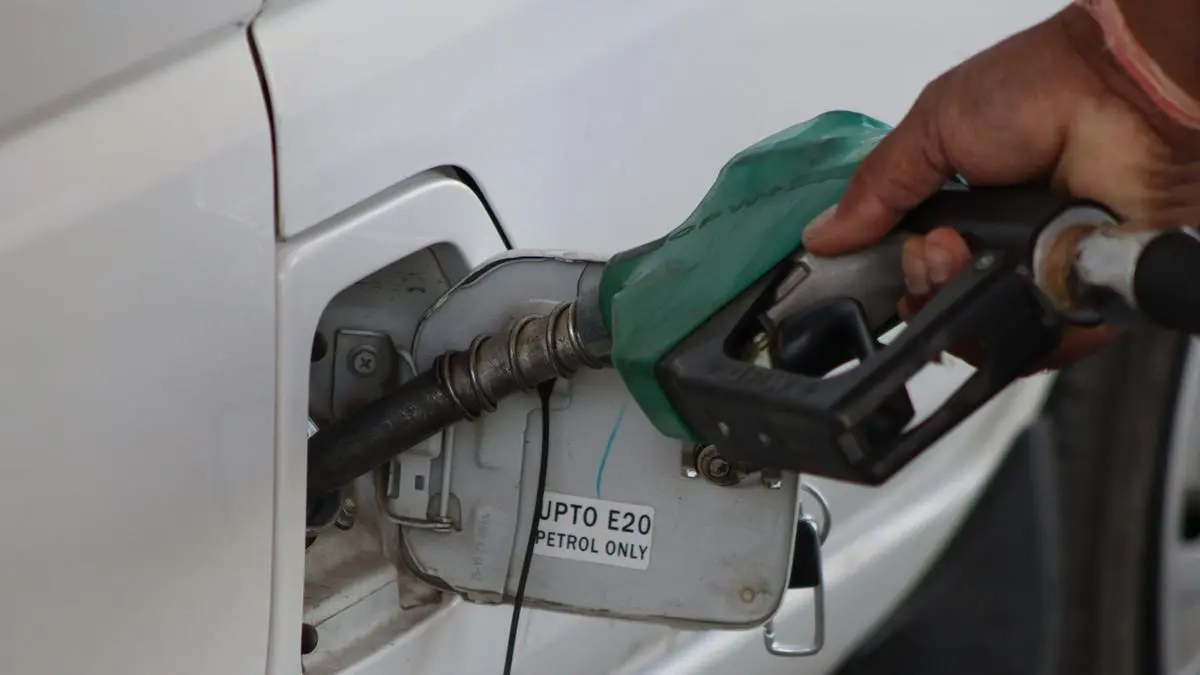
PERFECT MIX. India’s ethanol production currently exceeds the requirement for E20 blending
| Photo Credit:
Fahad Puthawala

India is preparing for E85 — petrol blended with 85 per cent ethanol — and even E100 fuels for flex-fuel vehicles that can run on any blend. This push looks prescient. As crude oil volatility and shortages returned with force in 2026, triggered by the Strait of Hormuz blockade and global supply disruptions, India found itself buffered by a policy conceived over two decades ago: the ethanol-blended petrol programme.

What began quietly in January 2003 as a modest initiative — with a 5 per cent blending target across nine states — barely registered in the public discourse. Even by 2014, the national blending average was just 1.53 per cent. But the groundwork had been laid steadily, through incremental policy support, distillery capacity creation, and a long-term view of energy transition.

The real shift came about in 2018. The National Policy on Biofuels redefined the programme’s scope, expanding ethanol feedstock beyond sugarcane molasses to include damaged food grains, surplus rice, maize, and agricultural residues. This diversification reduced reliance on water-intensive sugarcane and brought the grain-producing regions of north and central India into the ethanol economy, creating new income streams for farmers.

The scale-up that followed was dramatic. Ethanol blending increased near 20-fold from 380 million litres in 2013-14 to 7.07 billion litres in 2023-24. Blending levels climbed to 14.6 per cent in 2023-24, nearly 18 per cent by end-2024, and the targeted 20 per cent by March 2025 — five years ahead of schedule.

Today, India’s ethanol production exceeds the requirement for E20 blending. The surplus is not a problem but a strategic strength, ensuring readiness for higher blends such as E25, E30 or E40.

The next phase is already taking shape. The draft rules for E85 fuels are under preparation, alongside a push for flex-fuel vehicles (FFVs).

The CAFE III emission norms, expected from April 2027, are under review with proposals to treat FFVs on par with electric vehicles in emission credits.

This could accelerate their adoption and deepen ethanol’s role in the transport sector.

Beyond road transport, aviation is emerging as a new frontier for blended fuels. In April, the government amended aviation turbine fuel (ATF) regulations to include blended and synthetic fuels, effectively clearing the path for sustainable aviation fuel (SAF). Blending targets have been set at 1 per cent by 2027, 2 per cent by 2028 and 5 per cent by 2030 — marking ethanol’s entry into a high-value sector.

The foundation has been built, capacity exists, feedstock is diversified, and flex-fuel vehicles are on the horizon. What India’s ethanol programme now requires is continuity — the same patient, sustained commitment that built it.

(The writer is President, Grain Ethanol Manufacturers’ Association)

More Like This

Published on May 11, 2026



Source link

Oil markets see  billion bearish bets ahead of Trump Iran announcements

Oil markets see $7 billion bearish bets ahead of Trump Iran announcements


The timing of the positions coincided with multiple announcements that triggered sharp oil price movements, including delays in military action, ceasefire talks, and discussions around the Strait of Hormuz. The identities of the traders remain unknown, and regulatory agencies have not officially commented.

A series of well-timed market bets on falling oil prices totalling as much as $7 billion during March and April spread across multiple exchanges and types of fuel and derivatives just before major Iranian policy announcements by U.S. President Donald Trump, according to traders, market experts and Reuters analysis of exchange data.

The size exceeds previously reported bets amounting to $2.6 billion, which have already prompted the U.S. administration to warn staff against using nonpublic information for financial benefit. The U.S. Commodity Futures Trading Commission (CFTC) is investigating, a person familiar with the matter told Reuters in April, although the CFTC has yet to officially confirm a probe is underway.

Exchanges and instruments under scrutiny

Reuters could not establish who placed the bets and whether they originated in the U.S. or elsewhere. They included short positions, or bets that prices would fall, for derivatives including ICE, CME crude, diesel and gasoline futures.

The bets took place on two major exchanges that host benchmark global oil and fuel futures trade: the Intercontinental Exchange (ICE) and Chicago Mercantile Exchange (CME). Both exchanges declined to comment. The CME is investigating the trades, a source familiar with the matter told Reuters.

Suspicious timing ahead of Trump policy announcements

Traders first spotted unusual trades on March 23. The trades were executed minutes before Trump announced a delay to threatened attacks on Iranian power infrastructure, triggering an oil price fall.

The same pattern repeated on April 7, before Trump announced a ceasefire with Iran that triggered a fall of as much as 15% in benchmark ICE Brent futures. It happened again on April 17, when Iranian officials and Trump spoke about reopening the Strait of Hormuz, and then again on April 21, when Trump extended the ceasefire.

Reuters and other media reported those trades on the most actively traded front-month contracts for the two global crude benchmarks, Brent and West Texas Intermediate. The value of those bets on those four days in March and April stood at around $2.6 billion, according to Reuters initial calculations.

Regulatory probes and unanswered questions

The U.S. Justice Department, CFTC and White House did not immediately respond to requests for comment.

Published on May 7, 2026


Source link

India and UAE review strategic partnership amid West Asia security concerns

India and UAE review strategic partnership amid West Asia security concerns


In this image posted on May 7, 2026, Foreign Secretary Vikram Misri with Mubadala Investment Company MD and CEO Khaldoon Al Mubarak during a meeting.
| Photo Credit:
PTI

Foreign Secretary Vikram Misri on Thursday met UAE’s MoS for International Cooperation, Reem Al Hashimy, and reviewed the full spectrum of ties, along with discussing the regional situation.

Sharing the details of the visit in a post on X, the Ministry of External Affairs Spokesperson, Randhir Jaiswal, said, “Both sides reviewed the full spectrum of the India-UAE Comprehensive Strategic Partnership and identified areas for further cooperation. They also discussed the ongoing regional situation and global issues of mutual interest.”

Also during the visit, Foreign Secretary Misri met with Khaldoon Al Mubarak, MD & CEO, Mubadala Investment Company. They discussed ways to further deepen the India-UAE partnership, including in investment, technology and other key sectors.

West Asia security concerns after Fujairah strikes

The visit to the UAE comes amid the developing security situation in West Asia and the Gulf region, where, earlier this week, strikes took place at the country’s Fujairah Petroleum Industries Zone, resulting in injuries to three Indian nationals.

Prime Minister Narendra Modi has reaffirmed India’s deep-rooted ties with the United Arab Emirates, expressing unwavering support for the Gulf nation after an attack on civilian infrastructure in the strategic energy hub of Fujairah left three Indian citizens injured.

The strikes targeted Fujairah, a critical global maritime artery on the UAE’s eastern seaboard, which serves as a primary bypass for oil exports outside the volatile Strait of Hormuz. In a post on X, the Prime Minister conveyed his distress over the escalation, stating, “Strongly condemn the attacks on the UAE that resulted in injuries to three Indian nationals. Targeting civilians and infrastructure is unacceptable.”

He further emphasised the depth of the bilateral relationship, noting that “India stands in firm solidarity with the UAE” and continues to advocate for the “peaceful resolution of all issues through dialogue and diplomacy.”

Underscoring the strategic importance of the region’s maritime corridors, PM Modi highlighted that “ensuring safe and unimpeded navigation through the Strait of Hormuz is vital for enduring regional peace, stability and global energy security.”

New Delhi’s condemnation was first articulated by MEA Spokesperson Randhir Jaiswal, who, in an official statement on the attack on Fujairah, emphasised India’s stance on the escalating regional situation.

He noted that the targeting of innocent civilians must cease and reiterated that India continues to stand for “dialogue and diplomacy” to restore peace and stability across West Asia.

Highlighting the importance of global trade routes, the spokesperson called for “free and unimpeded navigation and commerce” through the Strait of Hormuz, stressing that such activities must remain in “keeping with international law.”

The Ministry further stated that India stands ready to support all efforts directed towards a peaceful resolution of the ongoing issues in the region.

Published on May 7, 2026


Source link

West Bengal assembly dissolved after completion of full term

West Bengal assembly dissolved after completion of full term


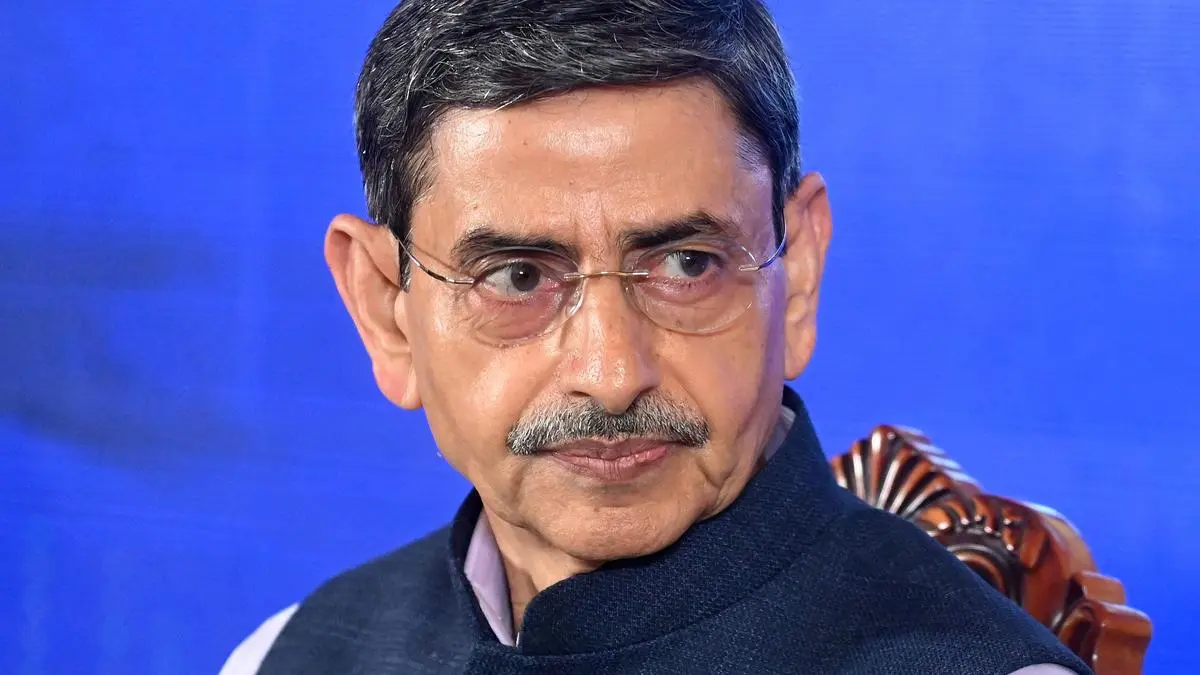
West Bengal Governor RN Ravi
| Photo Credit:
BIJOY GHOSH

Governor R N Ravi has dissolved the West Bengal State Legislative Assembly with effect from May 7 after completion of its term, according to an official notification.

The current assembly was constituted in May 2021 after the Trinamool Congress, under the leadership of Mamata Banerjee, returned to power for the third consecutive term in the state.

The dissolution marks the formal completion of the tenure of the outgoing assembly, following the recently concluded two-phase elections.

The notification was issued by the Department of Parliamentary Affairs.

With the dissolution of the assembly, the state cabinet also ceased to exist, effectively bringing Mamata Banerjee’s tenure as chief minister to an end.

However, deviating from practice, Banerjee has refused to resign after her party, the TMC, was defeated by the BJP in the assembly elections, alleging unfair means during the poll process.

Banerjee has maintained that she and her party were defeated through “manipulation”.

Article 174 of the Constitution empowers the Governor to summon the assembly under specific provisions. It governs the sessions, prorogation, and dissolution of state legislatures.

The BJP won 207 seats to secure more than a two-thirds majority in the 294-member West Bengal assembly, ending the TMC’s uninterrupted 15-year rule in the state.

The Mamata Banerjee-led party was reduced to 80 seats.

Published on May 7, 2026


Source link

SBI to decide on  billion foreign currency bond issue on May 12

SBI to decide on $2 billion foreign currency bond issue on May 12


The bonds may be issued in US dollars or other major foreign currencies during FY26–27
| Photo Credit:
Niharika Kulkarni

State Bank of India (SBI) on Thursday said the executive committee of its central board will meet on May 12 to decide on raising funds through the issue of USD 2 billion (around Rs 17,000 crore) foreign currency bonds in the current fiscal year.

In a regulatory filing, SBI said the executive committee will “examine the status and decide on long term fund raising in single/multiple tranches of up to USD 2 billion under Reg-S/144A, through a public offer and/or private placement of fixed/floating rate bonds in US dollar or any other major foreign currency during FY 2026-27”.

Shares of SBI closed at Rs 1,091.80, down 0.35 per cent from its previous close on the BSE.

Published on May 7, 2026


Source link

YouTube
Instagram
WhatsApp