West Bengal assembly dissolved after completion of full term

West Bengal assembly dissolved after completion of full term


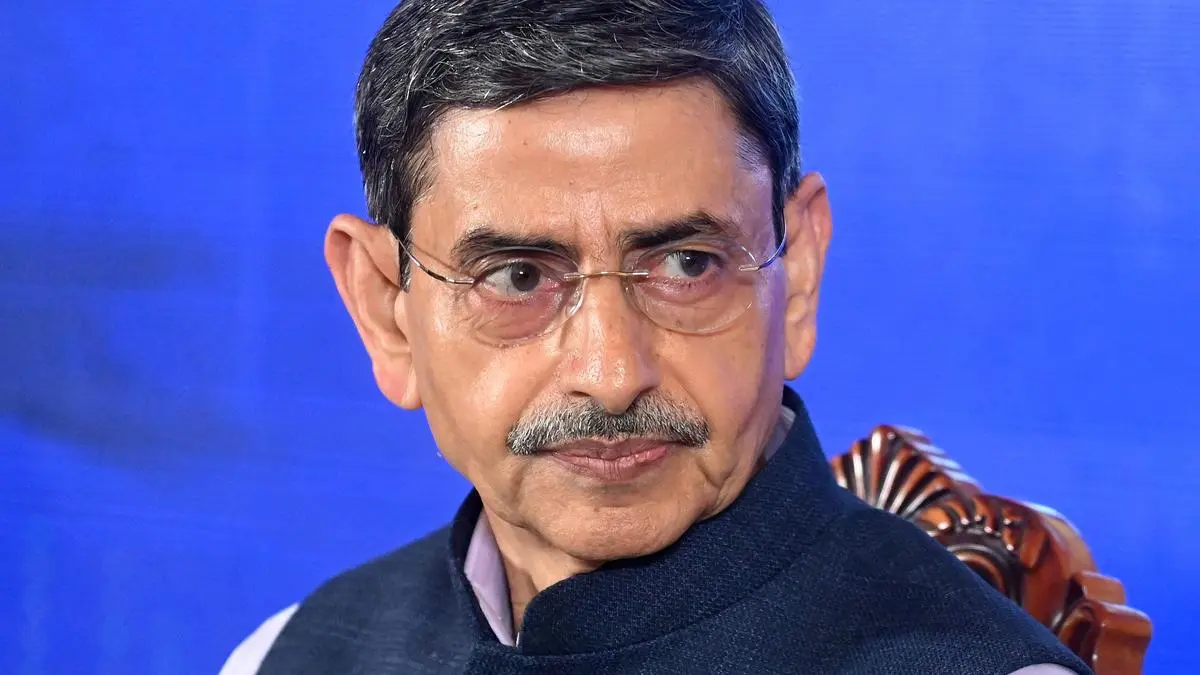
West Bengal Governor RN Ravi
| Photo Credit:
BIJOY GHOSH

Governor R N Ravi has dissolved the West Bengal State Legislative Assembly with effect from May 7 after completion of its term, according to an official notification.

The current assembly was constituted in May 2021 after the Trinamool Congress, under the leadership of Mamata Banerjee, returned to power for the third consecutive term in the state.

The dissolution marks the formal completion of the tenure of the outgoing assembly, following the recently concluded two-phase elections.

The notification was issued by the Department of Parliamentary Affairs.

With the dissolution of the assembly, the state cabinet also ceased to exist, effectively bringing Mamata Banerjee’s tenure as chief minister to an end.

However, deviating from practice, Banerjee has refused to resign after her party, the TMC, was defeated by the BJP in the assembly elections, alleging unfair means during the poll process.

Banerjee has maintained that she and her party were defeated through “manipulation”.

Article 174 of the Constitution empowers the Governor to summon the assembly under specific provisions. It governs the sessions, prorogation, and dissolution of state legislatures.

The BJP won 207 seats to secure more than a two-thirds majority in the 294-member West Bengal assembly, ending the TMC’s uninterrupted 15-year rule in the state.

The Mamata Banerjee-led party was reduced to 80 seats.

Published on May 7, 2026


Source link

SBI to decide on  billion foreign currency bond issue on May 12

SBI to decide on $2 billion foreign currency bond issue on May 12


The bonds may be issued in US dollars or other major foreign currencies during FY26–27
| Photo Credit:
Niharika Kulkarni

State Bank of India (SBI) on Thursday said the executive committee of its central board will meet on May 12 to decide on raising funds through the issue of USD 2 billion (around Rs 17,000 crore) foreign currency bonds in the current fiscal year.

In a regulatory filing, SBI said the executive committee will “examine the status and decide on long term fund raising in single/multiple tranches of up to USD 2 billion under Reg-S/144A, through a public offer and/or private placement of fixed/floating rate bonds in US dollar or any other major foreign currency during FY 2026-27”.

Shares of SBI closed at Rs 1,091.80, down 0.35 per cent from its previous close on the BSE.

Published on May 7, 2026


Source link

Bulk depositors cash in on banks’ need to raise resources to meet credit demand

Bulk depositors cash in on banks’ need to raise resources to meet credit demand


Bulk depositors such as public sector undertakings, temple trusts and companies with huge cash surplus are making hay as some banks seem game for paying muh maangi keemat (desired price) for their deposits to bridge the gap between credit growth and deposit growth.

This is underscored by the fact that interest rates on one-year bulk deposits (₹3 crore and above) have gone up from an average 6.90-7.00 per cent level in January 2026 to about 7.50 per cent now.

Credit growth (year-on-year) of all scheduled banks at 14.88 per cent as on April 15 was 276 basis points, higher than the deposit growth of 14.88 per cent, per RBI’s latest data.

A senior executive with a public sector bank (PSB) noted that recently a renowned temple trust issued a tender for placing a single ₹500 crore deposit, which is currently earning an interest rate of about 6.80 per cent with another bank. The mountain-top temple is now believed to be seeking a return of at least 7.30 per cent.

Repo rate

Indian Bank’s MD & CEO Binod Kumar said bulk deposit rates will go up if loan growth continues to grow at a faster clip than deposit growth, assuming the repo rate remains static. Ultimately, banks may also have to increase retail term deposit rates.

Kumar expects his bank to maintain the bulk deposit proportion at about 20 per cent of overall deposits.

K Arvind, Head – Treasury, Tamilnad Mercantile Bank, said: “One year bulk deposit rates have gone up from 6.90 to 7.00 per cent level in January 2026 to the current level of about 7.50 per cent. Though the repo rate has come down, bulk deposit rates have not come down as banks have to mobilise resources to support credit growth.”

According to the RBI’s latest data, during the current easing cycle (February 2025 to February 2026), the repo rate has been cumulatively cut by 125 basis points (bps) from 6.50 per cent to 5.25 per cent, but the transmission has not happened to the full extent.

The weighted average domestic term deposit rate on fresh and outstanding deposits have come down by 97 bps and 47 bps, respectively. The PSB executive quoted above said institutional depositors are exploiting the need of banks to mobilise deposits to the hilt.

Published on May 7, 2026


Source link

BSE clocks record FY26 as derivatives revenue doubles

BSE clocks record FY26 as derivatives revenue doubles


BSE shares hit a 52-week high of ₹3,985 during Thursday’s trade ahead of the results announcement.

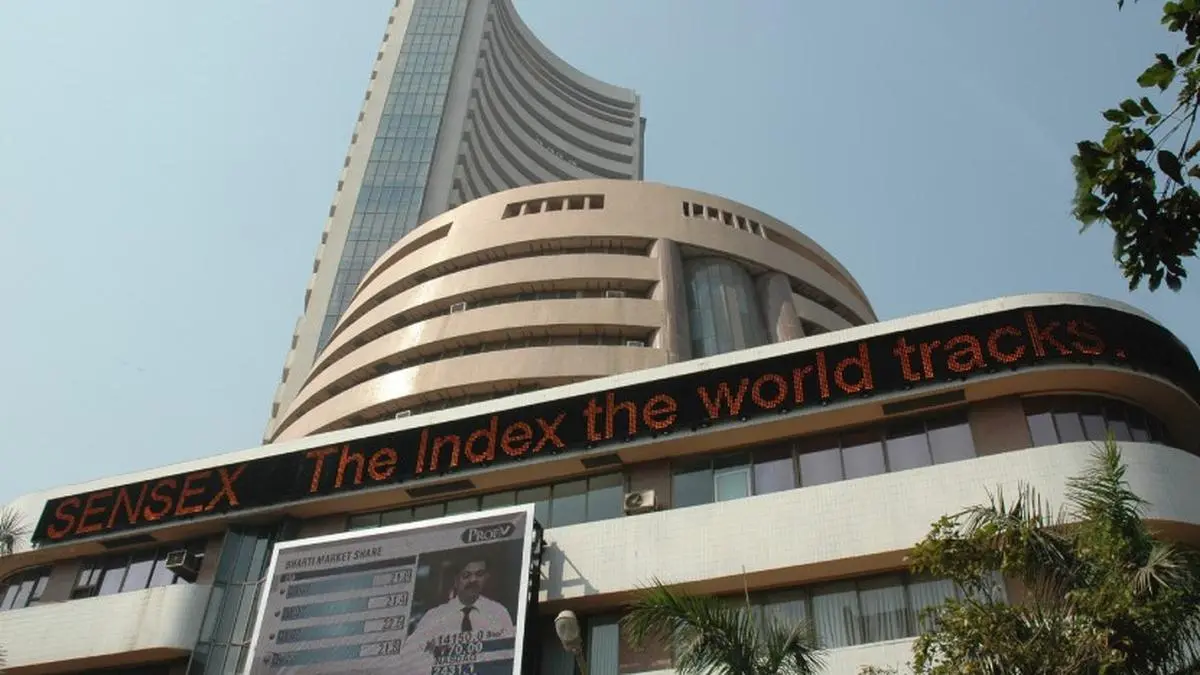
India’s oldest stock exchange, BSE, reported a 61 per cent jump in consolidated net profit for the March quarter at ₹795.47 crore, aided by a sharp rise in derivatives revenue and higher trading activity, capping what the exchange described as the strongest financial performance in its 150-year history.

Consolidated revenue for the January-March quarter rose to ₹1,630 crore from ₹926.38 crore a year earlier. Full-year net profit surged 88 per cent to ₹2,487 crore in FY26 against ₹1,322 crore in FY25, while revenue for the fiscal climbed 59 per cent to ₹5,148 crore.

Dividend boost

The board recommended a final dividend of ₹10 per share for FY26. BSE shares hit a 52-week high of ₹3,985 during Thursday’s trade ahead of the results announcement.

The strong performance was led by the equity derivatives segment, where annual revenue more than doubled to ₹3,134 crore. Average daily premium turnover rose 118 per cent to ₹19,522 crore in FY26 from ₹8,977 crore in the previous year.

On the post-results analyst call, BSE Managing Director and CEO Sundararaman Ramamurthy said the exchange remained dissatisfied with its 7-8 per cent cash market share, probably due to delays in implementation of smart order routing (SOR), which is a mechanism that enables brokers to route orders across exchanges for best price execution.

“This is far away from what we wanted it to be. We wanted it to be at least double digit,” Ramamurthy said. “We thought institutional and retail participants will become exchange agnostic and trade where the prices are suitable for them… But unfortunately, applications of SOR… are still pending for more than six months at the other exchange,” he said.

“This is probably impeding the growth in the market share,” he added.

Ramamurthy said the exchange’s strategy in derivatives was focused on “deepening and broadening” participation rather than merely chasing volumes. The number of brokers trading options on BSE increased to 587 from 446 a year ago.

FPI Surge

Meanwhile, the exchange’s foreign portfolio investor count rose sharply from 100 to 520. “We have set for ourselves a target of around 800 FPIs,” he said, adding that more long-term funds are beginning to participate in monthly options contracts as liquidity improves.

The exchange also indicated plans to enter commodity derivatives. “We do not want a ‘me too’ syndrome where we also start something because others are starting it,” Ramamurthy said. “We want to create a value proposition for the market by thinking about some unique selling proposition.”

The annual general meeting is scheduled for August 19. BSE StAR MF posted revenues of ₹285 crore, up 24 per cent, with transaction volumes growing 27 per cent to 84 crore. Total investor accounts on BSE crossed 25 crore, with 3.53 crore new accounts added during the year.

Published on May 7, 2026


Source link

Paytm shares jump 8% after Q4 profit, strong revenue growth. Should you buy?

Paytm shares jump 8% after Q4 profit, strong revenue growth. Should you buy?


Shares of One 97 Communications, which operates Paytm, settled 8 per cent higher on Thursday after the company reported a turnaround to profit in the March quarter and posted strong revenue growth driven by payments and financial services businesses.

The stock climbed to an intraday high of ₹1,197.40 on the NSE before closing at ₹1,197.40 compared to the previous close of ₹1,110.60.

Stock movement today

Paytm shares surge 6 per cent after Q4 earnings

Company posts Q4 profit of ₹183 crore against year-ago loss

FY26 revenue rises 22.2 per cent to ₹8,437 crore

Brokerages upbeat on payments and financial services growth

The company reported a consolidated profit of ₹183 crore for the quarter ended March 2026, compared with a loss of ₹545 crore in the corresponding period last year.

Consolidated revenue from operations rose 18.4 per cent y-o-y to ₹2,264 crore in Q4 FY26 from ₹1,912 crore a year earlier.

For the full financial year FY26, the company posted a consolidated profit of ₹552 crore against a loss of ₹663 crore in FY25. Annual revenue from operations increased 22.2 per cent to ₹8,437 crore from ₹6,900 crore in the previous fiscal.

Speaking at the Q4 earnings call, Paytm President and Group CFO Madhur Deora said the company prefers a partnership-driven model where Paytm manages distribution, technology and collections, while lending partners handle capital and risk management. He added that Paytm is “not super excited” about going for an NBFC licence, reinforcing its focus on collaborating with established financial institutions.

Brokerages said the company’s improving profitability, resilient payments business and continued momentum in financial services supported investor sentiment despite the absence of UPI incentive income.

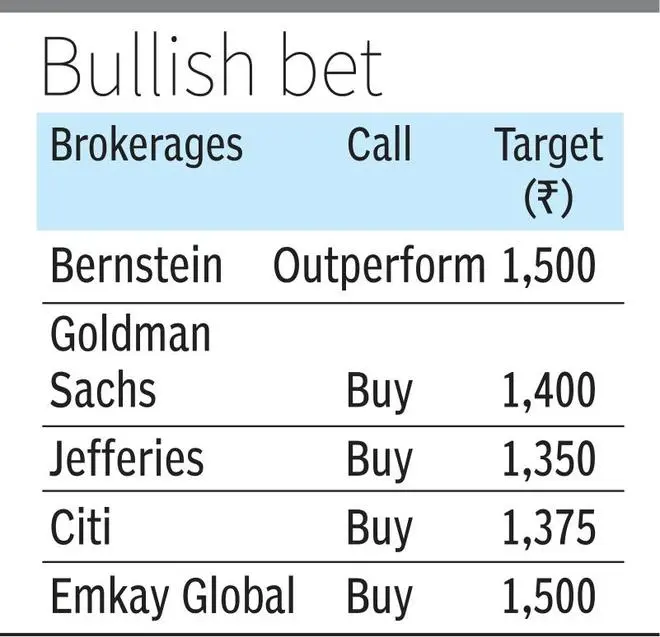
Goldman Sachs has maintained a positive outlook on Paytm, highlighting its strong growth in digital payments and financial services. It has retained a buy rating with a target price of ₹1,400. The brokerage expects Paytm’s EBITDA margins to improve steadily over the next few years. “We see scale up of recently launched postpaid product, further gains in market share, and new launches (such as wallets) as potential catalysts for the stock,” it added.

Citi maintained a buy rating with a target price of ₹1,375. The brokerage said Q4 core payment margins excluding subsidies continued to improve, while merchant business momentum remained robust. It noted that profits and EBITDA missed estimates due to higher marketing spends as the company stepped up promotional activity, but added that operating leverage continues to play out with fixed costs remaining under control.

Jefferies also maintained a buy rating with a target price of ₹1,350. The brokerage said revenue momentum helped offset the absence of PIDF and UPI incentives, with growth led by the financial services business. It added that contribution margins are normalising, while operating efficiency helped adjusted EBITDA margins improve to 8 per cent.

On the other hand, Bernstein maintained an outperform rating with a target price of ₹1,500. The brokerage said Paytm’s Q4 FY26 EBITDA was broadly in line with consensus estimates at ₹1.3 billion and highlighted resilient profitability despite the loss of PIDF incentives and the absence of UPI incentive accrual during the quarter. It said financial services revenue grew 12 per cent q-o-q and 38 per cent y-o-y, driven by merchant lending traction.

The brokerage added that UPI volumes surged 46 per cent y-o-y compared with industry growth of around 21 per cent, indicating improving engagement. Device additions remained steady at around 0.7 million during the quarter, easing concerns around competitive intensity. Bernstein also noted that indirect expenses remained tightly controlled, while payments margin declined 9 basis points due to the discontinuation of PIDF incentives. It expects non-linear EBITDA expansion over FY26-30, supported by more than 20 per cent revenue growth and disciplined costs.

Published on May 7, 2026


Source link

कर्जदारों सावधान! लोन नहीं चुकाया तो अब जब्त होगी प्रॉपर्टी, RBI ने जारी किए सख्त नियम

कर्जदारों सावधान! लोन नहीं चुकाया तो अब जब्त होगी प्रॉपर्टी, RBI ने जारी किए सख्त नियम


Loan Recovery: क्या आपने भी अपनी प्रॉपर्टी के लिए बैंक से लोन लिया है? अगर हां तो ये नए RBI के नियम आपको जरूर जान लेना चाहिए. क्योंकि अगर नहीं जानेंगे तो हो सकता है कि आपकी प्रॉपर्टी जब्त हो जाए. भारतीय रिजर्व बैंक ने मंगलवार को नए मसौदा दिशानिर्देश जारी किए हैं. जिसके बाद अब यदि कोई व्यक्ति लोन नहीं भर पाएगा तो बैंक उसकी रिकवरी के लिए प्रॉपर्टी को जब्त कर सकता है.

क्या कहते हैं नए नियम?
दरअसल इन नए मसौदा नियमों के अंतर्गत बैंक और गैर-बैंकिंग वित्तीय कंपनियां (NBFC) लोन रिकवरी की प्रक्रिया में सिर्फ अपवादस्वरूप ही अचल संपत्तियों का अधिग्रहण कर सकेंगी. इसके साथ ही सेंट्रल बैंक ने ये भी साफ किया है कि, विनियमित इकाइयों (RE) से सामान्य परिस्थितियों में अपेक्षा नहीं की जाती कि वे अपनी नियमित कर्ज गतिविधियों के बदले गैर-वित्तीय परिसंपत्तियों पर कब्जा करें.

ये भी पढ़ें: Indian Mango: अमेरिका में मिनटों में बिक रहे भारत के आम, अल्फांसो और केसर का दिखा जबरदस्त क्रेज! खत्म हुए स्टॉक

पारदर्शी तरीके से होगी कार्रवाई
इस नियम के तहत खराब लोन (NPA) से जुड़ी संपत्तियों के निपटान के नियम बताए गए हैं. RBI का कहना है कि ऐसी संपत्तियों को तय समय के भीतर और पारदर्शी तरीके से बेचना या निपटाना जरूरी है, ताकि ज्यादा से ज्यादा पैसा वापस मिल सके. ये नियम सिर्फ उन्हीं लोन पर लागू होगा जिन्हें पहले से NPA यानी खराब कर्ज घोषित किया जा चुका है.

इसके अलावा, बैंक को पहले बाकी सभी वसूली के तरीके आजमाने होंगे. अगर उनसे पैसा वापस नहीं मिलता, तभी ये प्रावधान लागू होगा. स्पेसिफाइड नॉन फाइनेंशियल एसेट यानी ऐसी अचल संपत्ति (जमीन, मकान, बिल्डिंग आदि) को बैंक या वित्तीय संस्था कर्ज की वसूली के बदले लोन लेने वाले से अपने कब्जे में लेगा. इसमें नॉन बैंकिंग एसेट (NBA) यानी गैर-बैंकिंग परिसंपत्तियां भी शामिल होंगी.

ये भी पढे़ं: TVK चीफ थलापति विजय की पत्नी के पास है Gold का भंडार, 1-2 नहीं… इतने करोड़ का है सोना


Source link

YouTube
Instagram
WhatsApp