Two ships with petroleum products for India crossing Strait of Hormuz, more expected to follow: Sources

Two ships with petroleum products for India crossing Strait of Hormuz, more expected to follow: Sources


India has reiterated its urgent call for the preservation of safe and uninterrupted maritime transit through the Strait of Hormuz.
| Photo Credit:
Dado Ruvic

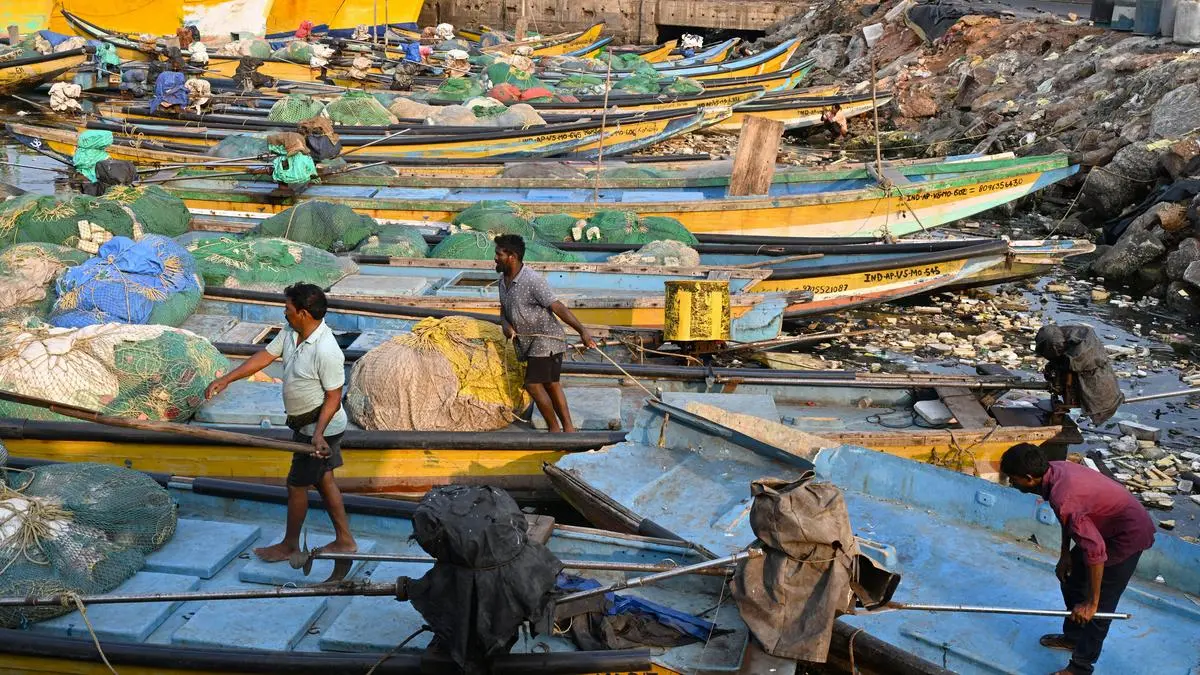
Two more merchant vessels carrying petroleum products for India are crossing Strait of Hormuz. Indian Navy warships are on standby to provide support to them, sources told ANI. More vessels are expected to follow soon, the sources added.

Earlier, speaking at a joint inter-ministerial briefing, Special Secretary in the Ministry of Ports, Shipping and Waterways Rajesh Kumar Sinha said authorities are closely monitoring the situation and maintaining coordination with various stakeholders.

“In the Gulf region, there has been no information in the last 24 hours regarding any incident involving Indian-flagged ships or Indian seafarers. All are safe,” Sinha said.

He added that Indian ships operating in the Persian Gulf are also safe.

“In the Persian Gulf, there are 20 ships sailing under the Indian flag, with around 540 Indians onboard, and they are also safe,” he said.

Sinha further said the Directorate General of Shipping has been actively responding to queries and concerns through its communication centre.

“In the last 24 hours, the DG Shipping communication centre, which operates 24 hours a day, received 98 calls and 335 emails, all of which were responded to,” he said.

On Friday, India reiterated its urgent call for the preservation of safe and uninterrupted maritime transit through the Strait of Hormuz, emphasising that international law must be upheld amidst the deteriorating security situation in West Asia. The government confirmed it is maintaining a vigilant watch over regional volatilities to protect national energy interests.

During the weekly media briefing, Ministry of External Affairs (MEA) spokesperson Randhir Jaiswal stated that New Delhi is actively coordinating with global partners to ensure stability.

“We are closely following all developments in West Asia. We continue to call for ensuring safe and free navigation through the Strait of Hormuz as a matter of priority,” Jaiswal noted.

Providing a significant update on maritime safety, the spokesperson revealed that four Indian-bound vessels transporting liquefied petroleum gas (LPG) successfully navigated the strategic chokepoint.

Published on March 28, 2026


Source link

Russia to ban gasoline exports from April 1 to prioritise local market, stabilise prices

Russia to ban gasoline exports from April 1 to prioritise local market, stabilise prices


Russia’s Deputy Prime Minister Alexander Novak
| Photo Credit:
RAMIL SITDIKOV

The Government of Russia on Friday (local time) announced a ban on gasoline exports starting April 1, aiming to prioritise domestic supplies and stabilise fuel prices amid global market turbulence due to the ongoing conflict in West Asia.

The announcement followed a meeting chaired by Russian Deputy Prime Minister Alexander Novak to review the situation in the domestic petroleum product market.

According to a statement issued by the Government of the Russian Federation, Novak highlighted that the ongoing crisis in West Asia is causing significant fluctuations in global oil and petroleum product prices, although demand for Russian energy abroad remains strong.

During the meeting, particular emphasis was placed on the objective set by Russian President Vladimir Putin to prevent domestic fuel prices from rising above forecasted levels.

The Russian Ministry of Energy reported that oil refining rates remain consistent with March 2025 levels, ensuring a stable domestic supply, and that industry companies have sufficient gasoline and diesel reserves along with high refinery capacity utilisation to meet internal demand.

“Particular attention was paid to the objective set by the Russian President of preventing domestic fuel prices from rising above forecasts. The Ministry of Energy reported on the current situation in the domestic fuel market: oil refining rates remain at the March 2025 level, ensuring stable supplies of petroleum products. Industry companies confirmed the availability of sufficient gasoline and diesel fuel reserves, as well as high refinery capacity utilisation to meet domestic demand,” the statement read.

Following these discussions, Novak instructed the Ministry of Energy to draft a resolution banning gasoline exports from April 1, 2026, to stabilise domestic prices and guarantee priority supply to the local market.

“Following the meeting, Alexander Novak instructed the Ministry of Energy to prepare a draft resolution banning gasoline exports from April 1, 2026, in order to stabilise prices and ensure priority supplies to the domestic market,” the statement added.

‘India in comfortable position’

Earlier in the day, the Ministry of Petroleum and Natural Gas reiterated that India has sufficient stock of crude oil, petrol and diesel, while ensuring an uninterrupted supply of LNG and LPG despite disruptions caused by the ongoing West Asia conflict.

Speaking at a joint inter-ministerial briefing, Sujata Sharma, Joint Secretary (Marketing & Oil Refinery), said the country currently maintains adequate crude inventories, with fuel supplies secured for the next two months and added that refineries are operating at full or above capacity, and domestic LPG production has increased by around 20 per cent.

Highlighting the impact of global tensions, she noted that crude oil, LPG and LNG supplies were affected and international prices have risen. However, the government has taken multiple calibrated measures to manage the situation effectively and ensure stability in domestic supply.

“As you all know, we are currently in a war-like situation, and due to the ongoing conflict in the Middle East, our supplies have been affected. Crude oil, LPG, and LNG have all been impacted. Crude prices have increased, and the prices of other products have also risen in international markets. However, the Government of India has taken several important decisions at multiple levels to effectively manage this situation,” Sharma said.

“As of today, we have sufficient crude inventories, and supplies for the next two months have already been secured. The situation is comfortable with respect to LPG and PNG as well. Our refineries are operating at 100 per cent or even above capacity, and domestic LPG production has increased by 20 per cent,” she added.

Published on March 28, 2026


Source link

RBI limits lenders’ net rupee FX positions at 0 million to curb speculation

RBI limits lenders’ net rupee FX positions at $100 million to curb speculation


The raging war in West Asia continues to have a deleterious effect on the rupee, which closed at a new all time low on Friday (March 27, 2026).

With the rupee depreciating about 4 per cent since the West Asia war began on February 28, 2026, the Reserve Bank of India has asked authorised dealers to ensure that their net open position – Indian Rupee (NOP-INR) – in the onshore deliverable market shall be maintained within $100 million at the end of each business day.

The move is probably aimed at reducing large bets against the Indian currency and preventing sharp movements amid rising global crude oil prices, continuous FPI-related outflows from the equity markets and a strengthening dollar, say market experts.

Authorised dealers have to ensure compliance with the order at the earliest but no later than April 10, 2026, according to the central bank.

Under the Master Direction on Risk Management and Inter-Bank Dealings, the Reserve Bank may prescribe limits for open positions involving rupee (NOP-INR) for exchange rate management, depending on market conditions.

Rupee at record low

The raging war in West Asia continues to have a deleterious effect on the rupee, which closed at a new all time low on Friday (March 27, 2026).

The rupee closed at a new low of 94.8125 per US Dollar, down about 84 paise against previous close of 93.9775, amid rising global energy prices, FPI-related outflows from domestic equity markets and a strengthening dollar.

YES Securities, in a report, noted that the Indian rupee fell to a record low, past 94 per dollar this week, pressured by energy supply concerns and foreign outflows.

“The rupee has dropped about 4 per cent since the war began, putting it on track for its first fiscal-year decline in over a decade. Rising energy costs are adding to inflation and growth concerns, keeping the near-term outlook weak,” per the report.

Published on March 28, 2026


Source link

Taken note of introduction of bill related to H-1B, L-1 visa in US Senate: Govt

Taken note of introduction of bill related to H-1B, L-1 visa in US Senate: Govt


Minister of State for External Affairs Kirti Vardhan Singh
| Photo Credit:
ANI

The government on Friday informed Parliament that it has taken note of the introduction of a bill related to H-1B and L-1 visa in the US Senate last September and according to available information, it remains at the ‘introduced’ stage with no hearings, markup, or further legislative progress.

The H-1B and L-1 Visa Reform Act of 2025 seeks to amend the Immigration and Nationality Act to reform the H-1B (specialty occupation) and L-1 (intra-company transferee) visa programmes with the stated objectives of “curbing fraud, abuse, outsourcing, and displacement of American workers”, Minister of State for External Affairs Kirti Vardhan Singh said in a written response to a query in Lok Sabha.

Key proposals include higher wage thresholds, mandatory recruitment of US workers, a 50 per cent cap on H-1B/L-1 workers in companies with more than 50 employees, stricter definitions of “specialty occupation” and “specialised knowledge”, shorter maximum stay periods for H-1B, and enhanced enforcement powers, he said.

The Ministry of External Affairs was asked whether it has come to the government’s notice that a bill has been introduced in the US Congress to change H-1B and L-1 visas for foreign workers, and what impact it will have on Indian techies.

“The government has taken note of the introduction of a bill titled ‘H-1B and L-1 Visa Reform Act of 2025’ (S. 2928) in the United States Senate on September 29, 2025. The Bill has been referred to the Senate Judiciary Committee,” Singh said.

According to latest available information (as of March 21), it remains at the “introduced” stage with no hearings, markup, or further legislative progress, he said.

The MEA was also asked to what extent the proposed bill, if it becomes a law, would impact Indian professionals in the US, on work visa.

“The proposed changes, if enacted into law, could (a) raise hiring costs and make it harder for US employers to sponsor or renew visas for less experienced or mid-level tech workers; (b) shift some of the work back to India or to other countries, and (c) make it difficult to obtain permanent residency because it limits the maximum time one could hold a H-1B visa,” the government said.

The MEA was also asked the details of the ‘Firewall’ project launched by the US government.

‘Project Firewall’ is an enforcement initiative launched by the US Department of Labor’s Wage and Hour Division on September 19, 2025.

“Key features include audits and investigations in cases of suspected displacement of US workers, inadequate recruitment, wage violations, or misrepresentation and enhanced penalties, including back wages, civil fines, and debarment from the H-1B programme,” Singh said.

The initiative is aimed at strengthening compliance with the existing H-1B visa programme rules to protect wages and job opportunities of highly skilled American workers, the MoS said.

“As of March 2026, the initiative remains active with a large number of ongoing investigations. It enforces existing regulations rather than introducing new statutory change,” the minister said.

The MEA said the government of India “continues to engage with the US side” at various levels on all aspects of skilled worker mobility to safeguard the interests of Indian professionals while respecting the immigration policies of the US.

Published on March 28, 2026


Source link

30 Days of West Asia conflict: India ups LPG output, focuses on PNG as imports concerns persist

30 Days of West Asia conflict: India ups LPG output, focuses on PNG as imports concerns persist


Commercial cylinder allocations have been raised to up to 70% in consultation with State governments to avoid hoarding or black marketing with focus on industries such as steel, automobile, textile, dye, chemicals, and plastics
| Photo Credit:
DEEPAK KR

As the recent conflict in West Asia completes a month, the world’s second largest importer of liquefied petroleum gas (LPG) has managed to navigate the black swan event so far by prioritising domestic production of the key cooking fuel, while focusing on encouraging as many as 60 lakh LPG consumers to migrate to piped natural gas (PNG).

The conflict—considered the biggest disruption in the history of global oil and gas markets—impacted India adversely considering that 60 per cent of its LPG requirement, 47 per cent of its liquefied natural gas (LNG) demand and roughly 30 per cent of crude oil needs transit the Strait of Hormuz (SoH), the 34 km-long world’s most critical energy choke point.

The conflict led to a surge in global energy prices. While Brent crude oil prices have averaged at $98 per barrel in March 2026 so far (up to March 25, 2026), up from $68 in February 2026, the average price of the Indian basket of crude oil has risen significantly to $125.7 a barrel in the ongoing month from $69 in February 2026, ICRA said.

Besides, natural gas prices (JKM) have also risen quite sharply, surpassing $20 per million British thermal units (mBtu) on March 18, 2026, nearly double the levels seen a month ago, it added.

While India has “sufficient” stocks of crude oil, natural gas, petrol, diesel and jet fuel, it faces supply risk with respect to LPG imports. This is due to India importing 60 per cent of its domestic demand. Of the total imports, almost 90 per cent come from West Asia with most of it transiting the SoH. What compounds the problem is that there are not many sources available to import LPG compared to crude oil or LNG.

However, the government responded immediately to the issue and prioritised LPG production in refiners at the expense of petrochemicals by invoking the Essential Commodities Act.

Domestic refinery production has now been ramped up by 40 per cent, bringing daily LPG output to a record 50,000 tonnes, which is more than 60 per cent of India’s requirement. India’s daily requirement is around 80,000 tonnes. This helped the net daily import requirement to decline to 30,000 tonnes.

Besides, the government has 80,000 tonnes of assured LPG import cargoes, which are en-route from the US, Russia, Australia, and other countries, arriving across India’s 22 LPG import terminals. This is equal to almost a month’s supply.

Panic buying

Besides, government has also managed to check panic buying with OMCs successfully delivering over 50 lakh cylinders every day. Cylinder demand had gone up to 89 lakh cylinders due to panic booking, but has now come down to 50 lakh cylinders.

Commercial cylinder allocations have been raised to up to 70 per cent in consultation with State governments to avoid hoarding or black marketing with focus on industries such as steel, automobile, textile, dye, chemicals, and plastics.

The government is also pushing for expansion of PNG and compressed natural gas (CNG) in the country, encouraging households and businesses to migrate to piped gas. India produces 92 million standard cubic meters per day (MSCMD) of natural gas out of a total daily requirement of 191 MSCMD, making it far less import-dependent on gas than on LPG.

City gas distribution (CGD) has expanded from 57 geographical areas (GAs) in 2014 to over 300 today. Domestic PNG connections have grown from 25 lakh to over 1.6 crore. There are 60 lakh LPG consumers who can easily migrate to PNG, which is now a focus area for the government.

In terms of crude oil and petroleum products, the government is in a very comfortable position. India has 74 days of total reserve capacity and actual stock cover is around 60 days right now (including crude stocks, products stocks and the dedicated strategic storage in caverns). Nearly two months of steady supply is available. Beside, another 2 months of crude oil imports have been secured.

Published on March 27, 2026


Source link

Iran war: Rupee closes at all-time low, bond yields harden, equities take a beating

Iran war: Rupee closes at all-time low, bond yields harden, equities take a beating


The raging war in West Asia continues to have a deleterious effect on the Indian financial markets, with the Rupee closing at a new all-time low, bond yields hardening and equities taking a beating.

The rupee closed at a new low of 94.8125 per US Dollar, down about 84 paise against the previous close of 93.9775, amid rising global energy prices, FPI-related outflows from domestic equity markets and a strengthening Dollar.

Yields of Government Securities (G-Secs) hardened due to fears of the fiscal implications of the Government’s move to reduce excise duty on petrol and diesel by ₹10 each.

Yield of the 10-year benchmark bond (6.48 per cent GS2035) closed at 6.94 per cent, up 6 basis points over the previous close of 6.88 per cent. The last time the 10-year G-Sec yield was at the 6.94 per cent level was in October 2024.

The equity markets are feeling the heat of the West Asia war due to the negative impact it will have on the economy and companies, even as FPIs continue to pull out. Amid worsening macro and slowing earnings growth, Goldman Sachs has lowered Indian equities to marketweight from overweight on less attractive risk/reward than North Asian markets.

Equity benchmarks BSE Sensex and NSE Nifty ended down 2.25 per cent (to close at 73,583 points) and 2.09 per cent (22,820 points), respectively.

Rupee vaults above 94

The rupee on Friday closed at 94.8125 per US Dollar, about 109 paise weaker against last Friday’s 93.72 close. Since the beginning of the West Asia war, the rupee has depreciated about 4 per cent.

YES Securities, in a report, noted that the Indian rupee fell to a record low, past 94 per dollar this week, pressured by energy supply concerns and foreign outflows.

“The rupee has dropped about 4 per cent since the war began, putting it on track for its first fiscal-year decline in over a decade. Rising energy costs are adding to inflation and growth concerns, keeping the near-term outlook weak,” per the report.

G-Secs yields rise

Impact of the Government’s move to reduce excise duty on petrol and diesel to shield consumers and oil marketing companies from the global oil shock has raised concerns that the Government may borrow more in FY27. G-Sec yields went up due to this.

India Ratings and Research (Ind-Ra) estimates suggest that if the excise duty remains at the current level throughout FY27, it would cost the government ₹1.70 lakh crore. Since the onset of the West Asia conflict, the Indian crude basket’s price has jumped to $117.09/barrel (bbl) in March 2026 (up to 25 March 2026) from $69.01/bbl in February 2026.

However, the retail prices of petrol (excluding premium variety) and diesel (excluding industrial diesel) have remained constant.

“Due to the constant retail prices, oil marketing companies incurred huge marketing losses, making the excise duty cut beneficial for their credit profile. Even after the excise duty cut, the retail prices of petrol and diesel are expected to remain the same as of 26 March 2026, complicating fiscal arithmetic for FY27,” said Devendra Pant, Chief Economist, Ind-Ra.

Equity markets down

With FPIs pulling out about $11.38 billion worth of investments from the Indian equity markets in March so far (up to March 27), the benchmark equity indices are sinking further.

Om Mehra, Technical Research Analyst, SAMCO Securities, said the Nifty ended the session at 22,819.60, declining 2.09 per cent, as it continued to remain under pressure and closed near the lower end of the day’s range.

He observed that the index has now extended its weakness, marking the fifth consecutive weekly decline, with a weekly fall of 1.28 per cent. Since the West Asia conflict broke out on February 28, Nifty is down by over 9 per cent.

Published on March 27, 2026


Source link

YouTube
Instagram
WhatsApp