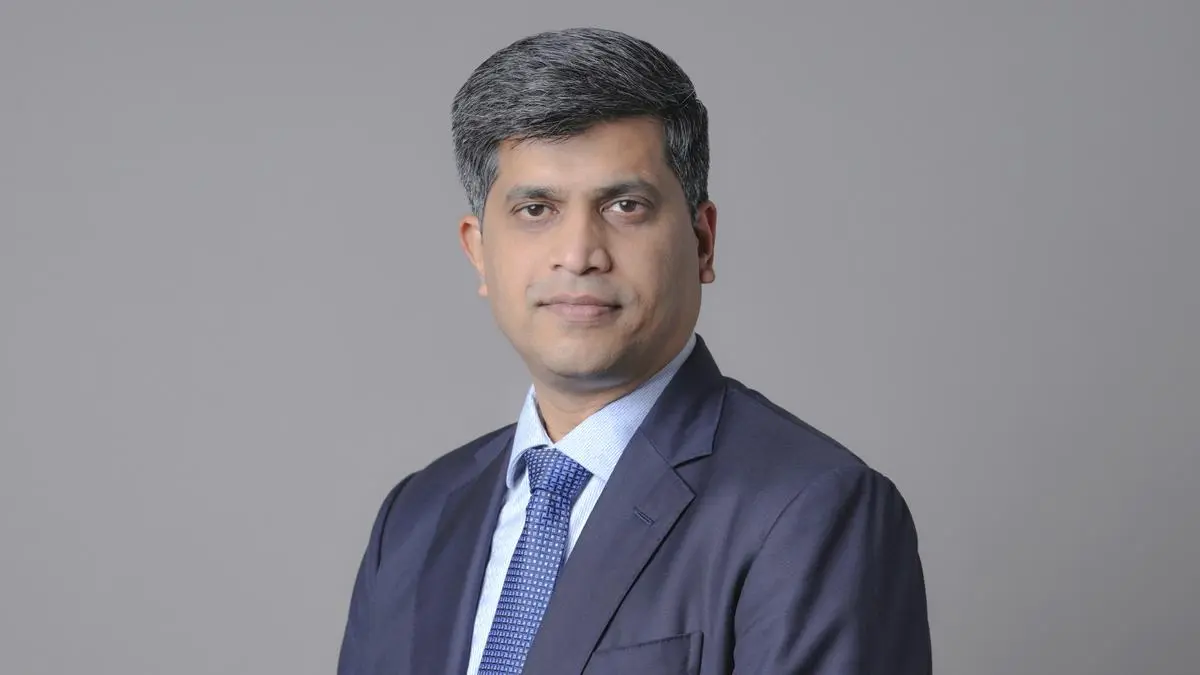
We are happy to give up some market share, but not do businesses which are risky, says Star Health and Allied Insurance CFO Nilesh Kambli

We are happy to give up some market share, but not do businesses which are risky, says Star Health and Allied Insurance CFO Nilesh Kambli


Star Health and Allied Insurance, a market leader in the country’s retail health insurance space, is planning to increase annual premium by high single digit in this fiscal, says its Chief Financial Officer Nilesh Kambli. In an interview with businessline, Kambli said the insurer is looking to maintain its market share or improve it marginally in FY27. Edited excerpts:

Star Health and Allied Insurance’s combined ratio for both the last financial year and for the last quarter improved. While the ratio improved 230 basis points at 98.8 per cent for FY26, it improved 270 bps at 95.7 per cent for Q4FY26. What were the reasons?

There was a sharp improvement in the loss ratio. The loss ratio improved by around 200 basis points for the last financial year. If you remember, FY25 was not a good year for us, and it was mainly for two reasons. First was group business — whatever we had written was highly loss making. So, during the last half of FY26, we had given up group businesses. So, in the group segment we saw roughly a 12 per cent improvement in the loss ratio. The proportion of that business is only 5 per cent. The balance loss ratio improvement came from retail business. If you remember, we had been mentioning about multiple things — growth in the new business, the price hikes that we have taken on last year on 65 per cent of the portfolio. Moreover, we had brought up multiple things to improve the claims efficiency to improve customer experiences. Like home healthcare services, telemedicine services, preventive and wellness initiatives. Also, fraud, waste and abuse is something which is very rampant when it comes to retail business. We had done a lot of things to improve that area as well. So, claims efficiency also gave us good benefits. And the last and the least is the underwriting. Also, we have been focusing on quality business. We are happy to give up some market share, but not do businesses which are risky, and where the inflation is higher, incidence of fraud is very high. The portability business is one segment which we have avoided. So, all these things have led to an improvement in the loss ratio.

In the current financial year, what is the combined ratio that you are looking at?

What we have stated is in FY28 we will have a mid teen to high teen return on equity (RoE). We are not giving any quarterly or yearly guidance. We had given long-term guidance of increase in the topline as well as bottomline, and that is what we are focusing on. We are mainly focused on RoE targets because expense ratio and claims ratio depend upon various regulations and various market conditions. So, we don’t want to comment on any individual things, but the combined ratio should continue to improve is what I can mention. We continue to grow our new business. Especially after the GST exemption, we have seen good growth in the new business. We believe, not at the same level, but the momentum should continue, and we should continue to grow our new business, especially in tier three cities where we have a very strong business and the under penetration is there when it comes to health insurance.

What kind of annual insurance premium increase is the company planning for this fiscal?

We will take price increases on an annual basis. So, for the current year also we have planned for certain price increases. Roughly 80 per cent of the portfolio will undergo price increase for FY27. It will help us beat inflation. In the last financial year, the average price increase on portfolio was eight to nine per cent — high single digit. We would take a similar price increase in the current year.

In the retail health segment, Star Health and Allied Insurance’s market share is the highest in the country. What are the company’s plans to increase the market share further in FY27?

Currently, we have 31.4 per cent market share in retail health. It was around 31 per cent for the last three-four years now. In spite of the competition, we do only profitable business. We don’t do businesses in loss making areas, we are still making that market share. So, it is by design, we are happy to let go around 60-70 basis per market share. But as long as we are profitable, we are fine with it. We expect the market to grow 15-18 per cent range going forward, and we are growing at a similar range. So, we should maintain the market share, or may be marginally improve it.


Source link

On-shoring global rupee market: Indian banks will need to evolve as market-makers globally, says RBI Guv Malhotra

On-shoring global rupee market: Indian banks will need to evolve as market-makers globally, says RBI Guv Malhotra


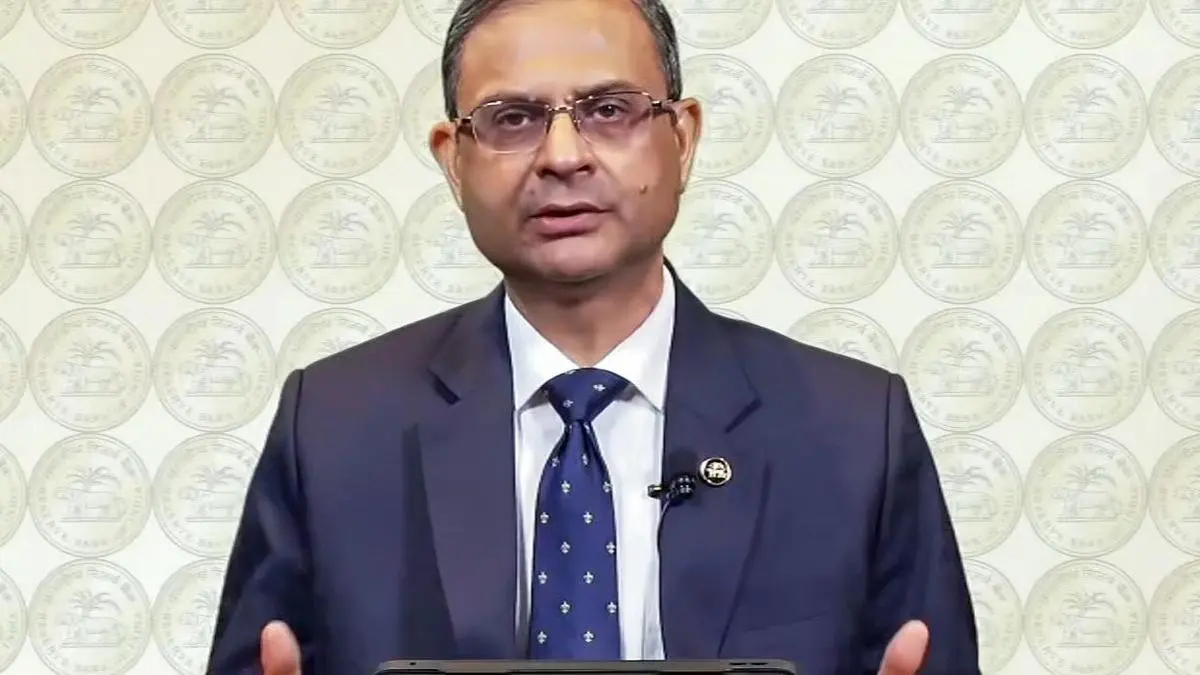
RBI Governor Sanjay Malhotra
| Photo Credit:
ANI

Reserve Bank of India Governor Sanjay Malhotra on Friday said Indian banks will need to evolve as market-makers globally if the global rupee market has to be on-shored.

Indian banks are dealing only with offshore market-makers rather than with end-users, Malhotra said in his key note address at the 25th FIMMDA-PDAI Annual Conference, in Amsterdam.

The Governor said: “We will also stand prepared to deploy appropriate policy measures, as warranted, to mitigate spillovers and ensure orderly market conditions.”

This observation comes in the backdrop of the rupee breaching the 95 to the dollar mark in intraday on Thursday for the first time since March 30, 2026, and closing at an all time low of 94.91 per US dollar.

The rupee has been buffeted by a host of factors, including global crude oil prices recently touching a four year high amid the ongoing West Asia war and blockade of the Strait of Hormuz, and persistent Dollar outflows due to FPI related sales in the Indian equity markets.

Malhotra emphasised that all banks should facilitate this as a priority, so that retail users get a fair deal. Currently, usage of the FX Retail platform remains limited.

The aforementioned suggestions form part of five areas for further deepening and strengthening India’s financial markets.

The Governor said while Central government securities market is liquid by most standards, there is scope to improve liquidity across all tenors and securities.

Malhotra noted that OTC (over-the-counter) derivatives markets, especially interest rate derivatives, remain concentrated in just one or two few products. He underscored that it needs to improve if efficient interest rate hedging options have to be made available to stakeholders.

He observed that development of credit derivatives, which is largely an underutilised area, is yet to take off in any meaningful way.

The Governor said market participants must acknowledge that while a privilege bestows some benefits, it also entails responsibilities.

The responsibilities include ensuring that every user has easy access to financial markets; every user can transact on fair and transparent terms, irrespective of size and sophistication; broader regulatory objectives are met in letter and spirit even as organisational interests are pursued; and to protect, promote and sustain market integrity.

Published on May 1, 2026



Source link

Maersk levies emergency freight surcharge on Gulf routes amid Hormuz risks

Maersk levies emergency freight surcharge on Gulf routes amid Hormuz risks


Under the new structure, shippers will pay $1,800 per 20-ft container, $3,000 per 40-ft container, and $3,800 for reefers, special and dangerous cargo. 
| Photo Credit:
Hollie Adams

Global shipping major Maersk has introduced an emergency freight surcharge on cargo to and from the Gulf region, significantly increasing logistics costs as security risks persist around the Strait of Hormuz.

Industry sources said that while there are no direct sailings currently operating reliably through the corridor, essential cargo such as pharmaceuticals and perishables are being routed through alternative sea-land combinations to reach destinations.

New structure

Under the new structure announced by Maersk in a trade notice issued on April 27, shippers will pay $1,800 per 20-ft container, $3,000 per 40-ft container, and $3,800 for reefers, special and dangerous cargo. The surcharge applies to cargo originating from, destined for, or transiting through affected Gulf ports. While the line did not specify the effective date of implementation, industry sources said it is with immediate effect.

The fee covers shipments linked to key markets including the UAE, Saudi Arabia (Dammam and Jubail), Kuwait, Qatar, Bahrain, Iraq and parts of Oman. The move comes amid continued avoidance of the Hormuz route and widespread operational disruptions.

Maersk said the surcharge is aimed at addressing the need for alternative logistics arrangements, including rerouting cargo, temporary storage at intermediate ports and deploying additional capacity.

“Due to the volatility of the ongoing situation, there is a need for alternative solutions to bring cargo to final destinations, including finding alternative routing and storage in transit,” the company said in a customer advisory.

The surcharge includes 14 days of storage in transit, after which additional storage and reefer plug-in charges will apply.

Maersk is not alone in imposing such levies. Singapore-based Ocean Network Express had earlier announced an Emergency Surcharge (EMS) on March 4, citing exceptional operational and security challenges in the Middle East, including the effective closure of the Hormuz corridor.

The EMS applies to all imports and exports to and from affected Persian Gulf countries, including Bahrain, Iraq, Saudi Arabia (Dammam and Jubail), Kuwait, Oman, Qatar and the UAE.

Industry sources said the imposition of such surcharges is expected to raise landed costs, disrupt pricing contracts and compress margins for Indian exporters and importers, particularly in sectors such as petrochemicals, food products and engineering goods.

With major shipping lines continuing to avoid the Hormuz corridor, analysts expect elevated freight rates and longer transit times to persist until stability returns to one of the world’s most critical maritime trade routes, said sources.

Published on May 1, 2026


Source link

Punjab records highest-ever GST collection of ₹2,987.4 cr in April

Punjab records highest-ever GST collection of ₹2,987.4 cr in April


Punjab Finance Minister Harpal Singh Cheema
| Photo Credit:
AKHILESH KUMAR

The Punjab government has set a benchmark in tax revenue with the highest-ever monthly collection of Goods and Services Tax (GST) at ₹2,987.38 crore in April, Finance Minister Harpal Singh Cheema said on Friday.

“The state has recorded a gross GST collection of ₹2,987.38 crore alongside a net GST collection of ₹2,725.08 crore. This exceptional performance reflects a remarkable year-on-year net GST growth of 70.70 per cent, translating to an impressive increase of approximately ₹1,129 crore over our collections in April 2025,” the minister for finance, planning, excise and taxation said.

Elaborating on Punjab’s position in the country, the minister said, “According to Government of India data, Punjab has recorded a staggering 66 per cent growth in post-settlement GST, surging from ₹1,795 crore last year to ₹2,987 crore. This establishes us as the highest-growing state in the country, significantly outperforming the all-India growth average and leading all north Indian states.”

Providing context on the fiscal metrics, the state finance minister said, “While the year-on-year comparison is influenced by an abnormal IGST adjustment of ₹859 crore from April 2025, neutralising this factor reveals an adjusted gross growth of 12.57 per cent and an adjusted net growth of 10.97 per cent.”

“This clearly demonstrates our sustained, organic improvements in core tax administration and compliance,” he said, according to an official statement.

Attributing this financial milestone to rigorous administrative measures, the minister said, “Our robust GST growth is directly supported by intensified enforcement activities across Punjab. Through the extensive leverage of data analytics, coordinated field action, and intelligence-based inspections, we have successfully imposed penalties exceeding ₹175 crore.

He further said that during a special anti-evasion operation in the iron and steel sector this April, the state executed a record enforcement drive by detaining nearly 200 vehicles in a single day.

Reiterating Chief Minister Bhagwant Singh Mann-led Punjab government’s commitment to strengthening the revenue base in the state, Cheema emphasised, “Punjab’s top ranking in GST revenue mobilisation is a testament to the taxation department’s focused strategy, which perfectly combines technology-driven enforcement with genuine taxpayer facilitation”.

“We remain entirely committed to continuing strict action against tax evasion, while ensuring a fair, transparent and supportive taxation system for all compliant taxpayers,” he said.

Published on May 1, 2026


Source link

Capital Small Finance Bank eyes ₹34K cr total biz threshold for converting to a universal bank

Capital Small Finance Bank eyes ₹34K cr total biz threshold for converting to a universal bank


Net Interest Income grew 17 per cent y-o-y to ₹121 crore (₹103 crore in Q4FY26)
| Photo Credit:
Andrii Yalanskyi

Capital Small Finance Bank (CSFB) will take a call on transitioning to a universal bank once its total business (deposits plus advances) and branch network reach a “decent size” of about ₹34,000 crore and 300, respectively, by March-end 2029.

Currently, the Jalandhar (Punjab) — headquartered Bank has a total business aggregating ₹18,705 crore (deposits: ₹10,018 crore; advances: ₹8,687 crore as at March-end 2026) and a branch network of 213 spread across five States and two Union Territories.

In an interaction with businessline, Sarvjit Singh Samra, MD & CEO, observed that once CSFB becomes a mid-sized institution, the time would be ripe for it become a universal bank.

“I would say when we reach at a decent size of…total business, our board will definitely take this call (on transitioning to a universal bank). We are very optimistic about this and actually there’s a path ahead for further growth,” he said.

Samra emphasised that CSFB’s target focus is the middle income group customer segment on both sides — deposits as well as advances.

“We are a specialised bank, taking care of the banking needs of the middle income group. We have been specialising in this segment for last 26 years — for the first 16 years as a local area bank and the next 10 years as a SFB,” he said, adding the Bank recently completed 10-years of its banking journey as a SFB.

CSFB reported 18 per cent year-on-year (y-o-y) increase in fourth quarter (Q4FY26) net profit at ₹40 crore against ₹34 crore in the year ago quarter.

Net Interest Income (difference between interest earned and interest expended) grew 17 per cent y-o-y to ₹121 crore ( ₹103 crore in Q4FY26).

Non-interest income (comprising income from commission, exchange & brokerage, profit/fee earned on sale of third-party products, profit/loss on sale/revaluation on investments, profit on exchange transactions, etc.) was almost unchanged at ₹26 crore.

Deposits and advances were up 20 per cent (and stood at ₹10,018 crore as on March-end 2026) and 21 per cent ( ₹8,572 crore), respectively.

Published on May 1, 2026


Source link

डेंजर जोन में दफ्तर-फैक्ट्रियां! चोट के दावों में 31% का बड़ा उछाल, सुरक्षा नियमों की खुली पोल

डेंजर जोन में दफ्तर-फैक्ट्रियां! चोट के दावों में 31% का बड़ा उछाल, सुरक्षा नियमों की खुली पोल


Show Quick Read

Key points generated by AI, verified by newsroom

  • कंपनियां अभी भी केवल कानूनी अनुपालन के लिए बीमा खरीद रही हैं।

Workplace Risk Report 2026: आज के टाइम में बड़े-छोटे हर सेक्टर में कर्मचारियों की सुरक्षा एक बड़ी चुनौती बनती जा रही है. बढ़ते काम के दबाव, मशीनों के ज्यादा इस्तेमाल के चलते हादसों का खतरा भी बढ़ रहा है. इसी बीच भारत के MSME सेक्टर में काम की जगह पर होने वाली दुर्घटनाओं के मामलों में बड़ा इजाफा देखने को मिल रहा है.

1 मई लेबर डे यानी आज से पहले जारी बीमाकवच वर्कप्लेस रिस्क रिपोर्ट 2026 के मुताबिक, फाइनेंशियल ईयर 2025-26 में वर्कप्लेस इंजरी क्लेम्स में सालाना आधार पर 31 प्रतिशत की बढ़ोतरी दर्ज की गई है. रिपोर्ट के मुताबिक, इस बढ़ोतरी की बड़ी वजह औद्योगिक गातिविधियों का बढ़ना, बेहतर रिपोर्टिंग सिस्टम और बीमा कवरेज का विस्तार है.

यह भी पढ़ें – Rupee vs Dollar: रुपये में अब तक की सबसे बड़ी गिरावट, 95.27 प्रति डॉलर के लो लेवल पर पहुंचा

मैन्युफैक्चरिंग सेक्टर सबसे ज्यादा हुआ प्रभावित

रिपोर्ट में 6 हजार से ज्यादा MSME कंपनियों के डेटा का अध्ययन किया गया है. इस रिपोर्ट में सामने आया कि सबसे ज्यादा हादसे फैक्ट्री और मैक्युफैक्चरिंग में हो रहे हैं.

इन हादसों के पीछे की मुख्य वजह है जैसे…

  • मशीनों से जुड़े हादसे
  • साथ ही फिसलकर गिरना
  • कंस्ट्रक्शन वर्क के दौरान गंभीर चोट लगना

वहीं IT और टेक्नोलॉजी सेक्टर में बीमा पॉलिसी लेने वाली कंपनियों की संख्या ज्यादा होने के बाद भी दुर्घटना के दावे लगभग जीरो रहे.

इस मौसम में बढ़ जाता है खतरा 

रिपोर्ट के मुताबिक, जून से सितंबर के बीच वर्कप्लेस दुर्घटनाओं का खतरा ज्यादा रहता है. कुल दावों में 43 प्रतिशत हिस्सा मॉनसून महीनों का रहा है. हैरानी की बात तो यह है कि अकेले जुलाई में 13.4 प्रतिशत दावे दर्ज हुए. क्योंकि भारी बारिश होने के कारण फिसलने का खतरा बढ़ जाता है.

इन राज्यों में सबसे ज्यादा जोखिम 

वर्कप्लेस जोखिम सबसे ज्यादा औद्योगिक राज्यों में देखा गया है. महाराष्ट्र 20 प्रतिशत, गुजरात, कर्नाटक, दिल्ली. ये चारों राज्य मिलकर कुल पॉलिसियों के आधे से ज्यादा हिस्से का प्रतिनिधित्व करते हैं.

नियमों का पालन अभी भी मुख्य वजह

रिपोर्ट के मुताबिक, 94.6 प्रतिशत MSME कंपनियां वर्कमेन कंपनसेशन इंश्योरेंस केवल कानूनी नियमों को पूरा करने के लिए खरीदती हैं. लेकिन अब धीरे-धीरे कंपनियों की सोच बदल रही है और वे कर्मचारियों की सुरक्षा को गंभीरता से ले रहे हैं.

डिजिटल प्रोसेस से तेजी

बीमा सेक्टर में डिजिटल बदलाव के चलते पॉलिसी जारी होने की प्रक्रिया काफी तेज हुई है.

  • 69.1 प्रतिशत पॉलिसी उसी दिन जारी हुईं
  • 82 प्रतिशत पॉलिसी तीन दिन के अंदर एक्टिवेट हुईं

यह पारंपरिक 3-7 दिनों की प्रक्रिया से काफी तेज है.

क्या बोले BimaKavach के CEO?

BimaKavach के फाउंडर और CEO  तेजस जैन ने कहा कि अब वर्कप्लेस रिस्क को नजरअंदाज करना मुश्किल होता जा रहा है.  उनके मुताबिक क्योंकि जोखिम केवल शारीरिक चोट तक सीमित नहीं है, बल्कि नियमों की अनदेखी और वित्तीय कमजोरियां भी बड़ा खतरा है. 


Source link

YouTube
Instagram
WhatsApp




