NSE crosses 13 crore investors as retail participation surges across India

NSE crosses 13 crore investors as retail participation surges across India


The investor base has grown rapidly, supported by strong market returns, rising SIP inflows, and expanding access across nearly all pincodes.

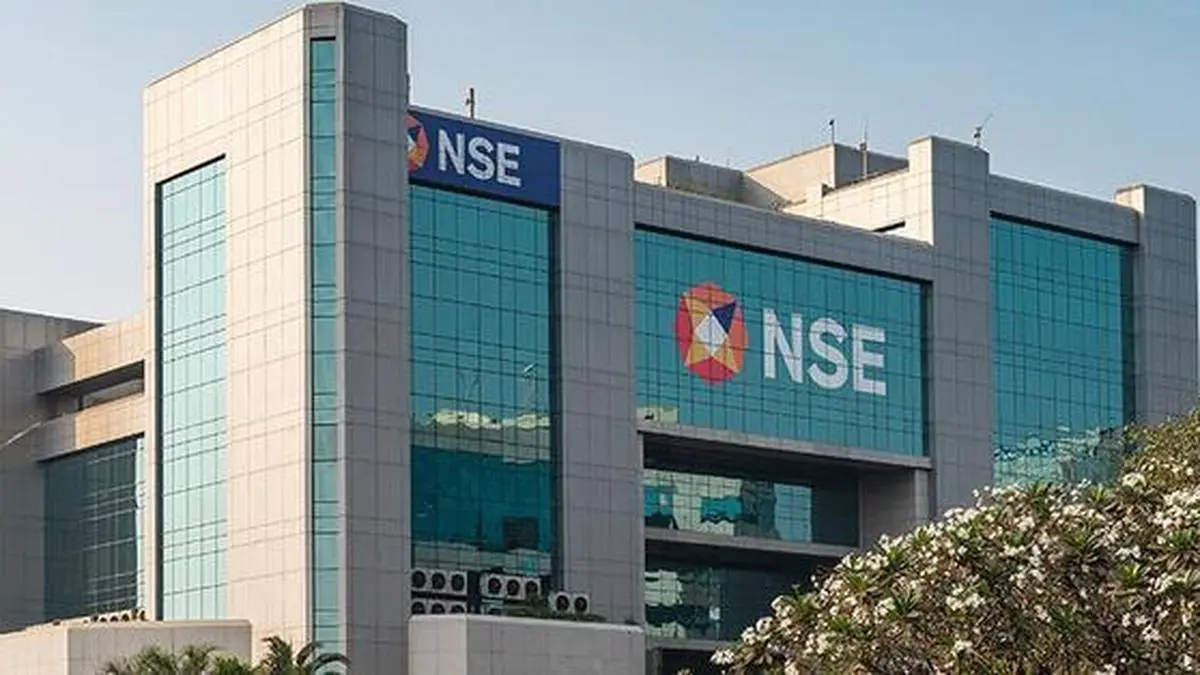
The National Stock Exchange of India (NSE) has crossed 13 crore unique registered investors thanks to a sharp acceleration in retail participation, with the latest 1 crore addition coming in just about seven months since September 2025.

The total number of client codes stood at 25.7 crore as of April 25, 2026, after breaching the 25-crore mark in February. Growth has picked up markedly, with the investor base expanding at a 26.4 per cent CAGR during FY21–FY26, compared with 15.2 per cent in the previous five-year period, NSE said on Monday.

Benchmark indices delivered five-year annualised returns of 10.8 per cent for Nifty50 and 13.3 per cent for Nifty 500. Market capitalisation of NSE-listed firms rose at an 18 per cent CAGR to ₹460.6 lakh crore, while individual investors now hold 18.6 per cent of the market as of December 2025.

The base age is getting younger and more diverse. Median age has declined to 33 years from 36 in FY21, with nearly 40 per cent of investors below 30. Women account for nearly one in four investors.

Geographically, participation has widened to 99.85 per cent of India’s pincodes. Maharashtra leads with 2 crore investors, followed by Uttar Pradesh (1.5 crore) and Gujarat (1.1 crore). States beyond the top 10 now account for 27 per cent of the base, with sharp growth in smaller states such as Arunachal Pradesh (7.9x), Mizoram (8.7x) and Assam (6.9x).

Sriram Krishnan, Chief Business Development Officer, NSE, said: “The progress has not been confined to established urban centres and has expanded meaningfully across Tier 2/3/4 cities… all signs of an increasingly resilient and inclusive capital market ecosystem.”

A total of 7.2 crore SIP accounts were opened in FY26, while average monthly SIP inflows increased to ₹29,132 crore from ₹3,660 crore in FY17.

Mobile trading now accounts for over a fifth of cash market turnover. NSE has scaled investor education, with awareness programmes rising five-fold to 17,764 in FY26, covering over 9.3 lakh participants. Its Investor Protection Fund stood at ₹2,871 crore, up 16.8 per cent year-on-year.

Published on April 27, 2026


Source link

Hormuz Crisis: एक जहाज को रास्ता देने के बदले 37 करोड़ वसूलता है ये देश, कर रहा तगड़ी कमाई

Hormuz Crisis: एक जहाज को रास्ता देने के बदले 37 करोड़ वसूलता है ये देश, कर रहा तगड़ी कमाई


Panama Canal: यूएस- ईरान के बीच चल रहे युद्ध का असर विश्वभर में देखने को मिल रहा है. इसके चलते क्रूड ऑइल की आवाजाही पर काफी असर पड़ रहा है. जिसकी वजह से भारत समेत दुनियाभर में भी इसकी कीमतों में लगातार इजाफा हो रहा है. हालांकि इस युद्ध का कई अन्य छोटे देश फायदा भी उठा रहे हैं. युद्ध के नाम पर क्रूड ऑइल की आवाजाही पर यहां करोड़ों रुपये की वसूली की जा रही है.

कौन-सा देश कर रहा वसूली?
दरअसल युद्ध के कारण हॉर्मुज ब्लॉक है, जिसके चलते तेल और गैस के जहाज दूसरे रास्ते से निकल रहे हैं. ये दूसरा रास्ता है पनामा कैनाल, लेकिन ये रास्ता भी इन जहाजों के लिए आसान नहीं है. बल्कि इस रास्ते से निकलने पर इनसे अच्छी- खासी वसूली की जा रही है. यहां से निकलने के लिए जहाजों की नीलामी की जा रही है जिसमें बोली करीब 4 मिलियन डॉलर यानी भारतीय मुद्रा के हिसाब से 37 करोड़ रुपये तक पहुंच रही है. जिससे पनामा कैनाल की तो चांदी ही चांदी हो रही है.

प्रायॉरिटी एक्सेस के नाम पर वसूली
इस समय जहां कंपनियां एक जहाज के 4 मिलियन डॉलर ले रही हैं, तो वहीं इससे पहले इस कैनाल से जहाजों के निकलने पर 3 से 4 लाख डॉलर का खर्च आता था, लेकिन अब प्रायॉरिटी एक्सेस के नाम पर तगड़ी वसूली की जा रही है. पहले, फास्ट-ट्रैक स्लॉट पर ढाई से तीन लाख डॉलर का एक्स्ट्रा खर्च लगता था, लेकिन इन दिनों हालात ये हैं कि एक्स्ट्रा खर्च बढ़कर 4.25 लाख डॉलर से भी ज्यादा हो गया है.

बता दें कि स्ट्रेट ऑफ हॉर्मुज से दुनियाभर की खपत के लिए करीब 20 प्रतिशत तेल गुजरता है. ये तेल सीधे भारत के गुजरात राज्य में पहुंचता है, जहां से इसकी अन्य शहरों में सप्लाई होती है. फिलहाल अमेरिका-ईरान युद्ध के चलते ये आवाजाही बंद है. जिसकी वजह से पनामा सरकार की कैनाल अथॉरिटी तगड़ी कमाई कर रही है.


Source link

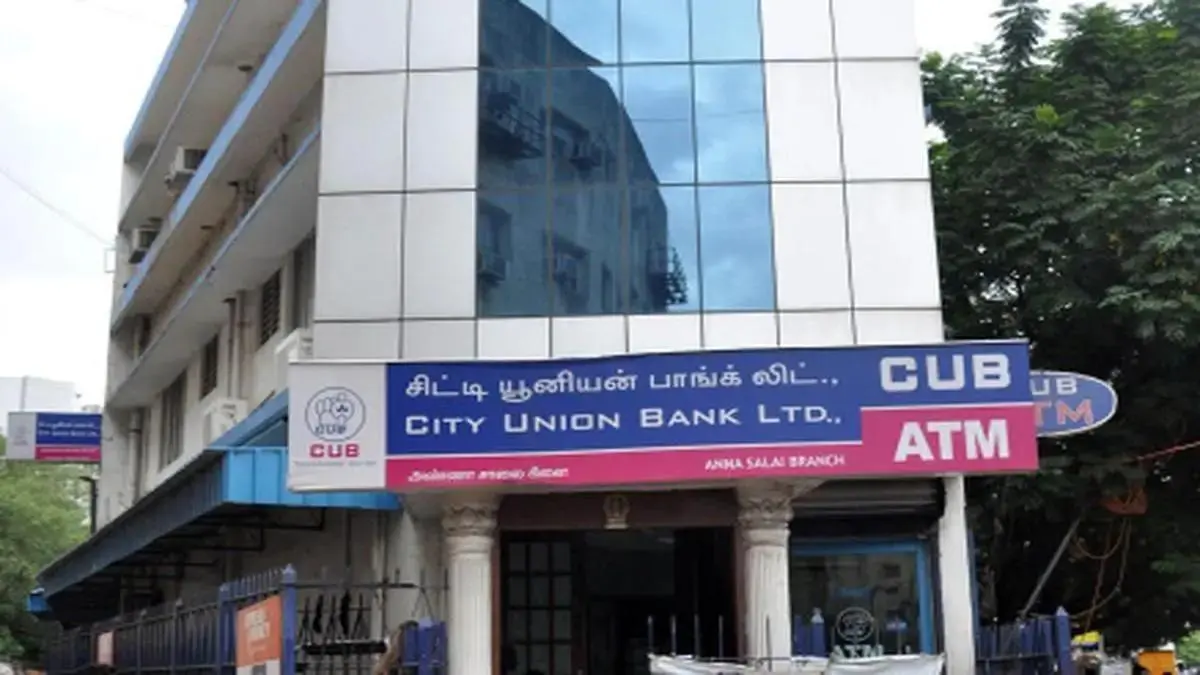
City Union Bank reports 25% profit rise in Q4FY26, approves bonus issue

City Union Bank reports 25% profit rise in Q4FY26, approves bonus issue


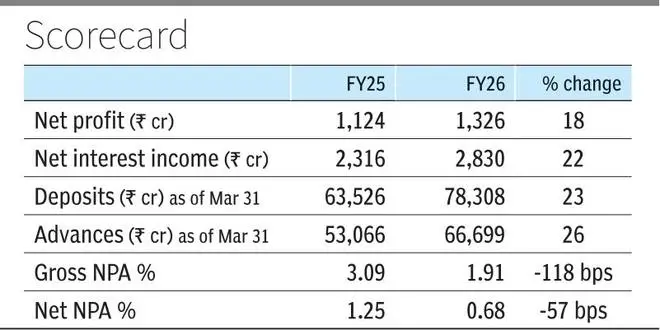
The Gross NPA % for FY26 was reduced to 1.91 per cent from 3.09 per cent in the last financial year. Net NPA % decreased to 0.68 per cent in the current quarter from 1.25 per cent in FY25.

Private sector lender City Union Bank on Monday reported net profit of ₹360 crore for the quarter ended March 2026 (Q4FY26), a 25 per cent growth compared to ₹288 crore in Q4FY25. Net interest income came in at ₹786 crore, a 31 per cent jump YoY. This is the highest net profit achieved by CUB in a single quarter, the bank said.

Net profit for the fiscal year 2026 (FY26) was ₹1326 crore, an 18 per cent jump compared to ₹1124 crore in FY25. At ₹2,830 crore, net interest income registered a 22 per cent jump.

The profitability was driven by robust increases in core business -both deposits and advances. Total deposits of the bank increased by 23 per cent YoY to ₹78,308 Cr. Cost of deposits decreased to 5.70 per cent in FY26 from 5.85 per cent in FY25.

At ₹66,699 cr, advances grew 26 per cent YoY. The yield on advances for Q4FY 26 marginally improved to 9.80 per cent compared to 9.73 per cent in Q3 FY26.

The Gross NPA % for FY26 was reduced to 1.91 per cent from 3.09 per cent in the last financial year. Net NPA % decreased to 0.68 per cent in the current quarter from 1.25 per cent in FY25. Both GNPA and NNPA has shown sequential decrease for the past eight quarters.

Net Interest Margin

Net Interest Margin at 3.74 per cent for FY26 was broadly in line with CUB’s guidance levels given earlier.

The bank recommended a dividend of ₹2 per equity share of face value of ₹1 each (200 per cent) for FY26, the payment of which will be subject to approval by the shareholders at the ensuing Annual General Meeting.

The Board also approved the issue of bonus shares in the ratio of 1 : 3 i.e. 1 equity share for every 3 fully paid up equity shares held as on record date, which will be subject to approval by the shareholders.

The Kumbakonam-headquartered bank has opened 13 new Branches on Monday at the following locations and as on date the bank has touched a network of 1000 branches in total.

Published on April 27, 2026



Source link

Net inflows into gold ETFs turn negative after positive trend for 2 weeks in a row

Net inflows into gold ETFs turn negative after positive trend for 2 weeks in a row


Gold ETF inflows turn negative, driven by North American investors

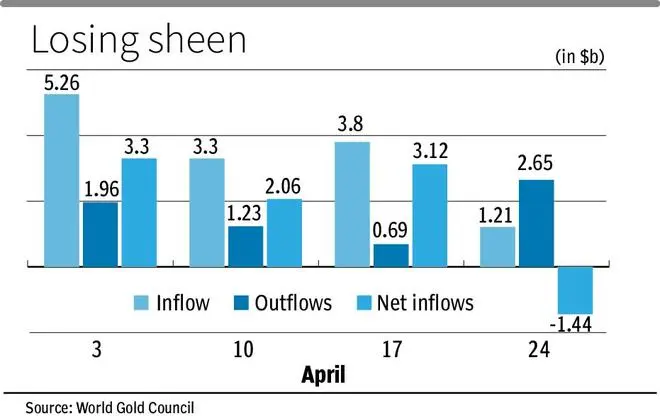
Investments in physically-backed gold exchange-traded funds (ETFs) turned negative last week, after rising for two consecutive weeks, data from the World Gold Council (WGC) showed.

For every $1 that was invested, there were more than double the exits during the week, with North American investors leading the trend.

The WGC data showed that investments in gold ETFs in the past week were to the tune of $1.21 billion, while investors took out $2.65 billion. 

According to experts, the negative investment in gold ETFs was primarily driven by investors being caught between geopolitical support and strong macroeconomic headwinds in the US. 

North Americans exit

Investors in North America chose to quit, with the outflows being $2.11 billion. Europe ($0.56 billion) and Asia (0.90 billion) witnessed inflows in gold ETFs. 

Country-wise, investors in the US chose to book profits valued at $2.23 billion. The UK topped with inflows into the ETFs at $0.34 billion, while Germany ($0.13 billion), Canada (0.12 billion) and China (0.08 billion) witnessed inflows. Details for India were unavailable.

Year-to-date, ETF inflows were $18.84 billion, down from $20.28 billion in the previous week. Overall investments as of April 27 were $64.08 billion, while outflows were $43.81 billion.

Asians stay positive

This has been possible primarily due to Asians being positive about gold ETFs. Net investments by Asians are up at $15.02 billion compared with $14.92 billion a week ago. Europe is another continent where inflows are positive at $3.49 billion. However, there were outflows to the tune of $0.05 billion in North America, a huge drop from $2.06 billion net inflows a week ago.

India and China continue to top in ETFs’ inflows at $3.26 billion and $9.12 billion respectively. In the US, France and Germany, net investments turned negative at $0.39 billion, $0.027 billion and $0.005 billion respectively.

The UK, Switzerland and Japan are other countries where ETF investments have been net positive at $1.8 billion, $2.02 billion and $1.26 billion respectively.

The trend in gold ETFs has been in sync with the drop in gold prices from the record high of $5,608 an ounce on January 29. Since then, the yellow metal has declined by over 15 per cent.

Investors’ fears

Currently, gold is ruling at $4,699.50 an ounce. On COMEX, gold June futures are quoted at $4,713.56. In India, spot gold in Mumbai ended at ₹1,51,186 per 10 g against ₹1,51,479 during the weekend. On MCX, gold June contracts ruled at ₹1.52,033 per 10 g. 

Gold prices more than doubled in their sparkling run from 2024 due to geopolitical crisis, tariff war between the US and other nations, and hopes of a cut in central bank interest rates. 

However, after the Iran war, investors have chosen to exit on rising dollar, yield rates and fears of banks raising interest rates to tackle inflation. A surge in crude oil prices has led to investors exiting the yellow metal and investing in the fossil fuel counters.

Published on April 27, 2026



Source link

Tamilnad Mercantile Bank Q4 PAT rises 28%, dividend declared

Tamilnad Mercantile Bank Q4 PAT rises 28%, dividend declared


Tamilnad Mercantile Bank (TMB) reported a 28 per cent YoY growth in net profit for the quarter ended March 2026 (Q4FY26) at Rs 374 crore and annual net profit of FY26 stood at Rs 1338 crore, up 13 per cent YoY.

The growth in profitability was driven by the bank achieving its highest advances and deposits growth in the past 39 quarters (~4 years).

At ₹61,712 Cr, deposits grew 15 per cent YoY in FY26, and at ₹53,379 Cr, advances saw a robust 20 per cent YoY growth. For the full fiscal, total business grew at 17.4 per cent YoY to end at Rs 1,15,091 crore. Net Interest Income for FY26 grew 9.8 per cent and stood at Rs 2527 crore.

The quarterly profit also rose despite the front-loading impact of ₹49.8 crores provision by the Thoothukudi-based bank for Performance-based Incentive for FY26 in the quarter ended March.

The bank’s CASA has increased to ₹17,365 crore with a growth rate of 22.4 per cent on YoY basis. Net Interest Margin(NIM) was slightly down to 3.98 per cent as of March 2026 from 4.07 per cent in the year-ago period.

For FY27, the bank expects total business to grow at about 18 per cent with an estimated 20 per cent growth in advances and 16 per cent deposits growth.

The asset quality also improved with Gross NPA as of March 31, 2026 at 0.73 per cent, the lowest in the past 40 quarters. Net NPA stood at 0.18 per cent.

Salee S Nair, MD & CEO, Tamilnad Mercantile Bank, told mediapersons that the bank delivered a FY26 that was markedly different from FY25. “We managed to arrest the decline in CASA, and also achieved a business growth of 9.35 per cent over the last 10 years CAGR,” he said. The credit costs are under control and we are also in the process of ramping up our credit monitoring centres to further accelerate advances and particularly corporate credit, he added.

The MD and CEO also put tariff issues behind them, and said the impact of the West Asia crisis was negligible on the company.

TMB’s export credit is around 3.6 per cent of its total MSME and Corporate credit, and the West Asian countries exposure is around ₹50.95 crore which is 0.10 per cent of total advances.

Advances growth came largely from a surge in gold loans, and also healthy growth in MSME loans. At Rs 24,790 crore, gold loans now make up almost 46 per cent of total advances of the bank, with the bank noting significant measures taken to ensure it is not impacted by gold price volatility.

The bank opened 44 new branches during FY26.

The Board of Directors recommended the payment of Final Dividend of ₹12.50 per equity share of the face value ₹10 each (125%) for FY26, subject to the approval of the shareholders.

The shares of TMB ended the trading day at Rs 702.35 up over 9.7 per cent on the BSE.

Published on April 27, 2026


Source link

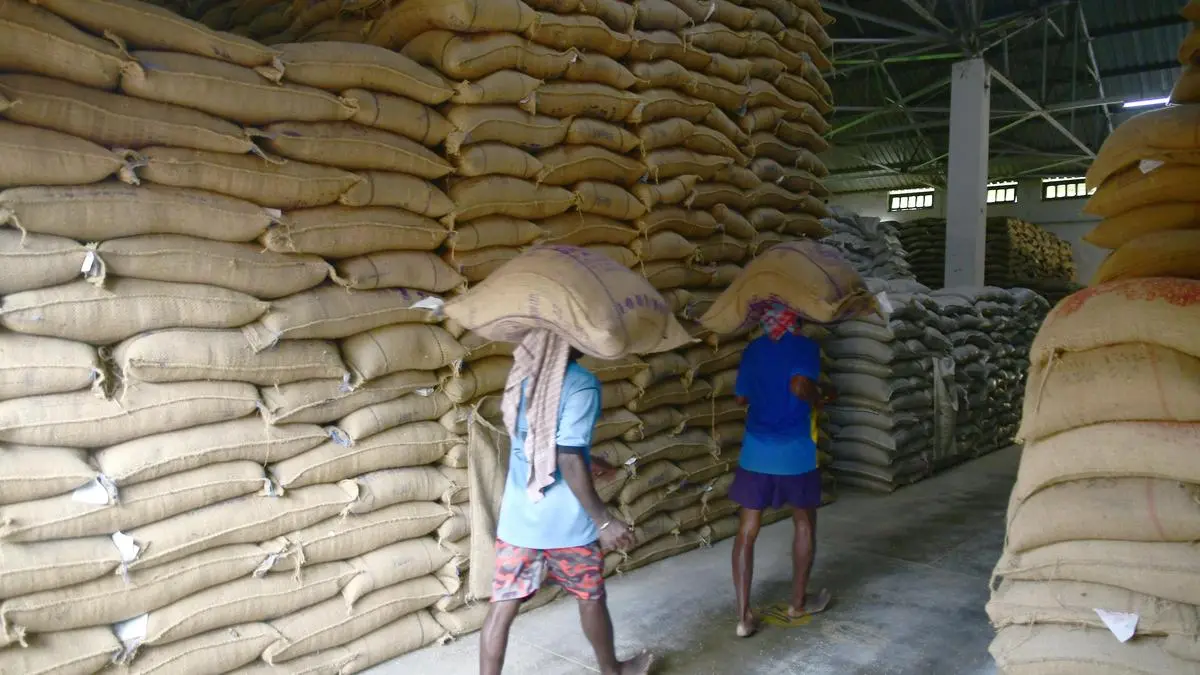
Rice exporters seek Goyal’s intervention on China GMO issue

Rice exporters seek Goyal’s intervention on China GMO issue


The move by the Chinese authorities has caused significant financial losses to Indian exporters
| Photo Credit:
SRINATH M

Seeking the government’s intervention for the revocation of the temporary suspension of the three Indian companies by China on a false allegation, a rice exporters’ body of Chhattisgarh has requested Commerce Minister Piyush Goyal to intervene and safeguard their interests.

“In view of the seriousness of the situation, the Rice Exporters Association of Chhattisgarh (TREACG) has made an urgent request to Commerce Minister Piyush Goyal to intervene and safeguard the interests of Indian rice exporters,” the exporters’ body said in a statement referring to the rejection of non-Basmati rice consignments by China.

GMO concerns

Expressing serious concern over the ongoing issue of alleged GMO detection in Indian rice consignments exported to China, it has been claimed that the move by the Chinese authorities has caused significant financial losses to Indian exporters.

Quoting a communication from the Indian Council of Agricultural Research (ICAR) sent to the government’s agri-export promotion body APEDA, TREACG said that no genetically modified (GM) rice has been approved for commercial cultivation in India. “No GMO-related research is being undertaken in any rice programme under ICAR. All rice varieties cultivated and exported from India are non-GMO,” it said, adding this reaffirms India’s position as a trusted global supplier of non-GM rice.

However, despite this clarity, several consignments have faced issues at Chinese ports, it said, pointing to detention and rejection of shipments, heavy demurrage, and return freight costs. Due to “Back to Town” or diversion of cargo to alternative markets, there is increased contractual risk and trade uncertainty, TREACG said.

On April 16, APEDA informed three Indian rice exporting companies that they have been temporarily suspended by GACC (China’s customs department) in connection with the GMO issue, said TREACG.

Specific pleas

The intervention sought by the exporters from the minister included diplomatic engagement with GACC to resolve the GMO testing issue, issuance of a clear trade advisory, recognition of load port non-GMO certification as final and binding, temporary suspension of contract registration for China and relief for affected exporters.

businessline reported on April 17 that China cancelled import licenses of three Indian companies, a month after rejecting their rice consignments, claiming those had traces of genetically modified organisms (GMO).

Published on April 27, 2026


Source link

YouTube
Instagram
WhatsApp