Jaishankar, US Secretary of State Rubio discuss trade and defence ties

Jaishankar, US Secretary of State Rubio discuss trade and defence ties


External Affairs Minister S Jaishankar held a phone conversation with US Secretary of State Marco Rubio, focusing on cooperation in key strategic areas including trade, critical minerals, nuclear energy, defence and energy. A file photo
| Photo Credit:
ANI

External Affairs Minister S Jaishankar on Tuesday held a phone conversation with US Secretary of State Marco Rubio, focusing on cooperation in areas of trade, critical minerals, nuclear energy and defence.

Jaishankar said he and Rubio agreed to remain in touch on these issues.

“Just concluded a good conversation with @SecRubio. Discussed trade, critical minerals, nuclear cooperation, defence and energy,” he said on social media.

“Agreed to remain in touch on these and other issues,” he added.

Published on January 13, 2026


Source link

BoM Q3 net profit up 27% at ₹1,779 cr

BoM Q3 net profit up 27% at ₹1,779 cr


Net interest income (difference between interest earned and interest expended) in the reporting quarter was up about 16 per cent y-o-y at ₹3,422 crore (₹2,944 crore in the year-ago period).  

Bank of Maharashtra (BoM) reported its highest quarterly net profit at ₹1,779 crore in the third quarter (Q3FY26) on the back of healthy growth in net interest income and non-interest income and lower provisioning burden for standard/restructured assets.

The Pune-headquartered public sector bank had reported a net profit of ₹1,406 crore in the year-ago quarter. The bank’s board has approved an interim dividend of 10 per cent on the equity shares: ₹1 per share having a face value of ₹10 each for FY26.

Net interest income (difference between interest earned and interest expended) in the reporting quarter was up about 16 per cent y-o-y at ₹3,422 crore (₹2,944 crore in the year-ago period).

Other income, including fee-based income, treasury income and recovery in written-off account, rose about 18 per cent y-o-y to ₹933 crore (₹788 crore).

Nidhu Saxena, MD & CEO, said the bank has a strong corporate loan sanctions pipeline of ₹50,000-55,000 crore and another ₹20,000 crore in various stages of disbursement. He expects the asset quality to be maintained at current levels.

While provisioning for non-performing assets (NPAs) rose to ₹660 crore (₹593 crore), provision for standard/restructured assets declined to ₹79 crore (₹244 crore).

Net interest margin (NIM) declined to 3.86 per cent against 3.98 per cent in the year-ago period amid cost of funds rising marginally (to 4.22 per cent from 4.19 per cent) even as yield on advances declined (to 8.92 per cent from 9.27 per cent).

Gross non-performingassets (NPAs) position improved to 1.60 per cent of gross advances by December-end 2025 against 1.80 per cent in December-end 2024. Net NPAs position, too, improved a shade to 0.15 per cent of net advances against 0.20 per cent.

Gross advances increased by about 20 per cent y-o-y to ₹2,73,502 crore by December-end 2025, with RAM (retail, agriculture and MSME) advances and corporate & other advances growing by about 20 per cent and about 14 per cent, respectively.

Total deposits rose about 15 per cent yoy to stand at ₹3,21,661 crore by December-end 2025. Low-cost CASA (current account, savings account) deposits nudged up to 49.54 per cent of total deposits against 49.28 per cent in the year-ago quarter.

BoM’s shares closed at ₹65.08 per share, up 1.96 per cent over the previous close on BSE.

Published on January 13, 2026


Source link

UPI can double to 1 billion users as digital payments expand: RBI

UPI can double to 1 billion users as digital payments expand: RBI


Reserve Bank of India Deputy Governor T. Rabi Sankar
| Photo Credit:
ANI

There is a lot of scope and opportunity for expanding digital payment in the country and UPI has the potential to more than double to 1 billion users from the current base of 400 million, Reserve Bank Deputy Governor T Rabi Sankar said on Tuesday.

About 50 per cent of global retail payment transactions are done in India but even then in terms of the number of digital transactions per person, it has to catch up with many advanced economies.

Citing an example of Kenya, the RBI Deputy Governor said, digital transaction per person in Kenya is roughly double than what India has.

Platform Evolution

The National Payments Corporation of India (NPCI), an RBI-0promoted body which created and operates UPI, had launched a USSD-based service to enable UPI access for feature phone users, within months of the launch of the main platform for smartphone users in 2016.

” The active users of UPI are about 400 million. We are targeting 1 billion users. So…there is a lot of scope, there is a lot of distance that we need to travel,” he said while speaking at Global Inclusive Finance India Summit here.

He further said that the expansion of digital payment has changed the landscape of the country and brought in financial inclusivity.

Citing an example, the Deputy Governor said that a housewife sitting at her home can run a small enterprise with the help of UPI as her payment part is secure.

Economic Impact

Quoting a study, Rabi Sankar said 10 per cent increase in digital payment could lead to 0.3 per cent addition in GDP.

Talking about enhancing cyber security, he said, the Reserve Bank has undertaken a lot of steps in that direction including mule hunter to put a curb on digital frauds.

Digital payments have significantly increased in recent years as a result of coordinated efforts of the government with all stakeholders. The total digital payment transactions value increased from Rs 2,071 crore in FY 2017-18 to Rs 22,831 crore in FY 2024-25 at CAGR of 41 per cent.

UPI Dominance

Unified Payment Interface (UPI) has emerged as the most popular and preferred payment mode pioneering Person to Person (P2P) as well as Person to Merchant (P2M) transactions.

About 81 per cent by volume of the total retail payment transactions in the country are processed on UPI rails.

UPI powers linking of multiple bank accounts into a single mobile application of any participating bank/third party application provider (TPAP).

The Reserve Bank has been facilitating the linkage of UPI with Fast Payment Systems (FPSs) of other countries on a bilateral basis, enabling both inward and outward remittance payments. Currently, such linkage is live with Singapore since February 2023 and implementation of similar projects with the UAE and Nepal are in progress.

The acceptance of India’s UPI apps via QR Code has been operationalised in Bhutan, France, Mauritius, Nepal, Singapore, Sri Lanka, the UAE and Qatar which enables Indian tourists, students, and business travellers in other countries to make payments to merchants using their Indian UPI apps.

Published on January 13, 2026


Source link

PayU Payments narrows consolidated loss to ₹248 crore in FY25

PayU Payments narrows consolidated loss to ₹248 crore in FY25


Fintech firm PayU Payments reported a narrower consolidated loss of ₹248 crore in FY25, compared with a loss of ₹429.51 crore a year earlier, according to regulatory filings accessed by Tofler.

Fintech firm PayU Payments has reported a narrowing of loss to Rs 248 crore in the financial year 2024-25, according to a regulatory document shared by market intelligence firm Tofler on Tuesday.

The company had posted a loss of Rs 429.51 crore in the same period a year ago.

The consolidated revenue from operations of PayU increased by about 23 per cent to Rs 5,562.98 crore in FY25, from Rs 4,527.39 crore in FY24.

PayU, however, reported a widening of losses to Rs 3,567.8 crore in FY25 on a standalone basis, from around Rs 273 crore in FY24.

“Payu Payments Private Ltd operates as an investment company, and reported its revenues for the financial year 2024-25 as Rs 3,972 crore, a 16 per cent jump since the last financial year. The company further reported a net loss of Rs 3,568 crore during the same fiscal year,” Tofler said.

The company’s employee benefit expenses decreased by 6.4 per cent year-on-year to Rs 667.62 crore.

Published on January 13, 2026



Source link

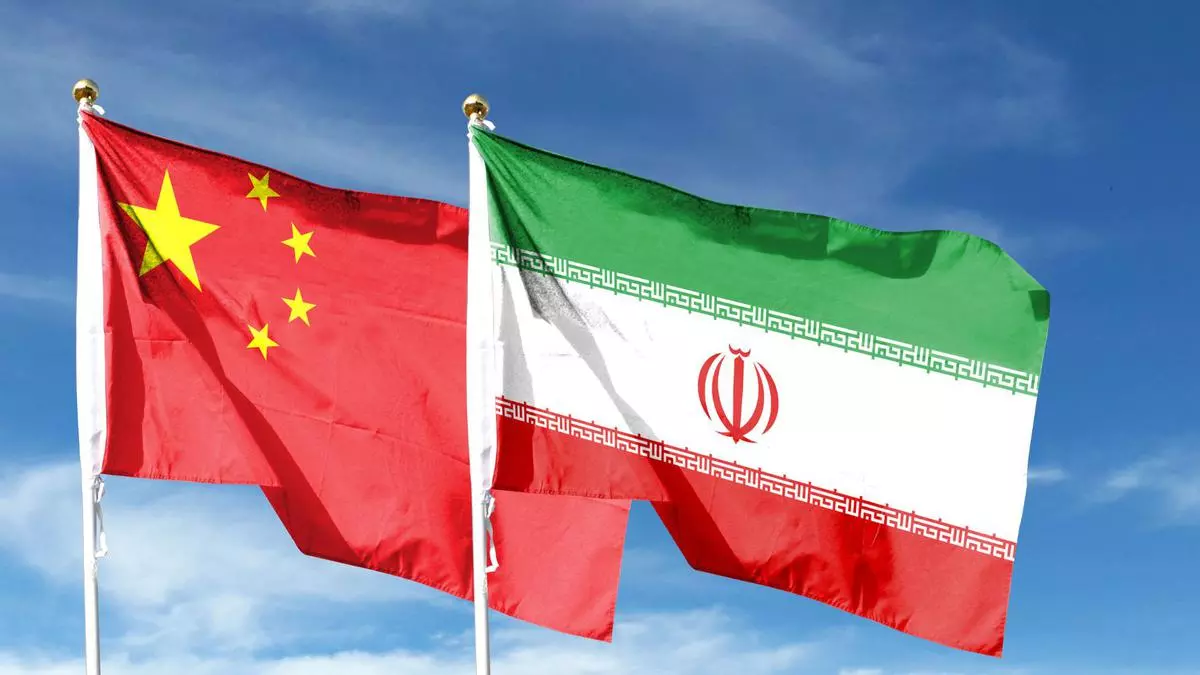
China’s reliance on Iranian oil leaves it exposed to Middle East supply risks

China’s reliance on Iranian oil leaves it exposed to Middle East supply risks


Sanctions have left Iran with limited buyers, allowing China—mainly independent “teapot” refiners—to secure deeply discounted crude.

China, the world’s largest crude
importer, is the main buyer of oil ‍from OPEC producer Iran,
leaving Beijing uniquely exposed to any supply disruption
fromconflict in the Middle ​East.

Beijing, which is also the biggest buyer of oil from ‌Venezuela
and a top importer of oil from Russia, has used ​purchases from
the three countries facing various Western sanctions to save
billions of dollars on its import bill in recent years.

HOW MUCH IRANIAN OIL DOES CHINA BUY?

China buys more than 80% of Iran’s shipped oil, data for 2025
from analytics firm Kpler showed. Iranian oil has limited buyers
due to U.S. sanctions aimed at cutting off funding to Tehran’s
nuclear programme.

China purchased on average 1.38 million barrels ​per day of
Iranian oil last year, according to Kpler. That represented
about ⁠13.4% of the total 10.27 million bpd of oil it imported by
sea.

WHO ARE THE MAIN CHINESE BUYERS OF IRANIAN CRUDE?

Chinese independent refiners known as teapots, clustered
mainly in Shandong province, are ​the main buyers of Iranian
crude, drawn ⁠by its discount to non-sanctioned barrels.
Teapots, which account for roughly a quarter of Chinese refinery
capacity, operate on narrow and sometimes negative margins and
have been squeezed recently by tepid domestic demand for refined
products.

China’s big state oil companies ‌have refrained from buying
Iranian oil since 2018/2019, traders and experts have ‌said.

HOW MUCH CHEAPER IS IRANIAN OIL?

Iranian Light crude has traded at around $8 to $10 a barrel
below ICE Brent on a delivered ‍basis to China since December,
from a discount of about $6 in September, traders said. That
means Chinese refiners save about $8 to $10 a barrel if they buy
Iranian Light rather ‍than non-sanctioned Oman crude, according
to calculations by a trader and Reuters.

Discounts have widened due to ample supply in onshore tanks and floating storage.
Iran has a record amount of oil on the water, equivalent to
around 50 days of output, as China has bought less because of
sanctions and Tehran seeks to protect its supplies from the risk
of U.S. strikes, Kpler said.

ARE U.S. SANCTIONS HAVING AN IMPACT?

Washington reinstated sanctions on Tehran in 2018, and U.S.
President Donald Trump’s administration has imposed several new
rounds ⁠of sanctions on Iran’s oil trade since taking office in
January.

Trump’s sanctions have included penalties on three Chinese
teapots, which has curtailed buying ​from several mid-sized
independents worried about being designated, Reuters reported.

WHAT IS BEIJING’S STANCE ON THE ⁠IRAN OIL TRADE?

Beijing rejects unilateral sanctions and defends its trade
with Iran as legitimate.
Iranian oil imported by China is typically labelled by traders
as originating from other countries, such as Malaysia, a major
transshipment hub, and Indonesia.
Chinese customs data has not shown any oil shipped from Iran
since July ⁠2022.

Published on January 13, 2026



Source link

‘No more 10-minute delivery’: Centre tells e-commerce and q-commerce players

‘No more 10-minute delivery’: Centre tells e-commerce and q-commerce players


The move is aimed at ensuring greater safety, security and improved working conditions for gig workers. 
| Photo Credit:

Responding to sustained demand from gig workers and their unions, Union Labour Minister Mansukh Mandaviya has persuaded major delivery aggregators to drop their 10-minute delivery deadline.

Blinkit is the first to act on the directive. The e-commerce platform has removed the 10-minute delivery promise from its branding and others are expected to follow, said sources privy to the development.

It is learnt that Minister Mandaviya convened a meeting last week to address grievances of gig workers over delivery timelines, flagged repeatedly by various stakeholders in relation to leading platforms including Blinkit, Zepto, Zomato and Swiggy.

“While Blinkit has already acted on the directive and removed the 10-minute delivery promise from its branding, other aggregators are expected to follow suit in the coming days,” said informed sources.

In a BSE filing, Eternal Ltd stated, “Specifically with respect to our quick commerce business Blinkit, there is no change in business model that could have any material impact on the Company.”

Tagline revised

As part of this change, Blinkit has updated its brand messaging, said sources. The company’s principal tagline has been revised from “10,000+ products delivered in 10 minutes” to “30,000+ products delivered at your doorstep.”

Blinkit is the first to act on the directive, removing quick delivery promise from its branding 

Blinkit is the first to act on the directive, removing quick delivery promise from its branding 
| Photo Credit: SHASHANK PARADE

However, other aggregators are still to respond officially about change in their delivery policies.

The move is aimed at ensuring greater safety, security and improved working conditions for gig workers.

The Telangana Gig and Platform Workers’ Union (TGPWU) and the Indian Federation of App-Based Transport Workers (IFAT) welcomed the move.

“This is a significant and much-needed step in protecting the lives and dignity of gig and platform workers. The 10-minute delivery model forced delivery partners into dangerous road behaviour, extreme stress, and unsafe working conditions,” said Shaik Salauddin, Founder President of TGPWU and National General Secretary of IFAT.

Analysts do not believe the development will have any material impact on volumes or growth trajectory of quick commerce platforms. “The removal of the 10-minute delivery catchline is largely optics-driven rather than business-altering. The proposition of quick commerce (QC) continues to be anchored in speed, convenience and proximity-led fulfillment, which remains structurally superior to horizontal e-commerce timelines,” said Karan Taurani, EVP, Elara Capital.

Published on January 13, 2026



Source link

YouTube
Instagram
WhatsApp