Q4 Results Today, April 21, 2026, Highlights: Find all the latest Q4 results 2026 updates of HCL Technologies, Nestle India, Persistent Systems, 360 ONE WAM, Tata Investment Corporation, Tata Elxsi, Central Mine Planning & Design Institute, Transformers and Rectifiers India, Powerica, Sunteck Realty, Cyient DLM, Rajratan Global Wire, NDL Ventures, Mahindra EPC Irrigation, DB (International) Stock Brokers.
BoM, PNB Housing, Groww, Nelco, Indosolar, Navkar in focus
Stay tuned for more updates from businessline

Q4 RESULTS TODAY: HIGHLIGHTS | STOCKS IN ACTION | QUICK TAKE
- Nestle India: standalone Q4 net profit rose to ₹1,114.11 crore vs ₹885.4 crore YoY.
- Persistent Systems consolidated Q4 net profit increased to ₹529.36 crore vs ₹395.76 crore YoY.
- 360 ONE WAM standalone Q4 net profit surged to ₹248.46 crore vs ₹70.41 crore YoY.
- Transformers & Rectifiers (India) standalone Q4 net profit edged up to ₹77.47 crore vs ₹76.59 crore YoY.
- PNB Housing Finance, BoM, Groww shares jump
- Stay tuned for more updates on Tata Elxsi, Tata Investment, CMPDI and more.
- April 21, 2026 18:52
HCLTech Q4 net profit rises 4.2 pc to Rs 4,488 cr
IT major HCLTech on Tuesday reported a 4.20 per cent on-year rise in consolidated net profit to Rs 4,488 crore in the January-March quarter of FY26 on the back of strong performance of its AI-led service offerings.
The Noida-headquartered firm had reported a consolidated net profit of Rs 4,307 crore in the same period of FY25.
The firm’s revenue from operations rose 12.34 per cent to Rs 33,981 crore in Q4 FY26, up from Rs 30,246 crore in Q4 FY25.
On a quarter-on-quarter basis, HCLTech’s profit and revenue rose by 10.10 per cent and 0.32 per cent, respectively.
For the full fiscal year of 2025-26, HCLTech recorded a net profit of Rs 16,642 crore, reflecting a 4.30 per cent decline from Rs 17,390 crore in FY25.
FY26 revenue stood 11.18 per cent higher at Rs 130,144 crore.
- April 21, 2026 16:39
Quarterly results

360 ONE WAM Q4 results live: Highlights
Key Highlights FY26 PAT AT RS 1,225 CRORE – UP 20.7% YoY
FY26 TOTAL REVENUE AT RS 3,144 CRORE – UP 18.6% YoY
Q4FY26PAT AT RS 292CRORE -UP 16.8% YoY Q4FY26
TOTAL REVENUE AT RS 780 CRORE – UP 18.5% YoY
OVERALL ASSETS UNDER MANAGEMENT (AUM) AT RS 6,74,492 CRORE AS ON MARCH2026
ANNUAL RECURRING REVENUE (ARR) AUM AT RS 3,11,940 CRORE- UP 26.4% YoY
ARR NET FLOWS AT RS 55,875 CRORE (EXCL. INORGANIC, NET FLOWS WERE RS 35,199 CRORE)
BOARD APPROVED INTERIM DIVIDEND OF RS 6.00 PER SHARE
- April 21, 2026 16:31
Quarterly results
360 ONE WAM Q4 results live: Profit jumps
360 ONE WAM reported standalone net profit for the quarter ended March 2026 at Rs 248.46 crore compared to Rs 70.41 crore in the same quarter last year.
In FY26, the PAT stood at Rs 395.22 crore compared to Rs 334.53 crore in the year-ago period.
Board approved first interim dividend of Rs 6 per share for FY26. Record date is April 27. Dividend will be paid on or before May 20.
Board also approved exclusion of Anshuman Maheshwary owing to transitioning into a new role from COO of the company to CEO of Alternates Asset Management business.
- April 21, 2026 16:09
Quarterly results
Transformers And Rectifiers (India) Q4 results live:
Transformers And Rectifiers (India) reported standalone net profit for the quarter ended March 2026 at Rs 77.47 crore compared to Rs 76.59 crore in the same quarter last year.
Board approved dividend of Rs 0.25 per share.
- April 21, 2026 16:07
Quarterly results
Nestle Q4 results live: Profits soar
Nestle India Q4 Results: Net profit up 27% to ₹1,110 cr, revenue grew 22.6%
Nestle India posted a consolidated net profit of Rs 1110.9 crore in the March quarter up 27.18% over Rs 873.46 crore in the corresponding period in the previous fiscal
- April 21, 2026 15:53
Quarterly results
Persistent Systems Q4 results live: Consolidated results
- April 21, 2026 15:50
Info tech

Persistent Systems Q4 results live: Q4 profit up
Persistent Systems reported consolidated net profit for the quarter ended March 2026 at Rs 529.36 crore compared to Rs 395.76 crore in the same quarter last year.
In FY26, the company posted PAT of Rs 1865.12 crore compared to Rs 1400.16 crore in FY25.
Board recommended final dividend of Rs 18 per share.
- April 21, 2026 15:42
Stock market

Stock market live, Q4 results today: Markets end nearly 1% positive
Sensex ended 753.03 pts or 0.96% higher at 79,273.33, and Nifty 50 settled 211.75 pts or 0.87% positive at 24,576.60.
- April 21, 2026 15:39
Quarterly results
Mahindra EPC Irrigation Q4 results Live:
Mahindra EPC Irrigation reported standalone net profit for the quarter ended March 2026 at Rs 4.79 crore compared to Rs 6.25 crore in the same quarter last year.
- April 21, 2026 15:31
Quarterly results
Suryoday Small Finance Bank Q4 results live: Board meeting on May 7
Suryoday Small Finance Bank board meeting on May 7, 2026, to consider financial results, recommendation of dividend and enabling approval from shareholders for raising of funds (debt and equity).
- April 21, 2026 15:23
Stock up

Nestle Q4 results live: Shares surge following Q4 results
- April 21, 2026 15:14
Nestle Q4 results live: Growth story
During the financial year ended 31st March 2026, we remained focused on the fundamentals and executed with resilience, delivering double-digit, volume-led growth alongside strong market share gains. Over the last five years our power brands MAGGI noodles consistently maintained its leadership position in the market, while KITKAT and NESCAFÉ have accelerated their market share growth
- April 21, 2026 14:48
Quarterly results
NDL Ventures Q4 results live: Q4 profit down q-o-q
NDL Ventures posted net profit after tax for the quarter ended March 2026 at RS 15.16 lakh compared to 23.32 lakh in the December 2025 quarter.
Recommended final dividend of Rs 0.50 per share.
Shares traded 3% lower at Rs 129.
- April 21, 2026 14:45
Quarterly results
Nestle Q4 results live: Commodity outlook
Commodity Outlook by Nestle India : Coffee prices continue to trend lower. Cocoa prices remain subdued, reflecting improved supply and moderated demand. Sugar prices remain stable. Edible oil prices are firm and have moved higher in line with global crude oil prices, supported by increased diversion to biodiesel. Wheat has been affected by unseasonal rains in April, resulting in a delayed harvest and lower quantity and quality. Milk prices have firmed and are expected to remain elevated through the summer lean season.
- April 21, 2026 14:45
Quarterly results
Nestle India Q4 results live: Profit jumps
Nestle India reported standalone net profit for the quarter ended March 2026 at Rs 1114.11 crore compared to Rs 885.4 crore in the same quarter last year.
Board recommended final dividend of Rs 5 per share.
Shares traded at Rs 1,353.90 on the NSE, higher by 5%
- April 21, 2026 14:42
Neslte India Q4 results live:
Total sales and domestic sales for the quarter increased by 23.4% and 23.1%, respectively. Encouragingly, all product groups contributed to this performance. I extend my sincere appreciation to our colleagues for their steadfast teamwork and shared sense of purpose, as we continued to serve consumers amidst a demanding external environment. Penetration and premiumization, combined with disciplined resource allocation and strong execution, have been key in driving growth : Nestle India CMD Manish Tiwary
- April 21, 2026 14:41
Nestle India Q4 results live:
Manish Tiwary, Chairman and Managing Director of Nestlé India, stated, “I am pleased to share that this quarter, Nestlé India delivered high double-digit growth and recorded its highest-ever domestic sales, at INR 6,445 crore. This performance was powered by double-digit volume growth, driven by over 50% increase in advertising spends, whilst delivering a healthy EBITDA margin of 26.3%.
- April 21, 2026 14:41
Quarterly results
Nestle India Q4 results live:
Nestle India posted a consolidated net profit of Rs 1110.9 crore in Q4 up 27 per cent and revenue of operations of Rs 6747.79 crore up 22.6 per cent
- April 21, 2026 13:46
Stock up
HCL Tech Q4 results live: Shares up ahead of Q4 results
- April 21, 2026 13:34
Muthoot Microfin FY26 Live:
Muthoot Microfin reported a strong FY26 performance, with AUM rising 13% YoY to Rs 14,006 crore as of March 31, 2026, from Rs 12,357 crore in FY25. Disbursements increased 6% YoY to Rs 9,418 crore .
The company’s portfolio diversification improved meaningfully, with the JLG:Non-JLG mix shifting from 97:3 in March 2025 to 83:17 in March 2026. Its small and micro enterprise IL portfolio stood at Rs 2,387 crore with near-zero delinquency.
Asset quality also strengthened, with GNPA declining to 3.89% from 4.84% last year, while credit cost reduced sharply to 3.5% from 9.4%. Collection efficiency for Q4 FY26 improved to 96.43%, up from 93.07% in Q4 FY25, while X-bucket collection efficiency increased to 99.82% from 98.97%.
During FY26, Muthoot Microfin raised Rs 9,537 crore , compared to Rs 7,375 crore in FY25, including Rs 3,290 crore through PTCs, Rs 865 crore via listed NCDs, and Rs 133 crore through ECBs. Borrowing cost reduced to 10.27% in Q4 FY26 from 11.02% a year ago.
The company now has 33 lakh active customers across 1,670 branches , while Mahila Mitra app downloads have crossed 20 lakh. CRISIL revised the outlook on long-term facilities/NCDs to Positive while reaffirming the A+ rating, and the company’s ESG score improved to 80.8 from 72.2, making it the highest ESG-rated NBFC by CareEdge ESG Ratings.
- April 21, 2026 12:41
Stock down

Indosolar Q4 results live: Shares down
Indosolar shares traded at their lower band on the NSE at Rs 513.85, down 5%.
Company posted a profit after tax for the quarter ended March 2026 at Rs 41.99 crore compared to Rs 40.04 crore in the same quarter last year. In December 2026 quarter, it posted a profit of Rs 41.47 crore.
Board approved the appointment of Abhishek Pareek as CFO w.e.f. April 20, 2026.
- April 21, 2026 12:30
Stock up
PNB Housing Finance Q4 results live: Shares jump
PNB Housing Finance shares rallied 11% to Rs 1,007 on the NSE before trading at Rs 980.05 at 12.27 pm.
Company reported a consolidated net profit of Rs 655.80 crore in March 2026 quarter compared to Rs 550.38 crore in the same quarter last year.
- April 21, 2026 12:25
Stock up
Nelco Q4 results live : Shares rally
Nelco shares traded 9% higher on the NSE at Rs 736.30, hitting a high of Rs 766.90.
Company reported standalone net profit for the quarter ended March 2026 at Rs 2.79 crore compared to Rs 3 lakh loss in the same quarter last year. In FY26, the company reported a profit of Rs 6.09 crore compared to Rs 9.81 crore in the year-ago period.
Board recommended final dividend of Rs 1 per share.
- April 21, 2026 12:20
Stock market
Stock market live updates, Q4 results live: Markets trade higher
At 12.19 pm, Sensex traded 707.94 pts or 0.90% higher at 79,228.24, and Nifty 50 soared 191 pts or 0.78% to 24,555.85.
- April 21, 2026 12:18
Stock up
360 One WAM Q4 results live: Shares in focus
360 ONE WAM arm 360 ONE Alternates Asset Management approved acquisition of entire fully paid up equity share capital of Quark Solar Private Limited.
360 ONE WAM Q4 results today. Shares traded at Rs 1,123.25 on the NSE, up 1.26%
- April 21, 2026 11:58
Quarterly results
Reliance Q4 results live: Results on April 24
Reliance Industries board meeting on April 24 to consider and approve the standalone and consolidated audited financial results of the Company for the quarter and year ended March 31, 2026; and recommend dividend on equity shares of the Company for the financial year ended March 31, 2026.
- April 21, 2026 11:42
Stock down
SML Mahindra Q4 results live: Shares fall despite profit growth
SML Mahindra shares fell 7% to Rs 4,013.50 on the NSE from the previous close of Rs 4,321.60.
The company reported17 per cent growth in FY26,ahead of the commercial vehicle industry’s 13 per cent expansion, with revenue rising 18 per cent to ₹2,838 crore and profit after tax increasing 31 per cent to ₹160 crore.
Board recommended final dividend of Rs 23.50 per share.
- April 21, 2026 10:52
Stock up
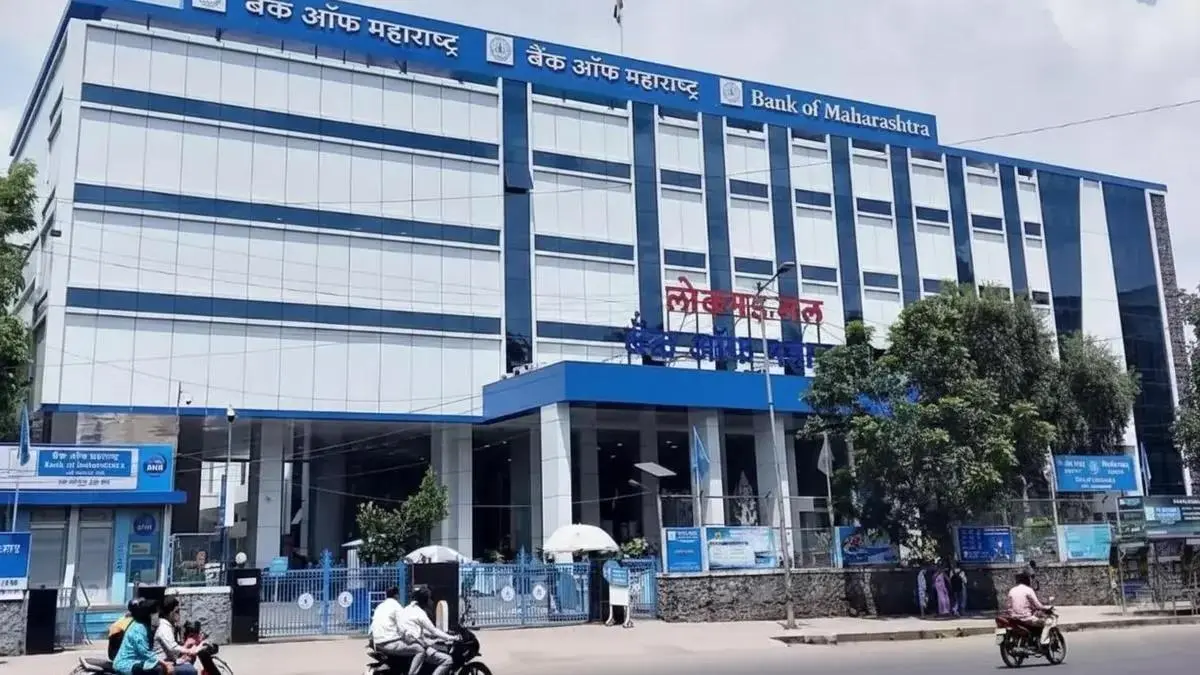
BoM Q4 results live: Shares surge

BoM shares hit 52-week high on strong Q4 earnings
Bank of Maharashtra shares surge to a 52-week high following strong Q4 earnings and positive investor sentiment.
- April 21, 2026 10:25
Stock up
Groww Q4 results live: Shares surge, here’s what brokerages say

Billionbrains Garage Ventures (Groww) shares soar 4% on strong Q4 profit surge
Billionbrains Garage Ventures shares rise 4% after a strong Q4 profit surge, boosting investor confidence and target prices.
- April 21, 2026 10:07
Ugro Capital Q4 results live: UGRO Capital Reports Q4’FY26 PAT of ₹51.1 Crore; Full-Year FY26 PAT ₹174.8 Crore
-ROA 2.1% | Total AUM ₹15,334 Cr | EM AUM ₹3,581 Cr | Embedded Finance AUM ₹2,280 Cr | All five Feb-26 realignment objectives on track
| No equity raise through FY29
UGRO Capital Limited (NSE: UGROCAP | BSE: 511742) today reported its financial results for the quarter and year ended March 31, 2026. The Company reported Q4’FY26 PAT of ₹51.1 crore, a 26% increase over ₹40.5 crore in Q4’FY25. Net Total Income expanded 51% year-on-year to ₹348 crore in the quarter, driven by a structural mix shift toward higher-yield on-book assets.
For the full year FY26, UGRO reported PAT of ₹174.8 crore (+21% year-on-year). Full-year Net Total Income stood at ₹1,067 crore (+31% year-on-year). The Emerging Market LAP vertical closed FY26 with AUM of ₹3,581 crore, growing 12% quarter-on-quarter, as vintaged branches (greater than 12 months old) reached ₹0.68 crore per month in disbursements – approaching the management target of ₹0.80–0.85 crore per month. The Embedded Finance platform crossed ₹2,280 crore AUM (+27% QoQ) with approximately 2.5 lakh active merchant customers. Consolidated AUM stood at ₹15,334 crore as at March 31, 2026.
On February 7, 2026, UGRO communicated five structural objectives to reorient the business toward its two high-yield focus verticals – Emerging Market LAP and Embedded Finance – while running down the Prime Intermediated portfolio, executing ₹200–220 crore in annualised cost savings, sustaining capital adequacy without incremental equity, and transitioning to an annuity-led ROA of 3.0–3.5% by FY29. After one full quarter of execution, all five objectives are on track. The focused vertical mix has moved from 32% to 38% of AUM – the fastest quarterly shift on record. Prime Intermediated disbursements were stopped from February 7, 2026.
Shachindra Nath, Founder & Managing Director, UGRO Capital said “We are excited to pivot with our full force to serving Bharat extensively – to solve the problem of MSME credit at the bottom of the pyramid, which is where the real gap exists and where we have spent three years building the right capability. The branch network is now working for us. Every branch that matures adds earnings without adding cost. Mature branches are at INR 0.68 Cr/month disbursement and 156 sub-6-month branches are queued behind them as the next leg of annuity growth. UGRO will compound from its existing footprint. All five commitments we made in February are on track, and we will deliver on them”
- April 21, 2026 09:48
Stock up
BoM Q4 results live: Shares soar
Bank of Maharashtra shares hit 52-week high on the NSE at Rs 79.20, higher from the previous close of Rs 75.54.
Bank of Maharashtra reported standalone net profit for the quarter ended March 2026 at Rs 2014.09 crore compared to Rs 1493.08 crore in the same quarter last year.
In FY26, the bank’s PAT stood at Rs 7019.32 crore compared to Rs 5519.79 crore in the year-ago period.
Board recommended final dividend of Rs 1.20 per share, in addition to Rs 1 per share declared on January 13, 2026, and paid during the financial year.
Board also approved raising of capital up to Rs 7,500 crore by way of equity capital by issue of equity shares by way of preferential allotment basis to GOI/ LIC/ Fl and /or by way of Qualified Institutional Placement (QIP) / Follow-on Public Offer (FPO)/ Rights/ ESPS Issue etc. and/or Basel III Additional Tier I Bonds and / or Tier II Bonds, subject to the necessary approvals.
Board also approved issuance of Long-Term Infra Bonds upto an amount of Rs. 10,000 crore during FY 2026-27 in multiple tranches, and raising of long term funds by issuing foreign currency bonds upto an amount of USD 500 million in multiple tranches during FY 2026-27.
- April 21, 2026 09:42
Stock up
Groww Q4 results live: Shares flat
Billionbrains Garage Ventures (Groww) shares traded flat on the NSE at Rs 197.59 at 9.39 am after opening at Rs 201, and soaring to Rs 203. The stock closed at Rs 196.11 on Monday.
It reported a sharp surge in profitability for the March quarter, with consolidated net profit rising 122 per cent year-on-year to ₹686 crore, up from ₹309 crore in the corresponding period last year.
- April 21, 2026 09:32
Stock market
Stock market live updates: Sensex, Nifty 50 in positive territory
Sensex gained 348.41 pts or 0.44% to 78,868.71 at 9.18 am, and Nifty 50 was up 92.90 pts or 0.38% to 24,457.75.
Published on April 21, 2026