PL Capital sees Nifty at 27,080 on 15% earnings; geopolitical risks, crude pressures

PL Capital sees Nifty at 27,080 on 15% earnings; geopolitical risks, crude pressures


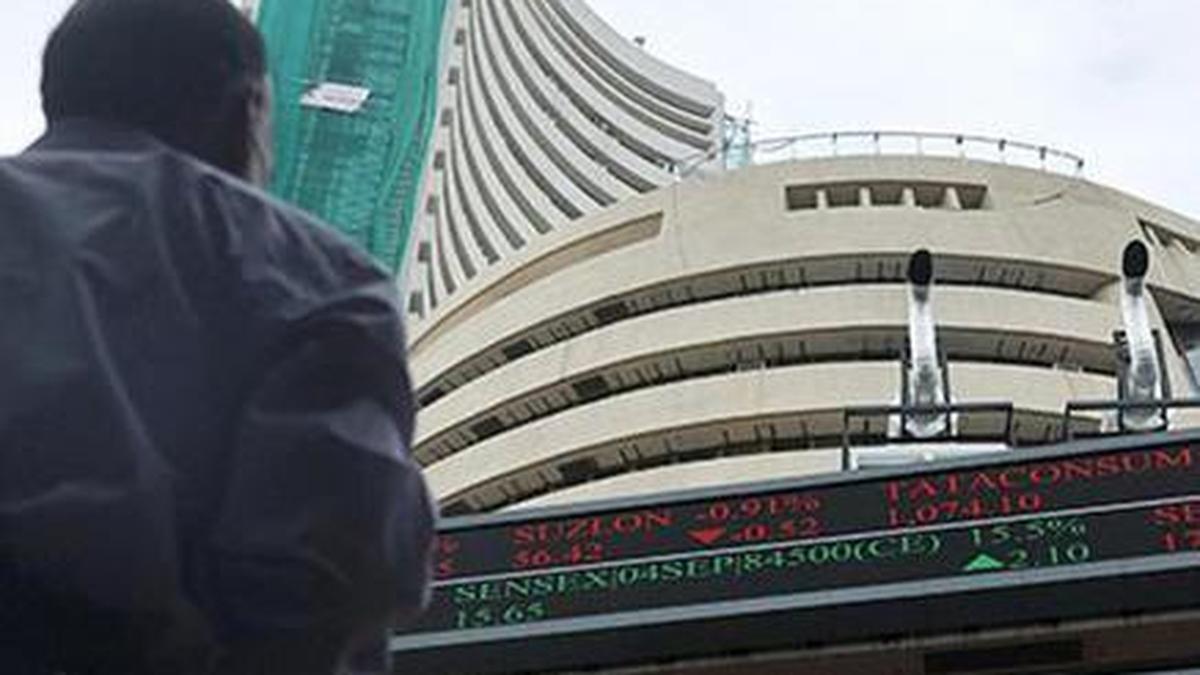
A man looks at a screen outside the Bombay Stock Exchange (BSE) in Mumbai, India, August 28, 2025. REUTERS/Francis Mascarenhas
| Photo Credit:
th-online Administrator

PL Capital has pegged a target of 27,080 for the Nifty 50, driven by an expected 15 per cent earnings CAGR over FY26–FY28, even as global uncertainties and rising crude prices cloud the near-term outlook.

The brokerage noted that the Nifty has declined 6.6 per cent over the past three months due to persistent foreign institutional investor outflows amid geopolitical tensions, particularly in West Asia. While markets have seen a rebound from recent lows, volatility is expected to persist.

Crude oil spike adds macro pressure

Oil prices have surged sharply and are unlikely to revert to pre-war levels, posing a significant risk for India, which imports 4.3 million barrels per day. This could increase the country’s import bill by over $70 billion annually. While diversification of supply sources may offer some cushion, critical routes such as the Strait of Hormuz remain vulnerable.

PL Capital said the impact of higher crude may be relatively contained compared to past shocks due to lower oil intensity of GDP. However, elevated freight and insurance costs, along with limited refining capacity, are expected to keep prices high, with second-order effects weighing on inflation, demand, and manufacturing.

Valuations remain below historical averages

The brokerage highlighted that the Nifty is currently trading at 17 times one-year forward earnings, a 12.4 per cent discount to its 15-year average of 19.4 times. It expects valuations to settle at 17.5 times, implying a target of 27,080 based on FY28 EPS of 1,551.

Earnings and sectoral outlook

Corporate performance remains resilient, with Q4FY26 revenues, EBITDA, and profit before tax projected to grow by 11.3 per cent, 6.3 per cent, and 5.7 per cent, respectively, though margins face pressure from rising input costs. Key growth drivers include automobiles, metals, telecom, NBFCs, healthcare, and construction, while consumption and IT are expected to see steady double-digit growth.

Demand trends and risks ahead

Domestic demand remains steady, supported by rural resilience and improving urban consumption. However, PL Capital cautioned that rising crude prices, inflationary pressures, and potential weather disruptions could weigh on future demand.

The brokerage maintained that while India’s long-term growth story remains intact, the trajectory of markets will depend on how global risks and domestic fundamentals evolve.

Published on April 21, 2026


Source link

Marine fuel blenders, refiners chase heavy sweet oil amid Iran war disruptions

Marine fuel blenders, refiners chase heavy sweet oil amid Iran war disruptions


Marine fuel providers
face tighter supply of higher-density, low-sulphur crude oil,
known as heavy sweet, for blending ‌because of competition from
refiners for the same oil as the Iran ​war disrupts Middle East
imports, industry sources said.

The reduced availability of fuel ⁠blending components is
occurring at the same time refiners are reducing low-sulphur
fuel oil (LSFO) production for marine fuel because of crude
shortages, which is supporting spot premiums for the residual
fuel used to power ships.

Crude ‌grades such as Dar Blend from South Sudan and
Australia’s Vincent and Pyrenees are typically exported to
Singapore and Fujairah in the United Arab Emirates ‌because their
low-sulphur content and overall characteristics make for easier
blending with other fuels to ‌craft ⁠0.5 per cent-sulphur fuel oil, known
as very low-sulphur fuel oil (VLSFO), for ship refuelling.

Since ⁠the Iran war began on February 28, some of that supply
has been diverted to refineries to make up for disrupted Middle
East supply, according to multiple industry sources and
ship-tracking data.

China has imported more than 300,000 ​metric tonne (2.19
million barrels) per month of ‌Dar Blend during March and April,
up from none in February, Kpler data showed.

“As refineries are running at lower intake due to shortage
of medium sour crude from the Middle East, they will need to
pull in heavier crude alternatives including sweet ‌barrels that
can support maintaining runs,” said June Goh, a senior analyst
at Sparta ​Commodities.

LIMITED HEAVY SWEET CRUDE SUPPLY

The supply of heavy sweet crude was fairly low even before
the war because of the limited output at ⁠the small number of
fields where it is found.

Since the war, the oil has become more expensive, making it
tough to find sufficient supply to blend and produce VLSFO this
month, ‌said a Singapore-based trader active in the market.

“The loss of medium sour crudes and (refinery) run cuts may
divert heavy sweet crudes into the refinery, leaving less
low-sulphur blendstock in the market,” said Emril Jamil, a
senior analyst at LSEG.

The run cuts will also cause refiners to prioritise
distillate fuel output such as diesel and jet fuel over LSFO,
reducing supply for bunkers, he said.
While a surge in Brazilian imports has cooled spot VLSFO
premiums ‌from all-time highs of nearly $140 a metric ton on
March 18, they remained above $17, versus pre-war levels ​of $2.

The shortage of blendstocks may also push blenders to use
unconventional oil, fuel experts said, which may cause quality
issues that can damage ship engines.

“With ⁠supply constrained by West Asia tensions and
disruptions around the Strait of Hormuz, the use of
unconventional ⁠feedstocks is a predictable response,” said Chris
Turner, technical manager at Integr8 Fuels.

“This isn’t an isolated lapse in quality, but a technical
consequence of market stress, ‌one we have seen repeat across
every major disruption in the past decade,” Turner added.

Vessels should seek clarification from suppliers regarding
the blend components used, including the use ​of alternative
feedstocks, fuel testing agency VPS said in a notice this month.

Published on April 21, 2026


Source link

Prestige Estates sells over 1,700 housing units in Hyderabad for more than ₹2,500 cr

Prestige Estates sells over 1,700 housing units in Hyderabad for more than ₹2,500 cr


Realty firm Prestige Estates Projects Ltd on Tuesday said it has sold more than 1,700 housing units in Hyderabad for over Rs 2,500 crore on better demand.

In a regulatory filing, the company said it has received a strong response to its recently launched residential project, Prestige Golden Grove, in Hyderabad.

“Within two weeks of launch, the company achieved sales of over 1,700 units, translating to a total sales value exceeding Rs 2,500 crore, reflecting robust early traction,” it added.

The project, spread across 29 acres, comprises 5,120 units.

Prestige Estates is expecting a total revenue of around ₹9,500 crore from this project.

Bengaluru-based Prestige Group has delivered 313 projects, covering 206 million sq ft. It currently has a pipeline of 128 projects comprising 195 million sq ft.

During the last 2025-26 fiscal, Prestige Estates achieved a record sales bookings of Rs 30,024.5 crore, a 76 per cent increase from the preceding year. A total of 11,692 units were sold during the last financial year.

Published on April 21, 2026


Source link

Gold, Silver range-bound; crude surges on Hormuz fears

Gold, Silver range-bound; crude surges on Hormuz fears


Gold and silver prices remained in a tight consolidation range on Tuesday as investors weighed the slim prospects of a U.S.-Iran peace deal ahead of a Wednesday ceasefire deadline, while crude oil surged on renewed fears over the Strait of Hormuz blockade.

Spot gold was trading around $4,794–$4,825 per ounce, pinned within its recent $4,750–$4,850 band, while silver hovered near $79.30, holding above the key $78 support level. On MCX, gold traded in the ₹1,53,500–₹1,54,000 range and silver held above ₹2,51,000.

Crude oil dominated market moves. Brent crude climbed to around $95 per barrel and WTI to approximately $91, both surging more than 6 per cent on Monday after Iran reimposed restrictions on the Strait of Hormuz over the weekend, citing U.S. “breaches of trust.” IRGC gunboats fired on a transiting tanker, several vessels turned back, and the U.S. seized an Iranian cargo vessel in the Gulf of Oman. The moves reversed a sharp Friday selloff, when Brent had fallen to $86 after Iran’s foreign minister briefly declared the strait open.

“The double blockade of the chokepoint, through which roughly a fifth of global oil supply passes, remains intact, putting a firm floor under crude prices despite shifting ceasefire signals,” said Kaynat Chainwala, AVP Commodity Research at Kotak Securities.

The energy-driven inflation risk is now directly weighing on gold. As crude surged, the dollar firmed above 98.3, dampening rate-cut expectations and limiting upside for non-yielding assets. President Trump has stated he will not extend the ceasefire beyond Wednesday if no agreement is reached, and has said the Strait of Hormuz will remain closed until a deal is finalised. U.S. Vice President JD Vance is travelling to Pakistan for negotiations with Iran.

Renisha Chainani, Head of Research at Augmont, noted that “the ongoing Middle East conflict has caused significant disruption to energy supplies, pushing inflation risks higher and increasing the probability of central bank interest rate hikes — both of which create headwinds for gold prices.”

Markets are also watching Tuesday’s congressional testimony from incoming Fed Chair Kevin Warsh, his first since nomination, for signals on the Fed’s tolerance for energy-driven inflation. U.S. retail sales, pending home sales, flash PMIs and weekly jobless claims round out the week’s data calendar.

Technically, a decisive break above $4,900 on COMEX gold could open the path toward $4,970–$5,000, while a fall below $4,800 risks a slide to $4,650–$4,600. For silver, a close above $80–$81 could lift prices toward $85–$87, but a break below $78 exposes the $75–$76 zone. The USD/INR pair is expected to trade sideways in the ₹92.95–₹93.35 range. The rupee ended Monday 20 paise weaker at 93.12.

Published on April 21, 2026


Source link

Industry seeks removal of 2.5% duty on aluminium scrap to ease costs

Industry seeks removal of 2.5% duty on aluminium scrap to ease costs


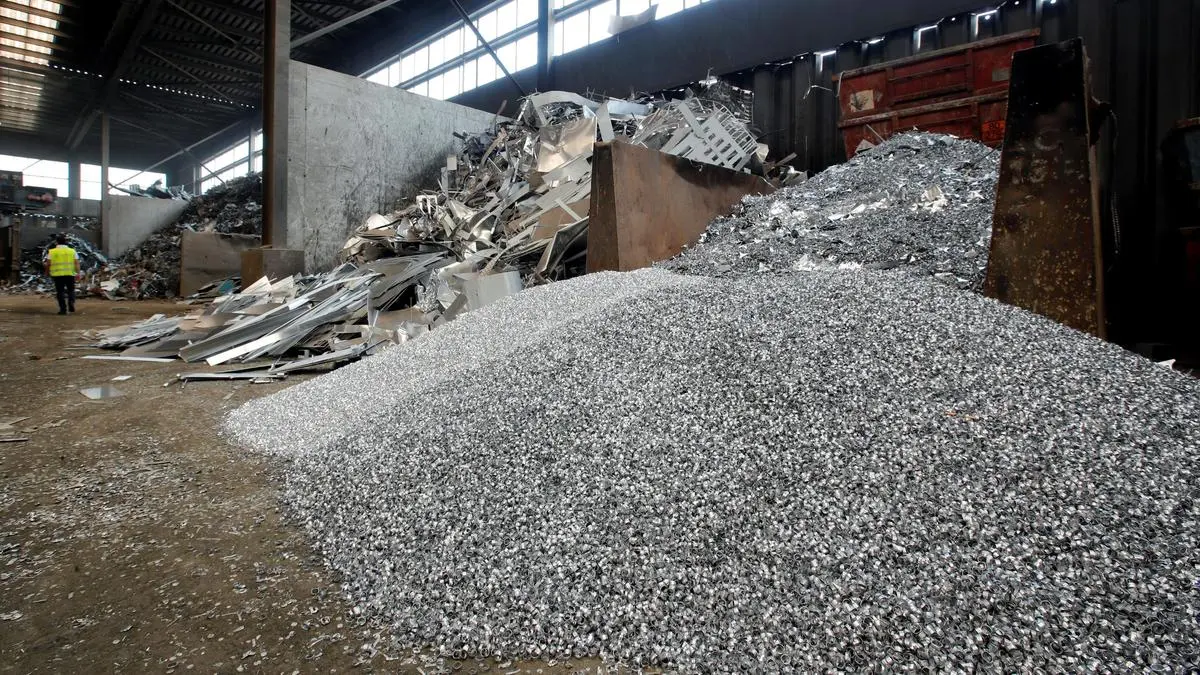
With aluminium demand expected to rise sharply by FY30, industry experts stress the need for policy support and stronger domestic scrap collection. (a file photo)
| Photo Credit:
ARND WIEGMANN

A leading industry group
representing small and mid-sized firms that recycle metals,
plastics, e-waste, rubber ​and glass has sought intervention from
the Prime Minister’s Office (PMO) to ‌remove an import tax on
aluminium scrap, citing rising costs ​and strong demand,
according to a letter reviewed ⁠by Reuters.

India, a major global buyer of aluminium scrap, imposes a
2.5% tariff on the product and relies heavily on supplies from
the European ‌Union, the U.S. and the Middle East.

The EU’s planned export curbs and disruptions from the
U.S.-Israeli war ‌on Iran have tightened supplies, industry
officials said.

Aluminium scrap is ‌used ⁠mainly by the auto sector as well as
in ⁠construction, foils and cables.

“MSMEs (Micro, Small and Medium Enterprises) depend on
high-quality imported scrap to meet technical specifications,
but the 2.5% basic customs duty raises input costs ​and strains
working capital, limiting ‌access to reliable recycled material,”
the Material Recycling Association of India (MRAI) said in a
March 26 letter to the PMO.

The PMO and the MRAI did not respond to Reuters requests ‌for
comment.

Scrapping of import tariff would reduce costs and improve
competitiveness, ​the letter said.

The secondary sector that relies on scrap contributes nearly
40% of India’s total aluminium supply ⁠of around 2.2 million
metric tons per year and it meets 85% of its scrap needs through
imports, the letter said.

In a ‌report released last year, the mines ministry said
India’s high dependence on imported scrap could be attributed to
the low availability of domestic scrap.

The ministry also said high scrap imports posed a problem
for primary producers of aluminium given a surge in shipments in
recent years.

However, the MRAI said in its ‌letter that removing the
import tariff would promote downstream manufacturing without
adversely impacting primary ​producers.

India’s leading primary aluminium producers include Vedanta
, Hindalco Industries and state-owned
National Aluminium.
Besides being a resource for ⁠domestic producers, scrap has a
vital role in the sector’s decarbonisation efforts, ⁠since
recycling aluminium uses 95% less energy than producing metal
from mined bauxite.

“With aluminium consumption expected to reach 8.5-9.0
million ‌metric tons by FY30 and recycled content mandates coming
in, imports are likely to remain crucial unless domestic scrap
collection ​and urban mining improve significantly,” commodities
consultancy BigMint said.

Published on April 21, 2026


Source link

Scam alert: Ships stranded near Hormuz receive fake messages offering safe transit

Scam alert: Ships stranded near Hormuz receive fake messages offering safe transit


Fraudulent messages promising safe passage through the Strait of Hormuz in exchange for cryptocurrency ​have been sent to some shipping companies whose vessels are ‌stranded west of the waterway, Greek maritime risk management ​firm MARISKS has warned.

The U.S. has ⁠maintained its blockade of Iranian ports, while Iran has lifted and then re-imposed its blockade of the Strait of Hormuz, ‌through which roughly a fifth of the world’s oil and liquefied natural gas passed before ‌war broke out in the Middle East.

Amid ceasefire ‌talks, ⁠Tehran, which controls the chokepoint, has proposed tolls ⁠on vessels to safely transit.

MARISKS on Monday issued an alert warning shipowners that unknown actors, claiming to represent Iranian authorities, ​had sent some shipping companies ‌a message demanding transit fees in cryptocurrencies, Bitcoin or Tether, for “clearance”.

“These specific messages are a scam,” the firm said, adding the message was not sent ‌by Iranian authorities.

There was no immediate comment from ​Tehran.

Hundreds of ships and about 20,000 seafarers remain stranded in the Gulf.

On April 18, ⁠when Iran briefly opened the strait subject to checks, ships tried to pass but at least two of ‌them, including a tanker, reported that Iranian boats had fired shots at them, forcing the vessels to turn around.

MARISKS said that it believed that at least one of the vessels, which tried to exit the strait on Saturday and was hit by gunfire, ‌was a victim of the fraud.

Reuters was not able to ​verify the information or track companies that had received the message.

“After providing the documents ⁠and assessing your eligibility by the Iranian Security Services, we ⁠will be able to determine the fee to be paid in cryptocurrency (BTC or USDT). Only then ‌will your vessel be able to transit the strait unimpeded at the pre-agreed time,” said the ​message cited by MARISKS.

Published on April 21, 2026


Source link

YouTube
Instagram
WhatsApp