Sai Parenterals lists at modest premium, marks 6% listing gains

Sai Parenterals lists at modest premium, marks 6% listing gains


Sai Parenterals shares made a steady debut on the stock exchanges on Thursday, listing at a modest premium to the issue price.

On the BSE, the stock opened at ₹405, reflecting a 3 per cent premium over the offer price of ₹392. On the NSE, it listed at ₹400, up 2 per cent.

The stock closed at 405.70 and 406.40 on the NSE and BSE, repectively.

Dr. Ravi Singh, Chief Research Officer (Research), Master Capital Services, believes that the company is well-positioned with its diversified formulations portfolio, strong CDMO capabilities, and growing presence in regulated and semi-regulated markets.

Singh advised investors allotted shares to consider holding them for the long term, given the steady industry growth outlook.

The ₹409-crore initial public offering of Sai Parenterals Ltd saw a subscription at 1.05 times, supported largely by institutional investors. The qualified institutional buyers segment was subscribed 1.71 times, while the non-institutional investors portion saw a stronger response at 2.36 times. Retail participation, however, remained subdued at 0.12 times.

Ahead of the IPO, the company mobilised over ₹122 crore from anchor investors, signalling early institutional confidence in the offering.

The IPO comprised a combination of fresh issue and an offer-for-sale. The fresh issue aggregated up to ₹285 crore, while the OFS included up to 31.57 lakh equity shares being offloaded by existing shareholders, including Vikasa India EIF I Fund and other individual investors. The price band for the issue was fixed at ₹372 to ₹392 per share, with a minimum bid lot of 38 shares.

Proceeds from the fresh issue are intended to support the company’s expansion strategy, particularly in strengthening its global formulations business and enhancing its Contract Development and Manufacturing Organisation capabilities. The focus remains on scaling up both injectable products and oral solid dosage manufacturing.

Published on April 2, 2026


Source link

India trading ban rocks 9 billion-a-day offshore rupee market

India trading ban rocks $149 billion-a-day offshore rupee market


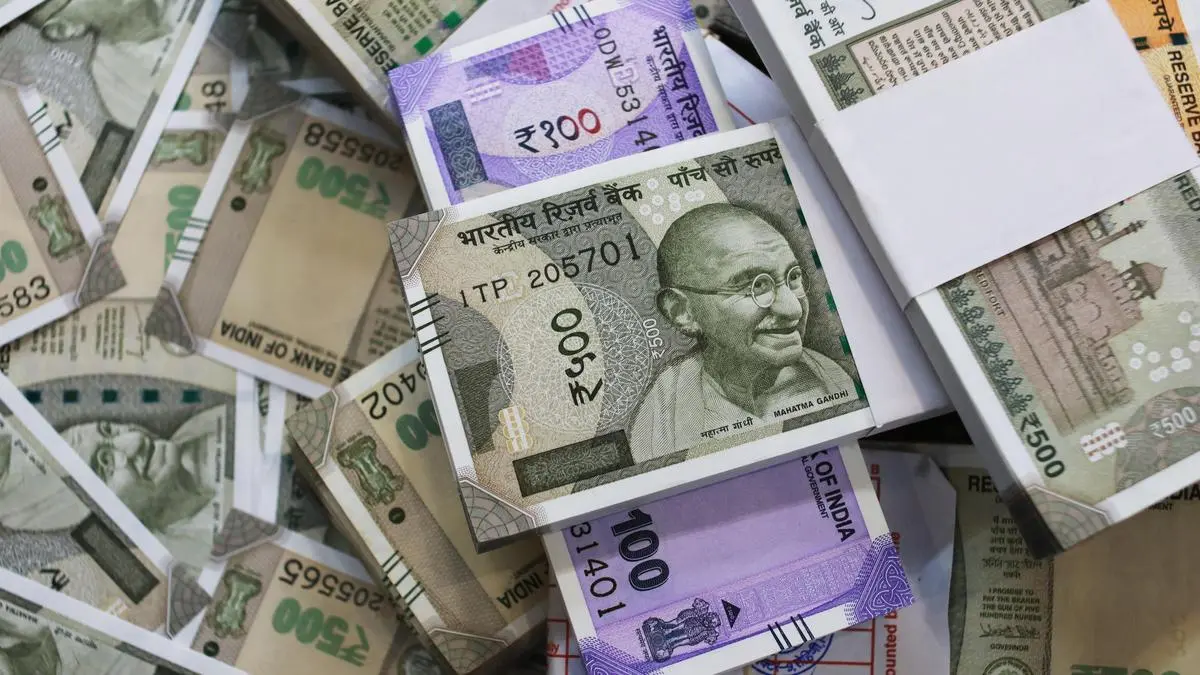
India banned its banks from offering the most popular instrument for trading the rupee offshore, threatening to squeeze a $149 billion-a-day market in an extreme step to shore up its tumbling currency.

The Reserve Bank of India’s restrictions on non-deliverable derivative contracts will ripple through major currency hubs such as Singapore and London, where trading has exploded over the past decade to about twice the size of the onshore market. The rupee surged the most in 12 years on Thursday.

The policy adds to a late-Friday measure that capped lenders’ daily currency positions locally at $100 million, triggering a scramble among banks to unwind at least $30 billion in arbitrage trades. Such moves risk undercutting years of efforts to deepen India’s currency markets, where growing onshore and offshore liquidity has helped attract foreign investors and support Prime Minister Narendra Modi’s push to boost the rupee’s global use.

“This is again a signal that the central bank is willing to consider harsh steps that are nevertheless regressive and that its focus is on the stability of the rupee rather than liquidity for now,” said Abhishek Upadhyay, an economist at ICICI Securities Primary Dealership.

The regulator is going all out to squeeze a trade that it sees fueling speculative bets. Investors have typically used offshore contracts known as non-deliverable forwards to build short rupee positions, while banks run arbitrage trades — buying dollars onshore and selling them overseas — to profit from price gaps between the two. Those onshore dollar purchases can add pressure on the local currency, reinforcing the offshore bearish bets. 

This activity is mainly driven out of global financial hubs such as Singapore, London and New York, with international lenders like JPMorgan Chase & Co., Standard Chartered Plc, HSBC Holdings Plc and Citigroup Inc. dominating the space. Some Indian banks also participate.

The RBI measures amount to a coordinated push to flush out excess bearish rupee positions and speculative trades across the market, according to Kunal Sodhani, head of treasury at Shinhan Bank Ltd. in Mumbai. This may come at the cost of reduced liquidity and wider spreads between the onshore and offshore markets, he said.

“Overall, the RBI’s message is unambiguous,” he said. “The FX market is to function as a hedging mechanism aligned with real economic activity, not as a platform for leveraged speculation.”

The rupee has been hitting successive lows despite repeated intervention by the RBI, with pressure intensifying after the Iran war drove up India’s fuel import costs. It has tumbled about 8% over the past year, making it Asia’s worst-performing currency.

The rupee rebounded about 2% to 92.84 per dollar on Thursday as trading resumed after a two-day break. Earlier in the week, it had weakened past the 95 level. Meanwhile, offshore forward points, or the cost of hedging exposure to rupee assets outside India, are near their highest since 2020.

The twin policy surprises are an attempt to head off imported inflation with a stronger currency. Skyrocketing energy prices have fanned stagflation fears, with oil-importers like India particularly vulnerable. A widening trade deficit, combined with a stronger dollar, has only deepened pressure on the rupee. 

This puts the RBI in a dilemma. Raising interest rates to defend the currency may hurt economic growth, pushing policymakers to rely more on other tools. That includes stepping up intervention — which has already contributed to a more than $30 billion drawdown in FX reserves in the first three weeks of March — as well as more direct measures targeting financial institutions. The central bank is due to announce its next rate decision on April 8.

“The RBI cannot use monetary policy to fight this pressure as they are primarily focused on inflation management,” said Gaurav Kapur, chief economist of IndusInd Bank Ltd. That helps to explain the move to target the NDF market, he said, adding that the central bank still has other options, including a potential increase in the cash reserve ratio, as seen in 2013.

Bond Outflows

By curbing NDF activity, the central bank is driving up the cost of hedging currency risk, said Rajeev de Mello, a global macro portfolio manager at Gama Asset Management. That will discourage foreign participation in the local bond market, ultimately pushing up the government’s borrowing costs, he added.

Foreign interest in Indian debt has grown, with about $14 billion flowing into bonds since their inclusion in JPMorgan’s flagship index in June 2024, underscoring the need for hedging. But flows have taken a hit from the latest curbs. On Monday, index-eligible bonds saw outflows of 32.85 billion rupees ($352 million), the biggest single-day exit in 10 months.

A key question now is how long the RBI can sustain such measures. When it adopted similar measures in December 2011, the rupee strengthened from 54.3 to below 50 in about a month — but at the cost of liquidity drying up, said Madhavi Arora, chief economist at Emkay Global Financial Services Ltd. However, volumes recovered within a few months, and banks, after an initial hit to shares, rebounded strongly. 

“If the similar playbook follows this time around too, rupee would be a sharp gainer over next one week or so, as the banks unwind their speculative positions,” she said. While lenders may face short-term mark-to-market losses, once the currency stabilizes and liquidity conditions normalize, the focus will shift back to credit growth, she added.

This time, however, the impact could be more disruptive as the scale of FX operations has ballooned. 

“Ten years ago, people didn’t take such large positions,” said Jayesh Mehta, chief executive officer of DSP Finance Private Ltd. with more than three decades of experience in FX and bonds. Today, the size of trades — including relative-value bets across currencies — can dilute the effectiveness of the RBI’s interventions, he added.

More stories like this are available on bloomberg.com

Published on April 2, 2026


Source link

Foreign fund inflow in Indian real estate falls 75% in Jan-Mar amid West Asia conflict: Colliers

Foreign fund inflow in Indian real estate falls 75% in Jan-Mar amid West Asia conflict: Colliers


Foreign investors were cautious to put money in Indian real estate during January-March amid the West Asia conflict, as their investments plunged 75 per cent to $400 million compared to the previous quarter, according to Colliers.

Real estate consultant Colliers India expects foreign investors to remain cautious through this year due to global economic uncertainties.

The consultant data showed that the total institutional investments in real estate fell drastically by 61 per cent to $1.6 billion in January-March from $4.2 billion in the preceding October-December quarter of 2025.

Out of this, domestic investors pumped in $1.2 billion while foreign players invested just 0.4 billion during the last quarter.

During October-December 2025, the inflow from domestic and foreign investors stood at $2.6 billion and $1.6 billion, respectively.

In fact, he said, domestic real estate investments witnessed a strong surge and accounted for three-fourths of the $1.6 billion inflows in Q1 2026.

“While global investors are likely to remain cautious in the near-term on account of volatilities in trade, crude and commodities markets, this phase is expected to be transient in nature,” Yagnik said.

India’s favourable demographics, consumption-driven economy and investor appetite to expand into both core and alternative assets are likely to keep its unique positioning in the wider APAC region intact, he observed.

The consultant mentioned that the global investors may adopt a more measured, wait-and-watch approach in the near-term, potentially impacting inflows over the next few quarters.

However, Colliers added that domestic investors are likely to remain firm and may offset the potential impact to some extent.

Among asset classes, institutional investments in office properties fell sharply to $821.1 million in January-March from $3051.8 million in the preceding quarter.

Published on April 2, 2026


Source link

Oil rises 6%, Asian stocks fall after Trump says US will hit Iran hard, 'finish the job'

Oil rises 6%, Asian stocks fall after Trump says US will hit Iran hard, 'finish the job'


Oil rose more than 6% and Asian stocks fell after US President Donald Trump said in his first national address since the Iran war began that the US will continue to hit Iran very hard.

Trump also said in his Wednesday night speech that the United States will “finish the job” in Iran soon as “core strategic objectives are nearing completion” and military operations could wrap up soon.

“We are going to hit them extremely hard over the next two to three weeks. We’re going to bring them back to the Stone Ages, where they belong,” Trump said in his address.

Trump did not mention a looming deadline he set for Iran to open the Strait of Hormuz, the critical waterway for global oil and gas transport, after he threatened Iran earlier with US attacks on its energy infrastructure if the strait was not reopened. He did not offer a clear path to end the supply disruptions that have sent energy prices soaring.

Tokyo’s Nikkei 225 was down 2.4% to 52,463.27 on Thursday. South Korea’s Kospi lost 4.5% to 5,234.05, also after government data showed consumer prices in March rose 2.2% from a year earlier on soaring fuel costs.

Hong Kong’s Hang Seng fell 1.3% to 24,965.07, the Shanghai Composite index was down 0.9% to 3,913.88.

Taiwan’s Taiex was trading 1.8% lower, while India’s Sensex lost 1.9%.

US futures were down more than 1.2%.

Oil prices were sharply higher following Trump’s remarks. Brent crude, the international standard, jumped 6.9% to $108.15 per barrel. Benchmark US crude rose 6.4% to $106.55 a barrel.

“The market has shown disappointment because the speech President Trump made was far less than what the market expected,” said Takashi Hiroki, chief strategist at Monex in Tokyo. “There were no concrete details about the end of the hostilities with Iran.” “What the market wants is a clear outline for the ceasefire,” he said.

Gold and silver prices fell. Gold’s price was down 4% to $4,621.30 per ounce, falling below the $4,700 mark. Silver lost 7.3% to $70.53 an ounce.

Renewed optimism on Wednesday for a possible end to the Iran war pushed world stocks higher, after Trump said late Tuesday the US military could end its offensive in two to three weeks.

Shares of Eli Lilly jumped 3.8% after the US Food and Drug Administration approved its GLP-1 pill for weight loss. Nike plunged 15.5% despite better-than-estimated quarterly profit on expectations of weaker sales.

In other dealings early Thursday, the US dollar rose to 159.35 Japanese yen from 158.82 yen. The euro was trading at $1.1534, down from $1.1589. (AP)

Published on April 2, 2026


Source link

Why RBI is clamping down on FX arbitrage

Why RBI is clamping down on FX arbitrage


India’s central bank has activated crisis-era measures to support the rupee, which has fallen to an all-time low as oil prices soared ​and foreign investors pulled money out at a record pace.

Amid the strain, the Reserve Bank of ‌India (RBI) has stepped in to curb speculative activity via arbitrage trades.

Here is ​what the central bank is trying to achieve through its measures.

What has the RBI done?

The RBI has announced two rounds of measures to support the rupee.

Last Friday, the RBI capped the net open rupee position of banks at $100 million compared with its earlier rule where positions equivalent ‌to 25 per cent of capital were permitted. A few days later, on Wednesday, it said banks can’t offer rupee non-deliverable forwards to resident and non-resident clients.

What are the reasons behind the move?

The RBI’s moves followed a near 4% depreciation ‌in ⁠the rupee in March, over and above an about 4% depreciation in the ⁠prior 12 months.

While some of the declines were due to weakening external fundamentals – foreign outflows and higher oil prices – a popular arbitrage trade had added to the pressure on the currency.

This so-called rupee basis trade involved profiting from differences ​between rupee forward rates onshore and ‌in the NDF market.

The trade itself is relatively straightforward. When NDFs imply a weaker rupee than onshore markets, traders can arbitrage the gap by selling dollars in the NDF market while buying dollars onshore.

This adds to dollar demand in an already strained local market and ‌accelerates the fall in the rupee. It also dulls the impact of FX ​market interventions by the central bank and puts more pressure on its forex reserves.

How large is the arbitrage trade?

Bankers estimate that across state-run, ⁠private and foreign lenders, banks had built up positions of about $30 billion to $40 billion with a significant chunk of the activity occurring since the Iran war broke out.

Do the rules amount to capital controls?

Not really. No additional restriction has been imposed on withdrawing capital from India.

What the steps do mean is that banks and corporates will only be able to hedge genuine underlying exposures/dollar requirements while making it significantly harder for both to put on large speculative wagers on the currency.

What does this mean for corporates and banks?

The moves could leave banks saddled with chunky losses as they rush to unwind arbitrage positions, an objective made ‌even costlier by the central bank’s decision to bar lenders from offering corporates NDF contracts.

The cost of cutting ​positions to RBI levels largely depends on the spread between the onshore market and the offshore NDF. A wider spread raises the cost of unwinding positions, ⁠and consequently, increases losses.

The move has also led to a sharp rise in hedging costs for overseas ⁠investors who typically rely on NDFs to hedge currency risk.

What does this mean for the rupee?

The rupee is expected to benefit from the measures as ‌the unwinding of arbitrage positions would spark a bout of heavy dollar sales in the onshore market.

The flip-side, though, is that the measures could create a disconnect between the ​onshore and NDF market while also denting the central bank’s previous efforts to integrate the two markets.

Published on April 2, 2026


Source link

YouTube
Instagram
WhatsApp