99.92% villages in India covered with banking outlets within 5 km radius: Govt

99.92% villages in India covered with banking outlets within 5 km radius: Govt


Based on the data uploaded by banks on the Jan Dhan Darshak (JDD) App, almost 100 per cent of villages in the country are covered with banking outlets, the Finance Ministry has informed.

“99.92 per cent of villages in the country and 100 per cent of villages in the UT of Dadra and Nagar Haveli are covered with banking outlets (Bank Branch / BC / IPPB) within a radius of 5 km (as on 06.03.2026),” according to a statement released by the Ministry of Finance.

The Government endeavours to ensure availability of banking outlet (Bank branch / Business Correspondent (BC) / India Post Payments Bank (IPPB)) within 5 kilometres (kms) of all inhabited villages in the country.

Availability of banking outlets is monitored by a Geographic Information System (GIS) based application, namely, the Jan Dhan Darshak (JDD) App. Major impediments in the augmentation of banking infrastructure are a lack of connectivity and infrastructure along with non-availability of suitable premises.

Furthermore, as per the extant RBI guidelines, rolling out of banking outlets in uncovered areas is a continuous process looked after by the State Level Bankers’ Committee (SLBC)/ Union Territory Level Bankers Committee (UTLBC), in consultation with the concerned State Government, member banks and other stakeholders.

Banks, inter alia, consider proposals for opening banking outlets in the light of RBI’s instructions, their business plans and commercial viability. To further assess the viability of opening a banking outlet, banks carry out surveys as required.

This information was given by the Minister of State in the Ministry of Finance, Pankaj Chaudhary, in the Lok Sabha today.

Published on March 31, 2026



Source link

Gold set for worst month in more than 17 years as US rate-cut hopes fade

Gold set for worst month in more than 17 years as US rate-cut hopes fade


Gold prices rose on ​Tuesday on hopes of de-escalation in the Middle East conflict, ⁠but were poised for their worst month in more than 17 years as higher energy prices dimmed hopes for a U.S. interest rate cut this year.

Spot ‌gold was up 1.1% at $4,561.68 per ounce, as of 0427 GMT. U.S. gold futures for April delivery gained 0.7% to $4,590.

The ‌dollar eased, making greenback-denominated commodities more affordable for holders of ‌other ⁠currencies.

“Gold prices are bouncing in early Asia-Pacific trade after U.S. ⁠President Donald Trump told aides he is willing to end the U.S. military campaign against Iran… That triggered a risk-on response from financial markets,” said Ilya Spivak, head ​of global macro at Tastylive.

Trump told ‌aides that he is willing to end the military campaign against Iran even if the Strait of Hormuz remains largely closed and leave a complex operation to reopen it for a later date, ‌the Wall Street Journal reported on Monday.

“Gold has been ​stabilizing for about a week now, with a rally last Friday a particular standout. That came alongside a drop ⁠in Treasury yields that seems to suggest the markets are starting to see the Iran war as a recession risk,” said Spivak.

Bullion has ‌fallen more than 13% so far this month, putting it on track for its steepest decline since October 2008, weighed down by a stronger dollar and fading expectations of a U.S. interest rate cut this year. Prices are still up about 5% for the quarter.

Traders have almost completely priced out any chance of a U.S. Federal ‌Reserve rate cut this year, as higher energy prices threaten to feed into broader ​inflation.

Gold tends to thrive in a low-interest-rate environment as it is a non-yielding asset.

Before the war in the ⁠Middle East erupted, there were expectations of two Fed rate cuts for this ⁠year, according to CME Group’s FedWatch tool.

Goldman Sachs said in a note that it still expects gold to reach $5,400 per ‌ounce by end 2026 on central bank diversification and Fed easing.

Spot silver rose 2.9% to $72.04 per ounce, spot platinum gained 0.6% to $1,911.15, ​and palladium was up 2% at $1,434.23.

Published on March 31, 2026


Source link

Trump willing to end war without reopening Hormuz: WSJ

Trump willing to end war without reopening Hormuz: WSJ


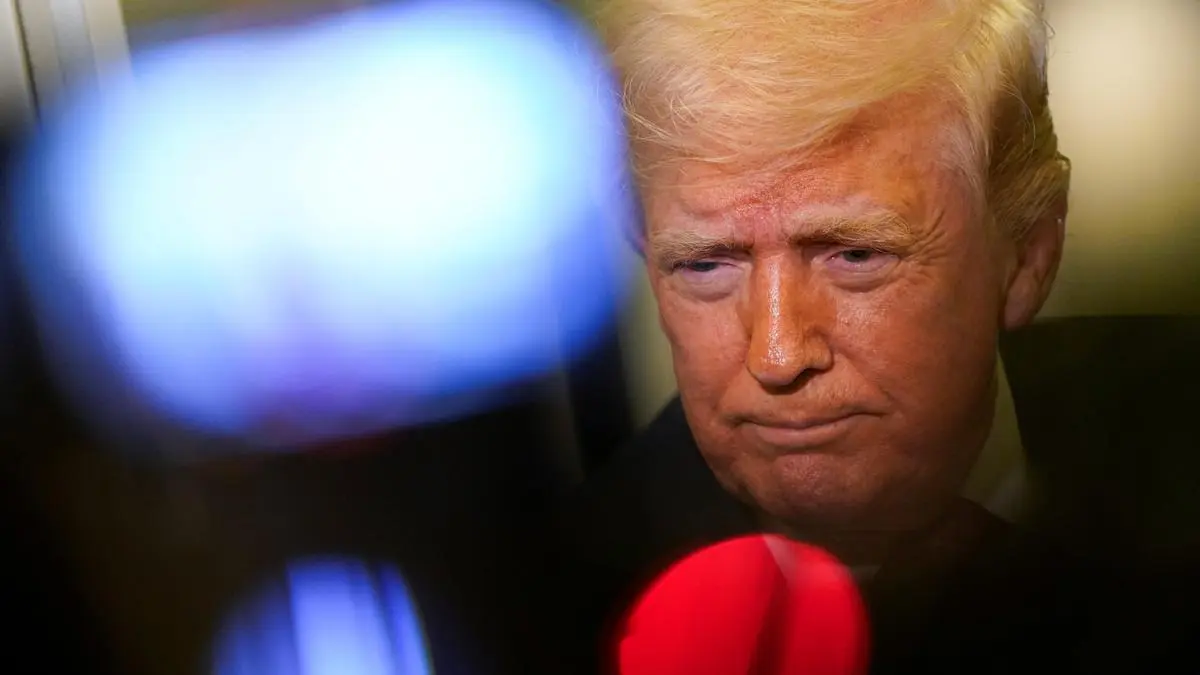
US President Donald Trump has told his aides that he’s willing to end the military operation against Iran even if the Strait of Hormuz remains largely closed, leaving the campaign to reopen it for a later date, the Wall Street Journal reported, citing administration officials.

In recent days, Trump and his aides assessed that a mission to pry open the chokepoint would push the conflict beyond his timeline of four to six weeks, the Daily said in a report.

According to the report, Trump decided that the US should achieve its main goals of hobbling Iran’s navy and its missile stocks and wind down current hostilities while pressuring Tehran diplomatically to resume the free flow of trade.

If that fails, Washington would press allies in Europe and the Gulf to take the lead on reopening the strait, the WSJ said, quoting officials.

At a media briefing on Monday, White House Press Secretary Karoline Leavitt said the president and the chief of the Pentagon have always stated a four to six-week estimated timeline for the military operation.

“We’re on day 30 today,” she said.

Leavitt also indicated that the Arab countries can be asked to share the burden of the military operation in Iran.

“I think it’s something the president would be quite interested in. I won’t get ahead of him on that but certainly it’s an idea, something that I think you’ll hear more from him on,” she said to a question of whether countries such as Kuwait, the UAE and Saudi Arabia should pick up the tab for the Iran operation.

Starting February 28, the US and Israel launched joint strikes against Iran, which in turn retaliated, spreading the war to the entire Gulf region. The Strait of Hormuz is a strategically important choke point for the world’s energy supplies.

The strait, a narrow shipping lane that connects the Persian Gulf with the Indian Ocean, remains effectively closed, bringing to a near halt the transit of hundreds of vessels per day, including container, dry bulk and liquid cargo ships.

Published on March 31, 2026


Source link

Himanta Biswa Sarma says Assam sees harmony under BJP, targets Congress ahead of polls

Himanta Biswa Sarma says Assam sees harmony under BJP, targets Congress ahead of polls


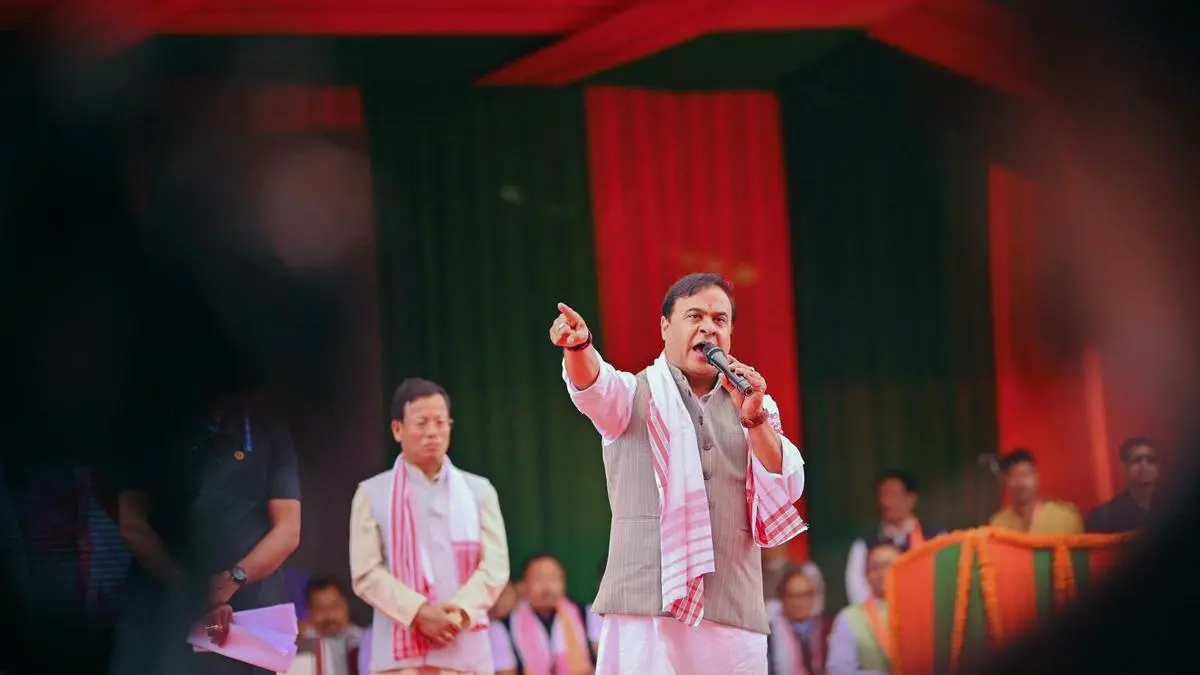
Assam Chief Minister Himanta Biswa Sarma, speaks during a campaign rally for the Assam assembly elections at Naoboicha, in Lakhimpur on Monday.
| Photo Credit:
ANI

Assam Chief Minister Himanta Biswa Sarma on Monday said different communities were living in harmony as the BJP was in power in the state.

Addressing back-to-back election rallies in Dhemaji, Majuli, Naoboicha and Sadiya, he accused the Congress of working only for ‘Bangladeshi-Miyas’, while ignoring the welfare of the indigenous population.

“We want to work for the people living in Assam — the Assamese, Bengali and Hindi speaking people, Gorkhas, tribals, all communities. All the communities are in harmony because the BJP is in power,” he said.

Sarma alleged that the Congress appeased ‘Bangladeshi Miyas’ when it was in power, while the BJP is working for the welfare of the indigenous community.

“You can see for yourself now that after the BJP came to power, the Bangladeshi-Miyas have been cut to size. During this term, we broke the hands and legs of the Bangladeshi-Miyas politically; next time we will break their backbone so that they cannot live peacefully in Assam,” he said.

‘Miya’ is originally a pejorative term used for Bengali-speaking Muslims in Assam, and they are usually identified as immigrants from what is now Bangladesh. In recent years, activists from the community have started adopting the term as a gesture of defiance.

Sarma claimed that he is the first chief minister to have visited the river-island of Majuli at least 15 times.

“Development of Majuli started in 2016, when the BJP came to power in the state. Congress did not want to come here as they didn’t want to solve the problems,” he said.

The CM also took a jibe at the Congress’s election slogan of ‘Natun Bor Asom’ (new greater Assam).

“We want our ‘Bor Asom’ on the ideals of Sankardev and Chaolung Sukapha, not a ‘Natun Bor Asom’ of Bangladeshi-Miyas,” he said.

Elections for the 126-member assembly will be held on April 9, with counting of votes scheduled on May 4.

Published on March 30, 2026


Source link

War in West Asia: Medical device makers call for measures to ease ‘working capital distress’

War in West Asia: Medical device makers call for measures to ease ‘working capital distress’


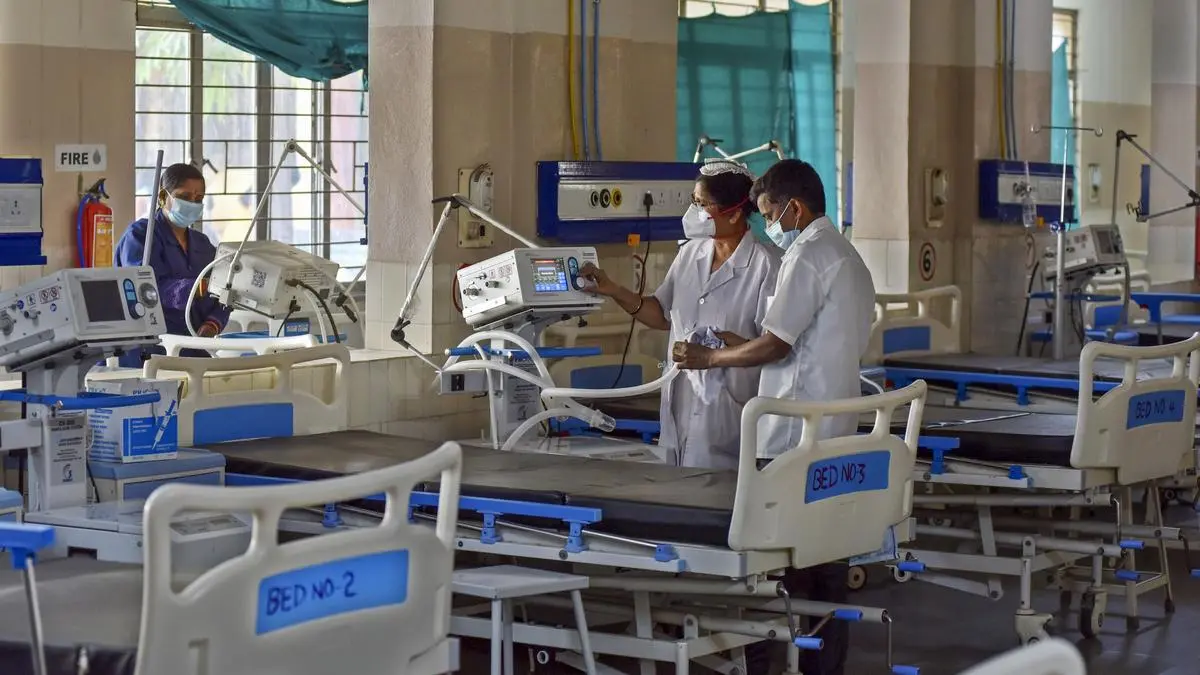
The war in West Asia has escalated input costs and was straining working capital for manufacturers of essential medical disposables, said the Association of Indian Medical Device Industry (Aimed), in a letter to the Union Finance Ministry.

They called for fast-tracking of GST refunds, or a temporary customs duty rebate on the import of raw materials or components, to ease the pressure faced by companies.

Manufacturers are reporting unprecedented increases in key raw materials and energy inputs, the letter said, outlining a “nearly 50 percent rise in critical plastics used in syringes, IV sets, catheters, and examination gloves; over 20 percent increase in packaging materials and diesel-based self-generated power and doubling of Adani PNG gas prices, widely used for process heating and captive power.”

Stressing that there were no shortages in the market presently, the letter said, shipment delays of one-to- three weeks were manageable, but the prolonged nature of disruptions could result in production slowdowns and expose the industry “to opportunistic pricing by dominant raw material suppliers.”

“India remains dependent on imports for specialized, medical-grade polymers that meet stringent regulatory standards. Any sustained disruption directly threatens manufacturing continuity and the stability of hospital supplies,” Aimed said.

“There is currently no shortage of syringes or other medical disposables, and there is no cause for public concern. But manufacturers are experiencing “huge cost escalations; longer lead times; elevated freight and logistics costs,” the letter said. Companies have already increased ex-factory prices by about 10-20 percent, Aimed spokesperson Rajiv Nath told businessline.

Working capital distress

The association called for fast-tracking of GST Refunds to ease “acute working capital distress”.  The industry continues to face severe working capital blocks due to the inverted duty structure, the letter explained, pointing to “18 per cent GST on inputs, versus 5 per cent GST on finished medical devices.”

This resulted in “large accumulations of unutilized input tax credit and increased bank borrowings,” they said, adding that Government may have assured that excess GST would be refunded in seven days, but “refunds from the GST rate reduction last year remain pending in most cases. This delay is now becoming unsustainable amid rising input costs,” the letter said.

The single step of immediately clearing pending GST refunds and adherence to the seven-day timeline will provide “critical liquidity relief to manufacturers,” it said.

The association urged the Centre to avoid reducing import duties on finished medical devices. “Any reduction in import duties at this stage would severely disadvantage domestic manufacturers already under stress and could lead to a surge in low-priced imports, undermining the progress made under Make in India and the Production Linked Manufacturing Ecosystem,” it said.

Aimed suggested a temporary and targeted, possibly three-month, customs duty rebate of “2.5 per cent on raw material imports, and 5 per cent on component imports for medical devices under Chapter 90..” the letter said.

Published on March 30, 2026


Source link

Complaints against health insurance claims totalled around 74,700 in 11 months

Complaints against health insurance claims totalled around 74,700 in 11 months


Complaints against health insurance claims in the 11 months of the current fiscal year have surpassed numbers of full FY25 by 14.5 per cent and around 55 per cent of FY24, data presented by the Finance Ministry in Lok Sabha on Monday showed.

“A total of 47,658 complaints during FY 2023-24, 64,365 complaints during FY 2024-25 and 73,729 complaints during FY 2025-26 up to February 2026, pertaining to various reasons in health insurance claims were registered on the ‘Bima Bharosa’ portal,” Minister of State in the Finance Pankaj Chaudhary said in a written reply. It may be noted that, post Covid, the premium for health insurance in many cases has more than doubled, while complaints about claim rejections are rising at an alarming rate.

Mandatory Specifics

Meanwhile, according to Chaudhary, Insurance Regulatory and Development Authority of India (IRDAI) has informed that Insurers are mandated to communicate specific reasons for rejection to the claimant, with reference to the relevant policy terms and conditions.

It is also stipulated that no claim shall be repudiated without the approval of the Product Management Committee (PMC) or its three-member sub-group, the Claims Review Committee (CRC) of the insurer.

“Among other reasons, claims may be rejected due to exclusion clauses and conditions in the policy, including cases where hospitalization is not required and the treatment falls under out-patient (OPD) services,” he said. Further, with regard to complaints, it is submitted that there is no specific categorization capturing instances of rejection of hospitalization claims on the ground that the treatment has been categorized as an out-patient service. 

Proper Governance

According to the Minister, IRDAI has informed that health insurance policy terms and conditions only provide for criteria for admissibility of medical expenses incurred by the policyholder under the policy. He also informed that the regulator has introduced several measures to bring in transparency, and fairness in the health insurance claims settlement processes.

“In case of repudiation, rejection, or partial disallowance, the insurer shall communicate detailed reasons with reference to specific policy terms. Aggrieved claimants may approach the insurer’s Grievance Redressal Officer (GRO), who shall resolve the complaint within 14 days. If still dissatisfied, the claimant may approach the Insurance Ombudsman for adjudication. Non-compliance with the Ombudsman’s award attracts a penalty of ₹5,000 per day,” Chaudhary said.

He also informed that amendment in Insurance Law empowers IRDAI to issue directions to insurers and insurance intermediaries in the public interest, to protect policyholders, prevent mismanagement, and ensure proper governance, including ordering disgorgement of wrongful gains, and bringing insurance intermediaries under the ambit of this provision. Penalty limit has also been enhanced.

Published on March 30, 2026


Source link

YouTube
Instagram
WhatsApp