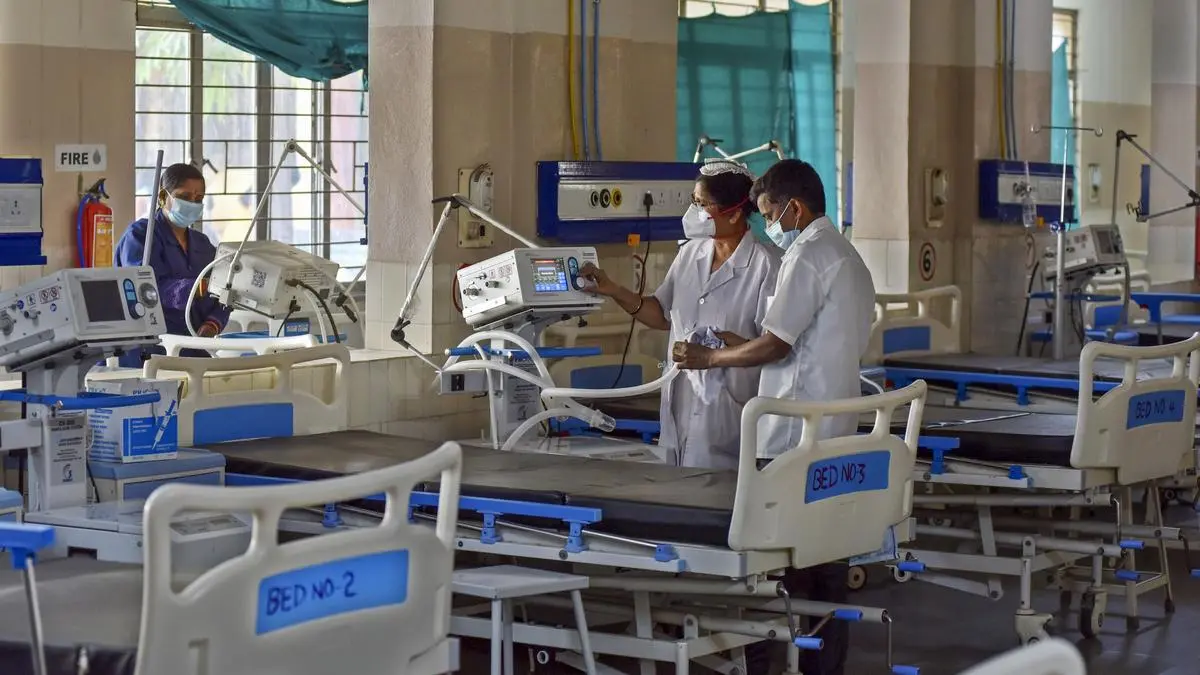
Complaints against health insurance claims totalled around 74,700 in 11 months

Complaints against health insurance claims totalled around 74,700 in 11 months


Complaints against health insurance claims in the 11 months of the current fiscal year have surpassed numbers of full FY25 by 14.5 per cent and around 55 per cent of FY24, data presented by the Finance Ministry in Lok Sabha on Monday showed.

“A total of 47,658 complaints during FY 2023-24, 64,365 complaints during FY 2024-25 and 73,729 complaints during FY 2025-26 up to February 2026, pertaining to various reasons in health insurance claims were registered on the ‘Bima Bharosa’ portal,” Minister of State in the Finance Pankaj Chaudhary said in a written reply. It may be noted that, post Covid, the premium for health insurance in many cases has more than doubled, while complaints about claim rejections are rising at an alarming rate.

Mandatory Specifics

Meanwhile, according to Chaudhary, Insurance Regulatory and Development Authority of India (IRDAI) has informed that Insurers are mandated to communicate specific reasons for rejection to the claimant, with reference to the relevant policy terms and conditions.

It is also stipulated that no claim shall be repudiated without the approval of the Product Management Committee (PMC) or its three-member sub-group, the Claims Review Committee (CRC) of the insurer.

“Among other reasons, claims may be rejected due to exclusion clauses and conditions in the policy, including cases where hospitalization is not required and the treatment falls under out-patient (OPD) services,” he said. Further, with regard to complaints, it is submitted that there is no specific categorization capturing instances of rejection of hospitalization claims on the ground that the treatment has been categorized as an out-patient service. 

Proper Governance

According to the Minister, IRDAI has informed that health insurance policy terms and conditions only provide for criteria for admissibility of medical expenses incurred by the policyholder under the policy. He also informed that the regulator has introduced several measures to bring in transparency, and fairness in the health insurance claims settlement processes.

“In case of repudiation, rejection, or partial disallowance, the insurer shall communicate detailed reasons with reference to specific policy terms. Aggrieved claimants may approach the insurer’s Grievance Redressal Officer (GRO), who shall resolve the complaint within 14 days. If still dissatisfied, the claimant may approach the Insurance Ombudsman for adjudication. Non-compliance with the Ombudsman’s award attracts a penalty of ₹5,000 per day,” Chaudhary said.

He also informed that amendment in Insurance Law empowers IRDAI to issue directions to insurers and insurance intermediaries in the public interest, to protect policyholders, prevent mismanagement, and ensure proper governance, including ordering disgorgement of wrongful gains, and bringing insurance intermediaries under the ambit of this provision. Penalty limit has also been enhanced.

Published on March 30, 2026


Source link

Rupee slide: 0 million NOP limit should be imposed only on banks’ trading book, say SBI economists

Rupee slide: $100 million NOP limit should be imposed only on banks’ trading book, say SBI economists


The $100 million Net Open Position – Indian Rupee (NOP-INR) limit in the onshore deliverable market prescribed by the RBI for Banks’ authorised to deal in foreign exchange should be imposed only on their trading book and not on whole bank book level as it creates operational challenges, according to SBI’s economic research department.

Further, given that much of the pressure on the rupee can have a two-way pass through the debt markets, the RBI needs to concomitantly explore the probability of conducting “Operation Twist” that pushes up the short-term yield while sobering the yield on long term papers.

Referring to the NOP-INR limit, which is aimed at reducing large bets against the Indian currency and preventing sharp movements, the Bank’s economists noted that the attempt to rationalize the open position for banks by the RBI though useful is likely to have created a significant divergence of the Onshore and Offshore markets.

“Indian banks (both public sector banks/PSBs and private sector banks/PVBs) are generally long onshore and short offshore, while foreign banks exhibit a contra trend. As banks attempt to unwind their positions, liquidity shortages are likely to emerge, creating a vicious cycle where offshore premiums could witness sharp rise.

“Thus, the NDF (non-deliverable forward) premia for 1 year shot up on Monday to 4.19% (from 3.43% yesterday) while 1 month premia spiked from 0.33% to 0.67%, and the NDF /Offshore rates were quoting at Rs 98.41 today, we believe the $100 mn limit should be imposed on the trading book only and not on whole bank book level as it creates operational challenges,” said Soumya Kanti Ghosh, Group Chief Economic Advisor, SBI, in the Bank’s Ecowrap report

This is also important as many FPIs and some FDI players would be taking out their funds in the present situation (reallocation / profit booking) and would be placing genuine demands on banks to fulfil on order matching basis.

On “Operation Twist”, SBI economists said it will ensure various reference rates remain within the prescribed bands, aligned with policy rate in calibrated manners. They also believe liquidity could be simultaneously modulated to ensure Rupee also gets support.

The Economists noted that interestingly, the Indian Rupee depreciated by 6.4% between 2nd April 2025 to 27th February 2026 (period 1 /the West Asia war started on 28th February). At the same time the dollar index also depreciated by 6% during the same period.

“This was the time when most currencies were appreciating against the dollar but not the rupee and thus perhaps the argument of using rupee as a shock absorber may have been overblown.

“The rupee depreciation post 27th February (period 2) is in fact in line with other currencies, and in fact better than currencies which appreciated significantly in period 1 indicating that in an uncertain world pushing the limits on rupee depreciation as a shock absorber does not hold beyond an inflection point,” they said.

Published on March 30, 2026



Source link

IRDAI mandates Ind AS for insurers from April 2026 to boost transparency

IRDAI mandates Ind AS for insurers from April 2026 to boost transparency


The implementation will apply to all categories of insurers, including Life, General, Stand-Alone Health, and Reinsurers
| Photo Credit:
iStockphoto

The Insurance Regulatory and Development Authority of India (IRDAI) has introduced the Indian Accounting Standards (Ind AS) – based Financial Reporting Framework for the Insurance Sector from April 1, 2026.

The Authority, in its 135th meeting held on Monday, has approved the Insurance Regulatory and Development Authority of India (Actuarial, Finance and Investment Functions of Insurers) (Amendment) Regulations, 2026.

These amendments mandate insurers to prepare and present financial statements in accordance with applicable Indian Accounting Standards (Ind AS), with effect from 1st April 2026.

The implementation will apply to all categories of insurers, including Life, General, Stand-Alone Health, and Reinsurers.

Aiming Consistency

The amendment approved today sets out the regulatory framework governing the recognition, measurement, presentation and disclosure of financial statements under Ind AS. The introduction of Ind AS aims to enhance consistency, transparency, and comparability in financial reporting across the insurance sector, in line with globally accepted standards.

The regulations provide for parallel reporting for a period of two years, or such period as may be specified by the authority, comprising financial statements prepared in accordance with Ind AS alongside financial information under the existing accounting framework.

“This approach is intended to enable insurers to stabilise processes and controls, while allowing stakeholders to understand and assess the impact of the new accounting framework. To facilitate a smooth transition, for insurers facing challenges in immediately shifting to Ind AS, a provision has been made to grant forbearance for one year. During this period, such insurers shall continue to submit Ind AS-based financial information also to the Authority,’’ IRDAI said in a release.

Modernising Accounting

The framework has been developed after extensive stakeholder consultations, including consideration of public comments on the Exposure Draft and engagement with insurers and industry professionals.

The Institute of Chartered Accountants of India (ICAI) and the Institute of Actuaries of India (IAI) welcomed the adoption of Ind AS and expressed their readiness to support insurers, auditing professionals, and actuaries. These amendments represent a significant step towards modernising the insurance sector’s financial reporting framework in India.

By aligning with globally accepted accounting standards, the regulations are expected to enhance transparency, credibility, and regulatory oversight, while safeguarding policyholder interests and supporting the development of a robust and globally aligned insurance ecosystem.

Published on March 30, 2026


Source link

XED withdraws GIFT City IPO amid weak demand and global uncertainty

XED withdraws GIFT City IPO amid weak demand and global uncertainty


The company cited KYC-related hurdles, muted institutional demand, and global geopolitical tensions as key reasons for the decision.

In a significant setback to listing momentum at the GIFT International Financial Services Centre (IFSC) in Gujarat, Mumbai-based XED Executive Development Ltd has withdrawn its proposed $12 million Initial public offering (IPO) “due to tepid response from investors amidst global crisis.”

IPO withdrawn amid weak market conditions

The company, which was poised to become the first issuer from GIFT City’s International Financial Services Centre (IFSC) to go public, informed the authorities and exchanges of its decision to pull back the offer. The shares were proposed for listing on the NSE International Exchange (NSE IX) and the India International Exchange (India INX). Founded in 2018, XED Executive Development specializes in high-touch executive education programs.

“The Company’s decision to withdraw the current IPO offering prior to closing was driven by a combination of factors beyond its control. Despite strong retail interest in the offering, a significant number of prospective retail applicants were unable to complete their bids within the offering window due to KYC-related procedural bottlenecks, resulting in a material gap between expressed interest and actual subscriptions. On the institutional side, response was muted reflecting the prevailing global risk-off sentiment, with institutional investors exercising heightened caution in the context of ongoing geopolitical uncertainties,” it stated.

Concerns over post-listing performance

“While the Company had the ability to proceed with a listing at a subscription level above the minimum threshold, the Board and management took the considered view that doing so under current market conditions — characterised by elevated volatility and compressed liquidity — carried a meaningful risk of post-listing price pressure given the relatively limited float. Proceeding in such an environment would not have served the best interests of incoming shareholders or the long-term market standing of the Company,” The company added.

Earlier delay linked to Gulf tensions

The withdrawal follows an earlier delay in the IPO timeline. On March 9, citing “prevailing uncertainties” in the Gulf region, XED had rescheduled its offering to March 16–24 from an initial March 6 launch. The postponement came amid rising geopolitical tensions involving Iran and the US-Israel axis, which the company said could have heightened market volatility and disrupted participation from global investors.

Dollar-denominated IPO under IFSCA framework

The proposed IPO, priced at $10–10.5 per share, was structured as a dollar-denominated offering through GIFT City, targeting overseas investors under the International Financial Services Centres Authority (IFSCA) framework.

Published on March 30, 2026


Source link

Equities end FY26 with worst performance in 6 years

Equities end FY26 with worst performance in 6 years


Markets ended the final session of FY2026 sharply lower on Monday, with the Nifty 50 falling 488 points or 2.14 per cent — marking a loss of 5.05 per cent for the full financial year — as the US-Iran conflict entered its fifth week without any credible pathway to resolution, and crude oil holding above $100 a barrel.

It was the biggest annual decline for equities in six years with the Nifty50 ending nearly at a one-year low and the Sensex at a 2-year low. The Sensex fell 1,636 points. India VIX surged to an intraday high of 28.79 before settling near 30.

Market pressure deepens as indices close FY2026 on a weak note

The Nifty opened gap-down at 22,549, briefly touched 22,714, then slid to a session low of 22,283. This was the eighth session in the March expiry series where the index closed with losses exceeding 1 per cent.

Hariprasad K, SEBI-registered Research Analyst and Founder of Livelong Wealth, called the decline significant: “The nature of the sell-off indicates a shift beyond technical correction, with broader market psychology now reflecting caution and defensive positioning.” He added that elevated VIX levels “signal heightened fear and expectations of large market swings in the near term… markets are currently driven by uncertainty rather than directional conviction.”

Banking, financials and policy impact hit markets hardest

Banking and financials bore the sharpest brunt. The RBI’s new restrictions on banks’ foreign exchange positions — aimed at curbing rupee speculation — hit treasury-sensitive lenders hard. Nifty PSU Bank and Nifty Financial Services were the top sectoral losers, each falling over 3 per cent. Bajaj Finance dropped 5 per cent, Shriram Finance and State Bank of India fell 3.8 per cent each. All 16 sectoral indices ended in the red, with 442 stocks within the Nifty 500 universe closing in the red.

Sudeep Shah, Head of Technical and Derivatives Research at SBI Securities, flagged the broader market’s relative resilience — midcap and smallcap indices, down 2.5 per cent–3 per cent, have not yet breached their March 23 swing lows unlike frontline indices.

Geopolitical tensions and crude oil drive global concerns

The widening of Iranian strikes, Houthi intervention in the Gulf, and visible US troop buildup deepened escalation fears. Brent crude held between $106 and $109 internationally, while domestic crude appreciated over 3 per cent. Gaurav Garg of Lemonn Markets noted the cascade effect: “Escalating geopolitical tensions…dashed hopes of de-escalation and pushed crude oil prices higher, raising concerns over inflation and macro stability for oil-importing economies like India.”

Among the few bright spots, Hindalco rose 2.5 per cent and Tech Mahindra added 1.7 per cent. Defence counters gained after the Defence Acquisition Council granted Acceptance of Necessity for procurement worth approximately ₹2.38 lakh crore. Gold advanced 0.8 per cent and silver gained over 1 per cent as investors sought defensive cover.

Outlook: cautious FY2027 amid volatility and macro headwinds

Vikrant Chaturvedi of Brickwork Ratings said: “FY2026 underscored the challenges of an uncertain and volatile global macro environment… a sharp crude oil price spike due to supply disruptions in the fourth quarter, driving cost inflation and weighing on corporate margins.” On FY2027, he said: “Equities face continued headwinds, while debt markets should offer relative stability… FY2027 will be a year of selective but constructive performance across asset classes.”

Technically, Nifty’s immediate support sits at 22,200–22,150; a break below could expose 22,000 and then 21,800. Q4 earnings season begins next week, and whether India Inc. has absorbed the geopolitical and energy shock — or whether downgrades follow — will set the market’s direction for the quarter ahead.

Published on March 30, 2026


Source link

Indian govt expects to meet 39 million tonnes of kharif 2026 fertilizer demand

Indian govt expects to meet 39 million tonnes of kharif 2026 fertilizer demand


The actual sales of fertilizers in last kharif season was 36.1 mt
| Photo Credit:
ANI

The Indian government on Monday said that the country has over 18 million tonnes (mt) of fertilizers stock as of now against 14.7 mt in the year-ago period. With increasing availability from domestic production and imports, this year’s kharif demand, estimated at 39 mt, will be met. After the government made available more gas to urea plants with 27 currently in operation, the production has improved from the initial decline.

At the inter-ministerial daily media briefing, Aparna S Sharma, Additional Secretary in Department of Fertilizers, said that as of now the country has 6.2 mt of urea, 2.34 mt of DAP, 1.27 mt of MOP, 8.68 mt of complex stock and more will be available in the coming days as the government will use April-May, considered lean period in demand, to beef up reserves.

According to her, the actual sales of fertilizers in last kharif season was 36.1 mt. Officials data show that it included 19.32 mt of Urea, 4.63 mt of DAP, 1.1 mt of MOP and 8.15 mt of complex.

Daily output up

She said that 27 plants (out of 30) are currently getting gas and the gas supplies have improved significantly — from 60 per cent of average demand after supply disruption to 80 per cent now. She pointed out that the Gulf region accounts for about 30 per cent of India’s import of DAP and urea, each and 50 per cent of liquefied natural gas (LNG), which is the key feedstock to produce the nitrogen fertilizer.

Further, the government said that after the disruption, the per day urea production had dropped by 30,000-35,000 tonne from normal about 80,000 tonner per day in the pre-war period. But, with the increased supply of gas from spot buying, the daily production has reached 67,000 tonne.

Sharma said the government has already sent advisories to States to use alternatives like SSP and TSP for DAP and also has increased sourcing of raw materials from destinations other than Gulf region, including Morocco and Russia. India is negotiating with many countries like Australia, Indonesia, Malaysia, Jordan, Canada, Algeria, Egypt and Togo for sourcing raw materials as well as finished fertilisers, she said.

Supply at 62% of demand

Official sources said that total demand for LNG by India’s urea plants is around 52 MMSCMD, based on their average consumption between September 2025 and February 2026. However, after the government listed fertilizer sector under second priority list in gas allocation, supplies to the urea units were maintained at around 32 MMSCMD, or 62 per cent of their average requirement.

After the government made a demand assessment of 8.56 MMSCMD of LNG during Mar 18-31 for spot buying, 7.31 MMSCMD was purchased, which resulted in gas supply increasing to 39.31 MMSCMD.

Published on March 30, 2026


Source link

YouTube
Instagram
WhatsApp