Naming spree in Hyderabad: A Trump Avenue, Google Street and Microsoft Road

Naming spree in Hyderabad: A Trump Avenue, Google Street and Microsoft Road


 Telangana Chief Minister A Revanth Reddy
| Photo Credit:
SPECIAL ARRANGEMENT

The Telangana government is on a naming spree. The State capital will soon have a Donald Trump Road, a Donald Trump Avenue (US Consulate General office), a Ratan Tata Road, Google Street, a Wipro Junction and a Microsoft Road.

“We have decided to name several landmarks after people like Ratan Tata and US President Donald Trump,” a Chief Minister’s Office statement said.

“The government has decided to name the upcoming greenfield radial road connecting the Nehru Outer Ring Road at Raviryal with the proposed Radial Ring Road (RRR) after Padma Bhushan Ratan Tata, with the interchange at Raviryal already named the ‘Tata Interchange’,” it said.

The road along the United States Consulate General in Hyderabad will be called ‘Donald Trump Avenue’. “We will write to the Union Ministry of External Affairs and the US Embassy, informing them about our proposal,” it said.

Earlier this year, Chief Minister A Revanth Reddy, while addressing the annual US-India Strategic Partnership Forum (USISPF) conclave in New Delhi, had proposed naming important roads in Hyderabad after leading global corporations.

The road along Google’s upcoming campus in the Financial District will be named Google Street, “recognising the global impact and contribution of Google Maps”.

Similarly, a road in the vicinity will be called Microsoft Road, and the junction nearby will be named Wipro Junction.

The State government is also considering dedicating some more roads in honour of distinguished individuals and corporations.

Published on December 7, 2025


Source link

Two-day Global Summit begins in Hyderabad on December 8

Two-day Global Summit begins in Hyderabad on December 8


Hyderabad, Telangana, 06/12/2025: Work in progress at the site of the Telangana Rising Global Summit 2047 at Bharat Future City in Kandukur Mandal, Rangareddy district on Saturday, December 06, 2025, The summit aims to showcase Telangana’s vision for a $3 trillion economy by 2047, with key infrastructure and investment discussions. Photo: NAGARA GOPAL / The Hindu
| Photo Credit:
NAGARA GOPAL

Marking its second anniversary in office, the Congress government in Telangana is all set to organise the two-day Global Summit from December 8 at Bharat Future City, the ‘Fourth City’ that it is promoting along the peripheries of Hyderabad.

Nobel Laureate Abhijit Banerjee, Trump Media & Technology Group Director Eric Swider, World Economic Forum Managing Director Jeremy Jurgens, Nobel Peace Laureate Kailash Satyarthi and Biocon Limited Executive Chairperson Kiran Mazumdar-Shaw, among others. Telangana Governor Jishnu Dev Verma will formally inaugurate the summit in the afternoon.

The State government will release the Telangana Rising 2047 Vision document, outlining its strategy to make the State a $3-trillion economy over the next two decades. The document was prepared in association with NITI Aayog and the ISB.

The State government, however, is concerned about the flight cancellations over the last few days, which could affect delegates’ travel plans. One day ahead of the event, IndiGo cancelled 115 flights.

It created a buzz around the summit, inviting Prime Minister Narendra Modi, several Union Ministers and Chief Ministers of various States. The Chief Minister deputed senior leaders to different State capitals to ask the Chief Ministers over the last week.

The document moots three strategies around CURE (Core Urban Region Economy), PURE (Peri Urban Region) and RARE (Rural Agriculture and Regional Economy).

The Musi Rejuvenation Project and Metro Rail expansion are also part of the development of the CURE strategy, while PURE handles infrastructure projects such as the Regional Ring Road, Greenfield Highway and Bullet Trains, connecting the State capital with Machilipatnam in Andhra Pradesh.

“Our main competitors and role models are China, Japan, South Korea and not Andhra Pradesh and Tamil Nadu. We will attract huge direct investments from abroad in the future,” the Chief Minister said.

“We are expecting huge investments during the two days. Representatives from 44 countries have confirmed their participation. Notably, 46 representatives from various companies are arriving from the United States alone,” an official said.

Sessions covering 27 topics, including aviation, energy, mobility, education and semiconductors, will be held over the two days. Officials have prepared seminar halls to facilitate these discussions.

Oscar-winning film musician M M Keeravani will conduct a concert in the evening. Telangana’s special dance forms, such as Kommu Koya, Banjara, Kolatum, Gussadi, Oggu Dollu, Perini Natyam and Bonalu, will be showcased to the delegates.

Published on December 7, 2025



Source link

Saffron and Shawls: India’s cultural message wrapped in diplomacy

Saffron and Shawls: India’s cultural message wrapped in diplomacy


A gift given by Prime Minister Narendra Modi to Russian President Vladimir Putin, Kashmiri Saffron, locally known as Kong or Zaffran, cultivated in Kashmir, in New Delhi
| Photo Credit:
ANI

During his recent visit to India, Prime Minister Narendra Modi presented Russian President Vladimir Putin with a parcel of premium Kashmiri saffron, among other gifts — the latest example of a long tradition of using Kashmiri products such as saffron and fine shawls to symbolise goodwill between leaders and dignitaries.

In August, Modi gifted a Pashmina shawl encased in a papier-mâché box to the wife of his Japanese counterpart. 

“Gifting saffron or a Kashmiri shawl is both cultural symbolism and political messaging. While it conveys warmth and respect, it also showcases the region’s rich cultural heritage and soft power,” said Shahnawaz Hussain, a Valley-based political analyst.

gifting history

Kashmiri products, particularly handmade Pashmina shawls, have been used as diplomatic gifts since the 16th century under the Mughal Empire. Pashmina — a fine wool taken from the undercoat of the Changthangi goat, a high-altitude breed native to Ladakh and Himalayan regions of Nepal and Tibet — gained prominence during the reign of Emperor Akbar, who held the fabric in high regard.

“The shawl later reached Europe as a luxury item and a symbol of prestige and high status, often used as a gesture of warmth and respect”, said Mohammad Younus Wani, a Kashmir based academic with expertise in Central Asian history. 

Wani said that Napoleon Bonaparte helped popularise it internationally when he presented a Kashmiri Pashmina to his first wife, Josephine, as a token of affection. 

Over the centuries, the practice evolved from gifting royalty to a modern diplomatic tool.

“Once the prerogative of emperors and monarchs, these gifts have become instruments of diplomacy, signalling respect, cultural exchange and mutual appreciation,” Hussain said. 

“The recent presentation of Kashmiri saffron to the Russian head of state highlights this continuity,” he added.

Hussain said that India continues to use saffron, Pashmina and many other handicraft items from across the country as soft-power instruments to promote cultural heritage and artisanal excellence.

For Kashmir’s saffron cultivators and craftsmen, the gesture carries symbolic weight.

“We are happy that our Prime Minister gifted Putin Kashmiri saffron. It is the highest recognition of our heritage crops and handicrafts,” said Ali Mohammad, a saffron cultivator from Pampore.

Published on December 7, 2025



Source link

Fino to sell its corporate BC business, aspires to become universal bank eventually: CEO

Fino to sell its corporate BC business, aspires to become universal bank eventually: CEO


Fino Payments Bank MD, CEO Rishi Gupta

Fino Payments Bank, which became the first payments bank to receive an ‘in-principle approval’ to convert to a small finance bank (SFB) on Friday, will sell its corporate business correspondent business (BC) going ahead, MD & CEO Rishi Gupta told businessline . The sale is being done to meet the Reserve Bank of India’s (RBI) SFB licensing guidelines.

“There are a lot of operational things which relate to getting people, technology operations and branches right. Then there are some corporate action at holding company level. We have a corporate BC business, which we can’t do under SFB structure so we will have to hive off. Right now, we intend to sell off this business instead of making it a group entity,” Gupta said, adding that the entity expects to receive final approval from the RBI over 12-18 months.

Through its BC network of around 15,000 touch points, Fino provides services to other partner banks for account opening, cash withdrawal and related services. In H1FY26, this vertical accounted for 8 per cent of the total revenue.

Fino Payments Bank will re-brand itself as Fino SFB post conversion and double its branch network from 120 currently, over the next 2-3 years, and hire 500-600 employees in the initial years of becoming a SFB.

Core business, universal bank

Gupta said that Fino’s ability to raise liabilities is already proven in a way, with low-cost current account and savings account (CASA) deposit base standing at ₹2,300 crore as on Q2FY26.

“We do ₹700 crore deposit mobilisation each year and will continue to build on that because of our wide distribution network,” he said. Fino will be able to source loans from its merchants and focus on selling secured loans like loan against property, gold loan and affordable housing in the initial phase. MSME loans, two-wheeler loans and credit cards can be considered in the later stage, said Gupta, ruling out the possibility of selling microfinance loans.

“We are meeting people to fulfil key roles on credit side for underwriting, credit risk, retail and branch banking, among others,” Gupta said. He added that the entity currently does not require or planning to raise fresh capital, but did not rule out its possibility to aid growth.

When asked whether Fino aspires to become an universal bank, Gupta said: “Why would we not look at universal bank license. It is too pre-mature at this stage, but regulatory guidelines do allow SFBs to convert to universal bank after meeting certain criteria. At an appropriate time, we will look at it. Aspiration is there, but currently there is no activity on that front but whatever we do, it will be done with that purpose,” he said.

Published on December 7, 2025



Source link

निवेश करने से पहले जान लें मंथली बनाम लंपसम SIP का रिटर्न गेम, वरना हो सकता है भारी नुकसान

निवेश करने से पहले जान लें मंथली बनाम लंपसम SIP का रिटर्न गेम, वरना हो सकता है भारी नुकसान


Show Quick Read

Key points generated by AI, verified by newsroom

Mutual Fund SIP vs Lumpsum: भारतीय निवेशकों के बीच म्यूचुअल फंड SIP में निवेश विकल्प आज बहुत फेमस होता जा रहा हैं. एसआईपी में लंबे समय तक छोटी-छोटी राशि में निवेश करके एक बड़ा कॉर्पस बनाया जा सकता है. एसआईपी अच्छा रिटर्न देने वाला एक निवेश ऑप्शन के तौर पर जाना जाता है.

इसमें निवेश करने पर सालाना 12 प्रतिशत या उससे ज्यादा रिटर्न भी मिल सकता है. एसआईपी में दो तरीकों से निवेश किया जाता है. एक तो मंथली और दूसरा लंपसम यानी एकमुश्त राशि का निवेश. बहुत से निवेशकों के मन में यह सवाल होता है कि, इन दोनों निवेश विकल्पों में उन्हें कहां ज्यादा रिटर्न मिल सकता है. आइए, इस विषय की जानकारी लेते हैं…..

12 लाख की एकमुश्त SIP का 10 साल बाद रिटर्न

अगर आप एसआईपी में 12 लाख रुपये का निवेश 10 सालों के लिए करते हैं, और इस दौरान 12 फीसदी का सालाना रिटर्न मिलता है, तो अवधि पूरी होने पर आपका निवेश बढ़कर लगभग 37.27 लाख रुपये तक पहुंच जाएगा.  यानी कुल मिलाकर आपको करीब 25.27 लाख रुपये का लाभ होगा. 

मंथली 10,000 रुपये की SIP

अगर कोई निवेशक हर महीने 10,000 रुपये की SIP शुरू करता है और इसे पूरे 10 सालों तक जारी रखता हैं तो, 10 सालों में कुल निवेश 12 लाख रुपए होगा. 12 फीसदी सालाना रिटर्न की गति से यही रकम बढ़कर लगभग 22.40 लाख रुपये पर पहुंच सकती है. यानी करीब 10.40 लाख रुपये का फायदा होगा.

किसमें मिला ज्यादा रिटर्न

निवेशको को मंथली निवेश की तुलना में लंपसम में ज्यादा रिटर्न मिला. जिसके पीछे कंपाउडिंग को होना है. लंपसम निवेश पर शुरू से ही कंपाउडिंग का लाभ मिलता है और रिटर्न भी बढ़ जाता है.    

डिस्क्लेमर: (यहां मुहैया जानकारी सिर्फ़ सूचना हेतु दी जा रही है. यहां बताना जरूरी है कि मार्केट में निवेश बाजार जोखिमों के अधीन है. निवेशक के तौर पर पैसा लगाने से पहले हमेशा एक्सपर्ट से सलाह लें. ABPLive.com की तरफ से किसी को भी पैसा लगाने की यहां कभी भी सलाह नहीं दी जाती है.)

यह भी पढ़ें: दिसंबर की धमाकेदार बिकवाली! पहले हफ्ते में FPI ने निकाले 12,055 करोड़ रुपये


Source link

Loan Approvals: MNRE shares status of solar PV manufacturing chain with FinMin, NBFCs

Loan Approvals: MNRE shares status of solar PV manufacturing chain with FinMin, NBFCs


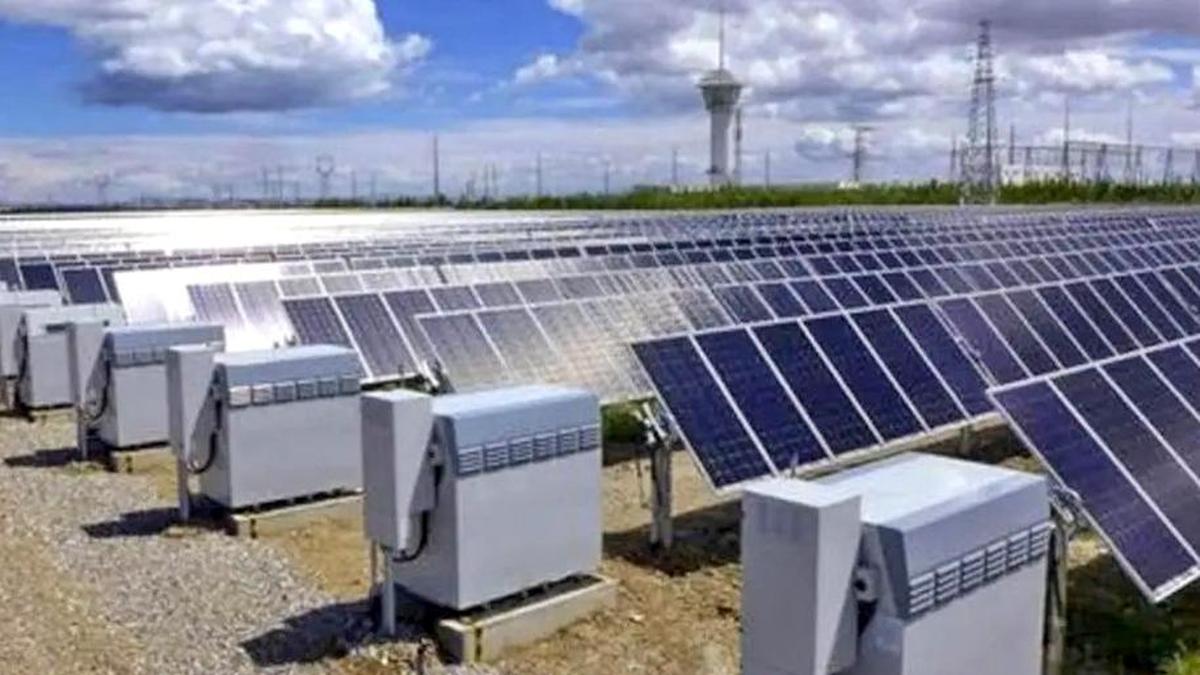
The Ministry of New & Renewable Energy (MNRE) has shared the status of installed domestic manufacturing capacities across various solar PV manufacturing value chains with the Finance Ministry and NBFCs for better evaluation of loan applications for clean energy projects.

MNRE, has circulated to Department of Financial Services and NBFCs like PFC, REC and IREDA, the status of present installed domestic manufacturing capacities across various sectors of solar PV manufacturing, including solar modules and upstream stages like solar cells, ingots-wafers, polysilicon as well as ancillary equipment like solar glass and aluminium frames, the Ministry said.

This will help financial institutions adopt a calibrated and well-informed approach while evaluating proposals for financing any manufacturing facility in the solar PV manufacturing sector and explore as well as expand their solar PV manufacturing portfolio to upstream stages like solar cells, ingots-wafers and polysilicon, it added.

It will also aid in better evaluation of loan applications for solar module ancillaries like solar glass and aluminium frames, etc. as well, rather than being limited to financing solar PV module manufacturing facilities alone.

The MNRE has not issued any advisory to Financial Institutions for stopping lending to either renewable energy power projects or to renewable energy equipment manufacturing facilities, the Ministry said.

The government is committed to make India self-reliant in solar PV manufacturing and establish the country as a major player in the global value chain.

This commitment is supported through a comprehensive set of initiatives, including the PLI Scheme for High Efficiency Solar PV Modules and measures to provide a level playing field for the Indian manufacturers.

The catalytic effect of these interventions has resulted in an expansion in solar module manufacturing capacity, from just 2.3 gigawatt (GW) in 2014 to around 122 GW enlisted in MNRE’s Approved List of Models and Manufacturers (ALMM) at present.

This expansion underscores the success of the Indian solar PV manufacturing story through the collective efforts of industry, various State Governments and the Government of India, while also reinforcing India’s commitment to achieving 500 GW of non-fossil fuel capacity by 2030 and contributing meaningfully to global decarbonization efforts.

The MNRE remains committed to further strengthening the solar manufacturing ecosystem through continued policy support, infrastructure development, and innovation. The Ministry will continue engaging with stakeholders to ensure India’s solar journey remains inclusive, competitive, and future ready.

Published on December 7, 2025


Source link

YouTube
Instagram
WhatsApp