Cong's Tewari introduces bill in LS to free MPs from ‘whip tyranny’

Cong's Tewari introduces bill in LS to free MPs from ‘whip tyranny’


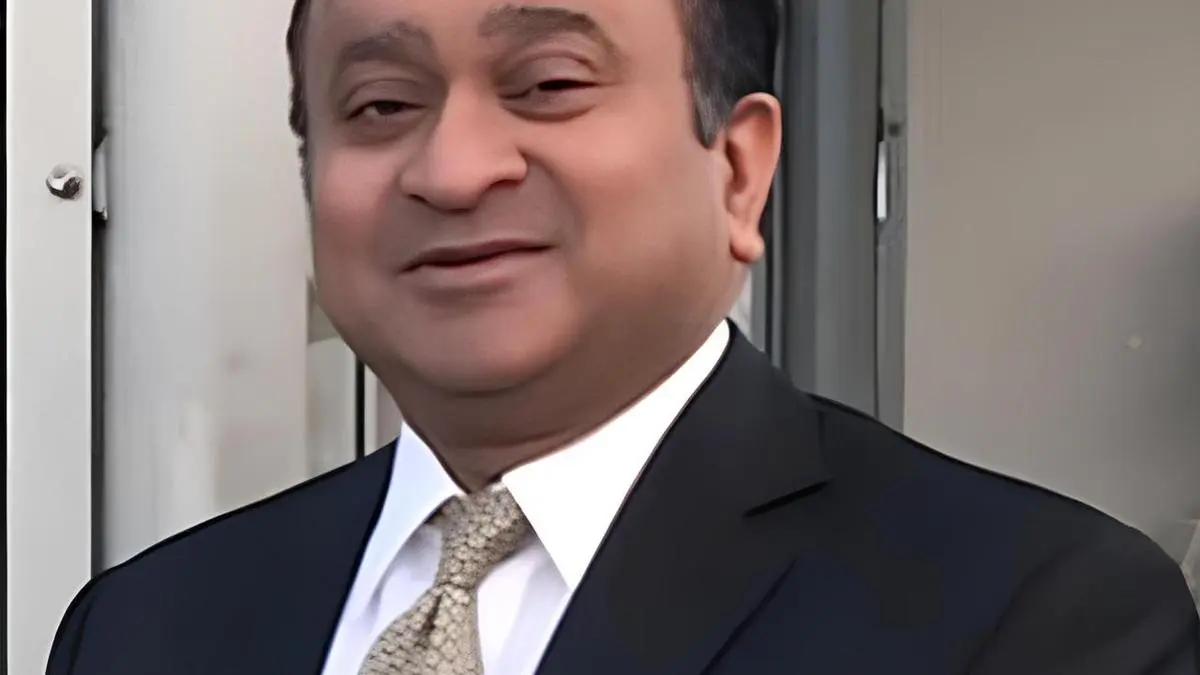
Congress MP Manish Tewari, speaks in the Lok Sabha during the ongoing winter session of Parliament, in New Delhi on Friday
| Photo Credit:
ANI

Congress MP Manish Tewari has introduced a bill in Lok Sabha that seeks to allow parliamentarians to take an independent line in voting on bills and motions other than those affecting the government’s stability in a bid to free them from “whip-driven tyranny” and promote “good lawmaking”.

Tewari, who introduced the private member’s bill on Friday to amend the Anti-Defection Law, said his proposed legislation seeks to flag who has primacy in a democracy — the elector who stands in the sun for hours to elect his or her representative or the political party whose whip the representative becomes the helot of.

The bill, introduced by Tewari for the third time in Lok Sabha after 2010 and 2021, seeks to give parliamentarians the freedom to toe an independent line in voting on bills and motions other than a confidence motion, no-confidence motion, adjournment motion, money bills and financial matters that could affect the stability of a government.

“This bill seeks to return conscience, constituency and common sense to the echelons of the legislature so that an elected representative actually functions as the representative of the people who elected him and not as an instrument of a whip issued by his party, transforming lawmakers into mere lobotomised numbers and dogmatic ciphers responding to a division bell,” Tewari told PTI.

The statement of objects and reasons of the bill state that it proposes to amend the Tenth Schedule to the Constitution with a view to provide for the following – “a member shall incur loss of his membership only when he votes or abstains from voting in the House with regard to a confidence motion, no-confidence motion, adjournment motion, money bill or financial matters, contrary to any direction issued in this behalf by the party to which he belongs to, and in no other case.” “The Chairman or the Speaker of a House shall make an announcement in the House regarding any direction issued by a political party in respect of the aforesaid motions, bill or financial matters, as soon as possible, after such direction has been communicated to him by that political party,” the statement of objects and reasons of the bill said.

“While making such an announcement, the Chairman or the Speaker of House shall also specifically inform the members that the defiance of the direction issued by a political party by any member shall result in automatic cessation of his membership; and a member shall have the right to appeal against cessation of his membership to the Chairman or the Speaker, as the case may be, within a period of fifteen days from the date of such cessation and the appeal shall be disposed of within a period of sixty days from the date of its receipt by the Chairman or the Speaker of a House,” it said.

Speaking about the bill, Tewari said it seeks to achieve twin objectives – the stability of the government is not impacted and parliamentarians and legislators exercise legislative choice.

“What is happening is when Parliament assembles at 2 o’clock in the afternoon, for government business, there is at times not even a quorum in the House. And in fact, there is an unspoken agreement between the treasury benches and the opposition not to raise the quorum issue so that if at all the House is functioning and it is not disrupted, it can continue,” the Congress MP from Chandigarh said.

The reason for this is that parliamentarians do not see a role for themselves in lawmaking which is one of their essential functions, he said.

“So the law is made by some joint secretary in some ministry. It is brought to Parliament, a minister will read out a prepared statement explaining what it is. Then it’s put to a pro forma discussion and then as a consequence of a whip-driven tyranny, those on the Treasury benches invariably vote for it and those on the opposition benches vote against it.

“So good lawmaking where members of Parliament would actually spend time looking at best practices around the world, researching legal precedent and then contributing to the proceedings, that has all become history,” Tewari said.

Asked whether the bill aims to remove the tyranny of the whip and promote good lawmaking, Tewari said “absolutely”.

“It is important to contextualise the bill. From 1950 to 1985, Members of Parliament and members of the state legislatures were subjected to whips by their respective political parties but the whips carried no coercive consequences,” he said.

“In 1967, the ugly spectre of Aaya Ram Gaya Ram started when legislators were crossing the floor with impunity with one legislator in Haryana crossing the floor eight times in one day. The spectre of defections became the bane of Indian democracy. Subsequently, almost 18 years later, then prime minister Rajiv Gandhi brought the anti-defection law as the 10th Schedule to the Constitution of India,” he said.

“It has been 30 years, the anti-defection law, however well intended it may be, has not been able to check the menace of defection. If defections were a retail activity in the 1960s, they became a wholesale activity by the 1990s after the introduction of the anti-defection law and subsequently by the year 2000s, especially after 2014 it has become a mega mall activity where entire parties are bought and sold wholesale, lock, stock and barrel,” Tewari said.

He asserted that the kind of “whip-driven” tyranny that the 10th schedule has inadvertently ended up introducing is not present in any other democracy around the world.

“You have reduced legislators, parliamentarians, parliamentary choice and parliamentary lawmaking to a complete farce- the principal function of Parliament is to appropriate a portion of monies to the government. How can that be done without free choice?” he said.

Tewari also called for setting up a judicial tribunal outside the prescient’s of Parliament consisting of a division bench of the Supreme Court to hear 10th Schedule matters. Appeals of any would lie to a five-judge bench with the provision of a statutory review after that to be heard in open court, he said.

Similarly, for the state legislatures the original appeal must lie to a judicial tribunal consisting of a division bench of the high court with the appeal to a five-judge bench and subsequently to the Supreme Court, Tewari said.

Published on December 7, 2025



Source link

Digitally unified insurance systems can transform India’s healthcare: GIM-WHO study

Digitally unified insurance systems can transform India’s healthcare: GIM-WHO study


India’s shift towards unified Ayushman Bharat Pradhan Mantri Jan Arogya Yojana (PMJAY) offers a unique real-world laboratory for understanding the power of digital integration.

Digitally unified insurance systems can enhance transparency, reduce fragmentation and improve access under India’s evolving subsidised health insurance set-up, according to a new study by the Goa Institute of Management (GIM), WHO and Gates Foundation.

The one-of-its-kind comprehensive analysis conducted in collaboration with Kerala Health department has demonstrated how integrated digital health-financing platforms can reform health systems and advance India’s progress towards Universal Health Coverage (UHC).

As India continues to expand subsidised health insurance schemes, the study highlights why unification of data and processes across different stakeholders is essential for improving service delivery.

The study titled “Health System Reform Powered by Data Integration of Health Financing: Lessons from India”, has been published in the prestigious journal Health Systems and Reform.

“The study provides one-of-its-kind comprehensive analysis of how digitally unified insurance systems can enhance transparency, reduce fragmentation, and improve access under India’s evolving subsidised health insurance setup. In addition to this, it also builds a roadmap for other countries which are in the process of modernising their health financing system,” Arif Raza, Associate Professor, Goa Institute of Management, told PTI.

India’s shift towards unified Ayushman Bharat Pradhan Mantri Jan Arogya Yojana (PMJAY) offers a unique real-world laboratory for understanding the power of digital integration.

During the study, the research team found that prior to PMJAY, the standalone programmes each with different Information and Communication Technology (ICT) platforms, operational processes, and administrative structures had limited efficiency that resulted in weakened fraud detection, slowed system-wide reforms and hindered portability of benefits.

“This fragmentation also made it difficult for the government to monitor outcomes due to lack of visibility in spending patterns and utilisation trends. By applying the scoping-review methodology to synthesise themes across multiple sources, the research team found that unified ICT platform is not just a technological upgrade but a foundational enabler for large-scale health system transformation.

“It enables different stakeholders of health system to connect and create a central data backbone that can support long term reforms,” Raza added.

The researchers found that integrated digital systems allow beneficiaries to access services across state boundaries and facility networks, eliminating the geographical restrictions of earlier schemes.

“Unified platforms allow conducting big-data analytics and using machine-learning tools to detect anomalies and reduce fraud, improving trust and accountability within insurance systems. Consolidated data systems reduce administrative duplication, streamline processes, and support real-time monitoring for policymakers and health-system managers.

“By demonstrating how integrating health-financing systems via unified ICT platforms can propel equity, portability and accountability, our study underscores a pivotal pathway for India — and other similar health-systems — to move beyond fragmented financing toward universal health coverage,” he added.

Published on December 7, 2025



Source link

Goa nightclub blaze: Death toll rises to 25, including 4 tourists and 14 staff members

Goa nightclub blaze: Death toll rises to 25, including 4 tourists and 14 staff members


North Goa: Smoke and flames billow after a fire broke out due to a cylinder blast at a nightclub, in North Goa, after midnight on Sunday, Dec. 7, 2025. At least 23 people were killed in the incident, according to officials. (PTI Photo) (PTI12_07_2025_000028B)
| Photo Credit:

The death toll from the massive fire in a club at Goa’s Arpora has risen to 25, with 4 of them identified as tourists, and 14 others as staff members, Goa Police said on Sunday.The identity of the seven bodies recovered is yet to be established, officials further said. “A massive fire broke out at Birch by Romeo Lane in Arpora, North Goa, resulting in 25 deaths, out of whom 4 confirmed to be tourists, 14 were staff members and identity of 7 is yet to be established.

Six persons are injured and their treatment going on. Cause of fire is yet to ascertained. Police and fire department investigation is in progress. Legal action is being taken,” Police said.

Meanwhile, Prime Minister Narendra Modi has announced an ex-gratia of ₹2 lakh for the next of kin of each deceased in the fire mishap.

The injured will be given ₹50,000 from the Prime Minister’s National Relief Fund (PMNRF). In a post on X, the Prime Minister’s Office (PMO) wrote, “An ex-gratia of ₹2 lakh from PMNRF will be given to the next of kin of each deceased in the mishap in Arpora, Goa. The injured would be given ₹. 50,000.”

Prime Minister Modi expressed deep grief over the fire mishap in Arpora, calling the incident “deeply saddening.” In an X post, PM Modi said, “The fire mishap in Arpora, Goa, is deeply saddening. My thoughts are with all those who have lost their loved ones. May the injured recover at the earliest. Spoke to Goa CM Dr. Pramod Sawant Ji about the situation. The State Government is providing all possible assistance to those affected.”

The blaze at the club-cum-restaurant was reported at midnight on Sunday, and emergency teams rushed to the scene. The injured were taken to nearby hospitals for treatment, while authorities worked through the night to bring the situation under control.

Authorities have begun a detailed investigation into the cause of the fire. Officials said efforts are underway to provide medical support to the injured and assistance to the families of those who died. Earlier, Goa Chief Minister Pramod Sawant ordered an inquiry into the matter. He also extended his heartfelt condolences to the bereaved families.

He said, “The incident is very unfortunate for a tourism state like Goa. The people who run such things illegally, and a fire incident occurred…23 people have lost their lives…The government will conduct an inquiry into this incident. The inquiry will examine the exact cause of the fire, and those found responsible will face the most stringent action under the law.”

Published on December 7, 2025


Source link

India positioned to benefit from rising demand for sustainable rubber, says AIRIA chief

India positioned to benefit from rising demand for sustainable rubber, says AIRIA chief


India is well-positioned to benefit from rising global demand for sustainable rubber, as it is emerging as a key player in meeting the rising offtake, says All-India Rubber Industries Association (AIRIA) President Anay Gupta.

“The country’s rubber industry is undergoing a significant transformation, driven by a focus on sustainability, eco-friendliness, and compliance with international standards,” Gupta told businessline in an online interaction.

The government has launched initiatives such as the Indian Sustainable Natural Rubber (iSNR) and INR Konnect (a web-based platform rubber growers with adopters to develop untapped plantations to increase production) to promote sustainable rubber production and enhance the country’s competitiveness in the global market. 

Meeting EUDR norms

“The iSNR initiative ensures that Indian rubber meets European Union Deforestation Regulation (EUDR) standards, making it an attractive option for global buyers,” said the AIRIA President.

The country’s rubber production is becoming more efficient, with the government providing subsidies, training, and infrastructure support to farmers. It is expanding the area under rubber cultivation, particularly in non-traditional regions, to increase production and meet growing demand.

The rubber industry is innovating, with companies investing in research and development to create eco-friendly and sustainable rubber products. For example, Modi Rubber has launched a bio-based EPDM compound with 40 per cent renewable content, he said.

Demand for rubber is being driven by the automotive sector, with vehicle production projected to grow by 7-9 per cent annually.

Lower output costs

The country’s rubber production costs are lower compared to other countries, making it an attractive destination for global buyers, Gupta said.

Stating that India is well-positioned to benefit from the rising global demand for sustainable rubber, he said, in addition to iSNR and INR Konnect, efforts such as the National Rubber Policy 2019 focus on value chain development, efficient tapping, and market access.

“By integrating sustainability into production and processing, India can significantly strengthen its export competitiveness in the coming years,” said Gupta. 

Per a recent study by The International Rubber Study Group (IRSG), India’s natural rubber (NR) consumption increased at a CAGR of 6.15 per cent during 2020-2024. It was the highest among consuming and producing nations. 

SR’s share

In the first half of 2025, consumption grew by 2.1 per cent. On the other hand, synthetic rubber consumption increased by 5.6 per cent in the first half of 2025. “The primary driver for this growth is the automotive tyre industry, which accounts for 68.9 per cent of synthetic rubber consumption,” said Gupta. 

Synthetic rubber is expanding in segments such as passenger car tyres, industrial products, footwear, hoses, belts, seals, and EPDM-based automotive components.

With rising vehicle production and growing adoption of speciality elastomers, synthetic rubber’s share in India is expected to increase gradually in the coming years, he said.

The global synthetic rubber market continues to show strong growth, the AIRIA president said, adding that with sustainability and performance becoming central to modern tire design, innovations in bio-based and eco-efficient synthetic rubber are further strengthening market growth.

Using blends

He said synthetic rubber, being petroleum-derived, becomes more cost-competitive when crude oil and feedstock prices soften. On the other hand, natural rubber prices remain volatile, influenced by climatic disruptions, tapping cycles, labour shortages, and rising demand from China and other major importing countries. 

“While natural rubber remains indispensable for applications requiring high elasticity such as heavy-duty tyres, synthetic rubber continues to gain pull due to its consistency, durability, and versatility across industrial applications,” said Gupta. 

So, manufacturers are increasingly use blends of natural and synthetic rubber to balance performance and cost, he said. 

Domestic synthetic rubber prices increased to ₹185 a kg during March-August this year compared with ₹176 during October 2024-February 2025. Prices of ribbed smoked sheet (RSS) 4, used by the tyre sector, are currently ruling at ₹184 a kg against ₹192 a year ago, Rubber Board data showed.  

Published on December 7, 2025



Source link

DGCA issues show-cause notice to IndiGo CEO Pieter Elbers, seeks reply in 24 hours

DGCA issues show-cause notice to IndiGo CEO Pieter Elbers, seeks reply in 24 hours


Mumbai

The government has cracked the whip on IndiGo and issued a show cause notice to its chief executive officer Pieter Elbers following large scale disruption of flights over the past few days.

The show cause notice to Elbers was issued on Saturday evening by the Directorate General of Civil Aviation.

The notice said as the CEO of the company Elbers was responsible for ensuring effective management of the airline but failed to make effective arrangements for the conduct of reliable operations and provide requisite facilities to passengers.

IndiGo which is the largest domestic airline has been cancelling hundreds of flights through the week over non availability of pilots. While the government has stepped in to provide relief by capping fares and given certain relaxations to IndiGo to enable it to maintain normal operations, it hasn’t taken the disruptions lightly given that it coincided with high profile visit of Russian president Vladimir Putin.

DGCA said the primary cause of flight disruptions was non provision of enough pilots for smooth implementation of the flight duty and time limitations (FDTL) norms which kicked in from November 1.

The DGCA said such large scale operational failures indicate significant lapses in planning, oversight and resource management and is prime facie non-compliant with provisions of Aircraft Rules 1937 and the FDTL norms. Also the airline failed to provide adequate information and facilities to passengers impacted by the cancellations.

Elbers has been asked to respond within 24 hours why no appropriate enforcement action should be taken against him for violation of the rules.

Published on December 6, 2025


Source link

TN to sign 91 MoUs worth ₹36,660 crore on Sunday at TN Rising Conclave, Madurai

TN to sign 91 MoUs worth ₹36,660 crore on Sunday at TN Rising Conclave, Madurai


Tamil Nadu Chief Minister M.K. Stalin
| Photo Credit:
PERIASAMY M

Tamil Nadu government on Sunday will sign 91 MoUs with various companies that will bring investment of ₹36,660 crore and generate 56,766 new jobs, according to a government press release.

The MoUs will be signed at the Investors Summit to be held in Madurai in which Chief Minister MK Stalin will participate. He will also lay the foundation stone of SIPCOT Industrial Park at Melur.

He will also distribute house site pattas to 63,698 beneficiaries, inaugurate and lay the foundation stone of new works at a cost of ₹3,065 crore.

The Veeramangai Velu Nachiyar flyover, constructed at Melamadai junction at a cost of ₹150 crore, will be inaugurated, the release said.

Published on December 6, 2025


Source link

YouTube
Instagram
WhatsApp