From 200 hotels to 500: Radisson’s blueprint for growth in India

From 200 hotels to 500: Radisson’s blueprint for growth in India


SERVING UP THALAIVA. Chema Basterrechea, global president and COO,
Radisson Hotel group, strikes a pose in this AI image

Last fortnight, the lobbies of the Radisson Blu GRT in Chennai and Radisson Blu Temple Bay at Mamallapuram had swashbuckling filmi posters of the global hospitality chain’s leadership. There was Nikhil Sharma, MD and COO for South Asia, hands on hips, rocking a mundu and crisp white shirt, and Chema Basterrechea, the global president and COO at Radisson Hotel group, also clad in white mundu and shirt and flicking his collars in classic Rajinikanth-style. Everyone from the IT head to HR head and sustainability lead was captured in dramatic poses inspired by Tamil films.

It was a conversation starter for the over 120 general managers and 80-plus owners who had converged in the southern capital to discuss growth strategies to scale up the chain’s presence from over 200 hotels to 500 by 2030. The event, RAD Leads 2026, was also an occasion to reward and applaud performance. “It was an opportunity to thank a lot of people for achieving amazing results,” said Basterrechea.

Nikhil Sharma, MD and COO for South Asia, Radisson Hotel group, strikes a pose in this AI image

Nikhil Sharma, MD and COO for South Asia, Radisson Hotel group, strikes a pose in this AI image

For those tracking the hotel sector for long, the 500 mark took one back a decade, when the race among the chains was to touch the 100 mark in India. Now, the race is to breach the psychological 500 mark (India’s Taj hotels is inching there with 388 properties and targets 700 by 2030). It’s a magical mark, for sure, for an industry that hit the doldrums during Covid but has been on a resurgence in the last couple of years and boldly building more supply. Overall, the industry is expected to add 1.14 lakh branded rooms by 2030, according to consultancy firm Hotelivate. “We have maintained a steady momentum with 14 openings in 2025 and additional hotels already opening in 2026, and we expect to cross 150 operational hotels soon,” says Sharma. The chain has 141 operating hotels, plus 91 in the pipeline.

But numbers tell only half the story. Where the hotels are expanding, which brands they are betting on, whether the growth is coming from conversions or through greenfield properties… are all significant factors. Sharma says a key growth driver will be expansion in tier 2 and 3 cities. “We will also continue to leverage conversion-led growth and flexible development models, which enable faster expansion and efficient capital deployment.” He said another key strategy would be to tap emerging demand segments, including leisure destinations, spiritual tourism circuits, and industrial hubs. The growing investor interest in hospitality as an asset class would also drive growth, he said.

In a competitive landscape, guest experience, employee experience and owner experience all matter; Radisson’s Chennai meet touched on all three. Said Basterrechea, “The hotels and companies that will make a difference are the ones that are ready for the present as well as the future. So we will continue to invest in technology and in people, because the share of the market can only be earned by doing better than the others.”

Interestingly, the Belgium-headquartered chain had even invited owners whose properties weren’t sporting the Radisson flag yet — for instance, the founders of Nala hotel, in Namakkal, who were soaking in the experience. “We will be converting to a Radisson Individuals six months from now. Right now, we are renovating,” said Lakshminarmadha Sureshkumar. Many of the owners at the event said it was Radisson’s flexible approach (no insistence on culturally irrelevant brand standards) that led them to sign up with the chain.

Globally Radisson has 10 distinctive brands — most have arrived in India, except for Prize by Radisson and the art’otel. “We continue to evaluate opportunities to introduce brands in India,” Sharma says.

Radisson has an interesting ownership structure. In 2018, the Belgian chain was acquired by Chinese conglomerate Jin Jiang International (it owns the EMEA and APAC business), while Choice Hotels acquired the Americas business in 2022. Has it made any difference? “The global ownership has strengthened our scale, access to capital, and global synergies, while our strategy in India has remained focused on growth,” says Sharma.

The industry is roaring with 80 per cent occupancy in cities like Delhi, and average daily rates are climbing sharply. But there are red flags. Hotelivate notes that frenetic building could lead to oversupply in smaller towns and a rate war. Geopolitics is a worry too. But as Basterrechea says, if there is one thing the hotel industry learnt during Covid, it was to be prepared for any crisis. “We do simulation exercises to handle any scenario,” he says.

(The writer was at RADS LEADS, in Chennai, at the invitation of Radisson Hotel Group)

More Like This

Published on March 30, 2026



Source link

Iran warns US against ground invasion as regional diplomats seek end to war

Iran warns US against ground invasion as regional diplomats seek end to war


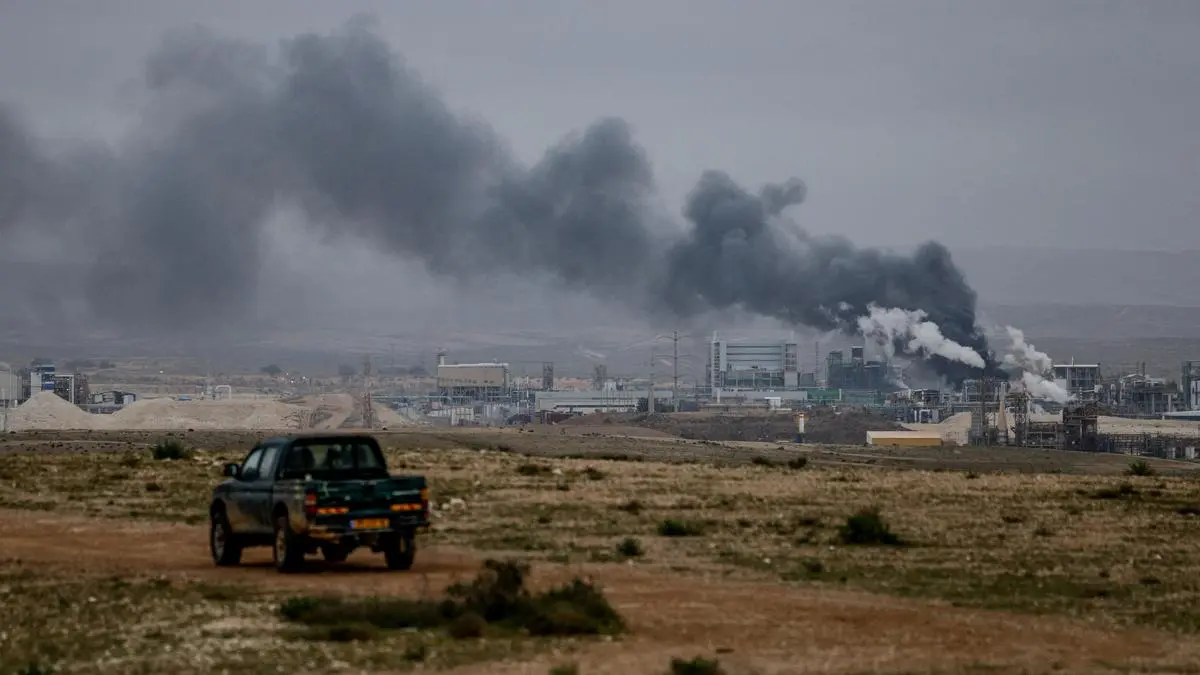
A top Iranian official warned the US against a ground invasion, saying American troops would be set “on fire,” as regional diplomats gathered in Pakistan on Sunday in a push to broker an end to the monthlong war.

Iran’s parliament speaker, Mohammad Bagher Qalibaf, dismissed weekend talks as a cover while the US dispatches additional troops to the Middle East. He said Iran was prepared to confront any American forces on its soil and would respond harshly against both US troops and Washington’s regional allies, according to Iranian state media.

The remarks came as Pakistan said the foreign ministers of Saudi Arabia, Turkiye and Egypt were holding talks in Islamabad without US or Israeli participation. Pakistani Prime Minister Shehbaz Sharif earlier said he and Iranian President Masoud Pezeshkian had held “extensive discussions” on the regional hostilities.

Yet there were few signs of progress as Israel and the US kept up strikes on Iran, and Tehran responded by firing missiles and drones across the region.

More than 3,000 people have been killed throughout the month-long war that began with US and Israeli strikes on Iran, triggering Iran’s attacks on Israel and neighbouring Gulf Arab states.

Israel announced waves of incoming strikes from Iran on Sunday, and explosions could be heard throughout Tehran.

Mideast leaders try to break impasse at weekend talks

Egypt’s Badr Abdelatty, Turkiye’s Hakan Fidan and Saudi Arabia’s Prince Faisal Bin Farhan were in Islamabad as part of talks scheduled days after the US offered Iran a 15-point “action list” as a framework for a possible peace deal. Abdelatty said the meetings were aimed at opening a “direct dialogue” between the US and Iran, which have largely communicated through mediators during the war.

Yet during the talks, Iran has eased some restrictions on commercial ships passing through the Strait of Hormuz. It agreed late Saturday to allow 20 more Pakistani-flagged vessels to transit the critical passageway, Pakistani officials said, adding to the select few it has let through as Iran works to choke but not cut off the strait entirely.

The weekend provided little sign of the talks narrowing the disconnect between the US and Iran.

US officials have insisted the war may be nearing an inflexion point, but Iranian leaders continue to publicly reject negotiations.

To the contrary, the United States has dispatched thousands of additional Marines and paratroopers to the region. And the Iran-backed Houthis, who govern parts of Yemen, announced their long-awaited entry into the war, launching missiles toward what they called “sensitive Israeli military sites” for the first time on Saturday.

Despite the deployments, US Secretary of State Marco Rubio said on Friday that Washington “can achieve all of our objectives without ground troops” as domestic opposition grows to expanding the war to a potential ground invasion, including among Republicans.

Yet Iranian officials have rejected the US framework and, in public, dismissed the idea of negotiating under pressure. Still, Press TV, the English-language arm of Iran’s state broadcaster, reported last week that Tehran drafted its own five-point proposal, citing an anonymous official. The plan reportedly called for a halt to killing Iranian officials, guarantees against future attacks, reparations and Iran’s “exercise of sovereignty over the Strait of Hormuz.”

Tehran threatens retaliatory strikes on Israeli and US universities

Iran on Sunday warned of additional escalation after Israeli airstrikes hit several universities, including ones that Israel claimed were used for nuclear research and development.

The paramilitary Revolutionary Guard warned in a statement that Iran would consider Israeli universities and branches of American universities in the region “legitimate targets” unless offered safety assurances for Iranian universities, state media reported.

American colleges, including Georgetown, New York University and Northwestern, have campuses in Qatar and the United Arab Emirates.

“If the US government wants its universities in the region spared, it should condemn the bombardment of (Iranian) universities by 12 o’clock Monday, March 30, in an official statement,” the Guard said.

It also demanded that the US stop Israel from striking Iranian universities and research centres. Iranian Foreign Ministry spokesperson Esmaeil Baqaei said on Saturday that dozens of universities and research centres have been hit, among them the Iran University of Science and Technology and Isfahan University of Technology.

Houthi involvement sparks concerns

Houthi Brig. Gen. Yahya Saree said on the rebels’ Al-Masirah satellite television station on Saturday that they launched missiles toward “sensitive Israeli military sites” in the south.

The group — which controls parts of Yemen — launched repeated attacks aimed at Israel and Red Sea shipping during the height of the Israel-Hamas war. Israeli strikes on Yemen last year killed the rebel-run government’s prime minister and top military general.

If the Houthis again increased attacks on commercial shipping, it would further push up oil prices and destabilise “all of maritime security,” said Ahmed Nagi, a senior Yemen analyst at the International Crisis Group. “The impact would not be limited to the energy market.” Bab el-Mandeb, at the southern tip of the Arabian Peninsula, is crucial for vessels heading to the Suez Canal through the Red Sea. Saudi Arabia has been routing millions of barrels of crude oil a day through it because the Strait of Hormuz is effectively closed.

Houthi rebels attacked more than 100 merchant vessels with missiles and drones, sinking two vessels, between November 2023 and January 2025. They have held Yemen’s capital, Sanaa, since 2014. Saudi Arabia launched a war against the Houthis on behalf of Yemen’s exiled government in 2015. They now have an uneasy ceasefire.

Death toll climbs

Iranian authorities say more than 1,900 people have been killed in the Islamic Republic, while 19 have been reported dead in Israel.

In Lebanon, where Israel has started an invasion in the south while targeting the Hezbollah militant group, officials said more than 1,100 people have been killed in the country since the start of the war.

In Iraq, where Iranian-supported militia groups have entered the conflict, 80 members of the security forces have died.

In the Gulf states, 20 people have been killed. Four have been killed in the occupied West Bank.

Published on March 29, 2026


Source link

Lupin goes for bigger bites of innovation

Lupin goes for bigger bites of innovation


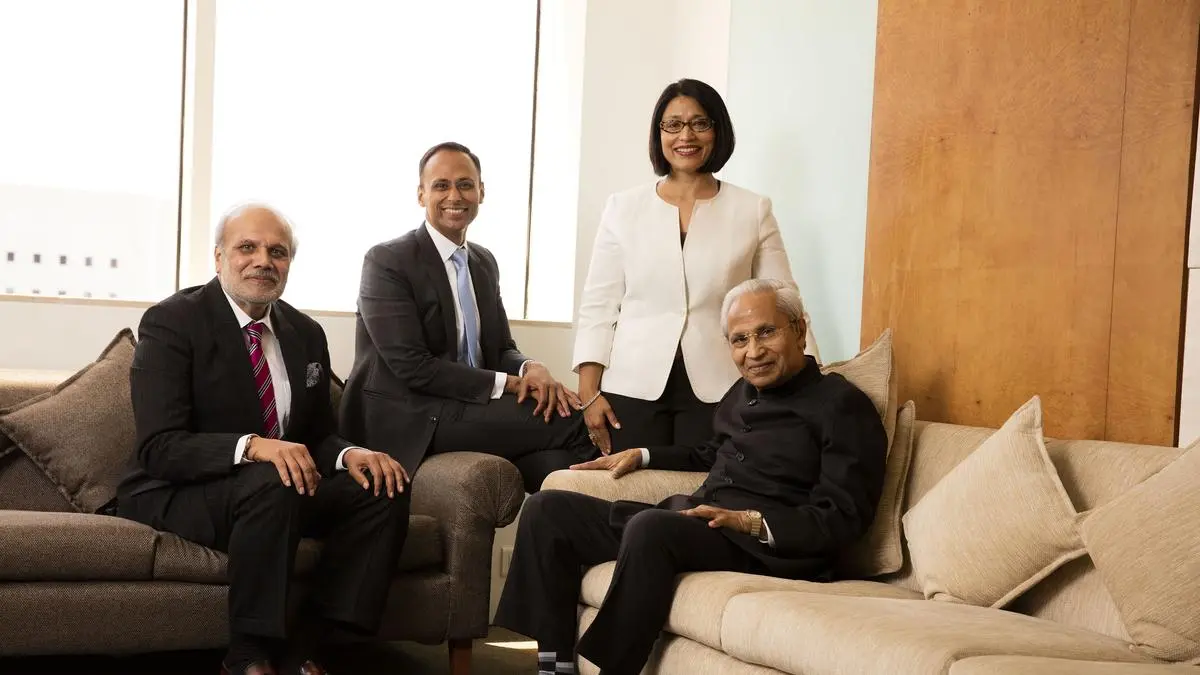
It’s Friday the 13th — a day some consider ominous, but not Lupin Managing Director Nilesh Gupta. Dressed in a traditional black kurta, he walks in for our meeting on the ninth floor of the company’s Mumbai headquarters — where he and his sister Vinita, the Chief Executive Officer, have their offices — to discuss the road ahead for the estimated ₹22,707-crore home-grown multinational drugmaker.

Nilesh is reminded that September will mark 13 years since he and his sister assumed their leadership roles. Good-humouredly he responds that the number (13) has been lucky for him — his surname, too, put him thereabouts in the alphabetical roll-call in class.

New Lupin Research Park facility, which was inaugurated by its late founder, Desh Bandhu Gupta, in 2017

The silence across the floor, and inside Lupin’s meeting room, lined outside by plants, belies a reality that is giving several corporate chiefs sleepless nights. A war rages in West Asia, supply chains are being disrupted again (after the Covid pandemic), and shortages begin to cast a long shadow — even in a country like India, which has a thriving domestic pharmaceutical industry.

Lupin has navigated tough times in the past too, under the stewardship of its founder, the late Desh Bandhu Gupta (he passed away in June 2017). DBG’s (as he was called) children now steer the ship. Is their strategy on handling global challenges, this time posed by a war, different from their father’s?

DBG would have taken bigger bets and bolder decisions, says Nilesh, because he was faced with “existential challenges”. “We’ve not dealt with existential concerns, Vinita and me… I do think we stand on the shoulders of giants,” he says, adding that the industry will overcome the current crisis.

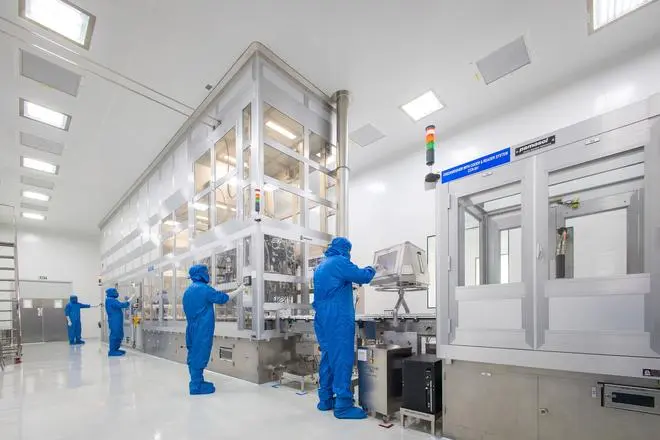
Lupin’s Pithampur plant houses the world’s highest capacity metered-dose inhaler (MDI) line

Lupin’s Pithampur plant houses the world’s highest capacity metered-dose inhaler (MDI) line
| Photo Credit: Devendra Purbiya

Framing the big picture for Lupin, Nilesh says innovation is the space for their big bets for the future. The earlier vision for a new therapy every year, set by DBG, is done, says Nilesh. “We’re into everything as far as generics… therapy-wise, dosage form-wise… that was the right strategy at that point of time,” he says.

The journey continued with the making of dermatology products, oral contraceptives, ophthalmology products and inhalation formulations. And through it, Lupin evolved as a producer of complex generics — products that few could make and, hence, marked by less competition and better prospects. Then came biosimilars: “we see biosimilars being 50 per cent of our European market, for example… and a good part of the rest would be inhalation,” says Nilesh. (Biosimilars, which are large complex molecules, are defined as “highly similar” to biological products.)

Lupin’s plant in  Nagpur

Lupin’s plant in Nagpur

Lupin played a critical role in making cephalosporins and tuberculosis drugs, for example. “Now it’s going to be about innovation,” says Nilesh.

Explaining Lupin’s entry into diagnostics, digital support and a neurological rehabilitation initiative, he says “the combination of diagnosis and pharmaceuticals seemed like a good place to start”, and the digital health division opened up a different avenue for cardiac treatment and support.

As the three grow, Lupin becomes a “broader healthcare player”, he says.

Crucial US market

Lupin’s growth plans include acquisition, says Nilesh, adding, “Our acquisition priorities are speciality in the US and Rx (prescription products) in India… OTC (over-the-counter products) is definitely a third… Vitabiotics is interesting because it’s, again, OTX (prescribed, but non-prescription product).” Lupin was reported to be evaluating UK’s Vitabiotics, a nutraceutical company.

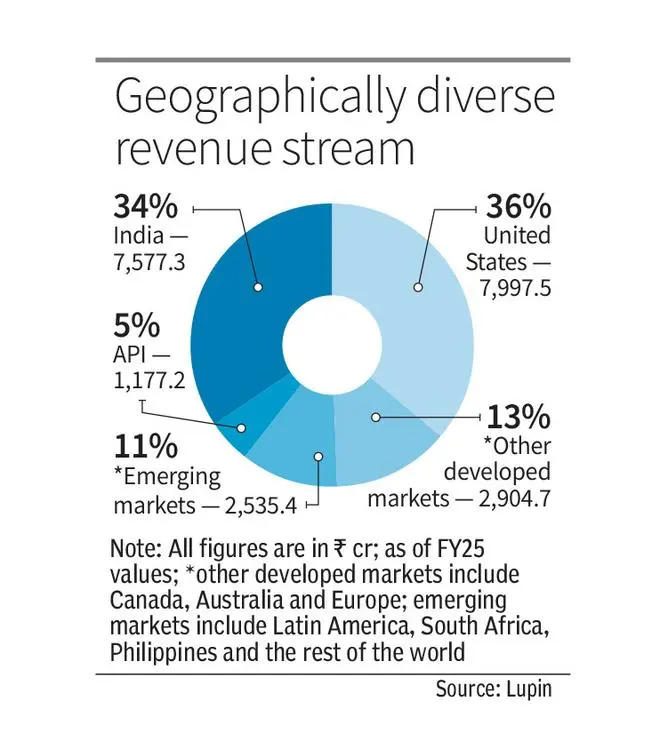
Outlining the importance of the US market, Vinita says, “The US is, and will continue to be a cornerstone of Lupin’s global strategy.” It’s an important contributor to Lupin’s financial performance, she says, pointing out that Lupin is the third-largest generic pharmaceutical company in the US by prescription volume — contributing to the health of Americans, besides generating considerable savings to the US healthcare system.

DBG’s recently launched biography captures a time when he asked a young Vinita to set up and establish Lupin in the US. In the 1990s, the generics market looked very different compared with today, says Vinita. The Hatch-Waxman Act of 1984, in simplifying the Food and Drug Administration (FDA) approval process for generics and granting a 180-day exclusivity period for first-to-file companies, created the right conditions for growth, she adds. Being a part of the industry’s transformation and driving the company’s expansion in a strategically important market was exciting and energising, she says, adding, “It ultimately laid the foundation for the global pharmaceutical company we are today.”

The US generics landscape changed and Lupin sharpened its strategic focus on complex generics, biosimilars and speciality products, which can sustain long-term business and mitigate the impact of external pricing pressures, she says.

Alongside the US, home market India is central to the company’s strategy, as also Europe — another growth driver, with complex generics like respiratory products and biosimilars, she says.

Bold bets

Being a large generic player does not necessarily equip a company to be a large innovation player, as the capabilities are different, and not necessarily India’s strong point, Nilesh says. However, India can be leveraged for those capabilities, he adds. “We’re now starting to operate innovation at two levels — one for the world, and the other for India.”

In India, it could be cardiac, diabetes, respiratory and oncology molecules — all as new chemical entities (NCEs). “But the cost of development is lower for just India as a market. The time-to-market is shorter. And, therefore, you can have much more shots on goal. Obviously, you’ll still have failure because you’re taking NCE risk eventually,” he explains.

The expectation is to have “a bunch of products in clinical trials” — for the first time, NCEs for India, he says, on picking up early innovation from China and Korea for development. “We are biting much deeper on the innovation side… on technology,” he says, pointing to AI and innovations to manufacture for the future, and building into it compliance.

Going back to the backdrop of the war, Nilesh points to the opportunity to “scale even more elsewhere in the world”. But aren’t there price increases, shortages? “Hundred per cent, because people use this to their advantage,” he says, citing increasing logistics and insurance costs. These are short-term, they will settle down, he adds. “I would by no means make light of the misfortunes of war,” he says, but looking ahead, it’s got to be innovation at scale — “much bigger bites”.

More Like This

Published on March 30, 2026



Source link

Does greater online penetration destroy profitability?

Does greater online penetration destroy profitability?


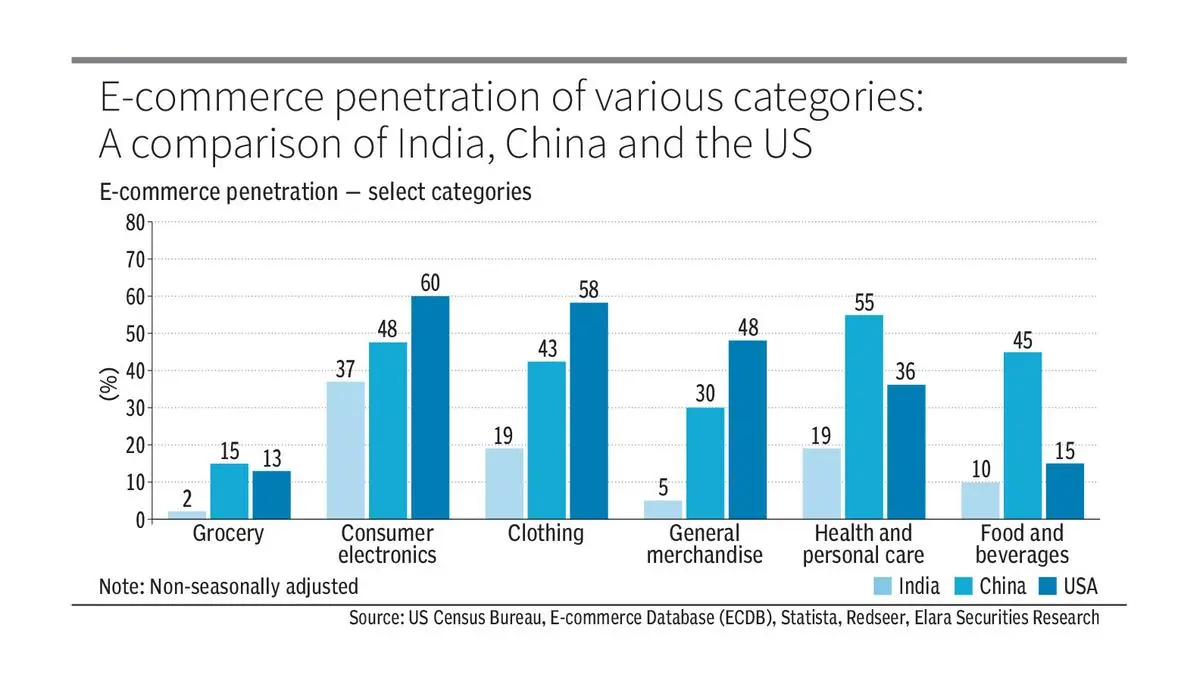
The global FMCG industry is undergoing a structural shift, led by the rapid rise of online channels. While this transition is visible across markets, India stands out — not just for its low online penetration, but also the speed and nature of the disruption driven by quick commerce.

Online grocery penetration in China and the US stands at 15–16 per cent, reflecting a reasonably scaled omni-channel ecosystem, while India remains significantly under-penetrated at less than 5 per cent. As China moved from low- to mid-teen online penetration between 2018 and 2022, the ecosystem saw broad-based margin pressure. FMCG companies faced higher platform commissions, increased trade spends, and a shift away from higher-margin traditional trade, leading to visible compression of gross margin and EBITDA. In the US, during a similar ramp-up phase, margin pressure was largely borne by retailers due to the high cost of order fulfilment and last-mile delivery, while FMCG brands remained relatively resilient as online was primarily a route-to-market shift.

Discovery and discounting

For India, the trajectory is likely to be closer to that of China than the US. With quick commerce driving a large share of online grocery growth, brands are more dependent on platform-led discovery, discounting, and higher channel investments. As penetration scales up from current low levels, FMCG companies are likely to face near-term margin pressure, driven by an adverse channel mix and rising competitive intensity. While growth will accelerate, profitability may remain under pressure until scale efficiencies and supply chain optimisation begin to offset these costs.

Unlike global markets, India has leapfrogged into quick commerce — a model that delivers groceries within minutes. This level of convenience is not present at scale in the US or China. As a result, India is not merely following the global online transition — it is accelerating it. Quick commerce is turning grocery into a high-frequency and impulse-driven category, fundamentally reshaping consumption patterns.

This is already visible in early data points. Categories such as beauty, personal care, apparel, and footwear have achieved 18–20 per cent online penetration, while FMCG and grocery remain under-penetrated. However, of the online grocery penetration, 50–60 per cent is driven by quick commerce. This is a powerful indicator of where the market is headed.

A structural shift is visible in India’s beauty and personal care (BPC) segment. Digital-first platforms such as Nykaa have delivered strong multi-year growth. BPC GMV/revenue growth is trending at 25–30 per cent, outpacing traditional incumbents — for instance, Hindustan Unilever’s BPC segment has grown 8–12 per cent. Notably, HUL’s e-commerce channel (including quick commerce) is growing at about 2x the company average and contributes 10–12 per cent of domestic revenues. However, this growth comes with higher channel costs and mixed impact. There are other trade-offs to the growth.

More competition

First, the rise of quick commerce will lead to more brand fragmentation. The platform-led discovery model, combined with low consumer loyalty in essential categories, enables new-age and D2C brands to scale up rapidly. Unlike traditional retail, where shelf space is constrained, quick commerce allows for faster experimentation and rotation of products. This will result in more winners, but also competition.

For incumbent FMCG companies, this creates incremental pressure. While overall category demand will expand, market share consolidation may weaken, as newer brands capture niche segments and consumer attention.

Second, the channel shift will have direct implications for margins. Quick commerce and e-commerce channels typically operate with lower margins for brands compared with general trade. As FMCG companies have more of these faster-growing channels in the mix, the overall margin profile is likely to be diluted.

Companies will attempt to mitigate this — optimise costs, including rationalising advertising spends, improving supply chain efficiencies, and tightening operating expenses. However, these levers have limitations. In a fragmented and competitive market, reducing brand investments or innovation could be counterproductive.

As a result, even in the best-case scenario, FMCG companies may be able to hold margins only at current levels. The more likely outcome is moderate margin compression in the medium term, particularly as quick commerce continues to scale up.

The pace of disruption will depend on one critical factor: non-metro expansion. Currently, quick commerce remains concentrated in metro markets. If the model scales up effectively in tier 2 and 3 cities — and gains acceptance in grocery — the impact on growth and margins will be amplified. India’s FMCG market could see a faster and deeper structural shift than those of global peers.

Net-net, India is entering a phase where growth and margins are diverging. Quick commerce will drive a sharp acceleration in FMCG consumption, increase category penetration, and expand the overall market. At the same time, it will introduce higher competition, lower loyalty, and sustained margin pressure.

The broader lesson from global markets remains relevant: online penetration does not destroy profitability — it delays it. However, India’s journey could be more intense. With quick commerce acting as a catalyst, the transition may be faster, sharper, and more disruptive than what China or the US experienced.

For companies and investors alike, the message is clear. The near term will be defined by scale, growth, and market capture. Margins, as history suggests, will follow — but only after the ecosystem matures.

India’s FMCG sector is not just digitising distribution, it is also redefining competition and reshaping demand itself.

(Karan Taurani is EVP, Elara Capital)

More Like This

Published on March 30, 2026



Source link

Bihar planning market debut of transmission company BSPTCL: State Energy Secy

Bihar planning market debut of transmission company BSPTCL: State Energy Secy


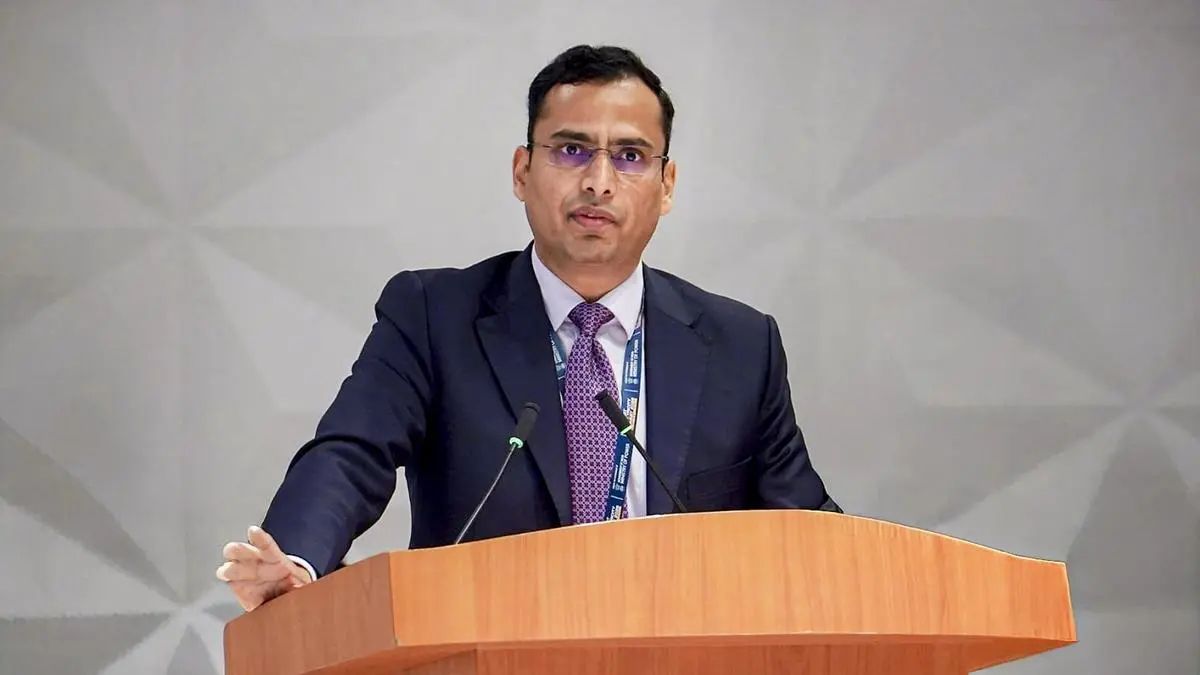
Bihar Energy Secretary Manoj Kumar Singh
| Photo Credit:

The Bihar government is preparing to list its power transmission company on the stock market in a move aimed at enhancing public participation in the state’s growth, a senior official said.

In a video interview with PTI, Bihar Energy Secretary Manoj Kumar Singh said, “We are planning to list our transmission company on the stock exchange and have issued an Expression of Interest (EoI) to onboard merchant bankers.” Bihar State Power Transmission Company Ltd (BSPTCL) is set to become the first state-owned transmission utility to go public, with the listing proposed on the NSE.

Singh noted that the size of the issue will be determined after the merchant bankers are appointed. “Once they are onboard, they will guide us through the IPO process and assess how much capital can be raised from the market,” he said.

Explaining the rationale, Singh described listing as a natural step for a profitable business. “Our transmission company has been consistently profitable for over a decade. We want the public to also share in this growth journey,” he added.

The funds raised from the IPO will be used to strengthen Bihar’s transmission infrastructure to meet future power demand. BSPTCL has outlined an ambitious expansion plan worth Rs 16,194 crore to enhance network capacity, improve intra-state transmission corridors, and handle increasing power loads.

The plan also includes upgrading substations and high-voltage transmission lines to reduce losses, improve grid reliability, and support the integration of new generation capacity, including from renewable energy sources.

According to Singh, Bihar recorded a peak power demand of around 8,800 MW last year, which is expected to rise to about 9,500 MW this year.

By 2030, peak demand is projected to cross the 13,000 MW mark, driven by growth in commercial and industrial establishments.

While Singh did not specify a timeline for BSPTCL’s listing, he indicated that the government may also consider listing its power distribution companies — North Bihar Power Distribution Company Limited (NBPDCL) and South Bihar Power Distribution Company Limited (SBPDCL) — in the future.

“We will begin with the transmission company. Once its revenue stream stabilises, we may consider listing the discoms in the next two years,” he said.

For FY25, BSPTCL reported a total income of Rs 1,968 crore and a profit after tax (PAT) of Rs 286 crore. NBPDCL posted a total income of Rs 17,448 crore with a PAT of Rs 1,339 crore, while SBPDCL recorded a total income of Rs 19,108 crore and a PAT of Rs 665 crore.

Published on March 29, 2026


Source link

YouTube
Instagram
WhatsApp