
भारत में टेलीग्राम पर लगा ‘ताला’, क्या अब कंगाल होने पर आ जाएगी कंपनी? जानें पूरा मामला

भारत में टेलीग्राम पर लगा ‘ताला’, क्या अब कंगाल होने पर आ जाएगी कंपनी? जानें पूरा मामला


Telegram Ban Impact: भारत में टेलीग्राम के इस्तेमाल पर 22 जून तक रोक लगी रहेगी. इलेक्ट्रॉनिक्स और सूचना प्रौद्योगिकी मंत्रालय की IT एक्ट की धारा 69A के तहत देशभर के टेलीग्राम के इस्तेमाल पर 22 जून तक रोक लगाई गई है. कंपनी ने सरकार की ओर से लगाए गए इस प्रतिबंध को दिल्ली हाई कोर्ट में चुनौती दी थी.

कंपनी की याचिका पर सुनवाई करते हुए दिल्ली हाई कोर्ट ने सरकार के आदेश को मनमाना या अनुचित मानने से इनकार करते हुए इसे खारिज कर दिया.  कोर्ट ने यह साफ शब्दों में कह दिया कि सरकार के पास आपातकालीन स्थितियों में किसी ऐप या डिजिटल प्लेटफॉर्म को ब्लॉक करने का पूरा अधिकार है.

कोर्ट ने और क्या कहा? 

टेलीग्राम की याचिका को खारिज करते हुए दिल्ली हाई कोर्ट ने कहा कि बैन लगाने के सरकार के फैसले को मनमाना नहीं कहा जा सकता. हाई कोर्ट के इस फैसले को टेलीग्राम के लिए एक बड़ा झटका माना जा रहा है. गौरतलब है कि सरकार ने 22 जून तक टेलीग्राम को बंद करने और 30 जून तक इसके मैसेज-एडिटिंग फीचर को डीएक्टिवेट करने का आदेश दिया था. इसका मकसद NEET-UG 2026  की परीक्षा में होने वाली धोखाधड़ी और पेपर लीक रैकेट पर लगाम कसने के लिए लगाया था, जिसे कंपनी ने दिल्ली हाई कोर्ट में याचिका दायर कर चुनौती दी थी.

भारत में कितने हैं टेलीग्राम यूजर्स?

भारत में टेलीग्राम के 10.4 करोड़ से 15 करोड़ के बीच एक्टिव यूजर्स हैं, जो इसे पूरी दुनिया में टेलीग्राम का सबसे बड़ा मार्केट बनाता है. ऐसे में अगर प्रतिबंध सिर्फ 22 जून तक ही लागू रहा, तो कंपनी के रेवेन्यू को तुरंत कोई बड़ा सीधा नुकसान नहीं पहुंचेगा. हालांकि, इस दौरान भारत से होने वाली इन-ऐप विज्ञापन से होने वाली कमाई पूरी तरह से रूक जाएगी. भारत में टेलीग्राम के लाखों पेड यूजर्स हैं. ऐप ब्लॉक रहने की वजह से नए सब्सक्रिप्शन पर रोक लगी हुई है. इससे कंपनी के कैश-फ्लो पर असर पड़ा है.  

निवेशकों का टूटा भरोसा

टेलीग्राम पहले से ही घाटे में चल रही कंपनी है. 2025 की शुरुआत में 870 मिलियन डॉलर रेवेन्यू के बावजूद कंपनी को 220 मिलियन डॉलर से ज्यादा का नुकसान हुआ था. अब भारत में बैन लगने से वैश्विक निवेशकों की बीच कंपनी की साख कमजोर होगी. ऐसे में भविष्य में इसे फंडिंग मिलने में दिक्क्तें आ सकती हैं. इसका मार्केट के वैल्यूएशन पर बुरा असर पड़ सकता है.

कंपनी के सीईओ पावेल डुराेव ने टेलीग्राम पर लगे बैन पर कहा, भारत में टेलीग्राम पर बैन लगने की सजा 15 करोड़ यूजर्स को मिलेगी, न कि उन अंदरुनी लोगों को जिन्होंने पेपर मटेरियल को लीक कराया. लीक रुकेंगे नहीं, बैन लगने से स्कैमर्स दूसरे ऐप्स पर शिफ्ट हो जाएंगे. 

क्या हमेशा के लिए बैन हो गया टेलीग्राम?

सरकार की तरफ से पहले ही यह कहा जा चुका है कि टेलीग्राम पर अस्थायी और सीमित समय के लिए प्रतिबंध लगाया गया है. 21 जून, 2026  को NEET-UG की दोबारा परीक्षा होगी. इसके सुरक्षित तरीके से सम्पन्न होने के बाद ऐप पर से बैन हटा दिया जाएगा. इससे पहले 3 मई, 2026 को NEET-UG पेपर लीक होने के बाद परीक्षा रद्द करनी पड़ी. जांच में पाया गया कि स्कैमर्स टेलीग्राम चैनल्स पर परीक्षा से जुड़े मेटेरियल्स धड़ल्ले से बेच रहे हैं. इसी के चलते सरकार ने 21 जून को दोबारा परीक्षा होने से पहले इस पर अस्थायी बैन लगा दिया. 

ये भी पढ़ें:

क्यों चीन से लेकर भारत में फंसा है ईरान का पैसा? जानें तेहरान के 8.3 लाख करोड़ के फंड लॉक की सच्चाई 


Source link

अब लखनऊ में होगी आठवें वेतन आयोग की बड़ी बैठक, जानें मीटिंग का पूरा शेड्यूल और मकसद

अब लखनऊ में होगी आठवें वेतन आयोग की बड़ी बैठक, जानें मीटिंग का पूरा शेड्यूल और मकसद


Show Quick Read

Key points generated by AI, verified by newsroom

  • आठवें वेतन आयोग की बैठक 22-23 जून 2026 को लखनऊ में.
  • यह बैठक वेतन, भत्तों, पेंशन सुधार पर सुझाव लेगी.
  • कर्मचारी 3-4 फिटमेंट फैक्टर, पेंशन बढ़ोतरी की मांग कर रहे.
  • जस्टिस रंजना देसाई आयोग अध्यक्ष हैं, रिपोर्ट 2027 में.

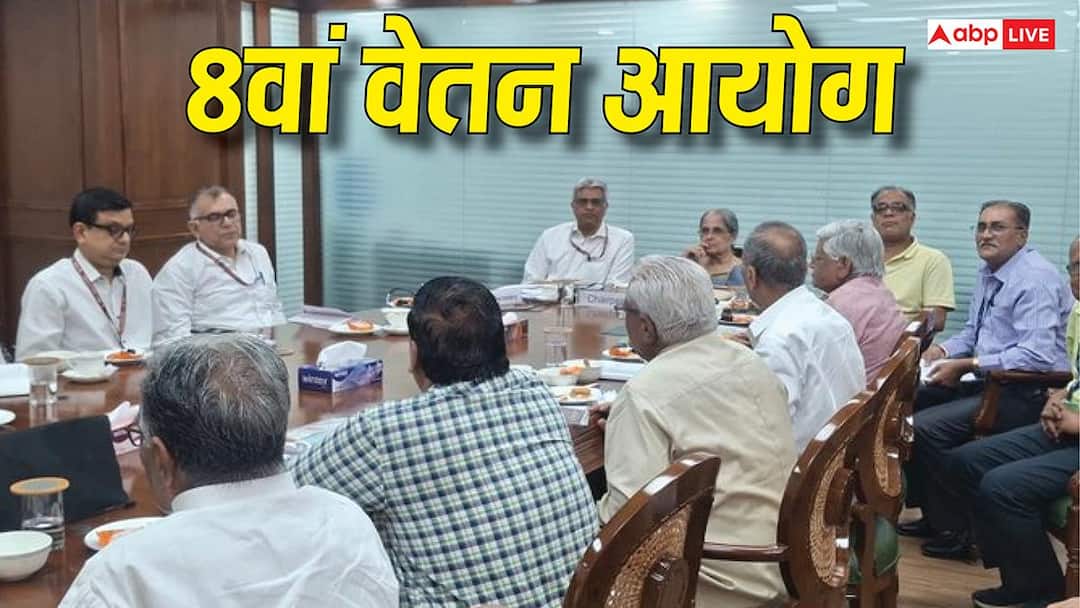
8th Pay Commission: वक्त जैसे-जैसे बीतता जा रहा है, वैसे-वैसे आठवें वेतन आयोग (8th Pay Commission) को लेकर केंद्रीय कर्मचारियों और पेंशनर्स की बेसब्री भी बढ़ती जा रही है. इस बीच, 8वें केंद्रीय वेतन आयोग की एक बड़ी मीटिंग लखनऊ में होने जा रही है. 8वें वेतन आयोग की आधिकारिक वेबसाइट पर पहले दी गई जानकारी के मुताबिक, 22 और 23 जून, 2026 को लखनऊ में अगली बैठक होगी. इसका मकसद उत्तर प्रदेश क्षेत्र में केंद्रीय कर्मचारियों, पेंशनभोगियों और विभिन्न कर्मचारी यूनियनों से मिलकर उनसे सैलरी रिवीजन, अलाउंस और पेंशन स्ट्रक्चर में सुधारों पर सुझाव लेना है. 

बैठक का क्या है एजेंडा?

15 जून, 2026 को मेमोरेंडम जमा करने की अंतिम समय-सीमा समाप्त होने के बाद यह पहली बड़ी बैठक होगी. आयोग की अध्यक्ष रंजना प्रकाश देसाई की अगुवाई में पैनल उत्तर प्रदेश और इसके आसपास के क्षेत्रों में रेलवे, पोस्टल, डिफेंस और इनकम टैक्स विभागों के कर्मचारी यूनियनों से आमने-सामने बात करेगा. इसमें संगठनों द्वारा जमा कराए गए ‘यूनिक मेमो आईडी’ के प्रस्ताव पर भी चर्चा होगी.

इससे पहले हैदराबाद, दिल्ली, श्रीनगर में भी बैठके हो चुकी हैं. आयोग की इन बैठकों का मकसद हर क्षेत्र के कर्मचारियों की आर्थिक स्थिति और जमीनी स्तर पर उनकी उम्मीदों का पता लगाना और अपनी रिपोर्ट में उनका जिक्र करना है. लखनऊ के बाद जुलाई में बंगाल, ओडिशा में भी बैठकें होने की उम्मीद है. इन सभी जगहों में कर्मचारी यूनियनों के साथ हुई बैठकों और उनसे मिले सुझावों के आधार पर रिपोर्ट तैयार की जाएगी, जिसकी सिफारिशें अप्रैल, 2027 तक आ सकती है. 

कर्मचारियों की क्या हैं मांगें?

  • कर्मचारी आठवें वेतन आयोग के तहत 3-4 के बीच फिटमेंट फैक्टर की मांग कर रहे हैं. अगर इसे मंजूरी दे दी जाती है, तो न्यूनतम बेसिक सैलरी 18000 से बढ़कर 50000 के पार पहुंच सकती है.
  • पेंशन एसोसिएशन द्वारा न्यूनतम पेंशन को अंतिम सैलरी का 67% करने और वरिष्ठ नागरिकों के लिए अतिरिक्त अलाउंसेज को बढ़ाने का प्रस्ताव है. 
  • प्रमोशन और इंक्रीमेंट के नियमों में सुधार की भी मांग है. मौजूदा समय में 30 साल की नौकरी में सिर्फ 3 बार मिलने वाले वित्तीय अपग्रेडेशन को हर 6 साल में करने की मांग उठाई गई है. साथ में 5% इंक्रीमेंट की भी डिमांड है. 

किसके हाथ कमीशन की कमान?

आठवें वेतन आयोग की अगुवाई सुप्रीम कोर्ट की पूर्व जज जस्टिस रंजना प्रकाश देसाई कर रही हैं. इसके अन्य सदस्यों में IIM बैंगलोर के प्रोफ़ेसर पुलक घोष और पंकज जैन (रिटायर्ड IAS) शामिल हैं, जो मेंबर-सेक्रेटरी के तौर पर काम कर रहे हैं.

इस पैनल को केंद्र सरकार के कर्मचारियों और पेंशनभोगियों से जुड़े सैलरी स्ट्रक्चर, भत्ते, पेंशन, सर्विस की शर्तों और अन्य संबंधित पहलुओं की समीक्षा करने की जिम्मेदारी सौंपी गई है. पे कमीशन के सबसे अहम पहलुओं में से एक ‘फिटमेंट फ़ैक्टर’ होता है, जिससे बेसिक पे में बदलाव होता है. अगर पिछले रिकॉर्ड को देखें, तो छठे पे कमीशन ने 1.86 के फिटमेंट फैक्टर, सातवें पे कमीशन ने 2.57 फिटमेंट फैक्टर की सिफारिश की थी. अब सभी की निगाहें आठवें वेतन आयोग के फिटमेंट फैक्टर पर टिकी हुई हैं.

ये भी पढ़ें:

8th Pay Commission: फिटमेंट फैक्टर बढ़ा तो सरकारी खजाने पर टूटेगा आफत का पहाड़, NPS-UPS का बोझ बढ़ना तय 


Source link

PhonePe wallet inactivity fee explained: UPI payments and bank accounts unaffected

PhonePe wallet inactivity fee explained: UPI payments and bank accounts unaffected


Inactivity fees on dormant PhonePe wallets do not affect users’ linked bank accounts or UPI transactions, according to clarifications issued by the company after notifications sent to some customers triggered confusion over how digital wallets operate.

The notifications apply only to the PhonePe Wallet, a prepaid payment instrument (PPI), and not to payments made through the Unified Payments Interface (UPI), where funds are debited directly from a user’s bank account.

The issue has highlighted a common misconception among consumers that their PhonePe account, UPI account and PhonePe Wallet are the same product. In reality, they operate independently and are subject to different rules.

A key concern among users has been whether inactivity charges can be recovered from their bank accounts if their wallet balance is insufficient.

PhonePe said no deductions would be made from linked bank accounts or through UPI, and wallet balances would not become negative.

The notifications have also raised questions among customers who actively use the PhonePe app, but still receive inactivity alerts. The company said wallet activity and UPI activity are tracked separately, meaning a user can make regular UPI payments while their wallet remains dormant.

As a result, a wallet may be classified as inactive even if the customer frequently uses the PhonePe app for QR-code payments, money transfers or bill payments through UPI.

PhonePe said affected users are notified 15 days before any inactivity fee is deducted from a wallet balance, allowing them time to reactivate the wallet, add funds, withdraw eligible balances or close the wallet if they no longer wish to use it.

The company also clarified that users do not necessarily need to upgrade to Full KYC status to reactivate a wallet. Reactivation can typically be completed through OTP verification and a wallet transaction.

Another source of confusion relates to cashback rewards. Cashback credits are generally stored in a separate gift card balance rather than the PhonePe Wallet itself, meaning receipt of cashback does not automatically indicate that a wallet is active or subject those balances to wallet inactivity deductions.

Wallet inactivity fees are not unique to PhonePe and are charged by some prepaid payment instrument providers to cover maintenance, compliance and operational costs associated with dormant accounts.

For users who have received a notification, the key consideration is whether they wish to continue using the PhonePe Wallet, reactivate it or close it, as the charges apply solely to wallet balances and not to bank accounts or UPI-linked transactions.

As digital payments become increasingly common in everyday life, understanding how wallets work and how they differ from UPI can help consumers make informed decisions and better understand the products they use:

DIFFERENCE BETWEEN UPI & WALLETS

When one makes a payment through UPI on PhonePe, the money is debited directly from your linked bank account. A PhonePe Wallet, on the other hand, is a prepaid payment instrument (PPI) where money is stored separately from your bank account.

This distinction is important because the inactivity fee applies only to the PhonePe Wallet and not to UPI-linked bank accounts.

HOW WALLET INACTIVITY CHARGES WORK

One of the concerns raised by users is whether PhonePe can deduct the inactivity fee from their bank account if their wallet has no balance. The answer is no.

If a user’s PhonePe Wallet has a zero balance and has remained inactive for an extended period, the inactivity fee will not be recovered from the user’s linked bank account or through UPI. Similarly, the wallet balance will not become negative.

In other words: – No deduction will be made from a linked bank account.

– No deduction will be made via UPI.

– A wallet with insufficient balance will not show a negative balance.

WHY SOME ACTIVE PHONEPE USERS MAY STILL RECEIVE NOTIFICATIONS

Some users have reported receiving inactivity notifications despite using PhonePe regularly for QR-code payments, bill payments, or money transfers.

This happens because wallet activity and UPI activity are tracked separately.

A customer may actively use PhonePe every day through UPI while their PhonePe Wallet remains unused for months or years. In such cases, the wallet can still be classified as inactive even though the user continues to use the PhonePe app.

ADVANCE NOTIFICATION AND USER CHOICES

According to PhonePe, affected users are notified 15 days in advance before any inactivity fee is deducted from the wallet balance.

During this period, users have the opportunity to: – Activate their wallet.

– Add money to the wallet if they wish to continue using it.

– Withdraw eligible balances.

– Review whether they want to continue maintaining the wallet.

QUESTIONS AROUND KYC

Some users believe they must complete Full KYC before they can reactivate their wallet. However, reactivating a wallet does not necessarily require converting a Minimum KYC wallet into a Full KYC wallet.

Users can activate their wallet by completing OTP verification and making a transaction using the wallet. Upgrading to Full KYC is not a prerequisite for activation.

UNDERSTANDING WALLET BALANCES & CASHBACK CREDITS

Another area of confusion involves cashback rewards. Many users assume that cashback balances are stored inside their PhonePe Wallet. In reality, cashback rewards are typically credited to a separate Gift Card Balance, which is distinct from the PhonePe Wallet.

As a result, receiving cashback does not automatically mean that a wallet is active, nor does it mean the cashback balance is subject to wallet inactivity deductions.

WALLET CLOSURE & CUSTOMER SUPPORT

Some users have reported difficulties while attempting to close their wallet through the app, including error messages or requests for additional verification.

In such situations, users are advised to contact PhonePe customer support for assistance with account closure or wallet-related issues.

WHY INACTIVITY CHARGES EXIST

Wallets are regulated as prepaid payment instruments and require maintenance, compliance, and operational support even when they are not actively used.

As a result, some wallet providers levy inactivity or maintenance fees on dormant wallets. The practice is not unique to a single company and has been observed among multiple wallet providers in the prepaid payments ecosystem.

The key takeaway in this case is that the inactivity fee applies only to the PhonePe Wallet, which is a separate prepaid payment instrument. It does not apply to UPI transactions, does not affect linked bank accounts, and does not result in negative wallet balances.

For users who have received a notification, the most important step is to determine whether they have an active PhonePe Wallet and decide whether they want to continue using it, reactivate it, or close it.

Published on June 20, 2026


Source link

Supervisory Data Quality Index score of small finance banks  and private sector banks drops

Supervisory Data Quality Index score of small finance banks and private sector banks drops


The Supervisory Data Quality Index (sDQI) score of small finance banks (SFBs) and private sector banks (PVBs) dropped by 1.5 and 1.3, respectively, while that of foreign banks (FBs) rose by 0.7 in March 2026 as compared to December 2025, according to the Reserve Bank of India.

sDQI measures data quality in terms of the Accuracy, Timeliness, Completeness and Consistency in the submission of returns and microdata by Banks for supervisory assessments.

The SDQI score of public sector banks (PSBs) declined marginally by 0.3 in March 2026 as compared to December 2025. Overall, the SDQI score of scheduled commercial banks declined marginally by 0.2 in March 2026.

As at March-end 2026, the SDQI score of SFBs, PVBs and PSBs declined to 90.4 (from 91.9 as at December-end 2025), 89.3 (90.6) and 90.7 (91.0), respectively. Only FBs reported an improvement in the score to 91.4 (90.7).

Overall, the SDQI score of scheduled commercial banks declined marginally to 90.7 in March 2026 from 90.9 in December 2025.

Banks are required to report data (Supervisory Returns: all periodic / ad-hoc data submitted to RBI in formats prescribed from time to time, irrespective of the technology platform, periodicity and the mode of submission) on their domestic and overseas operations, including the operations of IFSC Banking Units (IBUs) and Overseas Banking Units (OBUs), wherever applicable, to RBI.

Published on June 20, 2026


Source link

India to host BRICS National Security Advisers' Meet from June 22-23: MEA

India to host BRICS National Security Advisers' Meet from June 22-23: MEA


National Security Advisor Ajit Doval, the Ministry of External Affairs (MEA)

India is set to host the BRICS National Security Advisers’ Meeting on 22-23 June 2026. The meeting will be chaired by National Security Advisor Ajit Doval, the Ministry of External Affairs (MEA) said on Saturday.

As per the MEA, during the meeting, the National Security Advisers/Heads of Delegation of BRICS Member Countries will exchange views on the theme ‘Non-traditional security challenges confronting the world today’. They will discuss the rapidly evolving nature of national security challenges, as well as the role of new technologies in emerging security threats.

According to the statement, the National Security Advisers/Heads of Delegation will also review the outcomes of the recently held BRICS Joint Working Groups on Counter-Terrorism, and on Security in the use of Information and Communication Technologies. The meeting comes as India holds the BRICS Chairship for the fourth time in 2026, having previously held it in 2012, 2016, and 2021.

India’s BRICS Chairship is guided by the theme “Building for Resilience, Innovation, Cooperation and Sustainability”, reflecting a people-centric and humanity-first approach articulated by Prime Minister Modi at the 2025 Rio Summit.

BRICS brings together eleven major emerging markets and developing countries of the world: Brazil, China, Egypt, Ethiopia, India, Indonesia, Iran, Russia, Saudi Arabia, South Africa, United Arab Emirates. It serves as a useful platform for consultation and cooperation on contemporary issues having global as well as regional significance, and issues of global political and economic governance.

The official website for BRICS 2026 highlights how the BRICS agenda has expanded considerably from its initial focus on economic issues of mutual concern and is structured around three core pillars– political and security, economy and finance and cultural and people to people exchanges.

“BRICS cooperation continues to broaden its scope across a wide range of global issues, including fight against terrorism, climate change, food and energy security, the international economic and financial situation, telecommunications, agriculture, labour and employment, international financial architecture, trade, and the WTO,” the official website highlighted.

Published on June 20, 2026


Source link

India diversifies LPG imports during West Asia conflict as OMCs absorb price shock

India diversifies LPG imports during West Asia conflict as OMCs absorb price shock


India sharply diversified its liquefied petroleum gas (LPG) sourcing during the West Asia conflict, increasing imports from the US, Iran and several other countries to reduce dependence on the Gulf region, while state-owned fuel retailers absorbed much of the surge in international prices to shield households.

Before the conflict, roughly 90 per cent of India’s LPG imports came from West Asian suppliers, leaving the country heavily exposed to regional disruptions. By April 2026, the United States accounted for nearly one-third of India’s LPG imports, up from just 8 per cent in February, according to a Crisil report.

The shift was aided by a 2.2 million tonne-per-year LPG supply agreement signed with the United States in late 2025, equivalent to about 10 per cent of India’s annual import requirement.

Iran also re-entered India’s import basket, accounting for around 6 per cent of April imports, while supplies were sourced from countries like Argentina, Chile, France and the Netherlands.

The diversification helped maintain supplies during the conflict, but came at the cost of longer supply chains and higher freight expenses.

The disruption nevertheless weighed heavily on demand. LPG consumption fell to 2.47 million tonnes in April from 3.2 million tonnes in February as tighter availability and rising prices curbed usage.

After growing 6 per cent to a record 33.2 million tonnes in fiscal 2026, India’s LPG consumption declined 13 per cent year-on-year in both March and April, before falling 20 per cent in May.

Commercial and industrial users bore the brunt of the decline, with consumption dropping more sharply than household demand as market-linked customers responded quickly to higher prices and supply constraints.

Crisil said the conflict also triggered a sharp increase in global LPG prices. The Saudi Aramco Contract Price, the benchmark for Indian imports, rose 46 per cent between February and June as markets priced in supply risks and elevated freight costs.

However, the increase was only partially passed on to domestic consumers.

The price of a 14.2-kg household LPG cylinder in Delhi rose about 10 per cent between February and June, while the price of a 19-kg commercial cylinder surged more than 79 per cent.

The limited increase in household cooking gas prices led to a sharp rise in under-recoveries for oil marketing companies as procurement costs outpaced retail prices, it said, adding that the under-recoveries on domestic LPG cylinders in Delhi rose to ₹651 per cylinder in May, while cumulative losses borne by fuel retailers during March-May were estimated at nearly ₹22,000 crore.

The easing of tensions in West Asia and the potential reopening of key trade routes are expected to reduce immediate supply concerns and moderate global LPG prices.

However, the disruption exposed India’s continued dependence on imported LPG and the risks associated with concentrated sourcing.

While diversification and higher domestic production helped cushion the impact, the sector remains vulnerable to geopolitical disruptions, freight market volatility and swings in international energy prices, underscoring the importance of maintaining a broader import portfolio, the report added.

Published on June 20, 2026


Source link

YouTube
Instagram
WhatsApp




