Kerala’s familiar LDF–UDF script faces disruption

Kerala’s familiar LDF–UDF script faces disruption


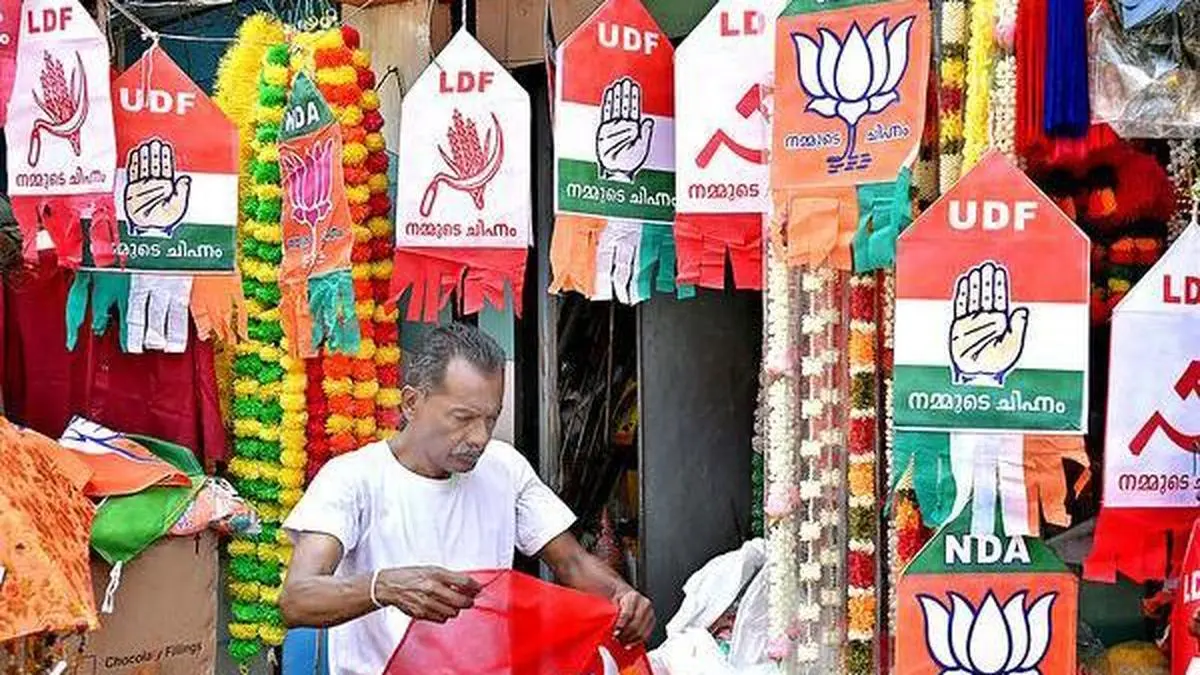
A worker arranging election materials of different political parties at a publicity materials store in Chalai market, Thiruvananthapuram

The Bharatiya Janata Party-led National Democratic Alliance has muscled its way to disrupt the near ritualistic two-front rivalry between the Left Democratic Front (LDF) and the United Democratic Front (UDF) in Kerala. This time, that familiar script faces disruption, with NDA pressing hard to transform the Assembly Elections into a three-cornered contest in the southern State.

Hardly have elections in Kerala promised a contest as competitive as the one now unfolding, with all three fronts striking aggressive postures early in the campaign. The incumbent LDF aims for a historic third consecutive term in what remains its last major bastion, while the Opposition UDF faces a fight to reclaim ground it considers familiar turf. The BJP, meanwhile, hopes to expand its footprint sufficiently to turn the contest triangular, and potentially force a hung Assembly that could allow it to play kingmaker.

The CPM-led LDF has set an ambitious target of winning 110 seats in the 140-member Assembly (it holds 99 in the outgoing House), while the Congress-led UDF is eyeing a tally of over 100 seats (from 41 at present). The BJP-led NDA, whose best showing so far has been one seat each in the Assembly and Lok Sabha, is seeking to push its tally into double digits, a threshold that could significantly alter post-election arithmetic.

The BJP’s attempt to break the LDF-UDF duopoly received a morale boost in the recent municipal polls, where the NDA scored a symbolic breakthrough by capturing the prestigious Thiruvananthapuram Corporation. The victory was significant enough for Prime Minister Narendra Modi to travel to the State to celebrate the win and address a rally, a move widely interpreted as signalling the party’s determination to expand its organisational base in Kerala.

Whether the electorate is ready for such a transition remains uncertain. The unusually short campaign window, among the briefest in the State’s history until polling day on April 9, leaves little time for course correction. Compounding this are logistical setbacks, including the fallout from SIR, which affected several BJP strongholds, including parts of Thiruvananthapuram.

Early campaign turbulence has also taken a toll on the UDF, where prolonged wrangling over candidate selection stretched across four days, costing valuable campaign time. Its rivals watched closely as the Opposition struggled to close ranks. Adding to the campaign uncertainty, a cooking gas shortage across parts of the State has threatened disruption to restaurants and street food vendors, an issue with the potential to influence voter sentiment at the grassroots level.

Signs of strain have surfaced within the ruling LDF as well. Internal dissensions, particularly in traditional strongholds such as Kannur, have dented the image of unity long associated with the Communist Party of India (Marxist). At least 10 senior LDF leaders, including former MLAs and a minister, have switched sides to contest under rival banners, hinting at fractures within the cadre base.

cadre fatigue

Analysts point to growing signs of political wear and possible cadre fatigue as the LDF attempts to secure a third straight term, a feat never before achieved in Kerala’s electoral history. The Congress-led UDF, for its part, continues to grapple with factionalism and leadership tussles that have periodically undermined its campaign momentum.

This evolving churn has created space for the NDA to position itself as a viable third alternative. Local body polls held in December, often viewed as a semi-final ahead of Assembly elections, provided a template for campaign strategies. While the UDF registered strong overall gains, the NDA’s capture of the Thiruvananthapuram Corporation stood out as a politically significant breakthrough, even though its vote share gains remained modest. The LDF, which performed below expectations in these polls, sought to stabilise its position by granting Assembly tickets to as many as 56 sitting MLAs, signalling continuity as a campaign theme.

anti-incumbency pressures

With anti-incumbency pressures, Opposition factionalism and an emboldened BJP seeking to expand its base, Kerala’s electoral landscape appears to be moving beyond its traditional binary. Whether that shift translates into a durable three-front contest, or merely reshapes margins within the existing order, will determine if this election marks a structural turning point in the State’s politics

Published on March 23, 2026


Source link

Rupee breaches the 94/dollar mark intraday; bond yields spike

Rupee breaches the 94/dollar mark intraday; bond yields spike


Yields of G-Secs jumped due to the possibility that rising crude oil prices could stoke inflation.
| Photo Credit:
anoopkrishnan

The rupee breached the 94 per dollar mark on Monday as the West Asia war continued to rage, leading to hardening of crude oil prices and FPIs persisting with selling in the domestic equity markets.

Yields of Government Securities (G-Secs) jumped due to the possibility that rising crude oil prices could stoke inflation.

The rupee closed at a new all-time low of 93.98 per dollar, down 27 paise over the previous close of 93.71. Intraday, it touched a low of 94.01 per dollar.

Siddhartha Khemka, Head of Research, Wealth Management, Motilal Oswal Financial Services Ltd, noted that currency markets reflected the stress arising from the escalating tensions between the US and Iran, with the rupee depreciating to a record low against the dollar, pressured by elevated crude prices and persistent foreign outflows.

FPIs remained net sellers, with cumulative outflows of ₹90,152 crore in March so far, adding to market pressure.

SBI, in a report, said “Since the start of the West Asia war, the rupee has depreciated by 2.74 per cent in just 21 days! Presently, one year NDF (non-deliverable forward) is trading at ₹96.43 while most volatility remains concentrated in near term NDFs.”

SBI economists said, going forward, if the war stretches beyond 10 days, the rupee is likely to face depreciation headwinds further (considering no significant intervention by the RBI).

They assessed that if the war continues for another month, the rupee might cross ₹96/$; if the war stops in another 7-10 days, the rupee is likely to be largely trading in the range of ₹91.5-94.5/$

Meanwhile, the 10-year benchmark government bond (6.48 per cent GS 2035) opened 5 basis points (bps) higher at 6.78 per cent due to an escalation in the West Asia war over the weekend and the subsequent rise in crude oil prices and US Treasury yields, according to a Nuvama Wealth report.

Over the day, yield of the aforementioned paper rose to 6.89 per cent as stop losses triggered and Brent crude for May delivery hovered above $112/barrel.

The 10-year G-Sec reversed and yields fell after US Trump said the US and Iran have held productive talks over a resolution to hostilities in the Middle East, Nuvama said The 10Y yield closed 11 bps higher at 6.84 per cent vs 6.73 per cent.

Published on March 23, 2026


Source link

RBI may closely scrutinise HDFC Bank’s application for term renewal of its CEO

RBI may closely scrutinise HDFC Bank’s application for term renewal of its CEO


Sashidhar Jagdishan, MD & CEO, HDFC Bank
| Photo Credit:
KSL

The dramatic exit last week of Atanu Chakraborty as Part-Time Chairman of HDFC Bank may prompt the Reserve Bank of India (RBI) to take a long, hard look when the Bank makes an application for a third term for its MD & CEO, Sashidhar Jagdishan.

Sources versed with the central bank approval process said when a Bank chief’s tenure comes up for renewal, it does not restrict its scrutiny to only balance sheet grrowth and financial health.

The process, which, at its heart, has the “fit and proper” criteria, goes much beyond the aforementioned factors and includes examining whether issues raised by the Directors were discussed and resolved, looking into regulatory violations/ whistleblower complaints and how they were addressed, and personal transgression, if any, among others.

“There is no smoke without fire. Things are not quite adding up, given that the Chairman hastily left his position and the Bank’s Directors emphasised that everything is hunky-dory,” they said.

Chakraborty quit the Bank’s board on March 17, citing “certain happenings and practices within the bank, that I have observed over last two years, are not in congruence with my personal values and ethics.”

Market Drag

Meanwhile, HDFC Bank’s stock continued to take a beating, plunging to a fresh 52-week low of ₹740.95 on Monday, with trading sentiments negatively influenced by Chakraborty’s sudden resignation and continued pessimism in the stock.

Among large private sector banks (PvBs), HDFC Bank’s stock declined the most (4.70 per cent). The stock had fallen nearly 12 per cent in four trading sessions.

Suresh Ganapthy, Managing Director and Head of Financial Services Research at Macquarie Capital, in a flash note on the developments at HDFC Bank, said: “We remove HDFC Bank from our Marquee buy list. Near-term underperformance may remain, while fundamentals remain strong with good ROA. At this point in time, governance concerns will weigh heavily on the stock. Investors would want more comfort from the board. “

Also, now the uncertainty surrounding MD & CEO Sashidhar Jagdishan’s reappointment will weigh down on the stock, he opined. Suresh observed that key risks include a slowdown in growth and further governance issues cropping up.

In his resignation letter dated March 17, 2026, Chakraborty said: “I joined the Board of HDFC Bank in May 2021. My tenure on the Board saw momentous events like the merger of the bank with HDFC Ltd, which created a conglomerate under the Bank. This strategic initiative made HDFC Bank the second-largest bank in the country. Though the benefits of the merger are yet to fully fructify.”

The Bank’s Interim Part-Time Chairman, Keki Mistry, noted that, at the age of 71, he would not take on the responsibility as Chairman for three months if the systems, processes, and governance practices in the bank did not align with his principles and his level of integrity.

Published on March 23, 2026


Source link

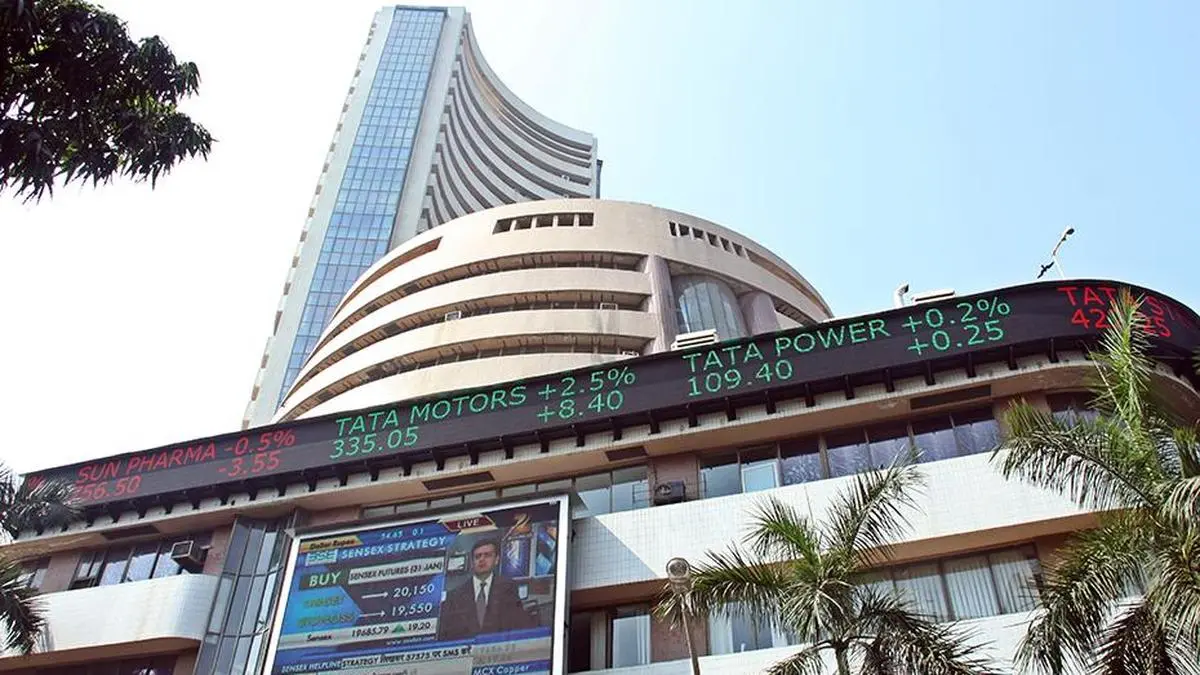
Gift Nifty jumps 800 points as Dalal Street watches West Asia for next move

Gift Nifty jumps 800 points as Dalal Street watches West Asia for next move


Monday’s selloff was broad-based and severe. India VIX surged over 17 per cent to close near 26.8 — its highest since June 2024 — reflecting extreme fear among participants
| Photo Credit:
cueapi

With US President Donald Trump having extended his 48-hour ultimatum to Iran by five days, Gift Nifty, along with global stocks, recovered sharply. However, analysts cautioned against reading too much into it.

Currently, Gift Nifty futures are trading about 800 points gain at 23,280, after recovering to hit a high of 23,500 from the day’s low of 22,453.

Bear Pressure

Markets are at a critical juncture, with the trajectory of the US-Iran conflict and crude oil prices set to determine whether a sharp recovery or a deeper slide lies ahead, analysts said, after the Sensex crashed 1,836 points and the Nifty 50 closed at 22,512 — its lowest in 11 months. March 2026 is on course to be the worst monthly performance for Indian indices since the Covid-19 crash of 2020, with the Nifty down nearly 12 per cent this month alone.

Rajesh Palviya, Head of Research, Axis Securities, said the market structure remained weak and any sustained recovery hinged entirely on geopolitical developments. “…market is desperate to give a sharp up move from the current level… maybe we could see 5–6 per cent kind of jump that cannot be ruled out because market is highly oversold…” he said, adding that a failure to de-escalate could push the Nifty toward the April 2024 low of 21,700–22,000.

Palviya also flagged that supply chain disruptions from the conflict zone would weigh on multiple sectors for at least one to two quarters, with inflation emerging as a secondary concern. “…a lot of money is waiting on the sideline. The confidence and sentiments are not supportive and that is what everybody is waiting for — whether some certainty towards the war comes…” he added.

Kranthi Bathini, Director – Equity Strategy, WealthMills Securities, described the current market phase as one of heightened volatility, noting that the Nifty had violated the 23,000 mark over the last 22 trading sessions since the war began. He identified crude oil and the rupee as a twin burden on Indian markets. “…it is a double whammy — on one hand the rise of crude oil, on the other hand rupee depreciation — creating extra pressure on Indian markets in the medium to short term…” he said.

Bathini cautioned that while relief rallies were possible, sustainability was the real test. “…for that sustainability, we need to see a gradual downtrend in crude oil prices…” he said, adding that any de-escalation of geopolitical tensions would have a direct positive impact on India given crude’s outsized role in the current account deficit and inflation trajectory.

Panic Selling

Monday’s selloff was broad-based and severe. India VIX surged over 17 per cent to close near 26.8 — its highest since June 2024 — reflecting extreme fear among participants. Nifty Midcap 100 and Nifty Smallcap 100 each fell over 3.9 per cent, and of the Nifty 500 universe, only 15 stocks ended in positive territory. The rupee touched a fresh all-time low near 93.97 against the US dollar, while Brent crude hovered around $112 per barrel. Bank Nifty is now down nearly 17 per cent from its all-time high in just 33 trading sessions, with the broader market structure continuing to form lower highs and lower lows.

Published on March 23, 2026


Source link

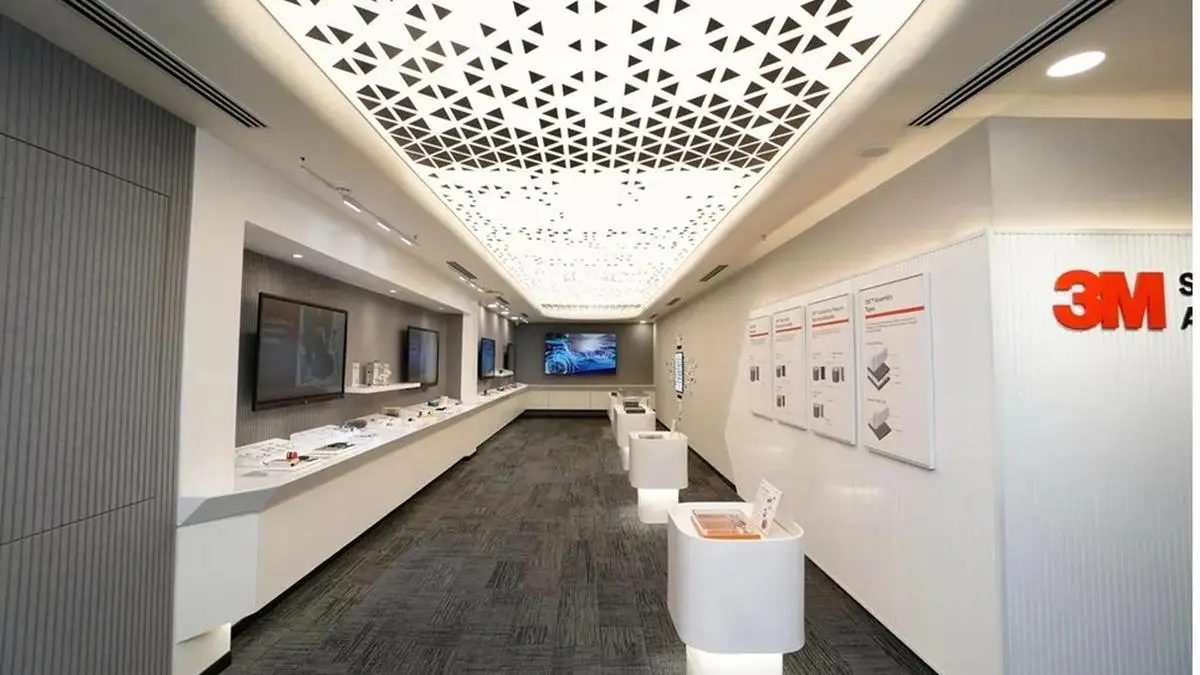
Broker’s Call: 3M India (Add)

Broker’s Call: 3M India (Add)


Target: ₹36,726.00

CMP: ₹31,070.90

3M India has passed on commodity inflation and INR depreciation to end-consumers in medium-long term, we note its EBITDA margin in 9MFY26 (19.7 per cent) is at its highest level since FY13. We remain confident that it is likely to end FY26E with the highest EBITDA margin in the past decade. Considering the inflation in other commodities such as copper, aluminium and crude oil, and with USD-INR rates reaching nearly ₹94 in March 2026, we believe there is an imminent risk to EBITDA margins.

There is a negative correlation coefficient of 0.37 between INR depreciation and EBITDA margin (with a one-year lag). While INR depreciation has an impact on EBITDA margin, we believe the company is in a position to pass on some of the additional costs via price hikes, revenue mix changes, cost-saving initiatives and operating leverage. 9MFY26.

3M India imports the majority of its raw materials and incurs significant expenses, including royalties and corporate management fees. While it generates some export revenue, we believe steep INR depreciation may impact profitability. We note its net outflows as a percentage of net sales stood at about 43 per cent over FY19-25.

We also note other commodities such as crude oil, copper and aluminium are in an inflationary zone. Furthermore, global shipping crisis and higher crude oil prices could impact freight costs. We cut TP to ₹36,726 (vs ₹39,250 earlier); implied target P/E works out to 50x FY28E EPS. Maintain ADD.

Published on March 23, 2026


Source link

Panic buying triggers fuel queues in Gujarat amid West Asia  tensions; dealers say no supply shortage

Panic buying triggers fuel queues in Gujarat amid West Asia tensions; dealers say no supply shortage


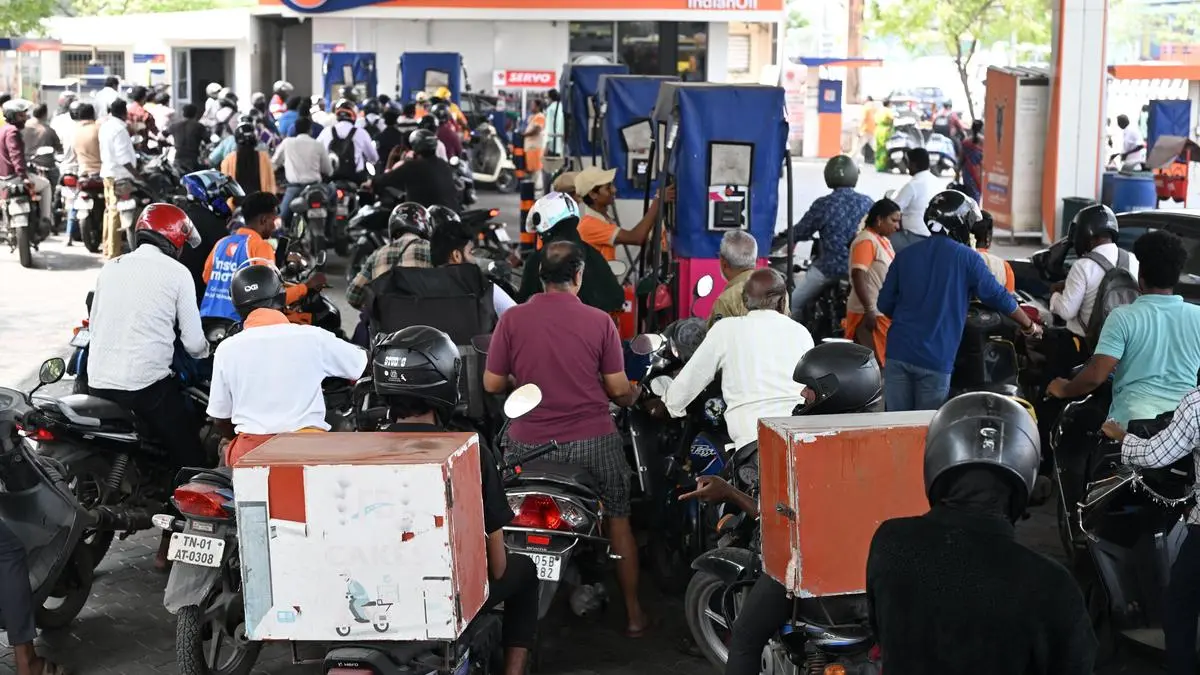
Dealers added that outlets of Indian Oil Corporation have been witnessing higher demand due to their wider network, further contributing to localized pressure.
| Photo Credit:
JOTHI RAMALINGAM B

Long queues were seen outside petrol pumps across major cities in Gujarat on Monday evening, as panic buying gripped consumers amid rising concerns linked to the ongoing West Asia conflict involving Iran, Israel and the US.

In Ahmedabad, queues of two-wheelers and cars were reported in several areas, including Gota, where fuel outlets operated by Nayara Energy temporarily suspended operations after running out of stock. Similar disruptions were reported from Rajkot and Surat, where a handful of petrol pumps shut temporarily after exhausting available fuel.

“In the last few hours, long queues have been seen at petrol pumps across Ahmedabad. There is no disruption in supply from oil companies or the government. Adequate quantities are available. Out of around 210 pumps in the city, only four or five are currently out of fuel, which appears to have triggered panic,” said Arvind Thakker, past president of the Federation of Gujarat Petroleum Dealers Association (FGPDA).

Temporary stock-outs

According to FGPDA, about eight petrol pumps in Rajkot and five in Surat faced temporary stock-outs. “We have been assured by oil marketing companies that there is no shortage of petrol or diesel. Some dealers faced payment-related issues over the weekend, which delayed replenishment. Supplies are ongoing and pumps will be restocked shortly. According to the information coming to us, pumps belonging to Nayara and Bharat Petroluem are the most affected and have reported to have dried out,” said Dhimant Ghelani, secretary of the association.

Dealers added that outlets of Indian Oil Corporation have been witnessing higher demand due to their wider network, further contributing to localised pressure. Gujarat government also issued a statement assuring that there was no fuel shortage. An important meeting was also held under the chairmanship of chief minister Bhupendra Patel in the state capital Gandhinagar where he took stock of the the fuel availability in the state.

Published on March 23, 2026


Source link

YouTube
Instagram
WhatsApp