HDFC Bank: Chakraborty’s sudden exit as Part-time Chairman stirs hornet’s nest

HDFC Bank: Chakraborty’s sudden exit as Part-time Chairman stirs hornet’s nest


The sudden departure of Atanu Chakraborty as Part-time Chairman and Independent Director of HDFC Bank with immediate effect has stirred a hornet’s nest, with its stock taking a beating amid reports of a “power struggle”, which the bank’s board strongly refuted. The RBI, backed the bank, stated that there are no material concerns on record about its conduct or governance.

Chakraborty, who was Part-time Chairman of India’s largest private sector bank since May 2021, put in his papers citing “certain happenings and practices within the bank, that I have observed over last two years, are not in congruence with my personal values and ethics”, as the basis for his decision to step down.

In his resignation letter, the Gujarat-cadre IAS officer, who retired as the Department of Economic Affairs Secretary in the Government of India in 2020, also observed that the benefits of the 2023 merger (of HDFC with HDFC Bank) are yet to fully fructify.

Banking sector experts say the bank’s board may approach M Rajeshwar Rao, former Deputy Governor of RBI, to replace Chakraborty. The role of Deputy Managing Director, Kaizad Bharucha is also set to expand, according to Keki Mistry, who said that he would be getting more responsibilities, in addition to his current functions.

The bank, in a regulatory filing, said based on its application the Reserve Bank of India on March 18, has granted its approval for the appointment of Keki Mistry as interim Part-time Chairman of the bank with effect from March 19 for three months.

HDFC Bank’s stock hit a 52-week low at ₹772 per share on Thursday on BSE. It closed at ₹779.70 apiece, down 5.13 per cent (or ₹43.25)

Addressing analysts, Mistry emphasised that there is no “power struggle” in HDFC Bank, and some relationship issues will always be there between individuals in any organisation. Chakraborty’s exit comes amid reports that he insisted on a review of the bank chief’s tenure before recommending a further extension of his tenure, and alleged strain in relationship between some of the CXOs.

Sashidhar Jagdishan has been helming the bank as MD & CEO since October 27, 2020. His second three-year term ends in October 2026. Mistry said: “And believe me…at the age of 71, I would not take on this responsibility [as Interim Chairman] for three months if the systems, processes and governance practices in the bank do not align with my principles and my level of integrity…RBI gave their approval for making me Interim Chairman for a period of three months just to stabilise things and then move on.”

Replying to a specific question on the possibility of a “power struggle” in an analyst call, Mistry said: “Differences on minor issues do come up from time to time, but there was nothing material whatsoever..There will always be some relationship issue between individuals. Those kind of things happen. There was no power struggle in the bank, as you put it”.

Renu Sud Karnad, Non-Executive (Non-Independent) Director, said: “In fact, we repeatedly asked him [Chakraborty] to tell us why, what had triggered this [resignation], and if there was anything we have to do to get it right. But he said there was nothing. And that was a bit baffling.”

Mistry observed that there has never ever been any kind of discussion at the board level on any matter that is contentious in terms of governance.

“If there have been any minor issues here and there, those have been tackled appropriately. .What caused that [resignation] letter to be sent yesterday is something which really, to my mind, defies logic,” he said.

The RBI emphasised that HDFC Bank is a Domestic Systemically Important Bank (D-SIB) with sound financials, professionally run board and competent management team.

“Basis our periodical assessment, there are no material concerns on record as regards its conduct or governance. The bank remains well-capitalized and the financial position of the bank remains satisfactory with sufficient liquidity.

“Reserve Bank will continue to engage with the Board and management on the way forward,” the central bank said in a statement.

Published on March 19, 2026


Source link

Iran strikes cut Qatar LNG output, disrupt global gas supplies

Iran strikes cut Qatar LNG output, disrupt global gas supplies


Iranian attacks have damaged key gas infrastructure in Qatar, knocking out 17% of its LNG export capacity and causing an estimated $20 billion annual revenue loss

D ​Iranian attacks have
knocked out 17% of Qatar’s liquefied natural gas (LNG) export
capacity, causing ⁠an estimated $20 billion in lost annual
revenue and threatening supplies to Europe and Asia,
QatarEnergy’s CEO told Reuters on Thursday.
Saad al-Kaabi said two of Qatar’s 14 LNG trains and one of its
two gas-to-liquids (GTL) facilities were ‌damaged in the
unprecedented strikes. The repairs will sideline 12.8 million
tons per year of LNG for three to five years, he said in an
interview.
“I never in ‌my wildest dreams would have thought that Qatar
would be – Qatar and the region – ‌in ⁠such an attack, especially
from a brotherly Muslim country in the month of Ramadan,
attacking ⁠us in this way,” said Kaabi, who is also Qatar’s
minister of state for energy affairs.

Hours earlier Iran had aimed a series of attacks at Gulf oil
and gas facilities after Israeli attacks on its own gas
infrastructure.

State-owned QatarEnergy ​will have to declare force majeure
on ‌long-term contracts for up to five years for LNG supplies
bound for Italy, Belgium, South Korea, and China due to the two
damaged trains, Kaabi said.

“I mean, these are long-term contracts that we have to
declare force majeure. We already declared, but that was a
shorter ‌term. Now it’s whatever the period is,” he said.

EXXONMOBIL IMPACT AND BYPRODUCTS

QatarEnergy had ​declared force majeure on its entire output of
LNG, after earlier attacks on its Ras Laffan production hub,
which came under fire again on Wednesday.

“For production ⁠to restart, first we need hostilities to
cease,” he said.
U.S. oil major ExxonMobil is a partner in the damaged
LNG facilities, while Shell is a partner in the damaged
GTL facility, which will take ‌up to a year to repair.

Texas-based ExxonMobil holds a 34% stake in LNG train S4 and
a 30% stake in train S6, Kaabi said.

Train S4 impacts supplies to Italy’s Edison and
EDFT in Belgium, while Train S6 impacts South Korea’s KOGAS,
EDFT and Shell in China.

The scale of the damage from the attacks has set the region
back 10 to 20 years, he said.

“And of course, this is a safe haven for a lot of people, to
have a ‌safe place to stay and so on. And that image, I think,
has been shaken.”

The fallout extends well beyond ​LNG. Qatar’s exports of
condensate will drop by around 24%, while liquefied petroleum
gas (LPG) will fall 13%. Helium output will fall 14%, and
naphtha and sulphur will ⁠both drop by 6%.

Those losses have implications ranging from LPG used in
restaurants in India to South ⁠Korea’s chipmakers which use
helium.

The damaged units cost approximately $26 billion to build,
Kaabi said.

“If Israel attacked Iran, it’s between Iran and Israel. It
has nothing to do with us ‌and the region,” he said.

“And so now, in addition to that, I’m saying that everybody
in the world, whether it’s Israel, whether it’s the U.S.,
whether it’s any other country, ​everybody should stay away from
oil and gas facilities.”

Published on March 19, 2026


Source link

InVITs’ asset to grow ₹1 lakh crore in FY26: CareEdge

InVITs’ asset to grow ₹1 lakh crore in FY26: CareEdge


InvITs have mobilised ₹88,000 crore equity during the past three years (FY23-FY25) and are expected to further raise ₹16,500 crore in FY26
| Photo Credit:
NAGARA GOPAL

Assets under management (AUM) of Infrastructure Investment Trusts (InvITs) is likely to grow by ₹1 lakh crore during FY26, said CareEdge Ratings.

InvITs have gained momentum with AUM doubling from about ₹3 lakh crore in FY22 to around ₹6.25 lakh crore by FY25, said the ratings major in a note. The number of InvITs in India has also increased from 11 in FY22 to 22 in FY25, reflecting both structural investor appetite and the rapid institutionalisation of operational infrastructure platforms.

However, sectoral dispersion is yet to catch up, it said adding that AUM remains heavily concentrated in two segments — telecom (₹3.06 lakh crore) and roads (₹2.46 lakh crore) — which together account for nearly 90 per cent of the industry’s AUM as of March 31, 2025, signalling diversification opportunities.

CareEdge Ratings expects InvIT AUM to grow led by portfolio expansion across roads, transmission, warehousing and renewable senergy ectors in FY26. “The medium-term trajectory will also benefit from the strong National Monetisation Pipeline-II (NMP-II), the pool of operational HAM assets, and increasing activity on transmission and warehousing platforms.”

InvITs have mobilised ₹88,000 crore equity during the past three years, FY23-FY25, and are expected to further raise ₹16,500 crore in FY26.

Reliance on banks

InvITs on a combined/aggregate basis had an outstanding gross debt of ₹2.82 lakh crore at the end of FY25. The borrowing mix of InvITs continues to show a clear reliance on banks, with term loans accounting for nearly two-thirds of total borrowings as of March 31, 2025. Bond issuances, despite gradual progress, account for only about 20 per cent of the combined debt, highlighting an underpenetrated capital market base even as platforms mature.

“InvITs are expected to witness another year of steady growth in FY26, with nearly ₹1 lakh crore of additional AUM driven by the roads, warehousing, transmission, and renewable energy sectors. The sector’s credit profile remains robust, supported by diversified, operational asset pools. However, there remains significant potential to enhance creditor protections further and deepen the domestic investor base, particularly given the currently low participation by retail investors, mutual funds, and insurance companies,” said Maulesh Desai, Director at CareEdge Ratings.

“Leverage levels are expected to remain stable at around 49 per cent in FY26, aided by valuation gains and continued equity issuances. Bond market participation is likely to stay moderate, representing approximately 20 per cent of the estimated ₹3.70 lakh crore in debt as of March 31, 2026,” he added.

Published on March 19, 2026


Source link

Domestic Strength Shields India from 4 Oil Shock: PMEAC Chairman S Mahendra Dev

Domestic Strength Shields India from $114 Oil Shock: PMEAC Chairman S Mahendra Dev


PMEAC Chairman S Mahendra Dev remains candidly optimistic about India’s economic resilience, even as West Asian conflict pushed crude prices past $114 per barrel this Thursday. In an exclusive interaction with businessline, Dev outlined why India is largely withstanding the shock, noting that while LPG supply faces minor disruptions, the broader growth story remains intact. He also dismissed concerns over a potential El Nino, arguing that expanded irrigation now shields Indian agriculture from rainfall deficits. On the AI front, Dev noted that while the impact on jobs remains speculative, the technology is likely to create a new surge in demand for skilled manpower. Excerpts:

How do you assess the current situation of Indian economy amid uncertainty over the war, as no one knows how long it will continue?

Indian economy is in good shape, numbers on macro fundamentals are good. If you see any indicator — fiscal deficit or current account deficit, banking and private sector profit — they are in good shape. Besides, the government is also increasing the capital expenditure in the Budget. Even in the debt to GDP ratio, we are under control.

Although globally there are problems of low growth and the supply chain problems, India has withstood the shock because of its monetary and fiscal policies.

What is your assessment about GDP?

Under the new GDP series, we (the government) are expecting 7.6 per cent growth in FY26. While the conflict may cause minor disruptions in March, we remain on track to achieve our projected growth. In the geopolitical uncertainties, India’s domestic economy is strong because exports are only 20 per cent of our GDP. Domestic consumption and investment are the sole drivers of growth, representing 80 per cent of the total. In that context, though we are not decoupled, we are much better off than even advanced countries. In this world, you cannot decouple. If the war ends soon, I do not think we will have much impact on our macro fundamentals.

What are the risks as no one knows when this war will end?

In the Ukraine-Russia war, initially there were some problems. But we could manage and there was not much impact on our fiscal growth or inflation. The US-Israel-Iran conflict has yet to significantly drive inflation through energy prices, though it has caused specific disruptions in the LPG supply chain.

Any direct impact on GDP?

We initially expected growth between 7 per cent and 7.4 per cent. While we still anticipate hitting the 7 per cent mark, a second, more cautious scenario must be considered if the war continues. Our energy vulnerability is high: we import nearly all our crude oil and over half of our gas. Most critically, since 90 per cent of our LPG passes through the Strait of Hormuz, any prolonged instability there will inevitably weigh on GDP and drive up inflation.

What is likely impact on inflation?

Right now, inflation is around 3 per cent as the new series show. I expect if the war prolongs, it will perhaps touch 4 -4.5 pert cent. Because for oil, we have to spend more money and that will have some impact on fiscal. But, on the whole, I am optimistic that we will withstand this shock without much disturbance to our macro fundamentals. If it prolongs and if there is a global recession, it may have more impact on our growth and inflation.

So, what kind of tolerance level you see in terms of the crude prices?

Crude prices up to $90/barrel (average for year) should be okay because earlier it was much less, so we can withstand that. But if it increases further to $ 120 or $ 130, it will have more impact on our fiscal parameters, and also inflation may increase further, even impact on GDP growth.

Indian basket of crude has already crossed $140. In this situation, what could be the CAD in the short and medium term?

I am talking about the average of Indian basket. There is a whole next year ahead to talk about 2026-27, and we do not expect the war to go on. But, even if the war ends, it will have some impact in the medium term, because the oil prices may still be higher for some time.

On the impact on current account deficit (CAD), our tolerance limit is around 2 per cent, so I do not expect more than that because right now it is about 1.3 per cent. It may go to 2 per cent, and even then it is slightly thin. Rupee too, will not go on depreciation. We are expecting FDI flows, and the foreign portfolio investors (FPI) to come back after sometime, because the US tariff issue is also being sorted out. The only risk is, a prolonged war may have some impact on remittances.

Yes, remittances by Indian diaspora is an issue to watch out for.

Recent data show that very few people have come after the war hit countries in the Gulf. They are still staying there. So, I do not think it will have any impact, as all of them will not come back, though remittances may have some marginal decline. What needs to be watched is how long it prolongs, which nobody knows. It may stop next week or prolong further, depending on that, they (Indians there) will decide.

Another issue of concern for India is fertilizer availability as natural gas, the key feedstock in Urea production, has been affected, so also its prices. We have seen fertilizer shortages in last two years. If domestic production of Urea falls, how do you see India to cope agricultural production?

Right now there is no shortage of Urea or DAP. I do not think farmers are complaining anywhere. So, everything depends on how long this war continues. The lower availability of gas may have some impact on fertilizer production and import. By beginning of Kharif season (before June 1), I think things will be sorted out. I do not think any major problems will be there on fertilizer side.

But, in the long run, I prefer farmers shifting to organic and natural farming, although some people do not agree with that view. But I feel we have to move. Sri Lanka’s example was an extreme case. Here, we can increase the share of organic and natural farming, because you cannot depend forever on fertilizers and pesticides, which are harmful to the people, who are getting cancers and other diseases. Soil is getting affected due to excessive fertiliser use. How to incentivise organic and other things with certification are more important. We should have a debate on these things. I am not saying we should entirely shift, and that is not feasible.

Now that many global models are predicting about emergence of El Nino. It is proved that Indian monsoon rainfall normally gets affected in El Nino years. Do you think India is now prepared to take another shock if there is deficient monsoon?

I think the worst drought year in last many decades was 2009. Many people had predicted 6 per cent drop in farm growth. But I went around and saw that there was moisture, a lot of moisture and that was suitable for Rabi crops. I said agriculture sector growth would be positive 1 per cent and actually it became 0.4 per cent in 2009-10.

India can withstand because irrigation has increased to 55 per cent (of total cultivable land), and we keep on increasing the irrigation so that we can increase our resilience to rain-deficiency. But if it is complete drought it will have an impact. We do not know how will be the distribution, it is too early. Also the crop sector share is now very less in the value of output as it is more from horticulture (which needs less water compared to other crops), livestock and fisheries. That way, we are more insulated.

You were earlier chairman of the CACP and you know that many of the non-price recommendations do not get implemented by the government and it is said to be one of the factors for continuing import dependence on pulses and edible oil, which was recently pointed out by the Supreme Court. Even in case of rice and wheat, where India has surplus, still export is banned in case of one bad year. Do you think that it is time to shift from rice wheat to other areas?

As an economist, I do not agree on banning agri export. But from the policy point of view, you need to balance between the farmers and consumers. When prices of pulses or rice or wheat or any other commodity increase, consumers get affected. Unless you take some measures, it keeps on increasing. If we export too much also, the domestic prices increase. So, a balance between farmers and consumers interests are needed.

Secondly, agriculture economists have been saying about diversification from rice and wheat to other crops. But to shift to millets or oilseeds or pulses, economics has to be right. For instance, the cost of cultivation (A2+FL) of rice is about ₹30,000 per hectare, jowar (sorghum) is ₹9,000, Bajra (pearl millet) is about ₹5,000, and Ragi it is almost negative. We have to make these millets more profitable crops with better varieties, higher yield and prices. Farmers do not shift unless there is a profit.

Source link

ईरान वॉर से LPG के बड़े संकट में फंसे भारत ने निकाला जबरदस्त तोड़, अब नहीं होगा जंग का असर?

ईरान वॉर से LPG के बड़े संकट में फंसे भारत ने निकाला जबरदस्त तोड़, अब नहीं होगा जंग का असर?


Middle East Tensions: मिडिल ईस्ट में बढ़ते तनाव का सीधा असर भारत पर भी देखने को मिल रहा है. सरकार के तमाम दावों के बावजूद एलपीजी संकट ने लोगों के सामने नई मुश्किलें खड़ी कर दी हैं. हालात यह हैं कि रेस्टोरेंट से लेकर औद्योगिक क्षेत्र तक एलपीजी की किल्लत के कारण बंद होने की कगार पर पहुंच गए हैं. ऐसे में सरकार ने इस स्थिति से निपटने के लिए वैकल्पिक उपाय अपनाने का फैसला किया है.

ऊर्जा आपूर्ति में आ रही बाधाओं के बीच सरकार का कहना है कि वह हालात को सामान्य करने के लिए गंभीरता से प्रयास कर रही है, क्योंकि मिडिल ईस्ट के तनाव ने ऊर्जा आपूर्ति को बुरी तरह प्रभावित किया है और एलपीजी की उपलब्धता पर भी दबाव बढ़ा है.

भारत ने निकाली नई तरकीब

पेट्रोलियम एवं प्राकृतिक गैस मंत्रालय (मार्केटिंग एवं ऑयल रिफाइनरी) की संयुक्त सचिव सुजाता शर्मा के अनुसार, पश्चिम एशिया के संघर्ष का असर भारत पर पहले से ही दिखने लगा है. उन्होंने बताया कि भारत का लगभग 90 प्रतिशत एलपीजी आयात स्ट्रेट ऑफ होर्मुज के रास्ते होता था, और इस मार्ग में बाधा आने से बड़ी समस्या खड़ी हो गई है. इस स्थिति से निपटने के लिए भारत अब अमेरिका से एलपीजी आयात कर रहा है.

इसके अलावा एलएनजी की आपूर्ति ऑस्ट्रेलिया और रूस जैसे देशों से की जा रही है. उन्होंने कहा कि सरकार ऊर्जा के वैकल्पिक स्रोतों पर भी काम कर रही है, ताकि आपूर्ति को सामान्य किया जा सके.

एलपीजी की चिंताजनक स्थिति

उन्होंने यह भी स्वीकार किया कि सरकारी प्रयासों के बावजूद एलपीजी को लेकर दबाव बना हुआ है. हालांकि ऑनलाइन बुकिंग की स्थिति में सुधार हुआ है और लगभग 93 प्रतिशत उपभोक्ता डिजिटल प्लेटफॉर्म का उपयोग कर रहे हैं, फिर भी कई जगहों पर लोगों को गैस के लिए लंबी कतारों में लगना पड़ रहा है. उन्होंने उपभोक्ताओं से अपील की कि वे धैर्य रखें और डिस्ट्रीब्यूटर के पास जाने के बजाय होम डिलीवरी का इंतजार करें.

गौरतलब है कि वैश्विक स्थिति अब काफी गंभीर हो चुकी है. ईरान पर अमेरिका और इजरायल के संयुक्त कार्रवाई के बाद संघर्ष का दायरा लगातार बढ़ता जा रहा है. अब हमलों का केंद्र ऊर्जा बुनियादी ढांचे पर आ गया है, जहां तेल और गैस उत्पादन से जुड़े संयंत्रों को निशाना बनाया जा रहा है. यह पहली बार है जब दोनों पक्षों की ओर से इस तरह सीधे तौर पर ऊर्जा क्षेत्र की अहम परिसंपत्तियों पर हमले किए गए हैं.

ये भी पढ़ें: वेस्ट एशिया टेंशन के बीच शेयर बाजार में कोहराम, 2500 अंक गिरा सेंसेक्स, निफ्टी 23100 के नीचे, इन शेयरों में गिरावट


Source link

Misuse of Insolvency and Bankruptcy Code by loan defaulters has tendency to badly impact economy: HC

Misuse of Insolvency and Bankruptcy Code by loan defaulters has tendency to badly impact economy: HC


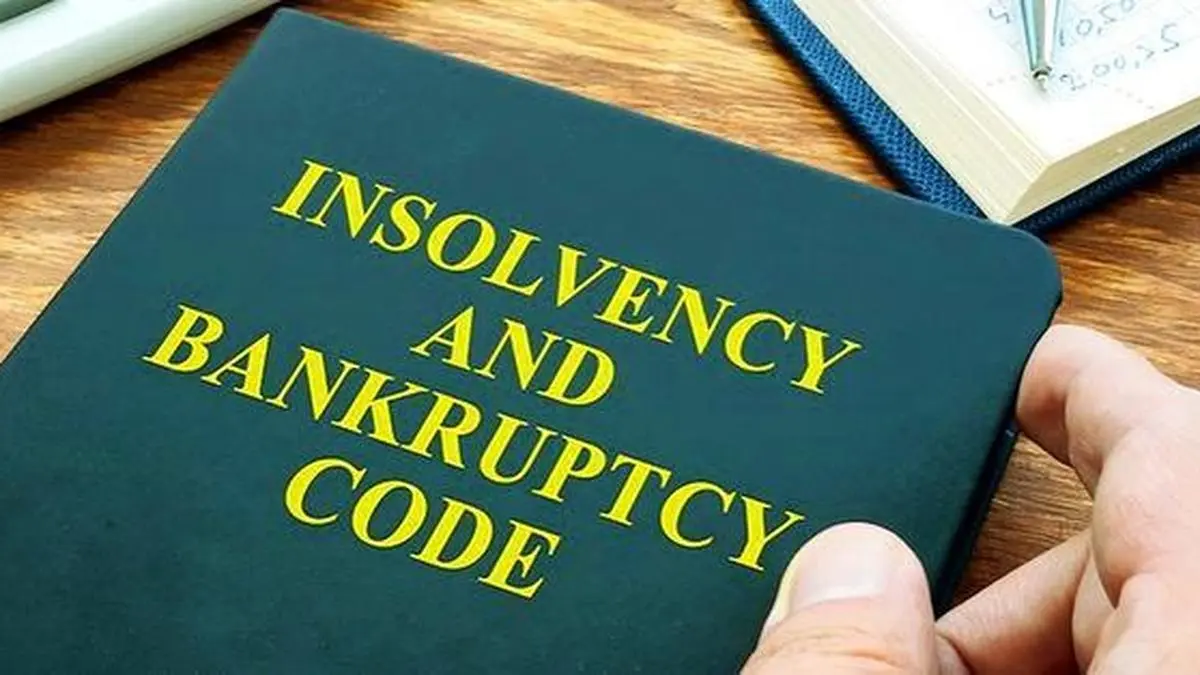
Man holds Insolvency and bankruptcy code IBC.
| Photo Credit:
designer491

The Bombay High Court has deprecated the misuse of provisions of the Insolvency and Bankruptcy Code (IBC) by loan defaulters and guarantors to “wear a cloak of immunity” by triggering a moratorium, and said this practice has the tendency to adversely impact the country’s economy.

A bench of Justices Manish Pitale and Shreeram Shirsat, in an order passed on Wednesday, said such strategies by loan defaulters frustrate the very objective of the IBC and paralyse the whole process of lawful steps taken by secured creditors, adding that the court cannot remain a mute spectator when misuse of legal provisions demonstrates failure of justice.

The court said it has noticed a “disturbing trend” in which chronic defaulters take resort to the provisions of the IBC to frustrate secured creditors and auction purchasers from proceeding under the provisions of the Securitisation and Reconstruction of Financial Assets and Enforcement of Security Interest Act.

In a number of such matters, it is found that the borrowers/guarantors act as fence sitters and do not take any steps when secured creditors proceed under the Securitisation Act and till the culmination of the process and auction purchasers come into the picture, the HC said.

At this stage, the borrowers/guarantors initiate collusive proceedings under the IBC, claiming triggering of moratorium before the National Company Law Tribunal (NCLT), it said.

“As a consequence, all steps taken under the Securitisation Act suddenly come to a standstill and such borrowers/guarantors, who are defaulters, wear a cloak of immunity under the garb of moratorium triggered under the IBC,” the court said.

In its judgment, the HC noted that the objective of the IBC was to ensure that insolvency resolution of corporate persons and individuals are undertaken in a time-bound manner for maximisation of value of assets, availability of credit and balance the interest of all stakeholders.

“We find that the manner in which the defaulting borrowers and guarantors have been taking recourse to the provisions of the IBC, shows that such strategies are frustrating the very objective of the IBC, apart from paralysing the whole process of lawful steps taken by secured creditors under the Securitisation Act,” the HC said.

Chronic defaulters of loan and financial facilities, when facing the heat of proceedings initiated by secured creditors, scamper to file proceedings under the IBC in a collusive manner so as to claim that moratorium is triggered, the HC said.

It added that in such a situation, the creditor or the auction purchaser has to approach the NCLT followed by the National Company Law Appellate Tribunal (NCLAT) and then the Supreme Court, till which time they are completely frustrated.

The bench said such a practice has the tendency of adversely affecting the economy, financial health and business environment in the country.

In such situations, the court cannot remain a “mute spectator” when misuse of legal provisions demonstrates failure of justice, it said.

The remarks were made in a petition filed by Rozina Firoz Hajiani and others, who were successful auction bidders for a south Mumbai property, challenging an order passed by the Debts Recovery Tribunal (DRT) putting their sale registration on hold as the borrowers had initiated proceedings under the IBC before the NCLT.

The Union Bank of India had extended a credit facility of Rs 6.25 crore to the borrowers in return of which the property in south Mumbai was mortgaged.

When the borrower defaulted in the payment, the bank first issued a notice and then filed an application before a local court to take physical possession of the mortgaged property, which was allowed.

In the meanwhile, the bank gave the borrower several opportunities to repay the loan amount which they failed.

In November 2024, the bank scheduled an auction of the property, following which the borrower approached the DRT challenging the same under the Securitisation Act.

The auction was conducted and the petitioner was declared as successful bidder, and a sale certificate was issued in their favour.

The borrowers then approached the NCLT under the IBC initiating insolvency resolution and also claiming that as per provisions of the Act interim moratorium was triggered.

Based on this, in January 2025 the DRT held that there was a moratorium and hence all further proceedings under the Securitisation Act were stalled.

The high court in its order noted that in the present case, the sale certificate was issued prior to the proceedings filed by the borrowers before the NCLT and hence the moratorium could not affect the sale and the DRT failed to appreciate this.

The court quashed the order passed by the DRT and said the bank can take further steps in pursuance of the auction sale and registration of sale certificate issued in favour of the petitioners.

Published on March 19, 2026


Source link

YouTube
Instagram
WhatsApp